

History, Discovery & the Story Behind Egypt’s Giant Statue
Introduction
The Colossus of Ramses II is one of the most impressive surviving statues from Ancient Egypt and a highlight of the Memphis Open-Air Museum. Measuring more than 10 meters (33 feet) in length and carved from a single block of limestone, this colossal masterpiece reflects the ambition, artistic excellence, and royal power of Pharaoh Ramses II, one of Egypt’s greatest rulers.
Originally erected in the ancient city of Memphis, Egypt’s first capital, the statue welcomed visitors to one of the most important religious and political centers of the ancient world. Today, although it lies horizontally inside a specially designed museum pavilion, it remains one of the country’s most fascinating archaeological treasures.
A visit to the Colossus offers a unique opportunity to admire the craftsmanship of Ancient Egyptian sculptors while learning about the reign of the king often called Ramses the Great.
Table 1: Colossus of Ramses II at a Glance
| Feature | Details |
|---|---|
| Name | Colossus of Ramses II |
| Pharaoh | Ramses II |
| Dynasty | Nineteenth Dynasty |
| Date | c. 1279–1213 BCE |
| Material | Limestone |
| Height | Approximately 10.5 meters (without pedestal) |
| Current Location | Memphis Open-Air Museum |
| Famous For | One of Egypt’s largest surviving royal statues |
Who Was Ramses II?
The Colossus honors Pharaoh Ramses II, who ruled Ancient Egypt for approximately 66 years, making him one of the longest-reigning monarchs in Egyptian history.
Known as Ramses the Great, he transformed Egypt through ambitious building projects, military campaigns, and diplomatic achievements.
During his reign, enormous temples, statues, obelisks, and monuments were constructed throughout the country, many of which survive today.
Among his most famous monuments are:
- Abu Simbel Temples
- Ramesseum
- Luxor Temple additions
- Karnak Temple expansions
- The Colossus at Memphis
His building program helped establish his reputation as one of the greatest pharaohs of all time.
Table 2: Ramses II at a Glance
| Feature | Information |
|---|---|
| Full Name | Ramses II |
| Title | Pharaoh of Egypt |
| Dynasty | Nineteenth Dynasty |
| Reign | c. 1279–1213 BCE |
| Nickname | Ramses the Great |
| Famous For | Monumental building projects |
Why Was the Colossus Built?
Like many royal monuments of Ancient Egypt, the Colossus of Ramses II served several important purposes.
It was designed to:
- Demonstrate the pharaoh’s divine authority.
- Impress visitors arriving in Memphis.
- Honor the gods.
- Celebrate military victories.
- Reinforce royal legitimacy.
- Display Egypt’s artistic achievements.
Standing at the entrance of a sacred area near the Temple of Ptah, the statue projected strength, stability, and eternal kingship.
Table 3: Purpose of the Colossus
| Purpose | Significance |
|---|---|
| Royal Power | Demonstrated authority |
| Religious Symbol | Honored the gods |
| Monumental Art | Showcased Egyptian craftsmanship |
| Political Message | Strengthened royal image |
| Public Display | Welcomed visitors to Memphis |
The Ancient City of Memphis
The Colossus originally stood in Memphis, one of the oldest and most influential cities in Egyptian history.
Founded around 3100 BCE, Memphis became:
- Egypt’s first capital.
- A political centre.
- A religious center dedicated to Ptah.
- A major trade hub.
- Home to royal palaces and temples.
For centuries, Memphis played a vital role in Egyptian civilization, making it the perfect location for one of Ramses II’s most impressive statues.
Table 4: Memphis Facts
| Feature | Details |
|---|---|
| Founded | Around 3100 BCE |
| Founder | Traditionally King Menes (Narmer) |
| Role | Ancient capital of Egypt |
| Main Deity | Ptah |
| UNESCO Status | World Heritage Site |
Discovery of the Statue
After centuries of decline, the ancient city of Memphis gradually became buried beneath layers of sand and soil.
The Colossus remained hidden until the 19th century, when archaeological investigations brought it back to light.
Its rediscovery attracted worldwide attention because of its remarkable size and excellent preservation.
The statue eventually became one of the most famous exhibits at the Memphis archaeological site.
Table 5: Discovery Timeline
| Period | Event |
|---|---|
| Ancient Egypt | Statue erected |
| Medieval Period | Buried beneath debris |
| 19th Century | Rediscovered by archaeologists |
| Modern Era | Preserved in museum pavilion |
Why Is the Statue Lying Down?
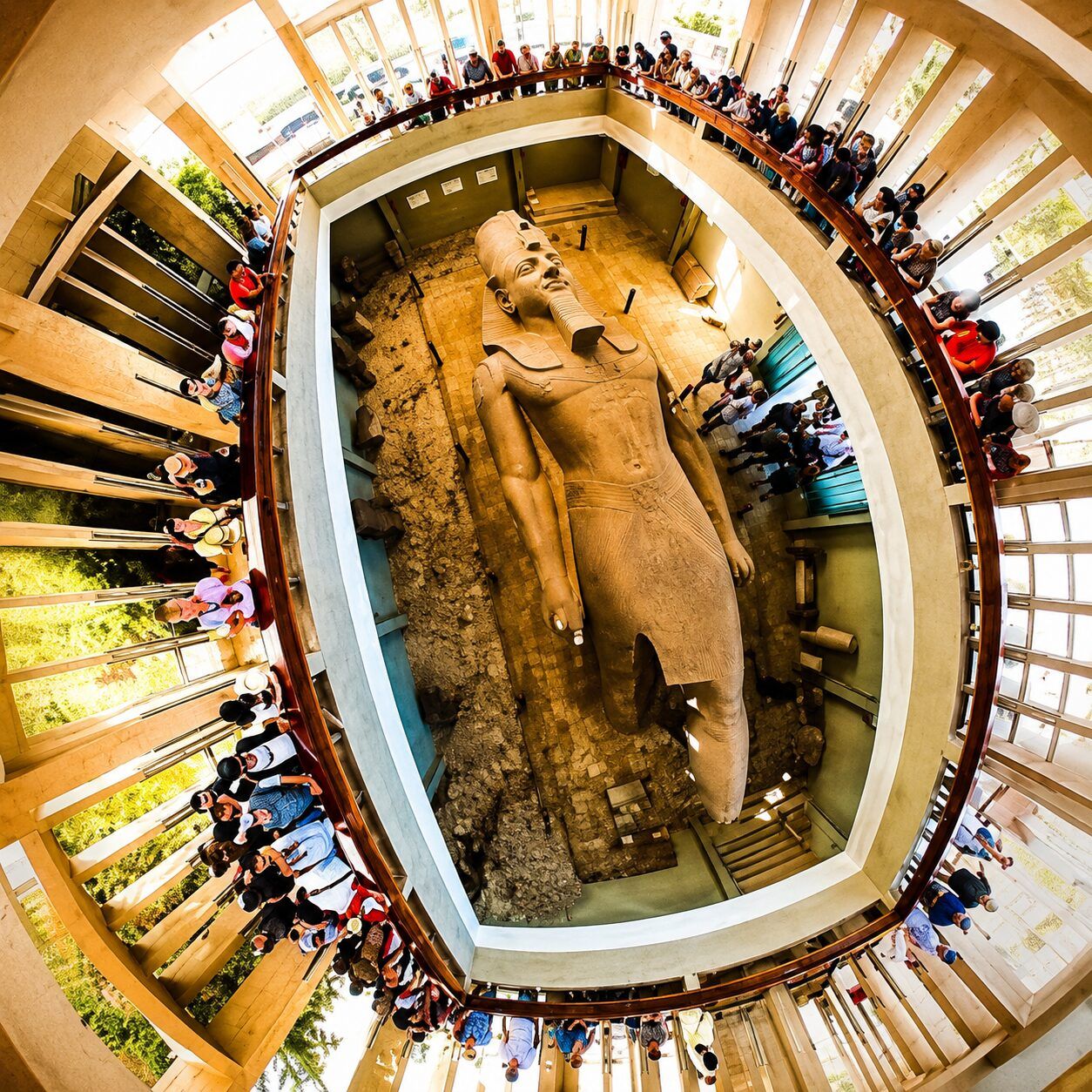
Many visitors are surprised to see the Colossus displayed horizontally rather than standing upright.
The statue suffered damage over the centuries, particularly to its lower legs and base, making reconstruction in a vertical position impractical.
Instead, archaeologists chose to display it lying down inside a protective building, allowing visitors to appreciate its size while minimizing structural stress and ensuring long-term preservation.
This arrangement also provides excellent viewing angles from elevated walkways.
Table 6: Preservation Features
| Feature | Purpose |
|---|---|
| Indoor Pavilion | Protects from weather |
| Horizontal Display | Reduces structural stress |
| Elevated Walkways | Better visitor viewing |
| Controlled Environment | Long-term conservation |
Artistic Masterpiece
The Colossus is a remarkable example of New Kingdom sculpture.
Ancient craftsmen carved the statue from a single massive block of limestone with extraordinary precision.
Notable artistic features include:
- Calm facial expression
- Royal nemes headdress
- False beard
- Detailed kilt
- Elegant proportions
- Finely carved hieroglyphs
Even after more than 3,200 years, the quality of the carving remains extraordinary.
Table 7: Artistic Features
| Feature | Description |
|---|---|
| Material | Limestone |
| Headdress | Royal nemes |
| Beard | Ceremonial false beard |
| Style | Idealized royal portrait |
| Hieroglyphs | Royal inscriptions |
Historical Importance
The Colossus is more than a remarkable work of art—it is a symbol of one of the most powerful periods in Ancient Egyptian history.
It reflects:
- Egypt’s artistic excellence.
- Royal authority.
- Religious beliefs.
- Advanced stone-carving techniques.
- The prosperity of Ramses II’s reign.
Today, it continues to inspire archaeologists, historians, artists, and travelers from around the world.
Table 8: Historical Significance
| Category | Importance |
|---|---|
| Art | Masterpiece of sculpture |
| History | Symbol of Ramses II |
| Religion | Connected with Temple of Ptah |
| Archaeology | Major Memphis discovery |
| Tourism | Iconic museum attraction |
Amazing Facts About the Colossus
- It was carved from a single block of limestone.
- The statue measures approximately 10.5 meters in length.
- It originally stood upright in Ancient Memphis.
- It depicts Ramses II, one of Egypt’s greatest pharaohs.
- It is one of the most famous exhibits in the Memphis Open-Air Museum.
- Visitors can admire the statue from elevated viewing platforms.
Table 9: Quick Facts
| Fact | Information |
|---|---|
| Age | More than 3,200 years |
| Material | Limestone |
| Pharaoh | Ramses II |
| Museum | Memphis Open-Air Museum |
| Best Combined With | Saqqara & Dahshur |
Why the Colossus Still Amazes Visitors
The Colossus of Ramses II remains one of Egypt’s most captivating archaeological treasures because it combines monumental scale, artistic excellence, and historical significance in a single masterpiece.
Standing before this giant statue offers a powerful reminder of the wealth, ambition, and craftsmanship of Ancient Egypt at the height of the New Kingdom.
Architecture, Artistic Features & Engineering of the Colossus
A Masterpiece of Ancient Egyptian Sculpture
The Colossus of Ramses II is one of the finest surviving examples of monumental sculpture from Ancient Egypt. Created during the reign of Pharaoh Ramses II, the statue reflects the extraordinary artistic skill and engineering knowledge achieved during the Nineteenth Dynasty.
Unlike many ancient statues that have suffered severe damage over time, the Colossus remains remarkably well preserved. Visitors can still admire its elegant proportions, detailed facial features, royal regalia, and carefully carved hieroglyphs.
Every detail was designed to project the image of a powerful ruler chosen by the gods to govern Egypt.
Table 1: Statue Overview
| Feature | Details |
|---|---|
| Statue Type | Colossal Standing Statue |
| Pharaoh | Ramses II |
| Material | Limestone |
| Height | Approximately 10.5 meters |
| Weight | Estimated more than 80 tons |
| Location | Memphis Open-Air Museum |
| Period | New Kingdom |
Carved from a Single Limestone Block
One of the most remarkable aspects of the Colossus is that it was carved from a single massive block of limestone.
Ancient Egyptian craftsmen carefully selected high-quality stone, shaped it using copper and bronze tools, and polished the surface to create an impressive royal monument.
The project required years of planning, quarrying, transportation, carving, and finishing.
Considering the enormous size of the statue, its precision remains an extraordinary engineering achievement.
Table 2: Materials Used
| Material | Purpose |
|---|---|
| Limestone | Main statue |
| Copper Tools | Rough carving |
| Bronze Tools | Fine detailing |
| Dolerite Hammerstones | Stone shaping |
| Sand Abrasives | Surface polishing |
Facial Features
The face of Ramses II demonstrates the idealized style favored by New Kingdom artists.
Although intended to represent the king, the sculpture emphasizes eternal youth and divine perfection rather than strict realism.
Key features include:
- Calm expression
- Almond-shaped eyes
- Straight nose
- Full lips
- Strong jawline
- Symmetrical proportions
These characteristics symbolized wisdom, strength, and divine authority.
Table 3: Facial Characteristics
| Feature | Symbolism |
|---|---|
| Calm Expression | Royal confidence |
| Almond Eyes | Divine awareness |
| Straight Nose | Ideal beauty |
| Full Lips | Majesty |
| Symmetry | Perfection |
Royal Regalia
The Colossus displays several symbols associated with Egyptian kingship.
Among the most recognizable are:
- Nemes headdress
- False ceremonial beard
- Royal kilt (Shendyt)
- Broad collar
- Royal uraeus (cobra emblem)
Each element reinforced the pharaoh’s status as Egypt’s supreme ruler and protector.
Table 4: Royal Symbols
| Symbol | Meaning |
|---|---|
| Nemes Headdress | Kingship |
| False Beard | Divine authority |
| Uraeus Cobra | Royal protection |
| Shendyt Kilt | Royal dignity |
| Broad Collar | Wealth and prestige |
Hieroglyphic Inscriptions
Ancient Egyptian sculptors decorated the statue with inscriptions praising Ramses II.
These hieroglyphs typically included:
- Royal titles
- Throne name
- Birth name
- Religious references
- Blessings from the gods
Although some inscriptions have suffered weathering, many remain visible and provide valuable historical information.
Table 5: Hieroglyphic Content
| Inscription | Purpose |
|---|---|
| Royal Titles | Identify the king |
| Throne Name | Official royal name |
| Divine Epithets | Honor the gods |
| Blessings | Ensure eternal rule |
| Dedications | Religious significance |
Artistic Style
The Colossus follows the artistic conventions of the New Kingdom, a period known for producing some of Egypt’s greatest sculptures.
Artists focused on:
- Idealized proportions
- Balanced composition
- Smooth stone surfaces
- Strong vertical posture
- Detailed craftsmanship
The result is a timeless representation of royal power and divine kingship.
Table 6: Artistic Characteristics
| Characteristic | Importance |
|---|---|
| Idealized Body | Eternal perfection |
| Symmetry | Harmony |
| Monumental Scale | Royal authority |
| Fine Carving | Artistic excellence |
| Smooth Finish | High craftsmanship |
Engineering the Colossus
Creating a statue of this size required remarkable engineering.
The project involved:
- Quarrying enormous limestone blocks
- Transporting heavy stone across long distances
- Precise carving
- Structural planning
- Careful finishing
Teams of skilled craftsmen, engineers, architects, and laborers worked together under royal supervision to complete one of Ancient Egypt’s greatest monuments.
Table 7: Construction Process
| Stage | Activity |
|---|---|
| Quarrying | Extract limestone |
| Transport | Move stone to Memphis |
| Rough Carving | Shape statue |
| Fine Carving | Add details |
| Polishing | Smooth surface |
| Installation | Erect monument |
Comparison with Other Colossal Statues
Ramses II commissioned numerous colossal statues throughout Egypt.
Each served as a symbol of royal authority and divine protection.
Table 8: Comparison of Major Statues
| Statue | Location | Material | Position |
|---|---|---|---|
| Colossus of Ramses II | Memphis | Limestone | Originally Standing |
| Abu Simbel Colossi | Abu Simbel | Sandstone | Seated |
| Luxor Temple Statue | Luxor | Granite | Standing |
| Karnak Colossi | Karnak | Granite | Standing |
Preservation and Conservation
Preserving the Colossus is a major responsibility for Egyptian archaeologists.
Modern conservation efforts include:
- Structural monitoring
- Stone cleaning
- Environmental protection
- Crack stabilization
- Visitor management
- Digital documentation
Displaying the statue horizontally inside a protective pavilion helps reduce stress on damaged sections while protecting it from weather and pollution.
Table 9: Conservation Projects
| Project | Objective |
|---|---|
| Structural Monitoring | Ensure stability |
| Stone Cleaning | Preserve details |
| Climate Protection | Reduce deterioration |
| Digital Recording | Long-term documentation |
| Visitor Management | Protect the monument |
Why the Colossus Is an Artistic Masterpiece
The Colossus of Ramses II is admired not only for its enormous size but also for its exceptional craftsmanship. Every detail—from the serene expression and finely carved royal regalia to the elegant hieroglyphs—demonstrates the extraordinary abilities of Ancient Egyptian sculptors.
More than 3,200 years after it was created, the statue continues to inspire visitors with its beauty, precision, and historical significance.
Table 10: Why the Colossus Is Unique
| Feature | Rating |
|---|---|
| Monumental Scale | ⭐⭐⭐⭐⭐ |
| Artistic Quality | ⭐⭐⭐⭐⭐ |
| Historical Importance | ⭐⭐⭐⭐⭐ |
| Preservation | ⭐⭐⭐⭐⭐ |
| Visitor Experience | ⭐⭐⭐⭐⭐ |
| Overall Significance | ⭐⭐⭐⭐⭐ |
A Monument to the Power of Ramses the Great
The Colossus of Ramses II stands as one of the greatest achievements of Ancient Egyptian sculpture. Its monumental scale, refined artistic style, and exceptional preservation make it a highlight of any visit to Memphis Open-Air Museum.
As one of the most recognizable statues from the New Kingdom, it continues to tell the story of Ramses II’s remarkable reign and the extraordinary skill of the artists who immortalized one of Egypt’s greatest pharaohs in stone.
Archaeology, the Temple of Ptah, Religious Significance & Lasting Legacy
A Monument That Survived More Than Three Millennia
The Colossus of Ramses II is far more than an impressive work of art. It is one of the most important archaeological discoveries in Memphis, preserving the legacy of one of Egypt’s greatest pharaohs more than 3,200 years after it was created.
Originally erected near the Temple of Ptah, the statue symbolized royal authority, divine protection, and the close relationship between the pharaoh and the gods. Although Memphis gradually declined after the New Kingdom, the Colossus survived beneath layers of soil until archaeologists rediscovered it, allowing modern visitors to appreciate one of the finest masterpieces of Ancient Egyptian sculpture.
Today, it remains the centerpiece of the Memphis Open-Air Museum and one of Egypt’s most iconic historical monuments.
Table 1: Historical Importance
| Feature | Significance |
|---|---|
| Pharaoh | Ramses II |
| Dynasty | Nineteenth Dynasty |
| Date | c. 1279–1213 BCE |
| Original Site | Temple of Ptah, Memphis |
| Current Location | Memphis Open-Air Museum |
| UNESCO Site | Memphis and its Necropolis |
The Temple of Ptah
The Colossus originally stood within or near the Temple of Ptah, one of the most important religious centers in Ancient Egypt.
Ptah was the patron god of:
- Craftsmen
- Sculptors
- Architects
- Builders
- Artists
Because Ramses II carried out extensive construction projects throughout Egypt, dedicating monumental statues at Ptah’s temple reinforced his connection with the divine creator and protector of skilled craftsmanship.
Although much of the temple has disappeared, archaeological remains continue to reveal its historical importance.
Table 2: Temple of Ptah
| Feature | Information |
|---|---|
| Main Deity | Ptah |
| Location | Memphis |
| Importance | Major religious center |
| Worshippers | Kings, priests, craftsmen |
| Historical Period | Old Kingdom to Late Period |
Ramses II’s Monumental Building Program
Few rulers in history matched the construction achievements of Ramses II.
During his long reign, he commissioned:
- Abu Simbel Temples
- The Ramesseum
- Expansions at Karnak Temple
- Additions to Luxor Temple
- Numerous colossal statues
- Obelisks
- Temples across Egypt and Nubia
The Colossus at Memphis formed part of this ambitious building program, helping project royal authority throughout the kingdom.
Table 3: Famous Monuments of Ramses II
| Monument | Location |
|---|---|
| Abu Simbel | Aswan |
| Ramesseum | Luxor |
| Karnak Additions | Luxor |
| Luxor Temple Additions | Luxor |
| Colossus of Ramses II | Memphis |
Archaeological Excavations
Modern archaeological excavations at Memphis have uncovered important remains associated with the Colossus and the surrounding sacred complex.
Excavations have revealed:
- Temple foundations
- Stone blocks
- Sculptures
- Hieroglyphic inscriptions
- Ceremonial courtyards
- Ancient roadways
- Architectural fragments
Together, these discoveries help archaeologists reconstruct the layout of one of Ancient Egypt’s greatest cities.
Table 4: Archaeological Discoveries
| Discovery | Importance |
|---|---|
| Temple Foundations | Religious architecture |
| Stone Reliefs | Artistic evidence |
| Royal Statues | Political history |
| Inscriptions | Historical records |
| Courtyards | Temple ceremonies |
Religious Significance
In Ancient Egypt, colossal statues were more than decorative monuments.
They symbolized:
- Divine kingship
- Protection of sacred spaces
- Eternal life
- Royal authority
- The presence of the gods
Visitors approaching the Temple of Ptah would have been greeted by the enormous image of Ramses II, reinforcing the belief that the king ruled with divine approval.
Table 5: Religious Symbolism
| Symbol | Meaning |
|---|---|
| Colossal Size | Royal power |
| Nemes Headdress | Kingship |
| False Beard | Divine status |
| Upright Pose | Stability |
| Temple Location | Sacred protection |
Rediscovery and Preservation
After Memphis declined, the Colossus gradually became buried beneath sand and debris.
When archaeologists rediscovered the statue during the nineteenth century, they recognized its exceptional historical value.
Because its lower section had been damaged over time, specialists decided to preserve it in a horizontal position rather than attempting a risky reconstruction.
Today, the protective museum building helps safeguard the limestone while allowing visitors to observe the statue from elevated walkways.
Table 6: Preservation Timeline
| Period | Event |
|---|---|
| Ancient Egypt | Statue erected |
| Medieval Period | Buried beneath debris |
| 19th Century | Rediscovered |
| Modern Era | Museum conservation |
Myths vs. Historical Facts
Many popular stories surround the Colossus of Ramses II.
Modern archaeological research helps distinguish legend from historical evidence.
Table 7: Myths vs. Facts
| Myth | Historical Fact |
|---|---|
| The statue was always displayed lying down | It originally stood upright near the Temple of Ptah |
| It is carved from granite | It is carved from limestone |
| Ramses II built Memphis | Memphis was founded over a thousand years before his reign |
| The statue is complete | Parts of the lower legs and base were damaged over time |
UNESCO World Heritage Site
The Colossus forms part of the UNESCO World Heritage Site “Memphis and its Necropolis – the Pyramid Fields from Giza to Dahshur.”
This extraordinary cultural landscape includes:
- Memphis
- Saqqara
- Dahshur
- Giza Plateau
Together, these sites tell the story of more than two thousand years of Ancient Egyptian civilization and architectural achievement.
Table 8: UNESCO Facts
| Feature | Information |
|---|---|
| Heritage Site | Memphis and its Necropolis |
| UNESCO Listing | 1979 |
| Country | Egypt |
| Category | Cultural Heritage |
| Includes | Memphis, Saqqara, Dahshur & Giza |
The Legacy of Ramses II
The Colossus continues to symbolize the remarkable achievements of Ramses II.
His reign was characterized by:
- Monumental architecture
- Military campaigns
- Diplomatic treaties
- Artistic excellence
- Religious devotion
More than three millennia later, his monuments remain among Egypt’s most visited attractions.
Table 9: Legacy of Ramses II
| Field | Contribution |
|---|---|
| Architecture | Massive temples and statues |
| Art | Monumental sculpture |
| Religion | Temple building |
| Diplomacy | International peace treaty |
| History | One of Egypt’s greatest rulers |
Why the Colossus Still Inspires Visitors
Standing before the Colossus of Ramses II offers a remarkable connection to Ancient Egypt’s New Kingdom.
Its enormous scale, exceptional craftsmanship, and rich historical context make it one of the most memorable highlights of any visit to Memphis.
For archaeologists, historians, photographers, and travelers alike, the Colossus remains a powerful reminder of Egypt’s artistic brilliance and royal ambition.
Table 10: Why Visit the Colossus?
| Experience | Rating |
|---|---|
| Ancient Sculpture | ⭐⭐⭐⭐⭐ |
| Historical Importance | ⭐⭐⭐⭐⭐ |
| Archaeology | ⭐⭐⭐⭐⭐ |
| Photography | ⭐⭐⭐⭐⭐ |
| Educational Value | ⭐⭐⭐⭐⭐ |
| Overall Experience | ⭐⭐⭐⭐⭐ |
A Lasting Symbol of Ancient Egypt
The Colossus of Ramses II has endured for more than 3,200 years, surviving the rise and fall of kingdoms, the decline of Memphis, and centuries beneath the sands of Egypt.
Today, it stands as one of the finest examples of Ancient Egyptian sculpture and a lasting tribute to the reign of Ramses the Great. Whether you’re exploring the Memphis Open-Air Museum or following the story of Egypt’s greatest pharaohs, this remarkable monument is an essential stop on any journey through Egypt’s ancient past.
Visitor Guide, Travel Tips, FAQs & Planning Your Visit
Plan Your Visit to the Colossus of Ramses II
A visit to the Colossus of Ramses II is one of the highlights of exploring Memphis, the first capital of Ancient Egypt. Housed inside the Memphis Open-Air Museum, this magnificent limestone statue offers visitors a rare opportunity to admire one of the largest surviving royal sculptures from the New Kingdom.
Unlike the crowded monuments of Giza, Memphis provides a relaxed atmosphere where travelers can appreciate ancient masterpieces at a comfortable pace. The museum’s elevated viewing platforms allow visitors to admire the Colossus from different angles while learning about the remarkable reign of Ramses the Great.
Whether you are interested in history, archaeology, photography, or Egyptian art, the Colossus is an unforgettable stop on any journey through Egypt.
Table 1: Visitor Information
| Feature | Details |
|---|---|
| Location | Memphis Open-Air Museum, Mit Rahina |
| Monument | Colossus of Ramses II |
| Material | Limestone |
| Dynasty | Nineteenth Dynasty |
| Average Visit Time | 30–45 minutes |
| Indoor Display | Yes |
| Guided Tour | Highly Recommended |
Best Time to Visit
The Colossus can be visited throughout the year, but the cooler months provide the most pleasant experience.
Best months:
- October
- November
- December
- January
- February
- March
- April
Morning visits are especially enjoyable because temperatures are lower and many tour groups have not yet arrived.
Table 2: Best Seasons
| Season | Weather | Recommendation |
|---|---|---|
| October–November | Pleasant | ⭐⭐⭐⭐⭐ |
| December–February | Cool | ⭐⭐⭐⭐⭐ |
| March–April | Warm | ⭐⭐⭐⭐☆ |
| May–September | Hot | ⭐⭐⭐☆☆ |
Opening Hours
The Colossus is located inside the Memphis Open-Air Museum, which generally follows the official operating hours of the Memphis archaeological site.
Opening times may occasionally change due to conservation work, public holidays, or special events. Checking the latest visitor information before your trip is always recommended.
Table 3: Suggested Visiting Schedule
| Time | Activity |
|---|---|
| 8:00 AM | Arrive at Memphis |
| 8:15 AM | Colossus of Ramses II |
| 9:00 AM | Alabaster Sphinx |
| 9:45 AM | Temple of Ptah ruins |
| 10:30 AM | Continue to Saqqara |
How to Get There
The Memphis Open-Air Museum is located approximately 30 kilometers (19 miles) south of downtown Cairo and just a short drive from Saqqara.
The easiest ways to reach the site include:
- Private guided tour
- Private driver
- Taxi
- Ride-hailing services
Most visitors combine Memphis with Saqqara and Dahshur for a full-day archaeological excursion.
Table 4: Transportation Options
| Option | Comfort | Best For |
|---|---|---|
| Private Tour | ⭐⭐⭐⭐⭐ | First-time visitors |
| Private Driver | ⭐⭐⭐⭐⭐ | Flexible itineraries |
| Taxi | ⭐⭐⭐⭐☆ | Independent travelers |
| Ride-Hailing App | ⭐⭐⭐⭐☆ | Budget-conscious visitors |
Nearby Attractions
The Colossus is surrounded by some of Egypt’s most important archaeological landmarks.
Nearby attractions include:
- Memphis Open-Air Museum
- Alabaster Sphinx
- Temple of Ptah
- Saqqara NecropolisRed Pyramid
- Step Pyramid of Djoser
- Imhotep Museum
- Serapeum of Saqqara
- Bent Pyramid
- Red Pyramid
These sites can easily be visited together during a single day trip from Cairo.
Table 5: Nearby Attractions
| Attraction | Approximate Distance | Suggested Visit |
|---|---|---|
| Alabaster Sphinx | Within the museum | 15–20 min |
| Temple of Ptah | Within the archaeological area | 20–30 min |
| Saqqara Necropolis | About 4 km | 2–3 hours |
| Step Pyramid of Djoser | About 5 km | 60–90 min |
| Imhotep Museum | About 5 km | 45–60 min |
| Bent Pyramid | About 16 km | 60–90 min |
| Red Pyramid | About 18 km | 60–90 min |
Photography Tips
The Colossus offers excellent photography opportunities thanks to its indoor pavilion and elevated viewing platforms.
For the best results:
- Visit early in the morning.
- Photograph the full length of the statue from the upper walkway.
- Capture close-up images of the face, hands, and hieroglyphs.
- Include visitors in some shots to highlight the monument’s scale.
- Follow current museum photography regulations.
Table 6: Best Photography Locations
| Location | Best Time |
|---|---|
| Upper Viewing Platform | Morning |
| Side View | Morning |
| Statue Face | Morning |
| Full-Length View | Early Morning |
| Museum Entrance | Morning |
Frequently Asked Questions
Why is the Colossus of Ramses II famous?
It is one of the largest surviving statues of Pharaoh Ramses II and one of the most important attractions in the Memphis Open-Air Museum.
Is the statue standing?
No. The Colossus is displayed horizontally inside a protective pavilion because of damage to its lower section and to ensure its long-term preservation.
Can visitors see the entire statue?
Yes. Elevated walkways allow visitors to view the monument from multiple angles and appreciate its full scale.
Is a guide recommended?
Yes. A licensed Egyptologist guide can explain the statue’s artistic details, historical significance, and its connection to the Temple of Ptah and the ancient city of Memphis.
Table 7: Quick Answers
| Question | Answer |
|---|---|
| Worth Visiting? | ⭐ Absolutely |
| Guided Tour | Highly Recommended |
| Indoor Display | Yes |
| Photography | Excellent |
| Family Friendly | Yes |
Visitor Checklist
For a comfortable visit to Memphis, remember to bring:
- Comfortable walking shoes
- Camera or smartphone
- Portable charger
- Water bottle
- Hat
- Sunglasses
- Sunscreen
- Small backpack
Table 8: Packing Checklist
| Item | Bring? |
|---|---|
| Comfortable Shoes | ✅ |
| Camera | ✅ |
| Portable Charger | ✅ |
| Water Bottle | ✅ |
| Hat | ✅ |
| Sunglasses | ✅ |
| Sunscreen | ✅ |
| Backpack | ✅ |
Suggested One-Day Memphis & Saqqara Itinerary
The Colossus is best explored as part of a full-day journey through Memphis, Saqqara, and Dahshur.
Table 9: Suggested Itinerary
| Time | Activity |
|---|---|
| 8:00 AM | Arrive at Memphis Open-Air Museum |
| 8:15 AM | Colossus of Ramses II |
| 9:00 AM | Alabaster Sphinx |
| 9:45 AM | Temple of Ptah |
| 10:30 AM | Saqqara Necropolis |
| 11:00 AM | Step Pyramid of Djoser |
| 12:00 PM | Imhotep Museum |
| 1:00 PM | Lunch |
| 2:30 PM | Bent Pyramid |
| 3:45 PM | Red Pyramid |
Table 10: Why Visit the Colossus of Ramses II?
| Experience | Rating |
|---|---|
| Ancient Sculpture | ⭐⭐⭐⭐⭐ |
| Historical Importance | ⭐⭐⭐⭐⭐ |
| Archaeology | ⭐⭐⭐⭐⭐ |
| Photography | ⭐⭐⭐⭐⭐ |
| Educational Value | ⭐⭐⭐⭐⭐ |
| Overall Experience | ⭐⭐⭐⭐⭐ |
Final Thoughts
The Colossus of Ramses II is one of the greatest masterpieces of Ancient Egyptian sculpture and a highlight of any visit to Memphis. Its monumental scale, exceptional craftsmanship, and fascinating history provide an unforgettable insight into the reign of one of Egypt’s most powerful pharaohs.
Combined with the nearby Temple of Ptah, Saqqara Necropolis, Step Pyramid of Djoser, and the pyramids of Dahshur, the Colossus forms part of an extraordinary journey through the heart of Ancient Egypt—where every monument tells a story of innovation, faith, and royal ambition.
Discover the Colossus of Ramses II with Let’s Explore Egypt
Stand before one of the most impressive royal statues ever created and experience the grandeur of Ancient Memphis, Egypt’s first capital. The Colossus of Ramses II, carved from a single block of limestone over 3,200 years ago, is a masterpiece of Ancient Egyptian sculpture and one of the highlights of the Memphis Open-Air Museum.
Join Let’s Explore Egypt for a 100% private guided tour, where a licensed Egyptologist will reveal the fascinating story behind Ramses the Great, explain the symbolism of the colossal statue, and introduce you to the remarkable archaeological treasures of Memphis, Saqqara, and Dahshur.
Why Book with Let’s Explore Egypt?
- 🏛️ Licensed Egyptian Tour Operator
- 👨🏫 Professional English-Speaking Egyptologist Guides
- 🚗 Private Air-Conditioned Transportation
- 👑 Visit the Colossus of Ramses II
- 🦁 Explore the Alabaster Sphinx of Memphis
- 🏛️ Discover the Temple of Ptah
- 🔺 Explore the Step Pyramid of Djoser
- 🏺 Visit the Imhotep Museum
- 🐂 Discover the Serapeum of Saqqara
- 📜 Explore the Pyramid of Unas
- 🏛️ Visit the Tomb of Ti
- 🏺 Explore the Mastaba of Mereruka
- 🔺 Visit the Bent Pyramid
- 🔺 Discover the Red Pyramid
- 📸 Plenty of Time for Photography
- 🌅 Flexible Departure Times
- 👨👩👧 100% Private & Tailor-Made Tours
- 💬 24/7 WhatsApp Support
- ⭐ Excellent Reviews from Travelers Worldwide
- 💳 Transparent Pricing – No Hidden Fees
Experience the Wonders of Memphis, Saqqara & Dahshur
Follow the story of Ancient Egypt through its greatest monuments on one unforgettable journey:
- 👑 Colossus of Ramses II – Admire one of the largest surviving royal statues in Egypt.
- 🦁 Alabaster Sphinx of Memphis – Discover one of the finest sphinxes carved from a single block of alabaster.
- 🏛️ Temple of Ptah – Explore the remains of Memphis’s most important religious center.
- 🔺 Step Pyramid of Djoser – Visit the world’s first pyramid, designed by Imhotep.
- 🐂 Serapeum of Saqqara – Explore the underground burial galleries of the sacred Apis Bulls.
- 📜 Pyramid of Unas – See the world’s oldest Pyramid Texts.
- 🏛️ Tomb of Ti – Admire beautifully preserved Old Kingdom reliefs.
- 🏺 Mastaba of Mereruka – Visit the largest private tomb in Ancient Egypt.
- 🔺 Bent Pyramid – Discover Egypt’s most unique pyramid.
- 🔺 Red Pyramid – Explore Egypt’s first true smooth-sided pyramid.
Our private tours combine Memphis, Saqqara, and Dahshur into one seamless experience, giving you a complete understanding of Ancient Egypt’s royal history, architecture, religion, and engineering.
Book Your Private Memphis Tour Today
Walk through the historic grounds of Memphis, admire the magnificent Colossus of Ramses II, and uncover the stories of the kings, architects, and craftsmen who shaped one of the world’s greatest civilizations.
Whether you’re passionate about archaeology, photography, history, or simply want to experience Egypt beyond the famous Giza Pyramids, Let’s Explore Egypt will create a personalized private tour tailored to your interests.
📞 Contact Let’s Explore Egypt
📱 WhatsApp: +20 120 323 3365
📧 Email: info@lets-explore-egypt.com
Why Travelers Choose Let’s Explore Egypt
✅ 100% Private & Personalized Tours
✅ Licensed Egyptologist Guides
✅ Comfortable Air-Conditioned Vehicles
✅ Flexible Pickup from Cairo, Giza & Cairo Airport
✅ Family-Friendly Experiences
✅ Easy WhatsApp Booking
✅ Excellent Reviews from International Travelers
✅ Safe, Reliable & Hassle-Free Service
Let’s Explore Egypt – Discover the Colossus of Ramses II and Explore the Timeless Wonders of Ancient Memphis.
Contact us today for a free personalized itinerary and explore the Colossus of Ramses II, the Alabaster Sphinx, the Temple of Ptah, the Step Pyramid of Djoser, the Imhotep Museum, the Serapeum of Saqqara, the Pyramid of Unas, the Tomb of Ti, the Mastaba of Mereruka, the Bent Pyramid, and the Red Pyramid with Egypt’s trusted local experts.
Recommended Egypt Tours
Why You Can Trust Let's Explore Egypt
This article was written and reviewed by the Let's Explore Egypt Editorial Team, a licensed Egyptian tour operator specializing in private Egypt tours, Nile cruises, and tailor-made travel experiences since 2009.
- 🏛 Licensed Egyptian Tour Operator Since 2009
- ⭐ Trusted by Thousands of Travelers Worldwide
- 👨🏫 Written & Reviewed by Local Egypt Travel Experts
- 🚐 Private Tours & Tailor-Made Travel Experiences
- 📞 24/7 Customer Support