

Welcome to the World’s First Pyramid
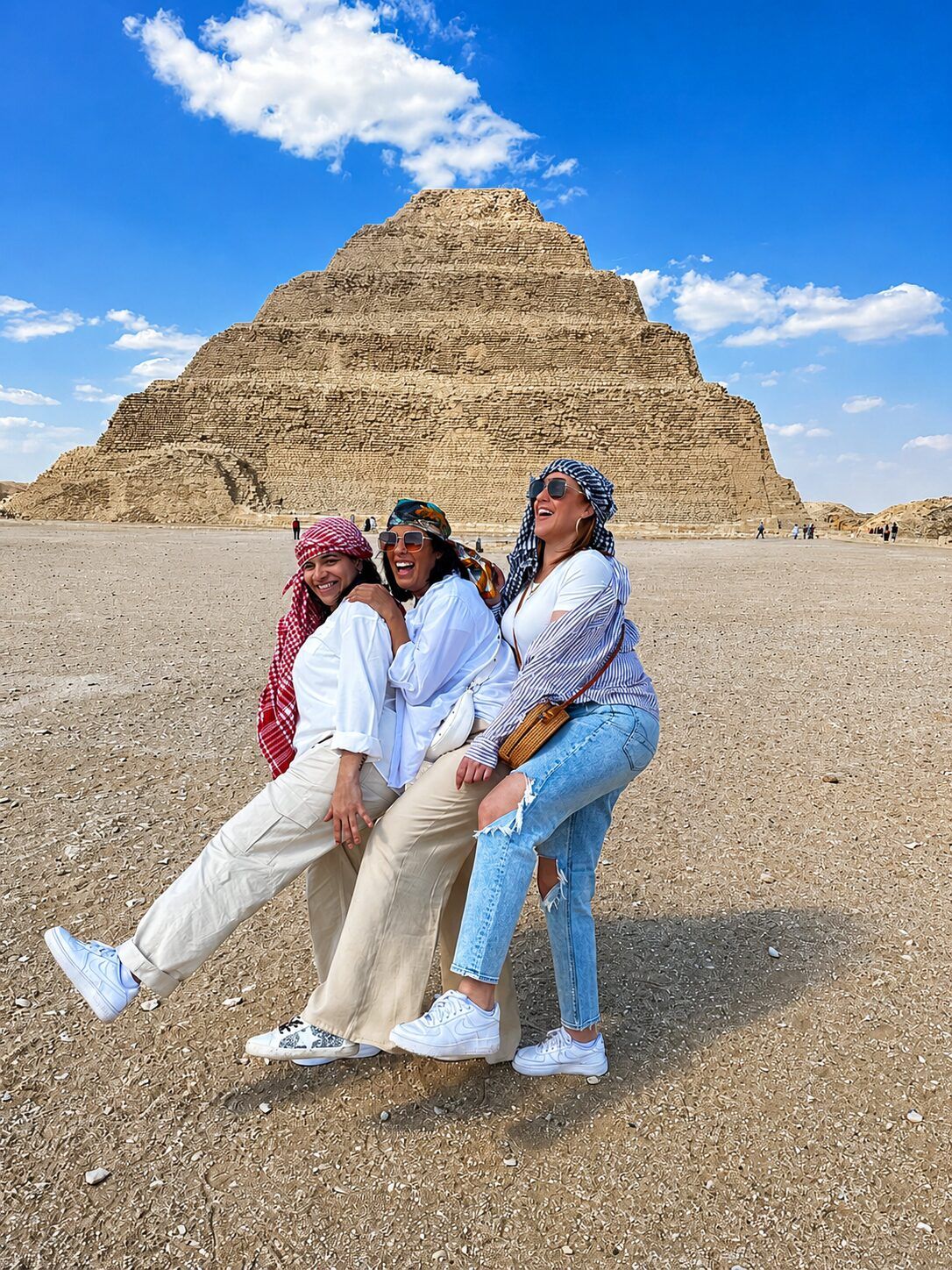
Long before the Great Pyramid of Giza dominated the Egyptian skyline, another revolutionary monument forever changed the course of architecture and engineering—the Step Pyramid of Djoser.
Located in the vast Saqqara Necropolis, about 30 kilometres (19 miles) south of central Cairo, this extraordinary monument is recognized as the world’s oldest large-scale stone building. Constructed over 4,600 years ago during Egypt’s Third Dynasty, it represents the beginning of pyramid construction and marks one of humanity’s greatest architectural breakthroughs.
The Step Pyramid was designed by the legendary architect Imhotep, whose innovative vision transformed a simple rectangular mastaba into a six-tiered pyramid. His revolutionary design became the foundation for all later pyramids, including the famous pyramids at Dahshur and Giza.
Today, visitors from around the world travel to Saqqara to admire the birthplace of pyramid architecture and discover where Egypt’s most ambitious building tradition began.
Table 1: Step Pyramid of Djoser at a Glance
| Feature | Details |
|---|---|
| Official Name | Step Pyramid of Djoser |
| Builder | Pharaoh Djoser |
| Architect | Imhotep |
| Dynasty | Third Dynasty |
| Date | Around 2670 BCE |
| Height | Approximately 62 meters (203 feet) |
| Location | Saqqara Necropolis |
| Material | Limestone |
| UNESCO Site | Memphis and its Necropolis |
What Is the Step Pyramid of Djoser?
The Step Pyramid of Djoser is the oldest surviving pyramid in Egypt and the first monumental structure built entirely from cut limestone.
Unlike the smooth-sided pyramids constructed later at Giza, Djoser’s monument consists of six stacked mastabas, creating its distinctive stepped appearance.
This design represented a dramatic leap forward in architecture. Before Djoser, Egyptian kings were buried beneath flat-roofed mastabas made primarily from mudbrick. Imhotep’s decision to build upward in stone created an entirely new architectural form.
The result was more than a royal tomb—it became a symbol of divine kingship and the prototype for every pyramid that followed.
Table 2: Mastaba vs. Step Pyramid
| Feature | Mastaba | Step Pyramid |
|---|---|---|
| Shape | Flat rectangular tomb | Six-tiered pyramid |
| Main Material | Mudbrick | Limestone |
| Height | Low | Over 60 meters |
| Royal Symbolism | Limited | Monumental |
| Historical Importance | Early royal tomb | Beginning of pyramid construction |
Who Was Pharaoh Djoser?
Pharaoh Djoser ruled during Egypt’s Third Dynasty, a period marked by political stability, economic prosperity, and remarkable architectural innovation.
Although much about his personal life remains unknown, Djoser’s reign is remembered for one extraordinary achievement—the construction of the Step Pyramid Complex.
His decision to commission an unprecedented stone monument demonstrated both his wealth and his ambition to create an eternal resting place unlike any seen before.
The success of this project established the foundation for the great pyramid-building era that would follow.
Table 3: Pharaoh Djoser
| Fact | Information |
|---|---|
| Royal Name | Netjerikhet Djoser |
| Dynasty | Third Dynasty |
| Reign | Approximately 2667–2648 BCE |
| Capital | Memphis |
| Architect | Imhotep |
| Burial Site | Step Pyramid, Saqqara |
Imhotep: The Genius Behind the Pyramid
Few individuals in Ancient Egypt achieved the lasting fame of Imhotep.
Serving as Djoser’s chief architect, high priest, physician, and royal advisor, Imhotep designed what many historians consider the world’s first monumental stone building.
His innovations included:
- Using cut limestone instead of mudbrick.
- Stacking mastabas into a stepped design.
- Creating an enormous ceremonial complex.
- Developing sophisticated stone construction techniques.
- Designing monumental courtyards, temples, and entrance colonnades.
Centuries later, Imhotep was honored as the patron of wisdom, architecture, and medicine. In the Greco-Roman period, he was even worshipped as a god.
Table 4: Imhotep at a Glance
| Feature | Details |
|---|---|
| Occupation | Architect, Priest, Physician |
| Served | Pharaoh Djoser |
| Greatest Achievement | Step Pyramid of Saqqara |
| Historical Legacy | Father of monumental stone architecture |
| Later Reputation | Deified as a god of wisdom and healing |
Why Was the Step Pyramid Built?
The Step Pyramid was constructed as Djoser’s eternal resting place and as a symbol of his divine authority.
Ancient Egyptians believed that the pharaoh became a god after death and required an elaborate tomb to ensure his successful journey into the afterlife.
The pyramid formed the centerpiece of an enormous funerary complex that included:
- Temples
- Courtyards
- Shrines
- Ceremonial gateways
- Underground galleries
- Royal burial chambers
This complex was designed not only for burial but also for religious festivals that celebrated the king’s eternal reign.
Table 5: Purpose of the Pyramid
| Purpose | Explanation |
|---|---|
| Royal Tomb | Burial place of Pharaoh Djoser |
| Religious Center | Sacred ceremonies and rituals |
| Symbol of Kingship | Demonstrated royal authority |
| Afterlife | Ensured eternal existence |
| Architectural Innovation | First monumental pyramid |
From Mastaba to Pyramid
The Step Pyramid did not begin as a pyramid.
Archaeological evidence suggests that construction started as a large square mastaba. During successive building phases, additional layers were added until the monument evolved into a six-step pyramid.
This gradual transformation reveals how Ancient Egyptian architects experimented with new ideas and refined their techniques.
Without these innovations, later masterpieces such as the Bent Pyramid, Red Pyramid, and Great Pyramid of Giza might never have been possible.
Table 6: Construction Stages
| Stage | Description |
|---|---|
| Stage 1 | Large square mastaba |
| Stage 2 | Enlargement of the mastaba |
| Stage 3 | Four-step pyramid |
| Stage 4 | Six-step pyramid completed |
The Third Dynasty: A New Era
The Third Dynasty marked the beginning of Egypt’s Old Kingdom, often called the “Age of the Pyramids.”
This period witnessed remarkable advances in:
- Government
- Engineering
- Stone carving
- Religion
- Art
- Architecture
The Step Pyramid became the defining monument of this new era and inspired generations of royal builders.
Table 7: Third Dynasty Highlights
| Achievement | Importance |
|---|---|
| Step Pyramid | First pyramid in history |
| Stone Architecture | Large-scale limestone construction |
| Central Government | Strong royal administration |
| Engineering | New building techniques |
| Religious Development | Expansion of royal funerary beliefs |
UNESCO World Heritage Site
Today, the Step Pyramid stands within the Saqqara Necropolis, part of the UNESCO World Heritage Site known as “Memphis and its Necropolis – the Pyramid Fields from Giza to Dahshur.”
This designation recognizes the site’s exceptional historical and cultural significance.
Visitors exploring Saqqara can appreciate not only Djoser’s pyramid but also centuries of Egyptian history preserved across the surrounding necropolis.
Table 8: UNESCO Facts
| Feature | Information |
|---|---|
| Heritage Site | Memphis and its Necropolis |
| UNESCO Listing | 1979 |
| Country | Egypt |
| Includes | Saqqara, Dahshur, Giza, Memphis |
| Category | Cultural Heritage |
Amazing Facts About the Step Pyramid
The Step Pyramid continues to fascinate historians and travelers alike.
Some remarkable facts include:
- It is the first pyramid ever built.
- It is the oldest monumental stone building in the world.
- It originally stood covered in polished white limestone.
- Its underground network extends for several kilometers.
- The surrounding funerary complex covers approximately 15 hectares (37 acres).
- It inspired every royal pyramid built during the Old Kingdom.
Table 9: Fast Facts
| Fact | Information |
|---|---|
| Age | Over 4,600 years |
| Height | 62 meters |
| Builder | Pharaoh Djoser |
| Architect | Imhotep |
| Material | Limestone |
| Historical Importance | World’s first pyramid |
Why the Step Pyramid Changed History
The Step Pyramid of Djoser represents one of humanity’s greatest milestones.
It introduced monumental stone architecture, transformed royal burial traditions, and demonstrated the remarkable creativity of Ancient Egyptian engineers.
Without Djoser’s vision and Imhotep’s genius, the famous pyramids of Giza might never have existed.
Today, the Step Pyramid remains a symbol of innovation, ambition, and the birth of one of history’s greatest architectural traditions.
Architecture, Underground Labyrinth & Ancient Engineering
Focus Keyword: Step Pyramid of Djoser
Secondary Keywords: Step Pyramid Architecture, Djoser Pyramid, Imhotep, Saqqara Pyramid, Ancient Egyptian Engineering, Saqqara Necropolis
Imhotep’s Revolutionary Masterpiece
The Step Pyramid of Djoser is far more than Egypt’s oldest pyramid—it represents one of the greatest engineering breakthroughs in human history.
Before its construction, Egyptian royal tombs were simple mastabas built mainly from mudbrick. Under the direction of Imhotep, these traditional designs evolved into a massive six-tiered stone pyramid that forever changed architecture.
Every part of the complex demonstrates remarkable planning, mathematical precision, and advanced engineering that was centuries ahead of its time.
Table 1: Architectural Overview
| Feature | Details |
|---|---|
| Height | Approximately 62 meters (203 ft) |
| Base Dimensions | About 121 × 109 meters |
| Number of Steps | Six |
| Main Material | Limestone |
| Architect | Imhotep |
| Construction Period | Third Dynasty |
The Six-Step Pyramid Design
Unlike the smooth-sided pyramids at Giza, Djoser’s pyramid consists of six stacked levels, each smaller than the one beneath it.
The stepped design symbolizes a giant staircase reaching toward the heavens.
Ancient Egyptians believed the pharaoh ascended to join the gods after death, making the pyramid a powerful symbol of resurrection and eternal life.
This innovative design later inspired the smooth-sided pyramids built by Pharaoh Sneferu and his successors.
Table 2: Evolution of Pyramid Design
| Monument | Shape | Importance |
|---|---|---|
| Mastaba | Flat | Early royal tomb |
| Step Pyramid | Six levels | First pyramid |
| Bent Pyramid | Transitional | Experiment toward smooth sides |
| Red Pyramid | Smooth-sided | First true pyramid |
| Great Pyramid | Perfect pyramid | Engineering masterpiece |
Built Entirely from Limestone
One of the greatest innovations introduced by Imhotep was the use of cut limestone blocks.
Instead of relying on sun-dried mudbrick, thousands of carefully shaped limestone blocks were quarried, transported, and assembled with remarkable precision.
This achievement marked the beginning of monumental stone architecture.
The success of this project influenced Egyptian builders for more than a thousand years.
Table 3: Construction Materials
| Material | Purpose |
|---|---|
| Limestone | Pyramid structure |
| Fine Limestone | Outer casing |
| Granite | Burial chamber elements |
| Gypsum Mortar | Filling small gaps |
| Rubble Fill | Internal support |
The Underground Labyrinth
Hidden beneath the Step Pyramid lies one of the largest underground complexes ever constructed in Ancient Egypt.
The subterranean network extends for more than 5.5 kilometers (3.4 miles) and includes:
- Corridors
- Storage chambers
- Burial galleries
- Shafts
- Side passages
- Royal apartments
The complexity of this underground system demonstrates the extraordinary ambition of Djoser’s architects.
Table 4: Underground Complex
| Feature | Details |
|---|---|
| Estimated Length | Over 5.5 km |
| Main Shaft Depth | About 28 meters |
| Storage Chambers | Hundreds |
| Burial Galleries | Multiple |
| Construction Material | Limestone |
The Burial Chamber
At the heart of the underground complex lies the king’s burial chamber.
Located at the bottom of a deep vertical shaft, the chamber was originally sealed with enormous granite blocks to protect the royal burial.
Although the tomb was robbed in antiquity, archaeologists have discovered fragments of stone vessels, decorative elements, and evidence of elaborate funerary preparations.
The burial chamber reflects the Egyptians’ determination to protect their king for eternity.
Table 5: Burial Chamber Facts
| Feature | Description |
|---|---|
| Location | Beneath the center of the pyramid |
| Access | Vertical shaft |
| Protection | Granite blocking stones |
| Purpose | Royal burial |
The Entrance Colonnade
Visitors entering the Step Pyramid Complex first pass through the impressive Entrance Colonnade.
This long corridor features rows of limestone columns carved to resemble bundles of reeds, a design inspired by earlier wooden architecture.
The colonnade creates a dramatic ceremonial entrance leading into the sacred complex.
It also demonstrates how Egyptian architects transformed traditional building materials into permanent stone monuments.
Table 6: Entrance Colonnade
| Feature | Details |
|---|---|
| Number of Columns | 40 fluted columns |
| Material | Limestone |
| Style | Reed-inspired architecture |
| Function | Ceremonial entrance |
The Heb-Sed Courtyard
One of the most remarkable parts of Djoser’s complex is the Heb-Sed Courtyard.
The Heb-Sed Festival celebrated the renewal of the king’s strength after many years of rule.
Although Djoser may never have performed the festival during his lifetime, the courtyard ensured he could continue celebrating it forever in the afterlife.
This large open space contains symbolic structures representing Egypt’s religious and political unity.
Table 7: Heb-Sed Festival
| Feature | Purpose |
|---|---|
| Courtyard | Royal ceremonies |
| Shrines | Symbolic worship |
| Festival Route | Renewal of kingship |
| Religious Meaning | Eternal rule |
The South Tomb
Located near the southern side of the complex, the South Tomb remains one of Saqqara’s greatest mysteries.
Its exact purpose is still debated.
Possible explanations include:
- Symbolic burial chamber.
- Storage for royal regalia.
- Religious shrine.
- Representation of Upper Egypt.
The tomb contains beautiful blue faience decorations similar to those found beneath the pyramid itself.
Table 8: South Tomb
| Feature | Details |
|---|---|
| Location | South of the pyramid |
| Decoration | Blue faience tiles |
| Purpose | Still debated |
| Historical Importance | Part of Djoser’s funerary complex |
The Temple Complex
The Step Pyramid is only one part of a much larger ceremonial complex covering approximately 15 hectares (37 acres).
It originally included:
- Temples
- Courtyards
- Chapels
- Storage buildings
- Ceremonial gateways
- Boundary walls
Many of these structures were built as symbolic versions rather than fully functional buildings, emphasizing their religious purpose.
Table 9: Major Structures in the Complex
| Structure | Function |
|---|---|
| Step Pyramid | Royal tomb |
| Entrance Colonnade | Ceremonial access |
| Heb-Sed Courtyard | Royal festival |
| South Tomb | Symbolic burial monument |
| Chapels | Religious ceremonies |
| Boundary Wall | Sacred enclosure |
Ancient Engineering Innovations
Imhotep introduced numerous engineering techniques that later became standard in pyramid construction.
His innovations included:
- Large-scale stone construction.
- Carefully planned foundations.
- Symmetrical design.
- Underground engineering.
- Monumental ceremonial architecture.
- Integration of religious symbolism into structural design.
Many historians consider Imhotep the first named architect in recorded history.
Table 10: Engineering Achievements
| Innovation | Importance |
|---|---|
| Cut Limestone Construction | First large-scale stone building |
| Six-Step Design | Beginning of pyramid architecture |
| Underground Labyrinth | Advanced planning and engineering |
| Monumental Complex | Model for later pyramid complexes |
| Stone Columns | Permanent replacement for wooden architecture |
Comparison with the Great Pyramid
Although smaller than the Great Pyramid of Giza, Djoser’s Step Pyramid laid the foundation for all later pyramids.
Without Imhotep’s experiments at Saqqara, the engineering techniques used by Sneferu, Khufu, Khafre, and Menkaure might never have been developed.
Table 11: Step Pyramid vs. Great Pyramid
| Feature | Step Pyramid of Djoser | Great Pyramid of Khufu |
|---|---|---|
| Dynasty | Third Dynasty | Fourth Dynasty |
| Architect | Imhotep | Traditionally attributed to Hemiunu |
| Height | 62 m | 146.6 m (original) |
| Shape | Six-step pyramid | Smooth-sided pyramid |
| Material | Limestone | Limestone with granite elements |
| Historical Importance | World’s first pyramid | Largest pyramid ever built |
Why the Architecture Still Amazes Experts
More than 4,600 years after its construction, the Step Pyramid continues to impress architects, engineers, and archaeologists.
Its precise stonework, innovative design, and vast ceremonial complex represent the birth of monumental architecture in Ancient Egypt.
Standing before the pyramid today, it’s easy to understand why this extraordinary monument changed the history of engineering forever and paved the way for the magnificent pyramids that followed.
Archaeology, Hidden Chambers, Religious Symbolism & Imhotep’s Legacy
Focus Keyword: Step Pyramid of Djoser
Secondary Keywords: Step Pyramid of Djoser, Imhotep, Saqqara Necropolis, Blue Faience Tiles, Serdab Chamber, Ancient Egyptian Architecture
A Monument That Changed Archaeology
The Step Pyramid of Djoser is more than the world’s first pyramid—it is one of the most influential archaeological sites ever discovered. Every excavation at Saqqara has revealed new insights into the origins of pyramid construction, ancient engineering, and the religious beliefs that shaped Egypt’s earliest monumental architecture.
For over 150 years, archaeologists have explored the pyramid complex, uncovering underground passages, ceremonial courtyards, beautifully crafted stone vessels, and remarkable decorative features that continue to reshape our understanding of the Old Kingdom.
Today, the Step Pyramid remains one of the most studied monuments in Ancient Egypt.
Table 1: Archaeological Importance
| Feature | Significance |
|---|---|
| World’s First Pyramid | Beginning of pyramid architecture |
| Oldest Monumental Stone Building | First large-scale limestone construction |
| UNESCO Site | Part of the Memphis Necropolis |
| Architect | Imhotep |
| Archaeological Value | One of Egypt’s most important sites |
Early Excavations
Interest in Saqqara grew rapidly during the 19th century as European explorers began documenting Egypt’s ancient monuments.
Large-scale archaeological work revealed:
- Underground tunnels
- Burial chambers
- Stone vessels
- Ceremonial temples
- Limestone shrines
- Decorative reliefs
These discoveries demonstrated that the Step Pyramid Complex was far larger and more sophisticated than previously believed.
Excavations continue today, with new discoveries regularly emerging from the surrounding necropolis.
Table 2: Excavation Timeline
| Period | Discovery |
|---|---|
| 19th Century | First detailed surveys |
| Early 1900s | Major excavations of the complex |
| Mid-1900s | Restoration and documentation |
| 21st Century | Advanced conservation and digital mapping |
The Blue Faience Tiles
Among the most beautiful discoveries inside the Step Pyramid are the famous blue faience tiles.
These small glazed ceramic tiles once decorated underground chambers designed to imitate the walls of Djoser’s royal palace.
Their brilliant blue color symbolized:
- Water
- Renewal
- Heaven
- Eternal life
Even today, these tiles are considered masterpieces of Ancient Egyptian craftsmanship.
Table 3: Blue Faience Tiles
| Feature | Details |
|---|---|
| Material | Glazed faience |
| Color | Turquoise blue |
| Location | Underground chambers |
| Symbolism | Eternity and rebirth |
| Historical Importance | Early decorative masterpiece |
The Serdab Chamber
One of the most mysterious parts of the Step Pyramid Complex is the Serdab Chamber.
Hidden within a sealed structure, it originally housed a life-sized limestone statue of Pharaoh Djoser.
Two small eye holes in the wall allowed the king’s spirit, or ka, to symbolically observe ceremonies taking place outside.
This unique feature reflects the ancient Egyptian belief that the deceased ruler continued to participate in religious rituals after death.
Today, the original statue is preserved in the Egyptian Museum in Cairo, while a replica remains at Saqqara.
Table 4: The Serdab Chamber
| Feature | Description |
|---|---|
| Purpose | House the king’s statue |
| Material | Limestone |
| Eye Holes | Allowed the king’s spirit to observe rituals |
| Original Statue | Egyptian Museum, Cairo |
| Replica | Step Pyramid Complex |
Hidden Underground Chambers
Beneath the Step Pyramid lies a vast underground world.
Archaeologists have identified hundreds of chambers connected by an intricate network of corridors extending more than 5.5 kilometers (3.4 miles).
These underground spaces include:
- Storage rooms
- Burial galleries
- Symbolic apartments
- Ritual chambers
- Family burial areas
Many remain inaccessible to visitors due to conservation efforts.
Table 5: Underground Complex
| Feature | Information |
|---|---|
| Total Length | More than 5.5 km |
| Main Shaft Depth | About 28 meters |
| Number of Chambers | Hundreds |
| Construction Material | Limestone |
| Visitor Access | Limited |
Religious Symbolism
Every element of the Step Pyramid was designed with religious meaning.
Ancient Egyptians believed the king became divine after death.
The pyramid symbolized a staircase connecting Earth and Heaven.
Other important symbols included:
- Six steps representing ascension.
- East–west orientation reflecting the sun’s journey.
- Blue faience representing eternal waters.
- Underground chambers symbolizing rebirth.
- The Heb-Sed Court representing eternal kingship.
Together, these elements transformed the complex into a sacred landscape dedicated to the king’s everlasting life.
Table 6: Religious Symbols
| Symbol | Meaning |
|---|---|
| Pyramid Steps | Ascension to the heavens |
| Blue Faience | Eternal life |
| East | Birth and sunrise |
| West | Death and the afterlife |
| Heb-Sed Festival | Renewal of kingship |
Imhotep’s Lasting Legacy
Although Imhotep lived more than 4,600 years ago, his influence continues today.
He is widely regarded as:
- The first architect known by name.
- A pioneer of monumental stone construction.
- One of history’s greatest engineers.
- A respected physician.
- A high priest and royal advisor.
Centuries after his death, Imhotep was revered as a god of wisdom and healing, an extraordinary honor for someone who began life as a royal official.
His Step Pyramid inspired every major pyramid built afterward, including those at Dahshur and Giza.
Table 7: Imhotep’s Achievements
| Achievement | Importance |
|---|---|
| Step Pyramid | World’s first pyramid |
| Stone Architecture | Revolutionary construction methods |
| Engineering | Foundation of pyramid building |
| Medicine | Later worshipped as a healing deity |
| Legacy | Influenced generations of architects |
Restoration Projects
The Step Pyramid has undergone several major conservation campaigns.
Modern restoration has focused on:
- Stabilizing internal corridors.
- Reinforcing underground chambers.
- Repairing damaged limestone blocks.
- Improving visitor safety.
- Preserving decorative features.
After years of careful restoration, much of the monument has been reopened, allowing visitors to appreciate this architectural masterpiece while helping protect it for future generations.
Table 8: Conservation Projects
| Project | Purpose |
|---|---|
| Structural Reinforcement | Improve stability |
| Stone Restoration | Preserve limestone blocks |
| Tunnel Protection | Visitor safety |
| Drainage Improvements | Reduce water damage |
| Digital Documentation | Long-term preservation |
Hidden Mysteries
Despite decades of research, the Step Pyramid still holds many unanswered questions.
Researchers continue investigating:
- The complete function of every underground chamber.
- The exact sequence of construction phases.
- The purpose of the South Tomb.
- Whether additional hidden passages remain undiscovered.
- The symbolic meaning of several ceremonial buildings.
Modern technologies such as 3D scanning and ground-penetrating radar may reveal new discoveries in the future.
Table 9: Unsolved Mysteries
| Mystery | Current Understanding |
|---|---|
| Hidden Chambers | Some areas remain unexplored |
| South Tomb | Purpose still debated |
| Construction Phases | Multiple stages identified |
| Underground Network | Not fully understood |
| Ceremonial Buildings | Some symbolic functions remain uncertain |
Why Archaeologists Love Saqqara
For archaeologists, the Step Pyramid Complex is an open-air laboratory.
It provides invaluable evidence about:
- Early pyramid construction.
- Religious evolution.
- Ancient engineering.
- Royal ceremonies.
- Daily life during the Old Kingdom.
Few archaeological sites have contributed more to our understanding of Ancient Egypt.
Table 10: Why the Step Pyramid Matters
| Category | Importance |
|---|---|
| Architecture | First pyramid ever built |
| Engineering | Beginning of monumental stone construction |
| Archaeology | One of Egypt’s richest excavation sites |
| Religion | Early royal funerary beliefs |
| Tourism | Highlight of the Saqqara Necropolis |
| World Heritage | UNESCO-protected monument |
Why the Step Pyramid Still Inspires the World
More than 46 centuries after its completion, the Step Pyramid of Djoser continues to inspire visitors, historians, engineers, and architects.
It stands as a testament to human creativity and innovation, marking the moment when ancient builders transformed simple tombs into monumental structures that would define Egypt’s identity for millennia.
Without Imhotep’s bold vision, the legendary pyramids of Giza—and perhaps the entire history of monumental architecture—might have taken a very different path.
Visitor Guide, Travel Tips, FAQs & Everything You Need to Know
Planning Your Visit to the Step Pyramid of Djoser
A visit to the Step Pyramid of Djoser is a journey to the birthplace of pyramid construction. Located in the heart of the Saqqara Necropolis, this UNESCO World Heritage Site offers visitors the opportunity to explore the world’s first monumental stone building and one of Ancient Egypt’s greatest architectural achievements.
Unlike the bustling Giza Plateau, Saqqara offers a quieter atmosphere, allowing travelers to appreciate the monuments at a more relaxed pace. Most visitors combine the Step Pyramid with nearby attractions such as the Pyramid of Unas, the Serapeum of Saqqara, Memphis, and Dahshur for a full day of exploration.
Table 1: Visitor Information
| Feature | Details |
|---|---|
| Location | Saqqara Necropolis, Giza Governorate |
| UNESCO Status | Yes |
| Average Visit | 1.5–2 hours |
| Family Friendly | ⭐⭐⭐⭐⭐ |
| Guided Tours | Highly Recommended |
| Photography | Allowed in most outdoor areas (subject to current regulations) |
Best Time to Visit
The Step Pyramid can be visited year-round, but the cooler months provide the most comfortable conditions.
Best months:
- October
- November
- December
- January
- February
- March
- April
For the best photography and pleasant temperatures, plan your visit early in the morning.
Table 2: Best Seasons to Visit
| Season | Weather | Recommendation |
|---|---|---|
| October–November | Pleasant | ⭐⭐⭐⭐⭐ |
| December–February | Cool | ⭐⭐⭐⭐⭐ |
| March–April | Warm | ⭐⭐⭐⭐☆ |
| May–September | Hot | ⭐⭐⭐☆☆ |
Opening Hours
The Step Pyramid is located within the Saqqara archaeological site, and visitor access generally follows the site’s operating hours.
Opening times may vary during public holidays or for conservation work, so it’s always wise to confirm the latest schedule before your visit.
Arriving early helps you avoid the strongest midday heat and larger tour groups.
Table 3: Suggested Visiting Schedule
| Time | Experience |
|---|---|
| Early Morning | Cool weather and fewer crowds |
| Mid-Morning | Excellent sightseeing |
| Afternoon | Warmer temperatures |
| Late Afternoon | Softer light for photography |
How to Get There
Saqqara is approximately 30 km (19 miles) south of downtown Cairo.
You can reach the Step Pyramid by:
- Private tour
- Taxi
- Ride-hailing apps
- Private driver
Public transportation to Saqqara is limited, making a guided tour or private vehicle the most convenient option.
Table 4: Transportation Options
| Option | Comfort | Best For |
|---|---|---|
| Private Tour | ⭐⭐⭐⭐⭐ | Families & first-time visitors |
| Private Driver | ⭐⭐⭐⭐⭐ | Flexible itineraries |
| Taxi | ⭐⭐⭐⭐☆ | Independent travelers |
| Ride-Hailing App | ⭐⭐⭐⭐☆ | Budget-conscious visitors |
Nearby Attractions
One of the advantages of visiting Saqqara is the number of remarkable archaeological sites located nearby.
Many travelers include:
- Serapeum of Saqqara
- Pyramid of Unas
- Tomb of Ti
- Mastaba of Mereruka
- Imhotep Museum
- Memphis Open-Air Museum
- Bent Pyramid
- Red Pyramid
Together, these sites tell the complete story of pyramid evolution in Ancient Egypt.
Table 5: Nearby Attractions
| Attraction | Approximate Distance | Recommended Visit |
|---|---|---|
| Imhotep Museum | Within the complex | 30–45 min |
| Pyramid of Unas | Short walk | 30 min |
| Tomb of Ti | Nearby | 30–45 min |
| Serapeum of Saqqara | Nearby | 45–60 min |
| Memphis | About 6 km | 45–60 min |
| Bent Pyramid | About 10 km | 45 min |
| Red Pyramid | About 10 km | 45 min |
Photography Tips
The Step Pyramid offers incredible photography opportunities throughout the day.
For the best results:
- Visit shortly after opening.
- Use a wide-angle lens to capture the full pyramid.
- Photograph the Entrance Colonnade and Heb-Sed Courtyard.
- Include the desert landscape for dramatic compositions.
- Visit during the golden hour if your schedule allows.
Table 6: Best Photography Locations
| Location | Best Time |
|---|---|
| Main Pyramid | Morning |
| Entrance Colonnade | Morning |
| Heb-Sed Courtyard | Late Morning |
| Southern Side | Afternoon |
| Desert Panorama | Sunset |
Frequently Asked Questions
Is the Step Pyramid older than the Great Pyramid?
Yes. The Step Pyramid was built approximately 100 years before the Great Pyramid of Giza and is considered the first pyramid ever constructed.
Who designed the Step Pyramid?
The monument was designed by Imhotep, the brilliant architect, physician, and royal advisor to Pharaoh Djoser.
Can visitors enter the pyramid?
Access to the interior depends on conservation work and official regulations. Check the current visitor policy before your trip.
How long should I spend at Saqqara?
Most visitors spend 2–4 hours exploring the Step Pyramid and nearby monuments. History enthusiasts often stay longer.
Is Saqqara worth visiting?
Absolutely. Saqqara is one of Egypt’s most important archaeological sites and offers a deeper understanding of pyramid evolution beyond Giza.
Table 7: Quick Answers
| Question | Answer |
|---|---|
| Worth Visiting? | ⭐ Absolutely |
| Family Friendly | Yes |
| Guided Tours | Recommended |
| Average Visit | 2–4 hours |
| Photography | Excellent |
Visitor Checklist
Before heading to Saqqara, bring:
- Comfortable walking shoes
- Sun hat
- Sunglasses
- Sunscreen
- Camera or smartphone
- Portable charger
- Reusable water bottle
- Light backpack
Table 8: Packing Checklist
| Item | Bring? |
|---|---|
| Comfortable Shoes | ✅ |
| Camera | ✅ |
| Hat | ✅ |
| Sunglasses | ✅ |
| Sunscreen | ✅ |
| Water Bottle | ✅ |
| Portable Charger | ✅ |
| Small Backpack | ✅ |
Step Pyramid vs. Great Pyramid
Table 9: Comparison
| Feature | Step Pyramid of Djoser | Great Pyramid of Khufu |
|---|---|---|
| Dynasty | Third Dynasty | Fourth Dynasty |
| Height | 62 m | 146.6 m (original) |
| Architect | Imhotep | Hemiunu (traditionally credited) |
| Shape | Six-step pyramid | Smooth-sided pyramid |
| Historical Importance | First pyramid | Largest pyramid ever built |
| Location | Saqqara | Giza Plateau |
Fast Facts
Table 10: Step Pyramid Overview
| Feature | Information |
|---|---|
| Built | Around 2670 BCE |
| Pharaoh | Djoser |
| Architect | Imhotep |
| Material | Limestone |
| Height | 62 meters |
| UNESCO Site | Yes |
| Historical Significance | World’s first pyramid |
Final Thoughts
The Step Pyramid of Djoser marks the beginning of one of history’s greatest architectural traditions. Designed by the visionary Imhotep, it transformed the concept of royal tombs and paved the way for the magnificent pyramids that followed at Dahshur and Giza.
Today, this extraordinary monument continues to inspire visitors with its innovative design, vast ceremonial complex, and rich historical significance. Whether you’re passionate about archaeology, architecture, or Ancient Egyptian history, a visit to the Step Pyramid offers an unforgettable glimpse into the origins of pyramid building and the remarkable achievements of Egypt’s Old Kingdom civilization.
Explore the Step Pyramid of Djoser with Let’s Explore Egypt
Travel back more than 4,600 years and discover the monument that changed the course of history. The Step Pyramid of Djoser, designed by the legendary architect Imhotep, is the world’s first pyramid and the birthplace of monumental stone architecture.
At Let’s Explore Egypt, we offer 100% private tours to Saqqara, Memphis, and Dahshur, led by licensed Egyptologist guides who bring Ancient Egypt’s fascinating history to life. Explore beyond the famous Giza Pyramids and experience the remarkable sites where pyramid building began.
Whether you’re a history enthusiast, photographer, or first-time visitor to Egypt, we’ll create a personalized journey tailored to your interests.
Why Book with Let’s Explore Egypt?
- 🏛️ Licensed Egyptian Tour Operator
- 👨🏫 Professional English-Speaking Egyptologist Guides
- 🚗 Private Air-Conditioned Transportation
- 🔺 Visit the Step Pyramid of Djoser & Saqqara Necropolis
- 🏺 Explore Memphis, Dahshur, and Ancient Egypt’s oldest monuments
- 📸 Plenty of Time for Photography
- 🌅 Flexible Departure Times
- 👨👩👧 Fully Customized Private Tours
- 💬 24/7 WhatsApp Support
- ⭐ Thousands of Happy Travelers Worldwide
- 💳 Transparent Pricing – No Hidden Fees
- ❌ No Forced Shopping Stops
Complete Your Saqqara Adventure
Combine your visit to the Step Pyramid of Djoser with other incredible nearby attractions:
- 🏛️ Saqqara Necropolis
- 👨🎓 Imhotep Museum
- 🐂 Serapeum of Saqqara
- 🔺 Pyramid of Unas
- 🏺 Tomb of Ti
- 🏛️ Memphis Open-Air Museum
- 🔺 Bent Pyramid of Dahshur
- 🔺 Red Pyramid of Dahshur
Our private tours allow you to explore these remarkable sites at your own pace while learning from expert Egyptologists who share the stories behind Egypt’s oldest pyramids and temples.
Book Your Private Saqqara Tour Today
Discover where pyramid building began and walk through one of the most important archaeological sites in the world.
Whether you’re interested in ancient history, architecture, archaeology, or photography, Let’s Explore Egypt will provide an unforgettable experience with personalized service and local expertise.
📞 Contact Us
📱 WhatsApp: +20 120 323 3365
📧 Email: info@lets-explore-egypt.com
Why Travelers Choose Let’s Explore Egypt
✅ 100% Private Tours
✅ Licensed Egyptologist Guides
✅ Flexible & Personalized Itineraries
✅ Comfortable Air-Conditioned Vehicles
✅ Fast & Easy WhatsApp Booking
✅ Family-Friendly Experiences
✅ Excellent Reviews from International Travelers
✅ Safe, Reliable & Hassle-Free Service
Let’s Explore Egypt – Discover the Origins of the Pyramids and Experience Ancient Egypt Like Never Before.
Contact us today for a free personalized itinerary and explore the Step Pyramid of Djoser, Saqqara, Memphis, and Dahshur with Egypt’s trusted local experts.
Recommended Egypt Tours

Why You Can Trust Let's Explore Egypt
This article was written and reviewed by the Let's Explore Egypt Editorial Team, a licensed Egyptian tour operator specializing in private Egypt tours, Nile cruises, and tailor-made travel experiences since 2009.
- 🏛 Licensed Egyptian Tour Operator Since 2009
- ⭐ Trusted by Thousands of Travelers Worldwide
- 👨🏫 Written & Reviewed by Local Egypt Travel Experts
- 🚐 Private Tours & Tailor-Made Travel Experiences
- 📞 24/7 Customer Support