

Fayoum is one of Egypt’s most interesting destinations for travelers who want to experience nature beyond the country’s famous pyramids and ancient temples. Its wetlands, desert landscapes, agricultural fields, and lakes attract resident birds as well as migratory species throughout the year.
Whether you are a wildlife photographer, a birdwatching enthusiast, or simply a traveler looking for a peaceful nature experience, birdwatching in Fayoum offers a different way to explore the Egyptian countryside.
In this guide, you will discover the best places to look for birds, when to visit, what equipment to bring, and how to plan a responsible birdwatching trip from Cairo.
Why Is Fayoum Good for Birdwatching?
Fayoum combines several natural habitats within a relatively accessible area southwest of Cairo. These include lakeshores, shallow wetlands, reed beds, cultivated land, and desert environments.
Each habitat attracts different types of birds. Waterbirds may feed or rest near the lakes, while smaller species can be found around vegetation and farmland. Migratory birds also use the region during their seasonal journeys between Europe, Asia, and Africa.
The main reasons to consider Fayoum for birdwatching include:
- Wetland habitats: Lakes and shallow-water areas provide feeding and resting places for waterbirds.
- Seasonal migration: Bird diversity can increase during autumn, winter, and spring.
- Different landscapes: You can explore wetlands, agricultural areas, and desert surroundings in one trip.
- Photography opportunities: Open landscapes and natural light can create excellent conditions for wildlife photography.
- Access from Cairo: Fayoum can be visited on a day trip, although dedicated birdwatchers may prefer a longer stay.
For a broader overview of the region, read our Fayoum Travel Guide.
Best Time for Birdwatching in Fayoum
The best time to visit depends on the birds you hope to see and the habitats you want to explore. Bird movements change throughout the year, so no season guarantees a particular species.
Autumn: September to November
Autumn is an interesting period for birdwatchers because migratory birds move through Egypt on their seasonal journeys. Wetlands around Fayoum may provide important resting and feeding locations.
October and November can be especially appealing to travelers who want to combine comfortable outdoor exploration with opportunities to observe seasonal birdlife.
Early morning visits are often worthwhile because birds may be active around feeding areas before the day becomes hot.
Winter: December to February
Winter is generally one of the strongest seasons to consider for waterbird watching in Fayoum. Some migratory birds spend the colder months in Egypt, making lakes and wetlands particularly interesting for observation.
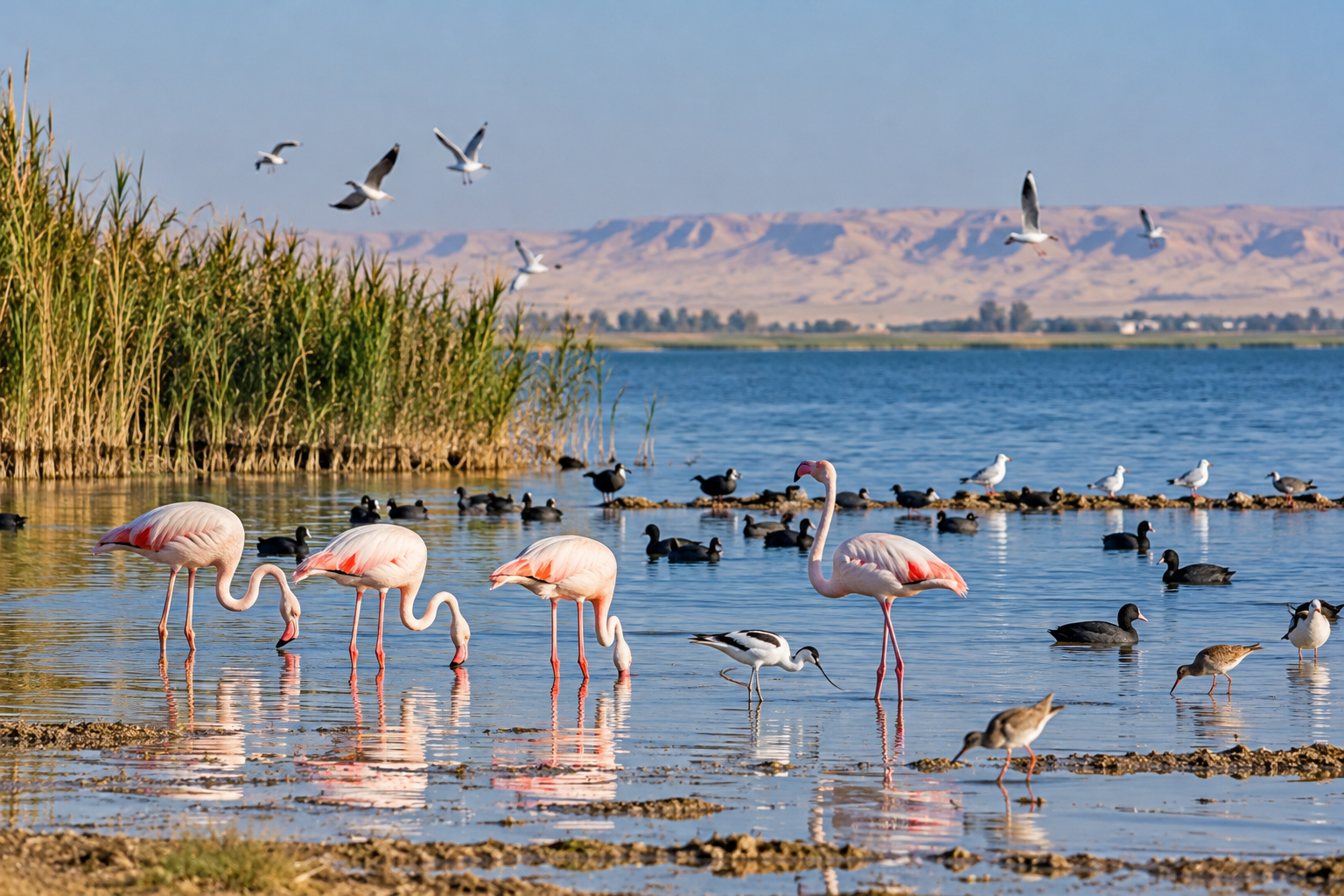
Lake Qarun is an important location to investigate during this period. Depending on the conditions, birdwatchers may encounter ducks, coots, gulls, waders, and other water-associated species.
Bring a light jacket for early morning outings, and remember that winter conditions can still vary considerably from day to day.
Spring: March to April
Spring offers another opportunity to observe seasonal movements. Birds may pass through the region as they travel toward their breeding areas, while resident species continue to use local habitats.
This season can suit visitors who want to combine birdwatching with landscape photography and a broader exploration of Fayoum.
Summer: May to August
Summer can be challenging because of the heat, particularly in exposed areas with little shade. Bird activity and species presence vary according to habitat, water conditions, and breeding cycles.
If you visit during summer, plan outdoor observation for early morning, carry enough drinking water, and avoid disturbing birds that may be nesting.
Planning tip: Autumn, winter, and spring are useful starting points for choosing a birdwatching trip. However, check local conditions before traveling, and do not assume that a particular bird will be present on a specific date.
Best Places for Birdwatching in Fayoum
1. Lake Qarun
Lake Qarun is one of the best-known natural areas in Fayoum for birdwatching. Its shoreline and surrounding wetland habitats attract resident and migratory birds, particularly water-associated species.
Depending on the season and local conditions, you may have opportunities to observe gulls, ducks, coots, egrets, and other birds around suitable feeding and resting areas.
For a productive visit:
- Explore accessible shoreline locations without entering restricted areas.
- Scan the water slowly with binoculars.
- Look for movement among shallow-water habitats and vegetation.
- Take time to observe individual birds before attempting photographs.
- Follow instructions from reserve authorities and local guides.
Bird distribution changes around the lake, so the best observation point can vary. A local guide familiar with current conditions can help you choose suitable areas.
Learn more in our dedicated guide to Lake Qarun, Egypt.
2. Wadi El Rayan
Wadi El Rayan is another worthwhile destination for nature lovers. Its lakes, wetland edges, and surrounding desert landscape create a different setting from the agricultural areas of Fayoum.
Birdwatchers can look for waterbirds near suitable lake habitats and observe other species in the surrounding landscape. The variety of environments makes the area useful for a trip that combines birdwatching with scenery and nature photography.
Keep in mind that the presence and abundance of birds change with the season. Plan your visit around observation rather than expecting a guaranteed checklist of species.
You can also explore our guide to the Wadi El Rayan Waterfalls to understand how this area fits into a wider Fayoum itinerary.
3. Agricultural Fields and Green Areas
Fayoum is not only about lakes and desert scenery. Its agricultural landscapes, trees, irrigation channels, and cultivated fields provide habitats for a variety of smaller birds.
Depending on the location and season, visitors may notice birds feeding, calling, or moving between trees and open ground.
These areas can be particularly interesting for photographers who enjoy observing bird behavior rather than focusing exclusively on large waterbirds.
Because farmland is also working land, remain on permitted routes, respect private property, and avoid blocking farm access or disturbing local residents.
4. Wetland Edges and Reed Beds
Shallow-water areas and vegetation near wetlands can provide food and shelter for different bird species. Look for movement along the water’s edge, among reeds, and on exposed muddy areas where birds may feed.
These habitats often reward patient observation. A quiet stop with binoculars can be more productive than driving quickly from one viewpoint to another.
Do not enter reed beds or sensitive habitats to get closer to a bird. Use optical equipment and remain at a respectful distance.
Which Birds Can You See in Fayoum?
Fayoum supports a variety of resident and migratory birds, but sightings depend on the time of year, habitat, weather, and local water conditions.
Birdwatchers may look for groups such as:
- Flamingos: Sometimes observed in suitable wetland environments.
- Ducks: Several types of waterfowl may visit during the cooler months.
- Coots: Water-associated birds that can be found in suitable lake and wetland habitats.
- Gulls: Different gull species may be present around lakes and other suitable areas.
- Egrets and herons: Wading birds that may feed around shallow water.
- Kingfishers: Possible sightings near suitable water habitats.
- Hoopoes: Distinctive birds that may be encountered in suitable open or vegetated areas.
- Shorebirds and waders: Species that use muddy margins and shallow water for feeding.
This is a guide to groups worth looking for, not a promise that every species will appear during your visit.
If seeing a particular species is your main goal, seek recent local sightings and consult a knowledgeable birdwatching guide before choosing your date and route.
How to Plan a Birdwatching Trip from Cairo
A birdwatching trip requires a slightly different approach from a standard sightseeing tour. Instead of spending the day rushing between attractions, you need time to stop, scan habitats, and wait quietly for birds to appear.
Option 1: A Birdwatching Day Trip
A day trip is suitable for visitors who want an introduction to Fayoum’s natural landscapes without staying overnight.
A possible itinerary could include:
Early morning: Depart Cairo and travel toward Fayoum.
Morning: Begin birdwatching around suitable areas near Lake Qarun, depending on current conditions.
Midday: Take a break and have lunch. During hotter periods, reduce strenuous outdoor activity.
Afternoon: Visit another suitable observation area or explore part of Wadi El Rayan if time, access, and conditions allow.
Evening: Return to Cairo.
This is a suggested structure, not a fixed schedule. The number of locations you can visit depends on traffic, road conditions, the time spent observing birds, and the distance between sites.
For a customized visit, see our Fayoum Day Trip from Cairo. If birdwatching is your main priority, confirm in advance that the itinerary can be adapted to allow sufficient observation time.
Option 2: A Dedicated Birdwatching Trip
Serious birdwatchers and wildlife photographers may benefit from a dedicated trip rather than a general sightseeing excursion.
This approach allows more time to explore suitable habitats, revisit observation points, and adjust the route according to recent sightings.
An overnight stay can also provide more flexibility for early starts and a wider range of locations. If you are considering staying in Fayoum, our Tunis Village guide can help you explore one of the region’s best-known cultural areas.
What Equipment Should You Bring?
You do not need expensive equipment to begin birdwatching. A few practical items can make your experience much more rewarding.
Binoculars
Binoculars are one of the most useful tools for observing birds without approaching them too closely. Choose a pair that is comfortable to hold and easy to focus.
Camera and Telephoto Lens
A camera with a telephoto lens helps you photograph birds from a respectful distance. If you use a phone, binoculars can still improve your viewing experience even when detailed wildlife photographs are not possible.
Bird Identification Guide
A field guide or bird-identification application can help you identify species by shape, color, behavior, and calls. Download any resources you need before leaving areas with reliable internet access.
Clothing and Sun Protection
Wear comfortable neutral-colored clothing, a hat, sunscreen, and suitable walking shoes. Bring an extra layer for cool mornings during autumn and winter.
Drinking Water and Snacks
Some observation areas have limited services. Carry enough water and snacks for your planned route, and take all rubbish away with you.
Notebook or Sightings App
Recording the time, location, habitat, and identifying features of each bird can help you learn more over time. Photos are useful, but written observations can also help distinguish similar species.
Bird Photography Tips for Beginners
Fayoum’s open landscapes offer opportunities for wildlife photography, but successful images often require patience rather than speed.
1. Start early. Morning light can be attractive for photography, and birds may be active around feeding areas.
2. Use a respectful distance. Avoid chasing birds or moving toward them when they show signs of disturbance.
3. Watch before taking pictures. Observe where a bird feeds, rests, or moves. This may help you anticipate a natural behavior without disturbing it.
4. Keep your movements slow. Sudden movements and loud conversations can cause birds to fly away.
5. Focus on behavior. A photograph of a bird feeding or interacting naturally with its surroundings can be more interesting than a simple record shot.
6. Be patient with changing conditions. Wind, glare, haze, and bright sunlight can affect image quality. Adjust your position when possible rather than forcing a difficult photograph.
7. Avoid baiting or playback that disturbs wildlife. Do not lure birds with food or repeatedly play recorded calls to provoke a response.
Responsible Birdwatching in Fayoum
Birdwatching should help visitors appreciate wildlife without placing additional pressure on it.
Follow these principles throughout your visit:
- Keep a safe distance from birds and their nests.
- Never touch eggs, chicks, or nesting material.
- Do not feed wild birds unless an authorized conservation program specifically instructs you to do so.
- Avoid loud music, shouting, and sudden movements.
- Do not enter restricted areas or sensitive nesting sites.
- Follow the instructions of reserve staff and authorized guides.
- Avoid flying drones near wildlife unless you have the required permission and it is confirmed to be appropriate.
- Do not publish precise locations of sensitive nesting sites if doing so could expose birds to disturbance.
- Take rubbish with you and leave natural habitats as you found them.
Protected areas may have access restrictions that change according to conservation needs. Check the rules before visiting, especially if you intend to photograph wildlife or explore less accessible locations.
Is Fayoum Birdwatching Suitable for Families?
Yes. Birdwatching can be a relaxing outdoor activity for families with children who enjoy animals and nature.
For a family-friendly experience, keep the route flexible and include breaks. Children can use binoculars with adult supervision, draw the birds they see, or record simple observations such as color, size, and behavior.
Choose accessible observation points and avoid long walks during hot weather. Younger children may enjoy a shorter visit focused on a few locations rather than a full day of intensive bird identification.
Explain why birds should be observed quietly and from a distance. This helps children understand that wildlife is not there to be handled or chased.
Frequently Asked Questions About Birdwatching in Fayoum
What is the best month for birdwatching in Fayoum?
October through April is a useful period to consider, particularly for seasonal and wintering birds. The best month depends on the species you want to observe and the conditions at the time of your visit.
Where is the best place to watch birds in Fayoum?
Lake Qarun is one of the region’s best-known birdwatching locations. Wadi El Rayan and suitable agricultural and wetland habitats are also worth considering.
Can I see flamingos in Fayoum?
Flamingos may be present in suitable wetland areas, but sightings are not guaranteed. Their presence varies with season and local conditions.
Can I go birdwatching in Fayoum on a day trip from Cairo?
Yes. A day trip can provide several hours for observation, depending on travel time and the itinerary. Visitors who want to focus on identifying many species may benefit from spending longer in the region.
Do I need a professional guide?
A guide is not essential for every casual visit, but a knowledgeable local birdwatching guide can help you find suitable habitats, identify species, understand local access rules, and use your time more effectively.
What should I bring for birdwatching?
Bring binoculars if possible, drinking water, sun protection, comfortable shoes, a camera if desired, and a bird-identification resource. A notebook or sightings application is also useful.
Is birdwatching possible all year?
Yes, resident birds can be observed throughout the year, but species diversity and activity vary. Autumn, winter, and spring are often particularly appealing for visitors interested in migratory birds.
Plan Your Fayoum Nature Experience
Birdwatching reveals a quieter side of Fayoum, far removed from crowded sightseeing routes. From the waterside habitats of Lake Qarun to the varied landscapes around Wadi El Rayan, the region offers opportunities to observe birds while discovering Egypt’s natural environment.
The key is to choose the right season, allow enough time, and remain flexible. Wildlife sightings are never guaranteed, but careful planning and responsible observation can make the experience rewarding.
If you are planning a trip from Cairo, explore our Fayoum Travel Guide and Fayoum Day Trip from Cairo to start organizing your visit.
Recommended Egypt Tours


Why You Can Trust Let's Explore Egypt
This article was written and reviewed by the Let's Explore Egypt Editorial Team, a licensed Egyptian tour operator specializing in private Egypt tours, Nile cruises, and tailor-made travel experiences since 2009.
- 🏛 Licensed Egyptian Tour Operator Since 2009
- ⭐ Trusted by Thousands of Travelers Worldwide
- 👨🏫 Written & Reviewed by Local Egypt Travel Experts
- 🚐 Private Tours & Tailor-Made Travel Experiences
- 📞 24/7 Customer Support