


While millions of visitors travel to Egypt each year to marvel at the Pyramids of Giza, the temples of Luxor, and the beaches of the Red Sea, few realize that just two hours southwest of Cairo lies one of the country’s most extraordinary destinations. Fayoum is a place where fertile farmland meets golden desert, prehistoric fossils lie beneath towering cliffs, sparkling lakes stretch to the horizon, and peaceful villages preserve traditions that have flourished for centuries.
Known as Egypt’s largest oasis, Fayoum offers an entirely different perspective on the country. Rather than bustling city streets and crowded archaeological sites, visitors discover waterfalls, protected nature reserves, UNESCO World Heritage Sites, pottery workshops, wildlife sanctuaries, and some of the most spectacular desert scenery in North Africa.
Whether you’re planning a day trip from Cairo, a weekend escape, or a longer adventure, Fayoum promises experiences that blend history, nature, culture, and outdoor adventure into one unforgettable journey.
Why Visit Fayoum?
Unlike many Egyptian destinations that focus exclusively on ancient monuments, Fayoum is celebrated for its remarkable diversity. In a single day, travellers can admire waterfalls, drive across towering sand dunes, explore ancient temples, walk among 40-million-year-old whale fossils, and finish with a sunset beside a tranquil desert lake.
Fayoum is perfect for:
- Nature lovers
- Adventure travellers
- Families
- Photographers
- Bird watchers
- Archaeology enthusiasts
- Couples seeking peaceful escapes
- Visitors looking beyond Egypt’s classic tourist trail
Its close proximity to Cairo also makes it one of the easiest destinations to visit without domestic flights or overnight train journeys.
Where Is Fayoum?
Fayoum lies approximately 100 kilometres (62 miles) southwest of Cairo and is connected to the capital by modern highways, making it one of Egypt’s most accessible natural destinations.
The governorate surrounds a vast natural depression linked to the Nile through the Bahr Youssef Canal, which has irrigated the region for thousands of years. Thanks to this unique geography, Fayoum became one of Egypt’s richest agricultural regions while remaining surrounded by dramatic desert landscapes.
Distance from Major Cities
| Departure | Distance | Driving Time |
|---|---|---|
| Cairo | 100 km | 1.5–2 hours |
| Giza | 95 km | 1.5 hours |
| Alexandria | 290 km | 4 hours |
| Beni Suef | 110 km | 2 hours |
| Minya | 250 km | 4 hours |
Its convenient location makes Fayoum one of the most popular private day trips from Cairo.
A Brief History of Fayoum
Fayoum has been inhabited for thousands of years and has played a vital role throughout Egyptian history.
During the Middle Kingdom (c. 2055–1650 BC), Pharaoh Amenemhat III transformed the region into one of Egypt’s most productive agricultural centres through ambitious irrigation projects. He also built the famous Hawara Pyramid and the legendary Labyrinth, described by ancient Greek historians as one of the greatest architectural achievements of the ancient world.
The region flourished during the Greco-Roman period, when prosperous towns such as Karanis and Medinet Madi became important centres of agriculture and trade. Fayoum is also renowned for the famous Fayoum Portraits—beautifully painted mummy portraits that are considered masterpieces of Roman-Egyptian art.
Today, the governorate combines this extraordinary historical legacy with internationally recognised natural heritage, including Wadi Al Hitan (Whale Valley), one of the world’s most important fossil sites.
Geography of Fayoum
Unlike a traditional oasis fed by underground springs, Fayoum receives its water from the Nile through the Bahr Youssef Canal.
This unique water system has created a landscape unlike anywhere else in Egypt.
Visitors will encounter:
- Fertile farmlands
- Palm groves
- Desert escarpments
- Sand dunes
- Salt lakes
- Freshwater wetlands
- Rocky valleys
- Fossil-rich plateaus
This striking contrast between green countryside and golden desert makes Fayoum a favourite destination for photographers.
Climate
Fayoum enjoys sunshine throughout the year with generally dry weather.
| Season | Average Temperature | Recommendation |
|---|---|---|
| Winter (Dec–Feb) | 18–24°C | Excellent |
| Spring (Mar–Apr) | 22–30°C | Excellent |
| Summer (May–Sep) | 34–40°C | Early morning visits recommended |
| Autumn (Oct–Nov) | 24–32°C | Ideal |
The cooler months between October and April are considered the best time to explore the desert, enjoy outdoor activities, and visit archaeological sites.
Best Time to Visit Fayoum
Although Fayoum welcomes visitors throughout the year, each season offers a different experience.
October–April
This is the most popular period thanks to pleasant temperatures, making it ideal for:
- Desert safaris
- Hiking
- Sandboarding
- Camping
- Bird watching
- Photography
May–September
Summer can be hot, but early-morning tours remain enjoyable. Visitors often combine sightseeing with lakeside relaxation or shorter excursions.
Quick Facts About Fayoum
| Feature | Information |
|---|---|
| Governorate | Fayoum |
| Distance from Cairo | 100 km |
| Driving Time | Approximately 2 hours |
| Famous For | Waterfalls, Whale Valley, Magic Lake |
| UNESCO Site | Wadi Al Hitan |
| Highest Activities | Safari, Sandboarding, Camping |
| Best Season | October–April |
| Suitable For | Families, Couples, Nature Lovers |
Top Reasons Fayoum Should Be on Your Egypt Itinerary
Many travellers focus solely on Cairo, Luxor, and Aswan, yet Fayoum offers experiences unavailable anywhere else in the country. It is one of the few destinations where visitors can seamlessly combine outdoor adventure, rich history, and peaceful rural landscapes in a single trip.
Highlights include:
- Egypt’s only natural waterfalls at Wadi El Rayan
- The UNESCO-listed fossil beds of Wadi Al Hitan (Whale Valley)
- The colour-shifting waters of Magic Lake
- Desert adventures such as 4×4 safaris and sandboarding
- Traditional pottery workshops in Tunis Village
- Birdwatching around Lake Qarun
- Ancient pyramids and temples away from the crowds
- Stunning sunsets over lakes and desert escarpments
For travellers looking to experience a quieter, greener, and more adventurous side of Egypt, Fayoum is one of the country’s best-kept secrets.
Fayoum Travel Guide 2026: The Ultimate Visitor’s Guide to Egypt’s Largest Oasis
The Best Places to Visit in Fayoum
Fayoum is one of Egypt’s most diverse travel destinations, offering a unique blend of natural beauty, ancient history, adventure, and authentic local culture. Whether you’re planning a day trip from Cairo or a weekend escape, these attractions deserve a place on your itinerary.
1. Wadi El Rayan Protected Area
Egypt’s Most Beautiful Nature Reserve
Established in 1989, Wadi El Rayan Protected Area covers approximately 1,759 square kilometres and is one of Egypt’s most spectacular natural landscapes. It is famous for its interconnected lakes, dramatic cliffs, desert scenery, and the country’s only natural waterfalls.
Originally formed through agricultural drainage projects, the lakes have evolved into a thriving ecosystem supporting birds, fish, and desert wildlife.
Highlights
- Egypt’s only natural waterfalls
- Crystal-clear lakes
- Desert cliffs
- Picnic areas
- Scenic viewpoints
- Wildlife observation
- Off-road adventures
Visitors can spend several hours walking along the lakes, photographing the waterfalls, or simply relaxing while enjoying the peaceful atmosphere.
Best Activities
| Activity | Duration | Suitable For |
|---|---|---|
| Waterfalls Visit | 30–60 min | Everyone |
| Photography | 1 hour | Photographers |
| Walking Trails | 1–2 hours | Families |
| Bird Watching | Seasonal | Nature Lovers |
| Picnic | Flexible | Couples & Families |
The Famous Waterfalls
The waterfalls connecting the Upper and Lower Lakes are among Fayoum’s most photographed landmarks. While not towering like those in tropical regions, their rarity in Egypt makes them incredibly special.
The sound of flowing water against a backdrop of golden desert creates one of the country’s most surprising landscapes.
Photography Tip: Visit early in the morning or just before sunset for softer light and fewer visitors.
Wildlife in Wadi El Rayan
The reserve provides habitat for numerous species including:
- Egyptian gazelles
- Fennec foxes
- Desert foxes
- Sand cats (rare)
- White-tailed mongooses
- Various reptiles
More than 150 bird species have been recorded, especially during migration seasons.
2. Wadi Al Hitan (Whale Valley)
Egypt’s UNESCO World Heritage Site
Located within the Western Desert, Wadi Al Hitan, or Whale Valley, is one of the world’s most important fossil sites. It was designated a UNESCO World Heritage Site in 2005 because it preserves hundreds of fossil skeletons of prehistoric whales that lived more than 40 million years ago.
These fossils provide remarkable evidence of the evolutionary transition from land-dwelling mammals to marine whales.
What Makes Whale Valley Special?
Unlike museums where fossils are displayed indoors, Wadi Al Hitan allows visitors to see skeletons preserved exactly where they were discovered.
You’ll encounter:
- Giant whale skeletons
- Ancient shark teeth
- Fossilised mangroves
- Sea shells
- Marine reptiles
- Rock formations shaped by millions of years of erosion
Walking through the valley feels like travelling back to a time when this desert was covered by a tropical sea.
The Fossil & Climate Change Museum
Before entering the valley, visitors can explore a modern museum featuring:
- Interactive displays
- Whale evolution exhibits
- Geological history
- Climate change information
- Rare fossils
- Educational films
The museum provides excellent context before exploring the outdoor fossil trail.
Visitor Information
| Information | Details |
|---|---|
| UNESCO Status | Since 2005 |
| Walking Trail | Approx. 2 km |
| Visit Duration | 2–3 hours |
| Difficulty | Easy |
| Best Time | October–April |
| Recommended | Guided Tour |
3. Magic Lake
Magic Lake is one of Fayoum’s hidden gems and has become a favourite destination for photographers, campers, and adventure travellers.
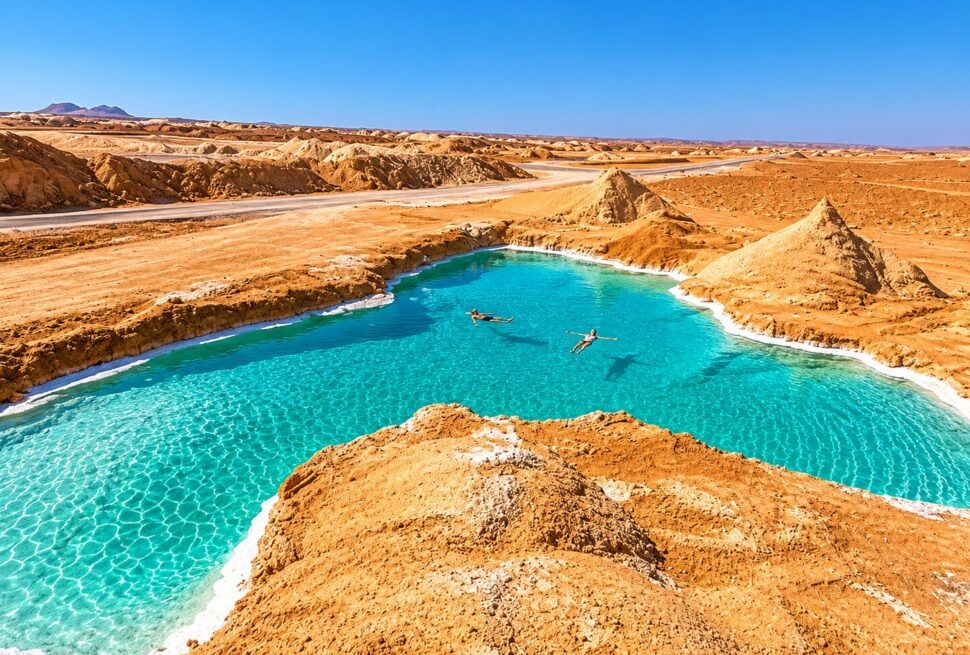
The lake is famous for appearing to change colour throughout the day. Depending on the sunlight, wind, and reflections, the water may look turquoise, emerald green, deep blue, or even golden during sunset.
This ever-changing appearance gave the lake its magical name.
Things to Do
- Relax beside the lake
- Watch the sunset
- Picnic
- Sandboarding
- Desert photography
- Camping
- Stargazing
The surrounding dunes create one of Egypt’s most spectacular landscapes.
Sandboarding at Magic Lake
One of Fayoum’s most exciting experiences is sandboarding down the towering dunes surrounding Magic Lake.
The soft golden sand provides excellent conditions for beginners as well as experienced riders.
Most tours include:
- Sandboard rental
- Safety instructions
- Several boarding runs
- Time for photographs
Unlike snowboarding, falls are generally soft, making the activity suitable for most visitors.
4. Mudawara Mountain
The Most Famous Viewpoint in Fayoum
Mudawara Mountain is not particularly high, but it offers arguably the finest panoramic views in all of Fayoum.
From the summit, visitors enjoy breathtaking views over:
- Magic Lake
- Wadi El Rayan Lakes
- Sand dunes
- Desert cliffs
- Endless desert landscapes
This is one of the best sunrise and sunset photography locations in Egypt.
Photography Tips
Best times:
- Sunrise
- Golden Hour
- Sunset
Bring:
- Wide-angle lens
- Polarising filter
- Tripod for sunset photography
5. Lake Qarun
One of the World’s Oldest Natural Lakes
Lake Qarun is among the oldest natural lakes in the world and one of Egypt’s most important wetlands. Stretching over 200 square kilometres, it has supported human settlements since prehistoric times and remains a vital habitat for migratory birds.
Despite its connection to the fertile Fayoum depression, the lake is saline, creating a unique ecosystem that differs from the nearby freshwater canals and farmland.
Bird Watching
Each winter, thousands of migratory birds arrive at Lake Qarun from Europe and Asia, making it a paradise for birdwatchers.
Common sightings include:
- Flamingos
- Grey herons
- Great egrets
- Ducks
- Gulls
- Cormorants
- Marsh harriers
- Stilts
The best birdwatching months are November to February, when migration is at its peak.
Activities Around Lake Qarun
| Activity | Best Time |
|---|---|
| Bird Watching | Winter |
| Sunset Photography | Year-round |
| Fishing | Selected Areas |
| Relaxing Walks | Morning & Evening |
| Wildlife Photography | Early Morning |
6. Tunis Village
Egypt’s Artistic Countryside Escape
Nestled on a hillside overlooking Lake Qarun, Tunis Village has transformed from a quiet farming settlement into one of Egypt’s most celebrated artistic communities.
The village is internationally known for its handcrafted pottery, inspired by traditional Egyptian techniques and modern artistic styles. Visitors can browse galleries, meet local artisans, and even join hands-on pottery workshops
Why Visit Tunis Village?
- Authentic rural atmosphere
- Pottery studios
- Artisan shops
- Charming cafés
- Eco-lodges
- Scenic lake views
- Annual pottery festival
The peaceful streets lined with mud-brick houses, flowering gardens, and small galleries offer a refreshing contrast to Egypt’s bustling cities.
Pottery Workshops
Many studios welcome visitors of all ages to try shaping and decorating clay under the guidance of experienced craftsmen. These workshops provide a memorable cultural experience and a chance to create a personalised souvenir.
Suggested Route for Nature Lovers
| Stop | Recommended Time |
|---|---|
| Wadi El Rayan Waterfalls | 45 min |
| Mudawara Mountain | 30 min |
| Magic Lake | 1 hour |
| Sandboarding | 45 min |
| Wadi Al Hitan | 2–3 hours |
| Tunis Village | 1 hour |
| Lake Qarun Sunset | 45 min |
Why These Attractions Make Fayoum Unique
Few places in Egypt offer such a remarkable variety of experiences within a single destination. In one day, you can walk among prehistoric whale fossils, watch water cascade through desert waterfalls, glide down towering sand dunes, admire panoramic lake views, and end your journey in a charming artisan village overlooking one of the country’s oldest lakes.
This combination of natural beauty, geological significance, outdoor adventure, and local culture makes Fayoum an exceptional destination for travellers seeking more than Egypt’s traditional archaeological circuit.
Fayoum Travel Guide 2026: The Ultimate Visitor’s Guide to Egypt’s Largest Oasis
Discover Fayoum’s Ancient Civilisations
While Fayoum is best known for its breathtaking natural landscapes, the region is equally fascinating for its rich archaeological heritage. Human settlement here dates back thousands of years, and successive civilizations—including the Ancient Egyptians, Greeks, Romans, and Copts—left behind remarkable monuments that tell the story of one of Egypt’s most fertile regions.
Unlike the crowded temples of Luxor or the famous pyramids of Giza, Fayoum’s historical sites offer a quieter, more intimate experience where visitors can explore at their own pace.
Hawara Pyramid
The Pyramid of Amenemhat III
Located around 9 km south of Fayoum City, the Hawara Pyramid was built during Egypt’s 12th Dynasty by Pharaoh Amenemhat III (c. 1859–1813 BC). Constructed primarily of mudbrick with a limestone casing, it originally stood about 58 metres high.
Although much of its outer casing has disappeared over time, Hawara remains one of the most historically significant pyramids in Egypt because of its association with the legendary Labyrinth described by ancient Greek historians.
Highlights
- Built during the Middle Kingdom
- Designed by Pharaoh Amenemhat III
- Originally covered with polished limestone
- Connected to the famous Labyrinth
- Quiet archaeological setting away from crowds
Visitor Information
| Information | Details |
|---|---|
| Dynasty | 12th Dynasty |
| Pharaoh | Amenemhat III |
| Construction | Mudbrick with limestone casing |
| Visit Duration | 30–45 minutes |
| Recommended | Guided visit |
The Lost Labyrinth of Egypt
The Greek historian Herodotus described an enormous building next to Hawara that contained thousands of rooms, underground passages, and magnificent halls. Known simply as The Labyrinth, it was considered one of the wonders of the ancient world.
Although little remains visible today, archaeologists believe the complex served as an administrative and religious centre connected to the pyramid.
Many historians even suggest that the legend of the Greek Labyrinth may have been inspired by this Egyptian masterpiece.
Meidum Pyramid
Egypt’s Transitional Pyramid
Although technically located in Beni Suef Governorate, the Meidum Pyramid is often included in Fayoum itineraries due to its proximity.
Originally begun by Pharaoh Huni and later completed by Sneferu, Meidum represents one of the earliest attempts to transform the traditional step pyramid into a true smooth-sided pyramid.
Today, its unusual appearance resembles a giant stone tower rising from the desert because much of the outer structure collapsed centuries ago.
Why Visit?
- Rare transitional pyramid design
- Very few visitors
- Excellent photography opportunities
- Peaceful desert setting
- Insight into pyramid engineering
Photography Tip
Visit early morning for dramatic shadows and cooler temperatures.
Qasr Qarun Temple
The Temple of Sobek and Dionysus
Situated near the western shore of Lake Qarun, Qasr Qarun is one of the best-preserved Greco-Roman temples in Egypt.
Despite its name (“Castle of Qarun”), the structure is actually a temple dedicated primarily to Sobek, the crocodile god, and later associated with Dionysus during the Greco-Roman period.
The temple’s dark corridors, hidden chambers, and elevated sanctuary create a mysterious atmosphere unlike many other Egyptian temples.
Highlights
- Excellent state of preservation
- Ancient inscriptions
- Hidden staircases
- Panoramic rooftop views
- Winter solstice sunlight phenomenon
Winter Solstice Event
Every year around 21 December, sunlight enters the temple and illuminates its inner sanctuary with remarkable precision, demonstrating the sophisticated astronomical knowledge of its ancient builders.
Medinet Madi
Fayoum’s Best-Preserved Ancient City
Often overlooked by international visitors, Medinet Madi is one of Egypt’s most remarkable archaeological treasures.
Founded during the Middle Kingdom and expanded during the Ptolemaic and Roman periods, the site contains temples, administrative buildings, streets, and residential structures that illustrate daily life over thousands of years.
Why It Matters
- Best-preserved temple in Fayoum
- Middle Kingdom origins
- Greek and Roman additions
- Beautiful sandstone architecture
- Very few tourists
Karanis Archaeological Site
A Roman Town Frozen in Time
Founded in the 3rd century BC during the reign of Ptolemy II, Karanis became one of the most prosperous agricultural settlements in Roman Egypt.
Excavations have uncovered:
- Residential homes
- Granaries
- Public baths
- Temples
- Streets
- Workshops
- Farming tools
- Ancient papyri
The dry desert climate preserved many everyday objects, providing archaeologists with extraordinary insight into ordinary life nearly 2,000 years ago.
The Famous Fayoum Portraits
Masterpieces of Roman-Egyptian Art
Although the original portraits are now displayed in museums around the world, Fayoum remains forever associated with these extraordinary works of art.
The Fayoum Portraits were painted on wooden panels and placed over mummies during the Roman period. They are celebrated for their astonishing realism and are among the oldest surviving examples of portrait painting.
Where to See Them
Original Fayoum Portraits can be viewed in museums including:
- Grand Egyptian Museum (selected displays)
- Egyptian Museum in Cairo
- The British Museum (London)
- The Louvre (Paris)
- The Metropolitan Museum of Art (New York)
Kom Aushim Museum
Located near the archaeological site of Karanis, the Kom Aushim Museum provides an excellent introduction to Fayoum’s history.
The museum displays:
- Ancient pottery
- Coins
- Jewellery
- Agricultural tools
- Roman sculptures
- Mummies
- Fayoum Portrait reproductions
- Everyday household objects
A visit here adds valuable context before exploring nearby archaeological sites.
Bird Watching in Fayoum
Fayoum is one of Egypt’s premier birdwatching destinations thanks to its lakes, wetlands, and protected reserves.
Each winter, thousands of migratory birds travelling between Europe and Africa stop here.
Common Species
- Greater Flamingo
- Grey Heron
- Little Egret
- Cormorant
- Marsh Harrier
- Northern Shoveler
- Pintail Duck
- Black-winged Stilt
- Avocet
- Gull species
Best Season
November to February offers the greatest diversity of birdlife.
Wildlife Beyond the Birds
Fayoum’s protected desert habitats are home to a surprising range of wildlife, including:
| Species | Habitat |
|---|---|
| Fennec Fox | Desert |
| Red Fox | Desert & Farmland |
| Dorcas Gazelle | Protected Areas |
| Egyptian Mongoose | Wetlands |
| Desert Hare | Sandy Plains |
| Various Lizards | Rocky Areas |
| Desert Snakes | Remote Desert |
While sightings of mammals are less common, patient visitors exploring protected areas with experienced guides may encounter these elusive animals.
Hidden Gems of Fayoum
Nazla Village
A charming village known for its traditional pottery workshops, where artisans continue techniques passed down through generations.
Youssef El Seddiq Area
A peaceful rural district surrounded by farms, lakes, and scenic countryside, ideal for travellers seeking authentic local experiences.
Desert Escarpments
The cliffs surrounding Wadi El Rayan offer panoramic viewpoints rarely visited by tourists and are perfect for photographers.
Remote Camping Areas
Away from the main roads, several designated camping sites provide unforgettable nights beneath exceptionally clear desert skies.
Suggested Historical Day Tour
| Time | Activity |
|---|---|
| 08:00 | Depart Cairo |
| 10:00 | Hawara Pyramid |
| 11:00 | Meidum Pyramid |
| 13:00 | Lunch |
| 14:00 | Karanis |
| 15:30 | Kom Aushim Museum |
| 16:30 | Qasr Qarun Temple |
| 18:00 | Sunset at Lake Qarun |
| 20:00 | Return to Cairo |
Why Fayoum Appeals to History Lovers
Fayoum offers a rare opportunity to experience Egypt’s past without the crowds found at more famous archaeological sites. Here, visitors can walk through Roman streets, admire Middle Kingdom pyramids, explore ancient temples, and discover the legacy of civilizations that thrived for thousands of years in one of the Nile Valley’s most fertile regions.
Combined with its exceptional natural landscapes, this historical richness makes Fayoum one of Egypt’s most rewarding destinations for curious travellers.
The Ultimate Visitor’s Guide to Egypt’s Largest Oasis
Best Things to Do in Fayoum
Fayoum is much more than a sightseeing destination. Whether you’re seeking adrenaline-filled adventures, peaceful lakeside relaxation, cultural experiences, or family-friendly activities, the oasis offers something for every traveller.
Here are the best experiences to include in your itinerary.
1. Explore Wadi El Rayan Waterfalls
The waterfalls are the heart of Fayoum’s natural beauty and one of the few places in Egypt where visitors can enjoy flowing water surrounded by dramatic desert scenery.
Things to do:
- Walk along the lakes
- Take panoramic photographs
- Watch local fishermen
- Enjoy a picnic
- Spot migratory birds
- Relax by the water
2. Experience a 4×4 Desert Safari
No visit to Fayoum is complete without a thrilling desert safari. Professional drivers take visitors across golden dunes, rocky plateaus, and remote valleys that are inaccessible by ordinary vehicles.
What to Expect
- Exciting dune driving
- Scenic desert viewpoints
- Fossil areas
- Photography stops
- Hidden valleys
- Experienced local drivers
Typical Duration
| Tour | Duration |
|---|---|
| Short Safari | 1–2 hours |
| Half-Day | 3–4 hours |
| Full-Day | 6–8 hours |
3. Go Sandboarding
The dunes surrounding Magic Lake provide ideal conditions for sandboarding.
Unlike snowboarding, the learning curve is gentle, making it suitable for beginners and families.
Tips
- Wear closed shoes
- Bring sunglasses
- Carry water
- Visit during cooler hours
- Use sunscreen
4. Camp Beneath the Stars
Camping is one of the most unforgettable experiences in Fayoum. After sunset, the desert becomes remarkably quiet, and the clear skies reveal thousands of stars.
Many organised camps include:
- Comfortable tents
- Campfire
- Traditional Bedouin dinner
- Tea and coffee
- Stargazing
- Sunrise breakfast
For photographers, the desert offers excellent opportunities for night-sky photography thanks to minimal light pollution.
5. Watch the Sunset at Magic Lake
Magic Lake is famous for its constantly changing colours. During sunset, the water reflects shades of orange, pink, gold, and deep blue, creating one of the most beautiful landscapes in Egypt.
Bring a camera, arrive at least 45 minutes before sunset, and simply enjoy the peaceful atmosphere.
6. Visit Pottery Workshops in Tunis Village
Tunis Village is one of Egypt’s leading centres for handmade ceramics.
Visitors can:
- Meet local artisans
- Watch pottery demonstrations
- Join pottery classes
- Purchase handmade souvenirs
- Visit small art galleries
Every handmade piece supports local craftsmen and reflects Fayoum’s artistic heritage.
Adventure Activities
| Activity | Difficulty | Family Friendly |
|---|---|---|
| Sandboarding | Easy | ✓ |
| Desert Safari | Easy | ✓ |
| Camping | Easy | ✓ |
| Hiking | Moderate | ✓ |
| Bird Watching | Easy | ✓ |
| Photography | Easy | ✓ |
| Pottery Workshop | Easy | ✓ |
Best Restaurants in Fayoum
Fayoum offers a mix of traditional Egyptian cuisine, countryside cafés, and lakeside restaurants.
Popular dishes include:
- Grilled chicken
- Kofta
- Mixed grills
- Fresh fish from Lake Qarun
- Stuffed pigeon
- Molokhia
- Fattah
- Homemade bread
- Rice with vegetables
- Seasonal salads
Many eco-lodges also prepare farm-to-table meals using locally sourced ingredients.
Must-Try Local Foods
| Dish | Description |
|---|---|
| Stuffed Pigeon | Traditional Egyptian delicacy |
| Fresh Tilapia | Lake Qarun speciality |
| Molokhia | Green soup served with rice |
| Feteer Meshaltet | Egyptian layered pastry |
| Hawawshi | Spiced meat baked in bread |
| Kunafa | Popular dessert |
| Basbousa | Semolina cake |
Where to Stay in Fayoum
Whether you’re looking for luxury, eco-tourism, or budget accommodation, Fayoum offers a variety of options.
Luxury Hotels
Luxury travellers can enjoy boutique properties with lake views, elegant rooms, fine dining, and spa facilities.
Ideal for:
- Honeymooners
- Couples
- Weekend escapes
- Luxury travellers
Eco-Lodges
Eco-lodges have become increasingly popular around Tunis Village.
Features often include:
- Mud-brick architecture
- Organic gardens
- Traditional décor
- Bicycle rentals
- Pottery workshops
- Local cuisine
Perfect for travellers seeking an authentic countryside experience.
Budget Accommodation
Budget-friendly hotels and guesthouses are available in Fayoum City, offering clean rooms, friendly service, and convenient access to nearby attractions.
Camping
Camping remains one of the most memorable ways to experience Fayoum, with options ranging from simple desert camps to luxury glamping setups featuring comfortable beds and private facilities.
Transportation
Most international visitors reach Fayoum by road from Cairo.
Options
| Transport | Time | Recommended |
|---|---|---|
| Private Car | 2 hrs | ★★★★★ |
| Private Tour | 2 hrs | ★★★★★ |
| Taxi | 2 hrs | ★★★★☆ |
| Bus | 2.5–3 hrs | ★★★☆☆ |
| Rental Car | 2 hrs | ★★★★☆ |
A private vehicle or guided tour is recommended, especially if you plan to visit Wadi Al Hitan or other remote desert attractions.
How Much Does a Fayoum Trip Cost?
Your budget depends on your travel style.
| Budget Type | Estimated Daily Cost (excluding international flights) |
|---|---|
| Budget | £30–£60 |
| Mid-range | £60–£120 |
| Luxury | £120–£250+ |
Typical expenses include:
- Transportation
- Entrance fees
- Meals
- Accommodation
- Optional activities such as desert safaris and sandboarding
Private tours may cost more but often include transport, a guide, lunch, and multiple attractions, providing excellent value for those with limited time.
Suggested One-Day Itinerary
| Time | Activity |
|---|---|
| 07:00 | Depart Cairo |
| 09:00 | Wadi El Rayan |
| 10:30 | Waterfalls |
| 11:30 | Mudawara Mountain |
| 12:30 | Magic Lake |
| 13:00 | Sandboarding |
| 14:30 | Lunch |
| 15:30 | Wadi Al Hitan |
| 18:00 | Sunset |
| 20:00 | Return to Cairo |
Suggested Two-Day Itinerary
Day One
- Wadi El Rayan
- Magic Lake
- Sandboarding
- Sunset
- Camping
Day Two
- Wadi Al Hitan
- Lake Qarun
- Tunis Village
- Pottery Workshop
- Return to Cairo
Suggested Three-Day Itinerary
Day One
- Wadi El Rayan
- Magic Lake
- Mudawara Mountain
Day Two
- Wadi Al Hitan
- Desert Safari
- Camping
Day Three
- Tunis Village
- Lake Qarun
- Hawara Pyramid
- Qasr Qarun Temple
- Return to Cairo
Essential Travel Tips
- Wear lightweight, breathable clothing.
- Bring a hat, sunglasses, and sunscreen.
- Carry plenty of drinking water.
- Wear comfortable walking shoes.
- Charge your camera and phone before heading into the desert.
- Respect protected areas and never remove fossils or natural objects.
- Book a 4×4 vehicle for desert routes.
- Start early in summer to avoid midday heat.
- Carry some cash, as small shops may not accept cards.
- Travel with a licensed guide for remote sites like Wadi Al Hitan.
Why Stay Overnight?
Although Fayoum can be visited on a day trip, staying overnight allows you to experience:
- Sunrise over the desert
- Stargazing far from city lights
- Desert camping
- Early morning wildlife activity
- A relaxed pace without rushing between attractions
An overnight stay also gives you time to enjoy the artistic atmosphere of Tunis Village and the peaceful shores of Lake Qarun.
Practical Travel Tips for Fayoum
A little preparation can make your visit smoother and more enjoyable. Fayoum’s attractions are spread across a large area, and many of the most spectacular sites are located inside protected desert reserves.
Essential Tips
- Start your trip early if travelling from Cairo.
- Wear comfortable walking shoes with good grip.
- Carry at least 2 litres of drinking water per person.
- Bring sunscreen, sunglasses, and a wide-brimmed hat.
- Keep a light jacket for winter mornings and evenings.
- Download offline maps before leaving Cairo.
- Respect wildlife and protected areas.
- Do not climb on archaeological monuments.
- Hire a 4×4 vehicle for Wadi Al Hitan and remote desert routes.
- Bring cash for small cafés, souvenir shops, and local markets.
What to Pack
| Item | Recommended |
|---|---|
| Passport or ID | ✔ |
| Comfortable Walking Shoes | ✔ |
| Sunglasses | ✔ |
| Sunscreen | ✔ |
| Hat or Cap | ✔ |
| Camera | ✔ |
| Power Bank | ✔ |
| Reusable Water Bottle | ✔ |
| Light Jacket (Winter) | ✔ |
| Personal Medication | ✔ |
| Small Backpack | ✔ |
If you plan to stay overnight, add warm clothing for the evening, as desert temperatures can drop significantly after sunset.
Photography Guide
Fayoum is one of Egypt’s most photogenic destinations, offering dramatic contrasts between lakes, dunes, cliffs, waterfalls, and lush farmland.
Best Photography Locations
- Wadi El Rayan Waterfalls
- Mudawara Mountain Viewpoint
- Magic Lake
- Wadi Al Hitan Fossil Trail
- Lake Qarun at Sunset
- Tunis Village
- Hawara Pyramid
- Qasr Qarun Temple
Best Time for Photography
| Time | Lighting |
|---|---|
| Sunrise | Soft golden light |
| Morning | Excellent visibility |
| Midday | Harsh light; best for landscapes |
| Golden Hour | Ideal for portraits and scenery |
| Sunset | Spectacular colours |
| Night | Perfect for astrophotography |
Sustainable Travel
Fayoum is home to sensitive ecosystems and protected heritage sites. Travelling responsibly helps preserve these landscapes for future generations.
Responsible Travel Tips
- Stay on marked paths in protected areas.
- Avoid disturbing wildlife.
- Never remove fossils or stones from Wadi Al Hitan.
- Dispose of rubbish properly.
- Carry reusable water bottles where possible.
- Support local artisans by purchasing handmade products.
- Choose locally owned accommodations and restaurants.
Shopping in Fayoum
Shopping in Fayoum focuses on handcrafted products rather than large shopping centres.
Best Souvenirs
- Handmade pottery
- Ceramic plates and bowls
- Palm-leaf baskets
- Handwoven textiles
- Traditional embroidery
- Local honey
- Olive oil
- Herbal teas
- Natural soaps
- Egyptian spices
Tunis Village is the best place to purchase authentic handmade ceramics directly from local artists.
Local Festivals
If your visit coincides with one of Fayoum’s cultural events, you can experience local traditions and craftsmanship.
Tunis Village Pottery Festival
Held annually, this festival celebrates Egyptian ceramic art with exhibitions, workshops, live demonstrations, and cultural performances.
Other local celebrations throughout the year include harvest events, handicraft fairs, and community festivals showcasing Fayoum’s rural heritage.
Internet & Mobile Coverage
Most towns and villages have reliable mobile coverage, while remote desert areas may have limited or no signal.
Free Wi-Fi is available in many hotels, eco-lodges, cafés, and restaurants, although speeds may vary.
Health & Safety
Fayoum is generally a safe destination for tourists.
Safety Recommendations
- Follow your guide’s instructions during desert safaris.
- Wear appropriate footwear.
- Stay hydrated.
- Protect yourself from the sun.
- Avoid walking in remote desert areas without a guide.
- Inform someone of your itinerary if travelling independently.
- Keep valuables secure.
Emergency services are available in Fayoum City, and larger medical facilities can also be found in Cairo if required.
Frequently Asked Questions (FAQs)
1. Is Fayoum worth visiting?
Absolutely. Fayoum offers waterfalls, lakes, desert landscapes, UNESCO World Heritage sites, ancient monuments, and authentic village life within easy reach of Cairo.
2. How far is Fayoum from Cairo?
Approximately 100 km (62 miles), with a driving time of around 1.5–2 hours.
3. Can Fayoum be visited in one day?
Yes. A private day trip covers the main highlights, while an overnight stay allows for a more relaxed experience.
4. What is Fayoum famous for?
It is known for Wadi El Rayan, Wadi Al Hitan (Whale Valley), Magic Lake, Lake Qarun, Tunis Village, and its rich archaeological heritage.
5. Is Wadi Al Hitan a UNESCO World Heritage Site?
Yes. It was recognised by UNESCO for its exceptional fossil record documenting whale evolution.
6. What is the best time to visit?
October to April offers the most comfortable weather for outdoor activities.
7. Do I need a 4×4 vehicle?
A 4×4 is recommended for Wadi Al Hitan and remote desert areas.
8. Can beginners try sandboarding?
Yes. The dunes are suitable for beginners and families.
9. Is camping available?
Yes. Both traditional desert camps and luxury glamping experiences are available.
10. Is Fayoum suitable for children?
Yes. Families enjoy waterfalls, lakes, easy walks, and pottery workshops.
11. Are there luxury hotels?
Yes. Boutique hotels and eco-lodges around Tunis Village offer comfortable accommodation.
12. Can I swim in Magic Lake?
Swimming conditions vary, so always follow local guidance and safety advice.
13. Are entrance tickets required?
Most protected areas and archaeological sites charge entrance fees.
14. Can I visit without a guide?
Yes, but a guide is recommended for historical context and easier navigation.
15. Is photography allowed?
Photography is generally permitted, though restrictions may apply at some archaeological sites or museums.
16. What wildlife can I see?
Flamingos, herons, ducks, foxes, gazelles, reptiles, and many migratory bird species.
17. Is Fayoum good for birdwatching?
Yes. Lake Qarun and Wadi El Rayan are among Egypt’s top birdwatching locations.
18. What local food should I try?
Fresh fish, stuffed pigeon, molokhia, feteer meshaltet, and traditional Egyptian desserts.
19. How many days should I spend in Fayoum?
One day covers the highlights, while two or three days allow time for camping, historical sites, and cultural experiences.
20. Why should I include Fayoum in my Egypt itinerary?
Because it combines nature, adventure, history, and authentic local culture in a destination that is close to Cairo yet feels worlds away.
Final Thoughts
Fayoum is one of Egypt’s most rewarding destinations for travellers who want to experience more than the country’s famous monuments. Within a short drive from Cairo, visitors can explore prehistoric fossil sites, admire waterfalls flowing through the desert, watch migratory birds over ancient lakes, discover centuries-old temples, and immerse themselves in the creativity of Tunis Village.
Whether you are travelling with family, as a couple, or on a solo adventure, Fayoum offers unforgettable landscapes, rich history, and authentic experiences that reveal a different side of Egypt. From sunrise over the dunes to sunsets reflected on tranquil lakes, every moment in Fayoum showcases the remarkable diversity of this extraordinary oasis.
Plan Your Fayoum Adventure
Ready to discover one of Egypt’s hidden treasures?
Our private Fayoum tours are designed to give you a comfortable, flexible, and unforgettable experience.
We Offer:
- ✅ Ultimate Fayoum Experience
- ✅ Family Fayoum Tour
- ✅ Overnight Fayoum Camping Tour
- ✅Luxury Private Fayoum Tour
- ✅ Tunis Village Tour
- ✅ Fayoum Desert Safari by 4×4
- ✅ Fayoum Day Trip from Cairo
Whether you want a relaxing nature escape or an action-packed desert adventure, we’ll help you create the perfect itinerary.
📱 WhatsApp: +20 120 323 3365
Recommended Egypt Tours
Why You Can Trust Let's Explore Egypt
This article was written and reviewed by the Let's Explore Egypt Editorial Team, a licensed Egyptian tour operator specializing in private Egypt tours, Nile cruises, and tailor-made travel experiences since 2009.
- 🏛 Licensed Egyptian Tour Operator Since 2009
- ⭐ Trusted by Thousands of Travelers Worldwide
- 👨🏫 Written & Reviewed by Local Egypt Travel Experts
- 🚐 Private Tours & Tailor-Made Travel Experiences
- 📞 24/7 Customer Support