

Introduction to Memphis, Egypt
Memphis Travel Guide: Explore Egypt’s First Ancient Capital

Long before Cairo, Alexandria, or Luxor became famous, Memphis stood as the political, religious, and cultural heart of Ancient Egypt. Founded over 5,000 years ago, this remarkable city served as the capital during Egypt’s Early Dynastic Period and the Old Kingdom, making it one of the oldest continuously inhabited cities in the world.
Although only a small portion of the ancient city survives today, Memphis remains one of Egypt’s most fascinating archaeological destinations. Visitors can admire the enormous Colossus of Ramses II, the magnificent Alabaster Sphinx, ancient statues, temple remains, and open-air exhibits that reveal the grandeur of Egypt’s earliest civilization.
Located just 25 km (15.5 miles) south of Cairo, Memphis is usually visited together with Saqqara and Dahshur, creating one of the most rewarding historical day trips in Egypt.
Quick Facts About Memphis
| Information | Details |
|---|---|
| Location | Mit Rahina, Giza Governorate |
| Distance from Cairo | 25 km |
| Founded | Around 3100 BC |
| Founder | King Narmer (Menes) |
| Ancient Name | Ineb Hedj (“White Walls”) |
| Greek Name | Memphis |
| UNESCO Status | Part of the Memphis and its Necropolis World Heritage Site |
| Best Visit Duration | 1–2 hours |
| Recommended Tour | Combined with Saqqara & Dahshur |
Why Visit Memphis?
While the pyramids attract millions of visitors every year, Memphis offers a quieter and more intimate look into Ancient Egypt. Instead of climbing monuments, you’ll walk among colossal statues that once decorated temples and palaces over four millennia ago.
Reasons to visit include:
- Discover Egypt’s oldest royal capital.
- See one of the world’s largest ancient statues.
- Visit the famous Alabaster Sphinx.
- Experience fewer crowds than Giza.
- Learn how Ancient Egypt began.
- Combine three UNESCO sites in one day.
- Capture stunning photographs without heavy tourist traffic.
The History of Memphis
Memphis was established around 3100 BC by King Narmer, often identified with Menes, the ruler credited with unifying Upper and Lower Egypt into a single kingdom.
Its strategic location near the Nile Delta allowed Memphis to control trade routes connecting Upper Egypt, Lower Egypt, Africa, and the Mediterranean.
For centuries, Memphis became:
- Egypt’s political capital
- Religious centre
- Military headquarters
- Commercial hub
- Royal residence
The city’s importance lasted for thousands of years, even after capitals shifted to Thebes and Alexandria.
Memphis During the Old Kingdom
The city’s golden age coincided with the construction of Egypt’s earliest pyramids.
Most of the kings responsible for building the pyramids at:
- Saqqara
- Dahshur
- Giza
ruled directly from Memphis.
The city’s craftsmen, architects, engineers, and priests helped create monuments that still amaze the world today.
Religious Importance
Memphis was dedicated to Ptah, the creator god and patron of craftsmen, architects, and builders.
The magnificent Temple of Ptah once stood at the city’s centre.
Pilgrims travelled from across Egypt to worship here, making Memphis one of the country’s most sacred religious destinations.
Other important deities worshipped included:
- Sekhmet
- Nefertem
- Apis Bull
- Hathor
- Osiris
UNESCO World Heritage Site
In 1979, UNESCO designated Memphis and its Necropolis—including Giza, Saqqara, Dahshur, and Abu Sir—as a World Heritage Site in recognition of its exceptional cultural significance.
The designation protects one of the most important archaeological landscapes on Earth, preserving monuments that span thousands of years of Egyptian history.
Where Is Memphis?


Memphis is located in the village of Mit Rahina, approximately:
| Destination | Distance |
|---|---|
| Cairo | 25 km |
| Giza Pyramids | 20 km |
| Saqqara | 6 km |
| Dahshur | 18 km |
| Grand Egyptian Museum | 25 km |
The journey from central Cairo typically takes 45–60 minutes, depending on traffic.
Why Combine Memphis with Saqqara and Dahshur?
These three sites represent different stages of pyramid development and the evolution of ancient Egyptian civilisation:
| Site | Highlights |
|---|---|
| Memphis | Ancient capital, colossal statues, Temple of Ptah remains |
| Saqqara | Step Pyramid of Djoser, tombs, pyramids |
| Dahshur | Bent Pyramid, Red Pyramid |
Together, they provide a complete story of the birth of pyramid construction and the rise of the Egyptian state.
Best Reasons to Include Memphis in Your Egypt Itinerary
- Rich historical significance as Egypt’s first capital.
- Easy day trip from Cairo.
- Family-friendly and less crowded.
- Excellent photography opportunities.
- Ideal combination with nearby UNESCO sites.
- Deep insight into Ancient Egyptian religion, politics, and architecture.
Top Things to See in Memphis, Egypt

Although only a fraction of the ancient city remains today, Memphis is home to several extraordinary monuments that reveal the scale and grandeur of Egypt’s first capital. A visit to the archaeological site allows you to stand beside colossal statues, explore temple remains, and admire masterpieces of ancient Egyptian sculpture that have survived for more than 3,000 years.
Most visitors spend 1–2 hours exploring the site before continuing to Saqqara or Dahshur.
1. The Colossus of Ramses II
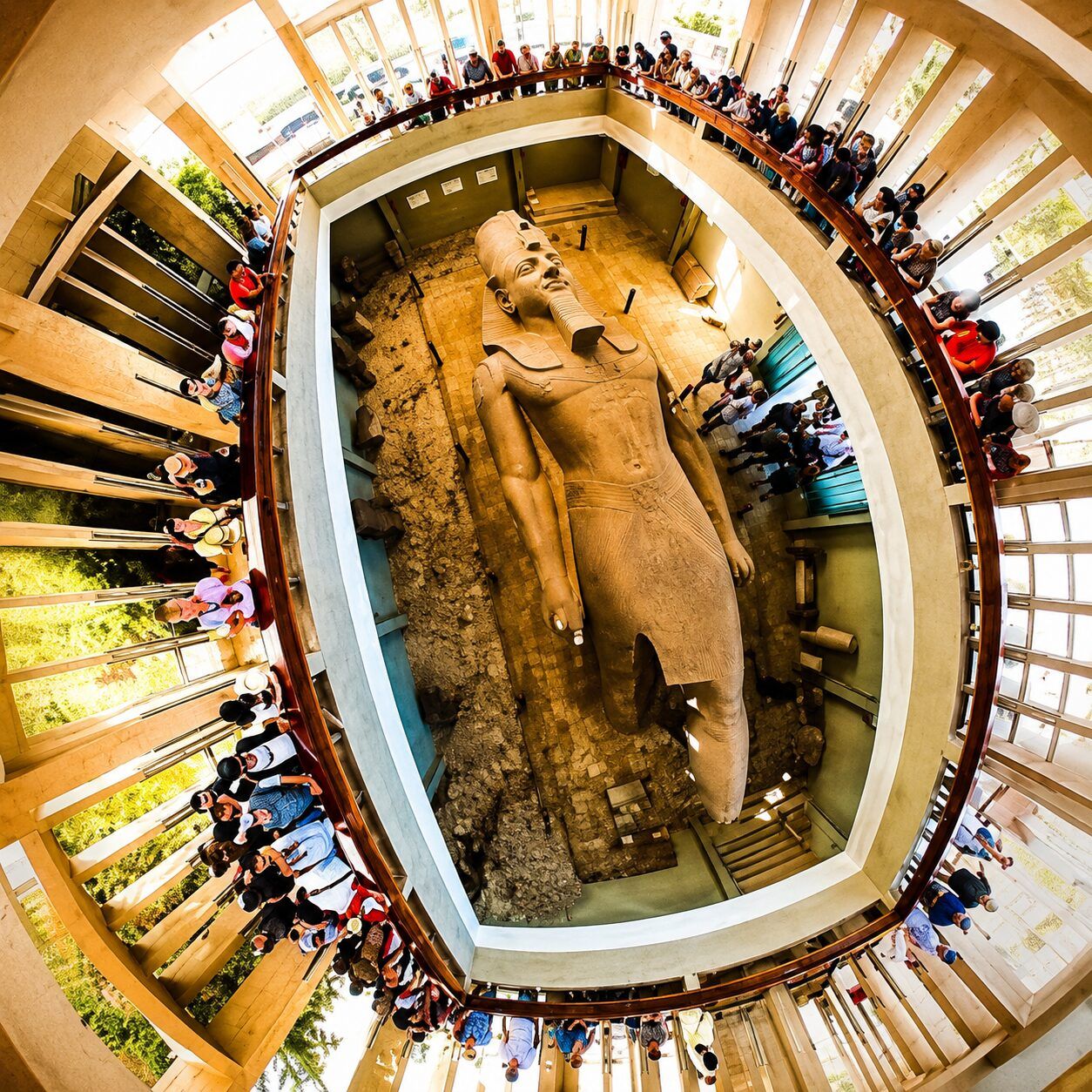
The undisputed highlight of Memphis is the Colossus of Ramses II, one of the largest surviving statues from Ancient Egypt.
The statue was carved from a single block of limestone during the reign of Pharaoh Ramses II (1279–1213 BC), one of Egypt’s greatest rulers.
Originally, the statue stood upright at the entrance of the Temple of Ptah, welcoming visitors to the ancient capital. Today, it lies horizontally inside a specially designed museum, allowing visitors to admire its incredible detail from an elevated viewing platform.
Facts About the Colossus
| Feature | Details |
|---|---|
| Height | Approximately 10.5 metres (34 feet) |
| Material | Limestone |
| Weight | Around 80 tonnes |
| Pharaoh | Ramses II |
| Date | 13th Century BC |
| Original Location | Temple of Ptah |
What Makes It Special?
Even though the lower legs are missing, the statue remains one of the finest examples of royal sculpture in Egypt.
Notice the incredible craftsmanship:
- The finely carved facial features
- The royal nemes headdress
- Detailed belt and clothing
- Muscular anatomy
- Hieroglyphic inscriptions
- Royal uraeus cobra on the forehead
Standing beside the statue gives visitors a true sense of the enormous scale favoured by Ancient Egyptian artists.
Photography Tips
The elevated walkway provides excellent photo opportunities.
For the best results:
- Use a wide-angle lens.
- Photograph from both ends of the viewing platform.
- Visit early morning for softer natural light.
- Capture close-up details of the face and hieroglyphs.
2. The Alabaster Sphinx

Another remarkable treasure is the beautiful Alabaster Sphinx, carved from a single block of calcite (often called Egyptian alabaster).
Unlike the famous Great Sphinx of Giza, this statue is much smaller but exceptionally well preserved.
Alabaster Sphinx Facts
| Feature | Details |
|---|---|
| Length | Around 8 metres |
| Material | Egyptian Alabaster |
| Estimated Weight | About 80 tonnes |
| Date | New Kingdom |
| Condition | Excellent |
Scholars still debate which pharaoh the sphinx represents, although many believe it depicts Amenhotep II.
Why Is It Unique?
Unlike limestone, alabaster reflects sunlight beautifully, giving the monument a warm golden appearance throughout the day.
Its finely carved paws, facial features, and lion’s body demonstrate the extraordinary skills of ancient sculptors.
3. The Open-Air Museum
The Memphis Open-Air Museum contains many important statues and architectural fragments discovered during excavations.
Visitors can walk among monuments that once decorated royal palaces, temples, and ceremonial avenues.
Highlights include:
- Granite statues
- Limestone reliefs
- Temple columns
- Stone sarcophagi
- Royal inscriptions
- Decorative capitals
- Ancient gateways
Every artefact tells part of the story of Egypt’s earliest capital.
Museum Highlights
| Attraction | Why It’s Worth Seeing |
|---|---|
| Colossus of Ramses II | Largest monument on site |
| Alabaster Sphinx | Rare sculpture |
| Temple Remains | Ancient religious architecture |
| Stone Statues | Beautiful craftsmanship |
| Royal Stelae | Ancient inscriptions |
4. Temple of Ptah
Although much of the temple has disappeared, the ruins still reveal the enormous scale of Memphis during its golden age.
The Temple of Ptah was once one of Ancient Egypt’s most important religious centres.
Ptah was considered:
- Creator god
- Patron of craftsmen
- Protector of architects
- God of builders
- Divine artisan
It is fitting that the city responsible for building Egypt’s pyramids worshipped the god of construction.
What Remains Today?
Visitors can still see:
- Foundation walls
- Stone blocks
- Temple platforms
- Gate remains
- Scattered columns
Archaeologists believe much of the temple still lies buried beneath nearby farmland and modern villages.
5. Statues of Ramses II
Throughout the museum grounds, visitors will encounter additional statues of Ramses II.
These include:
- Standing statues
- Granite fragments
- Royal heads
- Temple reliefs
They illustrate how frequently Ramses II commissioned monuments to celebrate his achievements across Egypt.
6. Ancient Stone Reliefs
The site preserves numerous decorated reliefs showing:
- Pharaohs making offerings
- Religious ceremonies
- Gods and goddesses
- Hieroglyphic inscriptions
- Temple decorations
Many still retain incredibly sharp carving despite thousands of years of exposure.
7. The Sacred Apis Bull
One of Memphis’ most important religious traditions centred around the Apis Bull.
Ancient Egyptians believed certain bulls were earthly manifestations of Ptah.
When an Apis Bull died:
- It received elaborate mummification.
- Priests held grand funeral ceremonies.
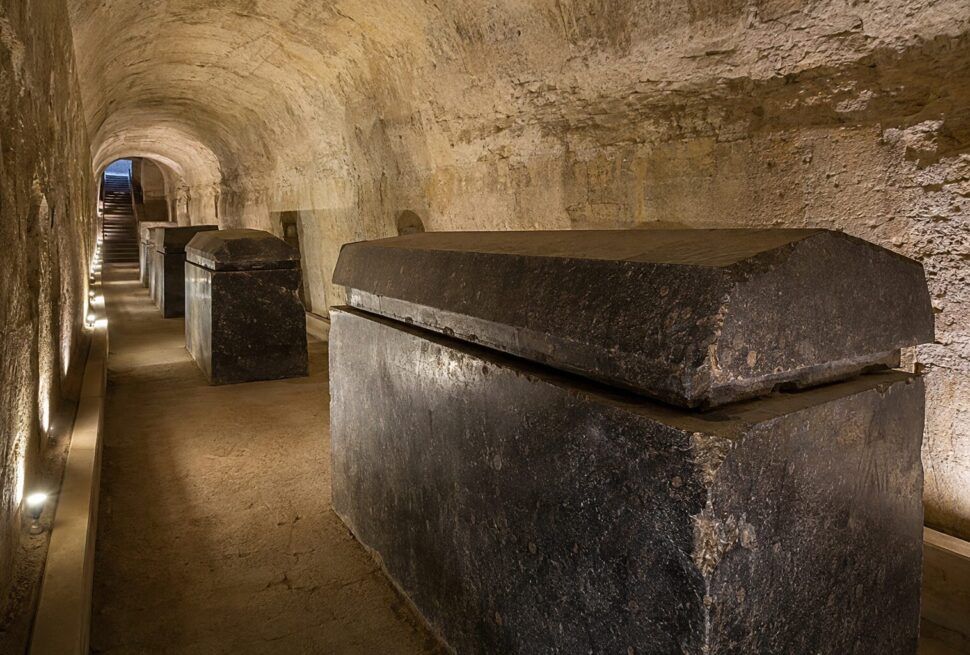
- The bull was buried in massive stone sarcophagi at nearby Saqqara (the Serapeum).
- A search began for the next sacred bull.
This tradition lasted for over 1,500 years.
Why the Apis Bull Was Important
| Belief | Meaning |
|---|---|
| Symbol of Strength | Royal power |
| Sacred Animal | Manifestation of Ptah |
| Religious Festivals | Annual celebrations |
| Burial | Serapeum at Saqqara |
8. Ancient City Foundations
Although the original city extended over several square kilometres, most of ancient Memphis now lies beneath:
- Agricultural fields
- Palm groves
- Modern villages
- Nile sediments
Archaeologists continue to excavate new discoveries every year, suggesting that much of the city remains hidden underground.
Walking Around the Site
The archaeological park is relatively compact and easy to explore on foot.
Visitors will find:
| Facility | Available |
|---|---|
| Walking Paths | ✔ |
| Information Signs | ✔ |
| Rest Areas | ✔ |
| Souvenir Shops | ✔ |
| Parking | ✔ |
| Toilets | ✔ |
Comfortable walking shoes are recommended, especially during warmer months.
Best Photography Spots
Some of the most photogenic locations include:
- The full-length view of the Colossus of Ramses II.
- Close-up details of the Alabaster Sphinx.
- Ancient columns against the blue Egyptian sky.
- Wide shots of the Open-Air Museum.
- Temple ruins framed by palm trees.
Early morning and late afternoon offer the best lighting for photography and a more comfortable visit.
Suggested Walking Route
| Stop | Estimated Time |
|---|---|
| Entrance | 5 minutes |
| Colossus of Ramses II | 25 minutes |
| Open-Air Museum | 20 minutes |
| Alabaster Sphinx | 15 minutes |
| Temple of Ptah Ruins | 20 minutes |
| Museum Grounds & Photos | 20 minutes |
Total Visit Time: Approximately 1.5 to 2 hours.
Visitor Tips
- Visit Memphis before Saqqara if starting from Cairo.
- Bring water, sunscreen, and a hat, especially in summer.
- Hire a licensed guide if you want deeper historical context.
- Respect barriers protecting fragile monuments.
- Allow extra time if you enjoy photography.
Planning Your Visit to Memphis, Egypt


Planning ahead can make your visit to Memphis much more enjoyable. While the archaeological site is smaller than the Giza Pyramids or Saqqara, it is rich in history and is best explored at a relaxed pace. This section covers everything you need to know before you go, from opening hours and tickets to transportation and suggested itineraries.
Opening Hours
The Memphis Open-Air Museum is generally open every day of the week.
| Day | Opening Hours |
|---|---|
| Monday | 8:00 AM – 5:00 PM |
| Tuesday | 8:00 AM – 5:00 PM |
| Wednesday | 8:00 AM – 5:00 PM |
| Thursday | 8:00 AM – 5:00 PM |
| Friday | 8:00 AM – 5:00 PM |
| Saturday | 8:00 AM – 5:00 PM |
| Sunday | 8:00 AM – 5:00 PM |
Last entry is usually around one hour before closing.
Tip: Opening hours may change during Ramadan or on public holidays, so it’s always worth checking before your visit.
Entrance Tickets
Entrance fees are set by the Egyptian Ministry of Tourism and Antiquities and may change over time.
Visitors usually purchase tickets at the entrance to the archaeological site.
Typical Ticket Categories
| Visitor Type | Ticket Required |
|---|---|
| International Adults | Standard Ticket |
| International Students | Student Ticket (with valid ID) |
| Egyptian Citizens | Local Ticket |
| Egyptian Students | Discounted Student Ticket |
Some tour packages include entrance tickets in the overall price, while others require you to purchase them separately.
How Long Should You Spend in Memphis?
Unlike larger archaeological sites, Memphis is relatively compact.
| Traveller Type | Recommended Visit |
|---|---|
| Quick Visit | 45 minutes |
| Average Visitor | 1–1.5 hours |
| History Enthusiast | 2–3 hours |
| Photography Lovers | 2 hours |
For most visitors, 90 minutes is the perfect amount of time.
Best Time of Day to Visit
The Egyptian sun can be intense, especially from late spring through early autumn.
Morning (Best Choice)
8:00 AM – 10:00 AM
Advantages:
- Cooler temperatures
- Fewer visitors
- Better photography lighting
- Comfortable walking conditions
Late Afternoon
3:00 PM – 5:00 PM
Benefits include:
- Softer sunlight
- Beautiful golden-hour photos
- More pleasant temperatures
Midday
11:00 AM – 2:00 PM
This is generally the least comfortable time due to:
- Strong sunshine
- Higher temperatures
- Harsher lighting for photography
Best Time of Year to Visit
| Season | Weather | Recommendation |
|---|---|---|
| Autumn (Sep–Nov) | Warm | ⭐⭐⭐⭐⭐ |
| Winter (Dec–Feb) | Mild | ⭐⭐⭐⭐⭐ |
| Spring (Mar–Apr) | Pleasant | ⭐⭐⭐⭐⭐ |
| Summer (May–Aug) | Very Hot | ⭐⭐⭐ |
Winter is widely considered the most comfortable season for sightseeing around Cairo.
How to Get to Memphis
Memphis is located approximately 25 km south of central Cairo.
From Cairo
| Transport | Approximate Time |
|---|---|
| Private Car | 45–60 minutes |
| Taxi | 50–70 minutes |
| Guided Tour | 45–60 minutes |
Traffic conditions in Cairo can significantly affect travel times.
Is Public Transport Recommended?
Although local minibuses and buses operate in the area, they can be confusing for first-time visitors.
For most international travellers, the best options are:
- Private driver
- Taxi or ride-hailing service
- Organised day tour
These choices save time and make it easier to combine Memphis with nearby attractions.
Visiting Memphis on a Guided Tour
Many visitors include Memphis as part of a full-day excursion.
Typical Day Tour Includes
| Included | Commonly Available |
|---|---|
| Hotel Pick-up | ✔ |
| Air-conditioned Vehicle | ✔ |
| Licensed Guide | ✔ |
| Bottled Water | Often Included |
| Entrance Tickets | Depends on Tour |
| Lunch | Optional |
Combining Memphis with Other Attractions
Most travellers visit Memphis alongside nearby archaeological sites.
| Attraction | Distance from Memphis |
|---|---|
| Saqqara | 6 km |
| Dahshur | 18 km |
| Giza Pyramids | 20 km |
| Grand Egyptian Museum | 25 km |
| Cairo Citadel | 30 km |
Suggested Half-Day Itinerary
| Time | Activity |
|---|---|
| 8:00 AM | Leave Cairo |
| 9:00 AM | Arrive at Memphis |
| 9:00–10:30 AM | Explore the Open-Air Museum |
| 10:30 AM | Depart for Saqqara |
Suggested Full-Day Itinerary
| Time | Activity |
|---|---|
| 8:00 AM | Hotel Pick-up |
| 9:00 AM | Visit Memphis |
| 10:45 AM | Explore Saqqara |
| 1:00 PM | Lunch |
| 2:30 PM | Visit Dahshur |
| 4:30 PM | Return to Cairo |
This itinerary gives you a comprehensive introduction to Egypt’s earliest royal capital and the evolution of pyramid building.
Accessibility
The site is mostly flat, but some areas have uneven stone surfaces.
Accessibility Overview
| Feature | Available |
|---|---|
| Flat Walking Areas | ✔ Mostly |
| Wheelchair Friendly | Partial |
| Rest Areas | ✔ |
| Shade | Limited |
| Toilets | ✔ |
| Parking | ✔ |
Visitors with mobility concerns may wish to travel with assistance.
Facilities at the Site
You’ll find several basic visitor amenities.
| Facility | Available |
|---|---|
| Ticket Office | ✔ |
| Toilets | ✔ |
| Parking Area | ✔ |
| Small Gift Shops | ✔ |
| Information Boards | ✔ |
| Security | ✔ |
There are no large restaurants within the archaeological site, so many visitors choose to eat before or after their visit.
What Should You Bring?
Essentials Checklist
| Item | Recommended |
|---|---|
| Passport or ID | ✔ |
| Comfortable Walking Shoes | ✔ |
| Sunglasses | ✔ |
| Sunscreen | ✔ |
| Hat or Cap | ✔ |
| Refillable Water Bottle | ✔ |
| Camera or Smartphone | ✔ |
| Cash for Small Purchases | ✔ |
Lightweight clothing is recommended, particularly during the warmer months.
Photography Tips
Memphis offers excellent opportunities for both landscape and detail photography.
For the best results:
- Visit early in the morning for soft, even light.
- Use a wide-angle lens for the Colossus of Ramses II.
- Capture close-ups of hieroglyphs and carved details.
- Include palm trees and temple ruins to add depth to your compositions.
- Respect any restrictions on flash photography inside covered areas.
Travel Tips for First-Time Visitors
- Arrive early to avoid the heat and crowds.
- Wear comfortable footwear suitable for uneven paths.
- Bring enough water, especially in summer.
- Allow time to visit Saqqara and Dahshur on the same day.
- Read the information panels or travel with a licensed guide to better understand the site’s history.
- Avoid touching or climbing on ancient monuments.
- Carry some cash for souvenirs or small purchases.
Why Memphis Is Worth Visiting
Although Memphis no longer has towering pyramids or massive temples, it provides something equally valuable: a direct connection to the origins of Ancient Egyptian civilisation.
Walking among the colossal statues and temple remains offers a clearer understanding of how Egypt grew into one of the world’s greatest ancient kingdoms. Combined with Saqqara and Dahshur, Memphis completes an unforgettable journey through the beginnings of pyramid construction and royal history.
Nearby Attractions, Travel Tips, Suggested Itineraries & Essential Visitor Information
One of the biggest advantages of visiting Memphis is its location. Situated in the heart of the ancient Memphite Necropolis, it is surrounded by some of Egypt’s most famous archaeological sites. Rather than visiting Memphis on its own, most travellers include it in a full-day tour that showcases the evolution of pyramid construction and the rich history of Ancient Egypt.
Top Attractions Near Memphis
1. Saqqara
Located just 6 km (3.7 miles) from Memphis, Saqqara is one of Egypt’s most important archaeological sites.
Highlights
- Step Pyramid of Djoser
- Pyramid of Unas
- Serapeum
- Tomb of Mereruka
- Tomb of Kagemni
- Ancient mastaba tombs
- Imhotep Museum
Saqqara is widely regarded as the birthplace of pyramid construction.
2. Dahshur
Only 18 km (11 miles) south of Memphis, Dahshur offers visitors the chance to see two of Egypt’s best-preserved pyramids.
Must-see monuments include:
- Bent Pyramid
- Red Pyramid
- Black Pyramid (view from outside)
Unlike Giza, Dahshur is much quieter, allowing visitors to enjoy the monuments without large crowds.
3. Giza Pyramids
Approximately 20 km (12.5 miles) away, the Giza Plateau is one of the world’s most famous archaeological sites.
Highlights include:
- Great Pyramid of Khufu
- Pyramid of Khafre
- Pyramid of Menkaure
- Great Sphinx
- Valley Temple
- Panoramic viewpoint
- Camel riding area
Many visitors begin at Giza before continuing south to Memphis.
4. Grand Egyptian Museum (GEM)
The Grand Egyptian Museum is located about 25 km (15.5 miles) from Memphis and houses one of the world’s largest collections of Ancient Egyptian artefacts.
Top exhibits include:
- Grand Staircase
- Colossal statues
- Royal treasures
- Interactive galleries
- Conservation Centre
- Children’s Museum
- Hanging Obelisk
A visit to the museum complements the archaeological sites perfectly.
Suggested Tour Combinations
| Tour | Duration | Recommended |
|---|---|---|
| Memphis Only | 2 Hours | ⭐⭐⭐ |
| Memphis + Saqqara | Half Day | ⭐⭐⭐⭐ |
| Memphis + Saqqara + Dahshur | Full Day | ⭐⭐⭐⭐⭐ |
| Giza + Memphis + Saqqara | Full Day | ⭐⭐⭐⭐⭐ |
| Giza + Memphis + Saqqara + Dahshur | Full Day (10–12 Hours) | ⭐⭐⭐⭐⭐ |
The last option is ideal for travellers who want to experience the complete story of Egypt’s earliest dynasties and pyramid evolution.
Memphis vs. Saqqara vs. Dahshur
| Feature | Memphis | Saqqara | Dahshur |
|---|---|---|---|
| Ancient Capital | ✅ | ❌ | ❌ |
| Pyramids | ❌ | ✅ | ✅ |
| Giant Statues | ✅ | Limited | ❌ |
| Royal Tombs | ❌ | ✅ | Limited |
| Museum | Open-Air Museum | Imhotep Museum | No |
| Crowds | Low | Medium | Very Low |
| Photography | Excellent | Excellent | Excellent |
| Walking Difficulty | Easy | Moderate | Easy |
Best Tour for First-Time Visitors
If this is your first trip to Egypt, the following route offers the best balance of history, architecture, and convenience.
| Time | Activity |
|---|---|
| 8:00 AM | Hotel Pick-up in Cairo |
| 9:00 AM | Visit Memphis |
| 10:30 AM | Explore Saqqara |
| 1:00 PM | Lunch at a local restaurant |
| 2:30 PM | Visit Dahshur |
| 5:00 PM | Return to Cairo |
This itinerary allows you to experience more than 4,500 years of Egyptian history in a single day.
Where to Eat Near Memphis
While there are no major restaurants inside the archaeological site, several dining options are available in the surrounding area and on the route back to Cairo.
Popular choices include:
- Traditional Egyptian restaurants
- Family-friendly local eateries
- Garden restaurants
- Cafés serving light meals and refreshments
Recommended Dishes
- Koshari
- Grilled chicken
- Kofta
- Mixed grill
- Molokhia
- Falafel
- Fresh Egyptian bread
- Baklava
- Umm Ali (Egyptian dessert)
What to Wear
The weather around Memphis is generally warm and sunny throughout the year.
Clothing Recommendations
| Item | Recommended |
|---|---|
| Lightweight Clothing | ✅ |
| Comfortable Shoes | ✅ |
| Hat | ✅ |
| Sunglasses | ✅ |
| Sunscreen | ✅ |
| Reusable Water Bottle | ✅ |
During winter, a light jacket may be useful in the early morning and evening.
Photography Tips
Memphis is a fantastic destination for photographers, offering a mix of monumental sculptures, open landscapes, and historic ruins.
Best Photo Locations
- Colossus of Ramses II
- Alabaster Sphinx
- Open-Air Museum
- Temple of Ptah ruins
- Palm-lined walkways
Best Times for Photography
| Time | Lighting |
|---|---|
| 8:00–10:00 AM | ⭐⭐⭐⭐⭐ |
| 10:00 AM–2:00 PM | ⭐⭐⭐ |
| 3:00–5:00 PM | ⭐⭐⭐⭐⭐ |
Golden-hour light brings out the warm tones of the limestone and alabaster.
Essential Travel Tips
- Start your day early to avoid Cairo traffic.
- Carry cash for small purchases.
- Wear sturdy shoes with good grip.
- Stay hydrated, especially in summer.
- Respect barriers protecting archaeological remains.
- Keep your entrance ticket until you leave the site.
- Travel with a licensed Egyptologist guide for a deeper understanding of the history.
- Combine Memphis with Saqqara and Dahshur for the most rewarding experience.
Common Mistakes to Avoid
| Mistake | Better Approach |
|---|---|
| Visiting only Memphis | Combine it with nearby sites |
| Arriving at midday | Visit early morning or late afternoon |
| Wearing sandals | Choose comfortable walking shoes |
| Forgetting water | Bring a reusable bottle |
| Rushing through the museum | Allow at least 90 minutes |
| Ignoring historical context | Read information panels or hire a guide |
Who Should Visit Memphis?
Memphis appeals to a wide range of travellers.
History Enthusiasts
Explore the birthplace of Egypt’s unified kingdom and the remains of its first royal capital.
Families
The compact layout and open-air museum make Memphis an accessible and enjoyable stop for visitors with children.
Photographers
Capture iconic statues, intricate carvings, and peaceful archaeological landscapes.
Students
Gain valuable insight into Ancient Egyptian politics, religion, and architecture.
Sample Two-Day Historical Itinerary
Day 1
| Time | Activity |
|---|---|
| 8:00 AM | Giza Pyramids |
| 11:00 AM | Great Sphinx |
| 1:00 PM | Lunch |
| 2:30 PM | Grand Egyptian Museum |
Day 2
| Time | Activity |
|---|---|
| 8:00 AM | Memphis |
| 10:30 AM | Saqqara |
| 1:30 PM | Lunch |
| 3:00 PM | Dahshur |
| 5:30 PM | Return to Cairo |
This itinerary spreads the sightseeing over two days, allowing more time at each location.
Final Thoughts
Although Memphis no longer has the monumental skyline it enjoyed thousands of years ago, it remains one of the most significant archaeological sites in Egypt. As the country’s first capital, it witnessed the birth of a unified kingdom, the rise of pyramid construction, and the flourishing of one of history’s greatest civilisations.
A visit to Memphis is not just about seeing statues and ruins—it’s about understanding the origins of Ancient Egypt. When combined with Saqqara and Dahshur, it offers an unforgettable journey through the early chapters of human history.
Whether you’re a first-time visitor or a returning traveller, Memphis deserves a place on your Egypt itinerary for its historical importance, peaceful atmosphere, and remarkable monuments.
Frequently Asked Questions, CTA & SEO Meta Information
Frequently Asked Questions (20 FAQs)
1. Where is Memphis in Egypt?
Memphis is located in Mit Rahina, about 25 km (15.5 miles) south of Cairo. It served as the first capital of Ancient Egypt and is part of the UNESCO-listed Memphis and its Necropolis archaeological area.
2. Why is Memphis famous?
Memphis is famous for being the first capital of a unified Egypt. It was the political, religious, and administrative centre of the country for centuries and is home to the impressive Colossus of Ramses II and the Alabaster Sphinx.
3. Is Memphis worth visiting?
Yes. Memphis is one of Egypt’s most historically significant sites. Although it is smaller than Giza or Saqqara, it provides valuable insight into Ancient Egyptian civilisation and is an excellent stop on a day trip from Cairo.
4. How far is Memphis from Cairo?
Memphis is approximately 25 km (15.5 miles) south of central Cairo. The drive usually takes 45–60 minutes, depending on traffic.
5. How much time do I need in Memphis?
Most visitors spend 1 to 2 hours exploring the archaeological site and open-air museum.
6. Can you visit Memphis and Saqqara on the same day?
Absolutely. Memphis and Saqqara are only 6 km (3.7 miles) apart, making them ideal to visit together. Many tours also include Dahshur on the same day.
7. What is the Colossus of Ramses II?
The Colossus of Ramses II is a massive limestone statue over 10 metres (34 feet) long, depicting Pharaoh Ramses II. It is one of the main attractions in Memphis and showcases the artistry of Ancient Egyptian sculptors.
8. What is the Alabaster Sphinx?
The Alabaster Sphinx is an impressive sculpture carved from a single block of Egyptian alabaster. It is believed to represent a New Kingdom pharaoh and is one of the finest surviving sphinxes in Egypt.
9. Is Memphis a UNESCO World Heritage Site?
Yes. Memphis is part of the UNESCO World Heritage Site “Memphis and its Necropolis”, which also includes Giza, Saqqara, Dahshur, and Abu Sir.
10. What are the opening hours of Memphis?
The archaeological site is generally open daily from 8:00 AM to 5:00 PM, although hours may vary on public holidays or during Ramadan.
11. Can I buy tickets at the entrance?
Yes. Tickets are usually available at the entrance, though many organised tours include admission in the tour price.
12. Is Memphis suitable for children?
Yes. The site is compact, easy to explore, and family-friendly. Children often enjoy seeing the giant statues and learning about Ancient Egypt.
13. Is photography allowed?
Photography is generally permitted in outdoor areas. Visitors should always follow the latest site regulations and respect any restrictions in covered or protected sections.
14. What should I wear when visiting Memphis?
Lightweight clothing, comfortable walking shoes, a hat, sunglasses, and sunscreen are recommended. During winter mornings, a light jacket may also be useful.
15. Is Memphis crowded?
Compared with the Giza Pyramids, Memphis is much quieter, making it a pleasant destination for travellers seeking a more relaxed experience.
16. Can I visit Memphis without a guide?
Yes, but hiring a licensed Egyptologist guide can greatly enhance your visit by explaining the site’s history, monuments, and archaeological discoveries.
17. What attractions are close to Memphis?
Nearby attractions include:
- Saqqara
- Dahshur
- Giza Pyramids
- Grand Egyptian Museum
- Cairo Citadel
18. What is the best time of year to visit Memphis?
The best months are October to April, when temperatures are cooler and more comfortable for sightseeing.
19. Is Memphis accessible for visitors with limited mobility?
Much of the site is flat and easy to walk around, although some areas have uneven surfaces. Visitors with mobility concerns may wish to travel with assistance.
20. Should I include Memphis in my Egypt itinerary?
Definitely. Memphis is one of the most important archaeological sites in Egypt and perfectly complements visits to Saqqara, Dahshur, and the Giza Pyramids. It offers a fascinating look at the origins of one of the world’s greatest civilisations.
Why Book a Memphis Tour with Let’s Explore Egypt?
Discover the birthplace of Ancient Egypt with a professionally organised private tour designed to make your experience smooth, informative, and unforgettable.
Our Tours Include
- ✅ Private air-conditioned transportation
- ✅ Hotel pickup and drop-off
- ✅ Licensed Egyptologist guide
- ✅ Flexible departure times
- ✅ No forced shopping stops
- ✅ Family-friendly itineraries
- ✅ Customisable tour options
- ✅ Optional visits to Saqqara and Dahshur
- ✅ Transparent pricing with no hidden fees
- ✅ Friendly local support before and during your trip
Whether you’re passionate about archaeology or simply want to experience Egypt beyond the famous pyramids, our expert team will help you explore Memphis in comfort.
Book Your Memphis Tour Today
Walk through the ancient capital where pharaohs ruled, marvel at the colossal statues of Ramses II, and uncover the fascinating story of Egypt’s earliest civilisation.
Ready to explore Memphis?
📱 WhatsApp: +20 120 323 3365
🌐 Website: https://lets-explore-egypt.com
We look forward to helping you discover the incredible history of Ancient Egypt.
Recommended Egypt Tours

Why You Can Trust Let's Explore Egypt
This article was written and reviewed by the Let's Explore Egypt Editorial Team, a licensed Egyptian tour operator specializing in private Egypt tours, Nile cruises, and tailor-made travel experiences since 2009.
- 🏛 Licensed Egyptian Tour Operator Since 2009
- ⭐ Trusted by Thousands of Travelers Worldwide
- 👨🏫 Written & Reviewed by Local Egypt Travel Experts
- 🚐 Private Tours & Tailor-Made Travel Experiences
- 📞 24/7 Customer Support