

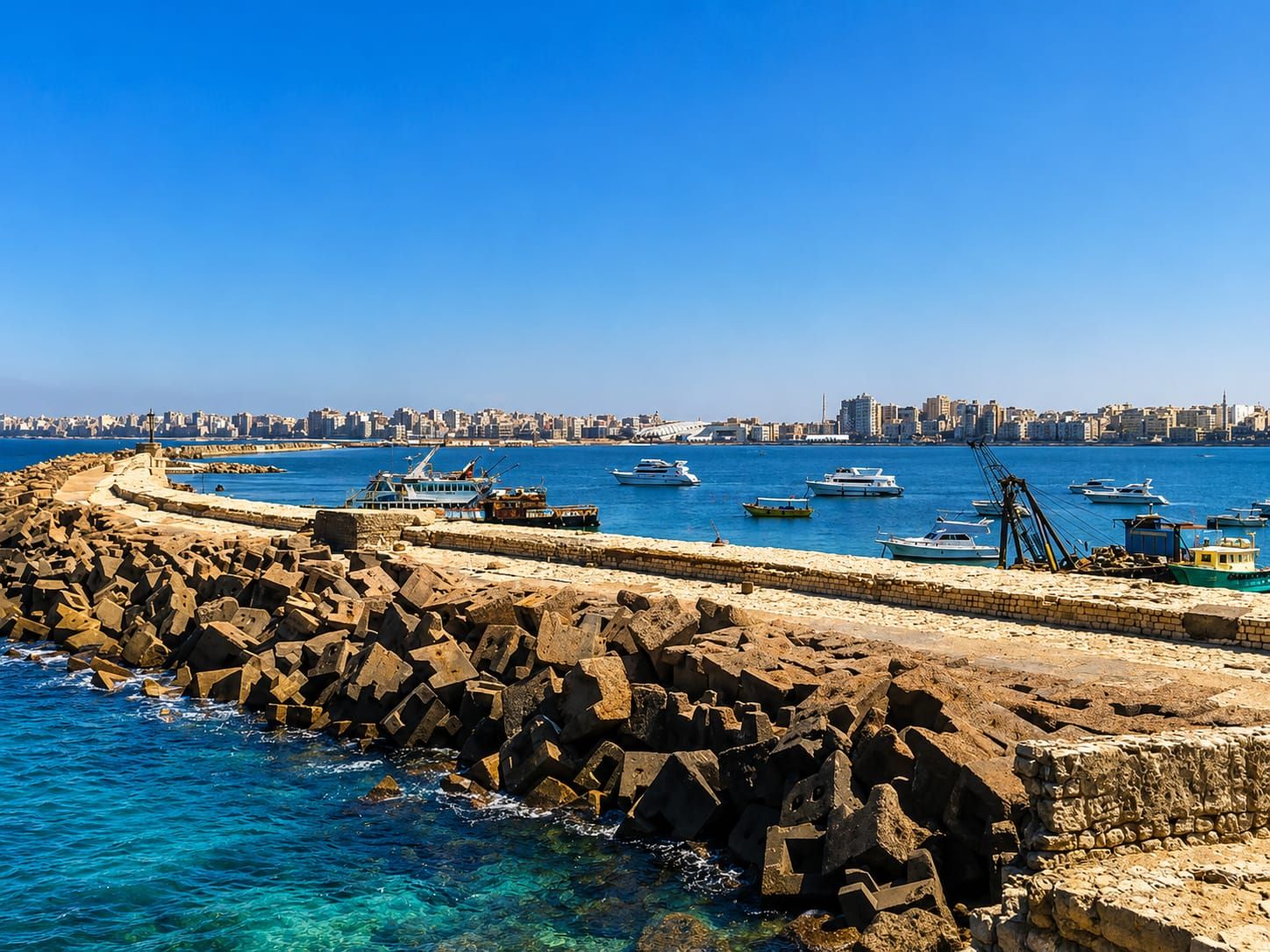
Alexandria, Egypt: Where Ancient Wonders Meet the Mediterranean
Alexandria is one of Egypt’s most captivating cities, offering visitors an extraordinary blend of ancient history, Mediterranean beauty, vibrant culture, and modern attractions. Located on Egypt’s northern coast along the sparkling Mediterranean Sea, Alexandria has enchanted travellers for over 2,300 years. Founded by Alexander the Great in 331 BC, the city quickly became one of the most important cultural, intellectual, and commercial centres of the ancient world.
Today, Alexandria remains Egypt’s second-largest city and one of the country’s most rewarding travel destinations. Unlike Cairo’s bustling streets and desert landscapes, Alexandria welcomes visitors with refreshing sea breezes, palm-lined promenades, elegant colonial architecture, seafood restaurants, historic cafés, impressive museums, and archaeological treasures that tell stories spanning thousands of years.
Whether you are passionate about ancient civilisations, fascinated by Greco-Roman history, searching for beautiful Mediterranean views, or simply looking for a relaxing coastal escape, Alexandria offers something for every traveller.
Every street corner reveals another chapter of history. Ancient Roman ruins stand beside modern buildings, centuries-old mosques overlook bustling markets, while luxury hotels share the coastline with traditional fishing boats. This remarkable mixture of old and new gives Alexandria a unique atmosphere unlike anywhere else in Egypt.
For many visitors, Alexandria provides the perfect balance between sightseeing and relaxation. After exploring archaeological sites in the morning, you can spend the afternoon enjoying fresh seafood overlooking the Mediterranean before finishing the day with a peaceful sunset walk along the famous Corniche.
Why Alexandria Should Be on Every Egypt Itinerary
Most travellers visiting Egypt immediately think of the Giza Pyramids, Luxor’s temples, or a Nile Cruise. While these destinations are undoubtedly spectacular, Alexandria offers a completely different side of Egypt that many visitors overlook.
Alexandria combines history, culture, architecture, beaches, and modern city life into one unforgettable destination.
Here are just a few reasons why Alexandria deserves a place on your Egypt itinerary:
Home of Alexander the Great’s Greatest Legacy
Alexandria is the only major city in Egypt founded by Alexander the Great himself. His vision transformed a small fishing village into one of the world’s greatest cities.
Birthplace of Ancient Knowledge
For centuries, Alexandria was considered the intellectual capital of the ancient world. Scholars travelled from Greece, Rome, Persia, and beyond to study at its legendary library.
Rich Greco-Roman Heritage
Unlike Upper Egypt, where Pharaonic temples dominate the landscape, Alexandria showcases Greek and Roman architecture, underground catacombs, amphitheatres, columns, and ancient city remains.
Beautiful Mediterranean Coastline
Alexandria offers kilometres of waterfront promenades, sandy beaches, cafés, marinas, and spectacular sea views that create a relaxing atmosphere year-round.
Incredible Seafood
Because of its coastal location, Alexandria is famous throughout Egypt for serving some of the freshest seafood in the country.
Comfortable Climate
Compared with Cairo and southern Egypt, Alexandria enjoys cooler temperatures thanks to the Mediterranean breeze.
Easy Day Trip from Cairo
Located approximately 220 kilometres north of Cairo, Alexandria is easily accessible by private car, train, or organised tour, making it an ideal day trip or weekend getaway.
The Remarkable History of Alexandria
Few cities in the world have influenced civilisation as profoundly as Alexandria.
Its story begins with one of history’s greatest military leaders.
Alexander the Great Arrives in Egypt
In 332 BC, Alexander the Great conquered Egypt during his campaign against the Persian Empire. Unlike many conquerors, Alexander was welcomed by the Egyptian people, who viewed him as a liberator.
Recognising the strategic importance of Egypt’s Mediterranean coastline, Alexander chose a small fishing village called Rhakotis as the location for a magnificent new city.
Construction began in 331 BC.
The city was designed using an advanced grid system by the famous Greek architect Dinocrates.
Alexander intended Alexandria to become:
- The capital of his Egyptian territories
- A major Mediterranean port
- A centre of commerce
- A hub of culture and education
- A connection between Europe, Africa, and Asia
Although Alexander left Egypt shortly after the city’s foundation, Alexandria continued to flourish under his successors.
The Ptolemaic Golden Age
After Alexander’s death in 323 BC, his general Ptolemy became ruler of Egypt and founded the Ptolemaic Dynasty.
Under Ptolemaic rule, Alexandria experienced an extraordinary period of prosperity.
It quickly became:
- The capital of Egypt
- One of the world’s largest cities
- The busiest Mediterranean trading port
- A centre for science and philosophy
- Home to magnificent royal palaces
- One of the wealthiest cities in the ancient world
Merchants arrived from every corner of the Mediterranean carrying spices, gold, ivory, textiles, wine, olive oil, glassware, and exotic goods.
Alexandria’s multicultural population included Egyptians, Greeks, Romans, Jews, Phoenicians, and people from across Africa and Asia, creating one of the most diverse cities of the ancient world.
The Legendary Library of Alexandria
No discussion of Alexandria is complete without mentioning its most famous institution—the Great Library of Alexandria.
Founded during the reign of Ptolemy I and expanded by Ptolemy II, the library became the largest collection of knowledge in the ancient world.
Historians estimate it may have housed between 400,000 and 700,000 scrolls.
The library aimed to collect every known book in existence.
Ships arriving at Alexandria’s harbour were reportedly required to surrender any manuscripts on board so copies could be made for the library.
Scholars studied subjects including:
- Astronomy
- Mathematics
- Medicine
- Philosophy
- Geography
- Literature
- Engineering
- Physics
Some of history’s greatest thinkers worked here, helping shape scientific understanding for generations.
Although the original library was eventually destroyed through a series of conflicts and disasters, its legacy lives on through the modern Bibliotheca Alexandrina, which continues the city’s tradition of learning and cultural exchange.
The Lighthouse of Alexandria
Standing proudly on the island of Pharos, the Lighthouse of Alexandria was one of the Seven Wonders of the Ancient World.
Constructed during the reign of Ptolemy II around 280 BC, it guided ships safely into Alexandria’s busy harbour for more than 1,500 years.
The lighthouse stood approximately 100–120 metres high, making it one of the tallest man-made structures of the ancient world.
Its innovative design featured three distinct levels:
- A square base
- An octagonal middle section
- A circular upper tower
At night, a large fire burned at the summit, while polished bronze mirrors reflected sunlight during the day, allowing sailors to spot Alexandria from many kilometres away.
Several powerful earthquakes between the 10th and 14th centuries severely damaged the lighthouse, and its remaining stones were later reused to build the impressive Citadel of Qaitbay, which now occupies the same site.
Cleopatra and Alexandria
Alexandria is forever associated with one of history’s most famous women—Queen Cleopatra VII.
The last ruler of the Ptolemaic Dynasty, Cleopatra transformed Alexandria into one of the most glamorous capitals of the ancient world.
Her relationships with Julius Caesar and Mark Antony changed the course of Roman and Egyptian history.
Although much of Cleopatra’s royal palace now lies beneath the Mediterranean Sea due to earthquakes and rising sea levels, underwater archaeological discoveries continue to reveal fascinating remains of ancient Alexandria.
Divers have uncovered:
- Marble statues
- Temple ruins
- Palace foundations
- Ancient columns
- Stone sphinxes
- Harbour structures
These discoveries offer a glimpse into the splendour of Cleopatra’s Alexandria.
Alexandria Under Roman Rule
In 30 BC, following Cleopatra’s death, Egypt became a province of the Roman Empire.
Alexandria remained one of Rome’s most important cities.
During this period, magnificent public buildings were constructed, including:
- Roman theatres
- Bathhouses
- Villas
- Temples
- Amphitheatres
- Markets
Many of these structures can still be visited today, particularly at Kom El-Dikka, where archaeologists uncovered an exceptionally well-preserved Roman neighbourhood.
Alexandria also became one of the earliest centres of Christianity, with its theological schools playing a significant role in the development of Christian doctrine.
Alexandria Through the Islamic Era
The Arab conquest of Egypt in the 7th century introduced a new chapter in Alexandria’s history.
Although Cairo gradually replaced Alexandria as Egypt’s political capital, the city remained an important Mediterranean port.
Throughout the Islamic, Mamluk, and Ottoman periods, Alexandria continued to thrive through international trade, maritime commerce, and cultural exchange.
Mosques, fortifications, markets, and caravanserais were built alongside older Greco-Roman monuments, creating the unique architectural diversity visible today.
Modern Alexandria
Today, Alexandria is a vibrant metropolis of more than five million residents. It remains one of Egypt’s leading economic, cultural, and educational centres.
Modern Alexandria is known for:
- The Bibliotheca Alexandrina
- Beautiful Corniche waterfront
- Historic cafés
- Bustling fishing harbours
- Excellent seafood restaurants
- Luxury seaside hotels
- Museums
- Art galleries
- Universities
- Mediterranean beaches
Despite rapid urban growth, the city has preserved much of its historical charm, making it one of Egypt’s most rewarding destinations for travellers.
Best Time to Visit Alexandria
One of Alexandria’s greatest advantages is its pleasant Mediterranean climate, making it a year-round destination.
Unlike southern Egypt, where summer temperatures can exceed 40°C, Alexandria benefits from cooling sea breezes that keep conditions far more comfortable.
Spring (March to May)
Spring is widely considered the best time to visit Alexandria.
The weather is warm but not overly hot, flowers bloom across the city’s parks and gardens, and outdoor sightseeing is particularly enjoyable.
Average temperatures range between 20°C and 28°C, making it perfect for walking along the Corniche, exploring archaeological sites, and enjoying outdoor cafés.
Spring is also ideal for photography, as clear skies and soft sunlight create excellent conditions for capturing Alexandria’s landmarks.
Top Attractions, Ancient Wonders & Must-Visit Landmarks
Alexandria is often described as an open-air museum where every district reveals another layer of history. From magnificent Greek and Roman monuments to Islamic fortresses and modern cultural landmarks, the city offers an exceptional variety of attractions that few destinations can match.
Unlike Cairo, where Pharaonic monuments dominate the landscape, Alexandria tells the story of Egypt’s Greco-Roman heritage. Ancient scholars once walked its streets, Roman emperors ruled from its palaces, and merchants from every corner of the Mediterranean filled its bustling harbour.
Whether you are visiting for a single day or spending several nights in the city, these attractions deserve a place on every itinerary.
Alexandria’s Top Attractions at a Glance
| Attraction | Historical Period | Recommended Visit | Average Visit Time | Best For |
|---|---|---|---|---|
| Bibliotheca Alexandrina | Modern | ⭐⭐⭐⭐⭐ | 2–3 hours | Culture & Architecture |
| Citadel of Qaitbay | Mamluk | ⭐⭐⭐⭐⭐ | 1–2 hours | History & Sea Views |
| Catacombs of Kom El Shoqafa | Roman | ⭐⭐⭐⭐⭐ | 1–1.5 hours | Archaeology |
| Pompey’s Pillar | Roman | ⭐⭐⭐⭐☆ | 45–60 minutes | Ancient History |
| Roman Amphitheatre | Roman | ⭐⭐⭐⭐☆ | 45 minutes | History Lovers |
| Alexandria National Museum | Modern | ⭐⭐⭐⭐⭐ | 2 hours | Egyptian History |
| Royal Jewelry Museum | Modern | ⭐⭐⭐⭐☆ | 1.5 hours | Royal Heritage |
| Montaza Palace Gardens | Modern | ⭐⭐⭐⭐⭐ | 2–3 hours | Families & Relaxation |
Bibliotheca Alexandrina
The Bibliotheca Alexandrina is undoubtedly Alexandria’s most iconic modern landmark. Built near the site of the legendary Ancient Library of Alexandria, it represents Egypt’s commitment to preserving knowledge and promoting international cultural dialogue.
Opened in 2002, the library was designed through an international architectural competition and has become one of the world’s most impressive modern libraries. Its striking circular design symbolises the rising sun, while the granite exterior is engraved with characters from more than one hundred writing systems, representing humanity’s shared pursuit of knowledge.
Inside, visitors discover one of the largest reading rooms in the world, spread across multiple levels and flooded with natural light through its dramatic sloping roof.
The library is much more than a collection of books. It functions as a cultural complex that hosts international conferences, scientific exhibitions, concerts, educational programmes, and art displays throughout the year.
Highlights
- Millions of books
- Massive multi-level reading hall
- Planetarium
- Manuscript Museum
- Antiquities Museum
- Art galleries
- Children’s Library
- Digital archives
- Conference centre
Why Visit?
The Bibliotheca Alexandrina bridges ancient history with modern innovation. Even visitors who are not avid readers are often captivated by its architecture, exhibitions, and panoramic views of the Mediterranean.
Citadel of Qaitbay
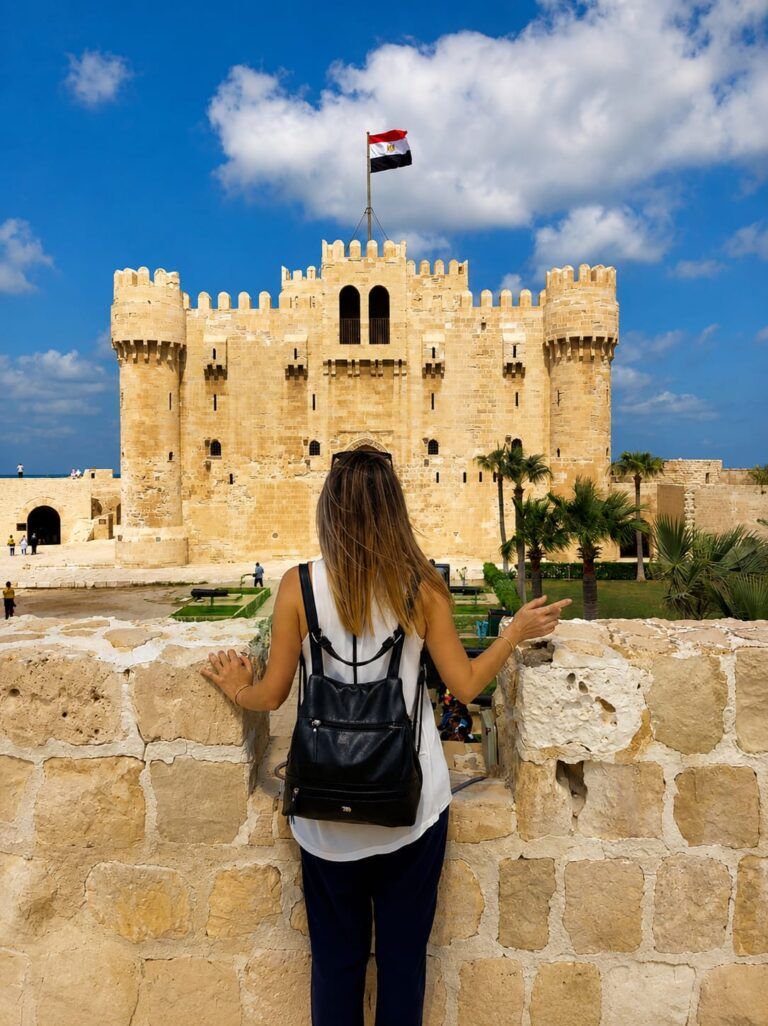
Standing proudly on the Mediterranean coast, the Citadel of Qaitbay occupies one of the most historically significant locations in the world.
The fortress was constructed in 1477 AD by Sultan Al-Ashraf Sayf al-Din Qaitbay to defend Alexandria against naval invasions. What makes the citadel especially remarkable is that it stands on the exact site where the legendary Lighthouse of Alexandria once guided ships into the city’s harbour.
Many historians believe that stones from the fallen lighthouse were incorporated into the fortress during construction.
Visitors exploring the citadel can walk through its defensive towers, narrow passageways, observation platforms, and thick stone walls while enjoying breathtaking views across Alexandria’s Eastern Harbour.
The upper levels offer some of the city’s finest panoramic photography opportunities, especially during sunrise and sunset.
Main Highlights
- Medieval defensive towers
- Ancient lighthouse site
- Historic cannons
- Harbour views
- Mediterranean coastline
- Excellent photography locations
Photography Tip
Visit during the late afternoon when warm sunlight illuminates both the fortress and the sea.
Catacombs of Kom El Shoqafa
The Catacombs of Kom El Shoqafa are among the most extraordinary archaeological sites in Egypt and are widely regarded as one of the Seven Wonders of the Medieval World.
Dating back to the 2nd century AD, these underground burial chambers reveal an extraordinary fusion of Egyptian, Greek, and Roman artistic traditions.
Visitors descend a spiral staircase into a vast underground necropolis containing family tombs, ceremonial halls, statues, sarcophagi, and beautifully carved reliefs.
Perhaps the most fascinating feature is the artistic blend visible throughout the catacombs. Egyptian gods appear wearing Roman clothing, while classical Greek decorative motifs surround traditional Egyptian funerary symbols.
This remarkable combination reflects Alexandria’s multicultural identity during the Roman period.
What You’ll See
- Underground burial chambers
- Ancient sarcophagi
- Roman banquet hall
- Carved statues
- Greek architectural details
- Egyptian religious symbolism
Visitor Advice
The underground chambers remain cool throughout the year, making this an excellent attraction during the summer months.
Pompey’s Pillar
Pompey’s Pillar is one of Alexandria’s most recognisable ancient monuments.
Despite its name, the column has no connection to the Roman general Pompey. Instead, it was erected around AD 297 in honour of Emperor Diocletian.
Carved from a single piece of red Aswan granite, the pillar stands approximately 27 metres high and weighs an estimated 285 tonnes.
It remains one of the largest monolithic Roman columns ever constructed.
Surrounding the pillar are the remains of the Serapeum, once one of the greatest temples in Alexandria dedicated to the Greco-Egyptian god Serapis.
Archaeologists have uncovered impressive sphinxes, underground tunnels, temple foundations, and numerous sculptures in the surrounding archaeological complex.
Interesting Facts
| Feature | Information |
|---|---|
| Height | Approximately 27 metres |
| Material | Red Aswan granite |
| Date | Around AD 297 |
| Dedicated To | Emperor Diocletian |
| Nearby Site | Temple of Serapis |
Roman Amphitheatre (Kom El-Dikka)
The Roman Amphitheatre was accidentally discovered during archaeological excavations in the 1960s.
Unlike massive Roman arenas found elsewhere, Alexandria’s theatre was designed primarily for lectures, musical performances, and public gatherings.
Its thirteen marble seating rows remain remarkably well preserved.
Excavations have also revealed nearby Roman villas decorated with colourful mosaic floors, ancient classrooms, baths, and residential buildings.
Today, visitors can walk through one of the best-preserved Roman neighbourhoods in Egypt.
Highlights
- Marble seating
- Roman mosaics
- Ancient lecture halls
- Roman baths
- Archaeological excavation area
Alexandria National Museum
Housed inside a beautifully restored Italian-style palace, the Alexandria National Museum provides an excellent overview of the city’s long history.
Its collection spans every major period of Egyptian civilisation.
Exhibits include:
- Pharaonic statues
- Greco-Roman sculptures
- Byzantine artefacts
- Islamic collections
- Royal family memorabilia
- Underwater discoveries from Alexandria’s harbour
For visitors with limited time, this museum offers one of the best introductions to Alexandria’s historical development.
Royal Jewelry Museum
Located in the elegant district of Zizenia, the Royal Jewelry Museum occupies a magnificent early twentieth-century palace that once belonged to Princess Fatma Al-Zahraa.
The museum showcases the lavish lifestyle of Egypt’s royal family before the 1952 revolution.
Visitors admire spectacular collections of:
- Diamond crowns
- Emerald necklaces
- Gold watches
- Decorative swords
- Royal portraits
- Crystal furniture
- Silver tableware
Equally impressive is the palace itself, featuring stained-glass windows, ornate ceilings, marble staircases, and intricate European-inspired architecture.
Montaza Palace Gardens
The Montaza Palace complex occupies one of Alexandria’s most scenic coastal locations.
Originally built as a royal summer residence, the estate covers more than 150 acres of beautifully landscaped gardens overlooking the Mediterranean Sea.
Visitors enjoy:
- Palm-lined avenues
- Flower gardens
- Historic palace exteriors
- Coastal walking paths
- Beaches
- Cycling areas
- Picnic spaces
The red-and-white palace combines Ottoman and Florentine architectural influences, creating one of Alexandria’s most photographed landmarks.
Recommended Visiting Order
| Time | Attraction |
|---|---|
| 09:00 | Bibliotheca Alexandrina |
| 11:30 | Roman Amphitheatre |
| 12:30 | Catacombs |
| 14:00 | Seafood Lunch |
| 15:30 | Pompey’s Pillar |
| 16:30 | Citadel of Qaitbay |
| 18:00 | Corniche Sunset Walk |
Attraction Comparison
| Attraction | History | Architecture | Photography | Families | Time Needed |
|---|---|---|---|---|---|
| Bibliotheca Alexandrina | ⭐⭐⭐⭐☆ | ⭐⭐⭐⭐⭐ | ⭐⭐⭐⭐⭐ | ⭐⭐⭐⭐⭐ | 2–3 hrs |
| Citadel of Qaitbay | ⭐⭐⭐⭐⭐ | ⭐⭐⭐⭐⭐ | ⭐⭐⭐⭐⭐ | ⭐⭐⭐⭐☆ | 1–2 hrs |
| Catacombs | ⭐⭐⭐⭐⭐ | ⭐⭐⭐⭐☆ | ⭐⭐⭐⭐☆ | ⭐⭐⭐☆☆ | 1 hr |
| Pompey’s Pillar | ⭐⭐⭐⭐☆ | ⭐⭐⭐⭐☆ | ⭐⭐⭐⭐☆ | ⭐⭐⭐☆☆ | 45 mins |
| Roman Amphitheatre | ⭐⭐⭐⭐☆ | ⭐⭐⭐⭐☆ | ⭐⭐⭐⭐☆ | ⭐⭐⭐⭐☆ | 45 mins |
| Montaza Gardens | ⭐⭐⭐☆☆ | ⭐⭐⭐⭐⭐ | ⭐⭐⭐⭐⭐ | ⭐⭐⭐⭐⭐ | 2 hrs |
By the end of this journey through Alexandria’s most famous landmarks, you’ll have explored a city where Greek philosophy, Roman engineering, Islamic architecture, and modern Egyptian culture exist side by side.
Best Beaches, Seafood, Shopping, Hotels & Hidden Gem
Alexandria is far more than an ancient city filled with archaeological treasures. It is Egypt’s Mediterranean playground, where visitors can relax on beautiful beaches, enjoy some of the country’s freshest seafood, shop in lively traditional markets, stay in luxurious seaside hotels, and discover hidden corners that many tourists never see.
The city’s unique atmosphere comes from its blend of European elegance, Egyptian hospitality, and Mediterranean lifestyle. Unlike many destinations where attractions close after sunset, Alexandria remains lively throughout the day and well into the evening, with cafés, restaurants, waterfront promenades, and bustling streets full of life.
Whether you’re travelling as a couple, with family, or on your own, Alexandria offers countless opportunities to relax between visits to its historic landmarks.
Alexandria’s Best Beaches
One of Alexandria’s greatest attractions is its long Mediterranean coastline, stretching for more than 30 kilometres. During the summer months, both locals and visitors flock to the city’s beaches to enjoy crystal-clear waters, refreshing sea breezes, and spectacular coastal scenery.
Some beaches are free and popular with local families, while others belong to hotels or private clubs, offering additional facilities such as sun loungers, changing rooms, restaurants, and water sports.
Montaza Beach
Located beside the famous Montaza Palace Gardens, Montaza Beach is one of Alexandria’s most picturesque coastal destinations. Surrounded by lush gardens, historic buildings, and rocky coves, it provides a peaceful escape from the city’s busy streets.
The calm waters make it an excellent choice for swimming, while the nearby gardens are perfect for walking, cycling, or enjoying a picnic.
Highlights
- Clean sandy beach
- Beautiful Mediterranean views
- Family-friendly atmosphere
- Nearby cafés
- Historic palace gardens
- Excellent photography opportunities
Stanley Beach
Perhaps Alexandria’s most photographed beach, Stanley Beach lies directly beneath the famous Stanley Bridge.
Its central location makes it particularly popular among visitors who want to combine sightseeing with relaxation.
Early mornings are peaceful, while evenings become lively as families and young people gather along the Corniche to enjoy the sea breeze.
Best Activities
- Swimming
- Beach cafés
- Sunset photography
- Walking along the Corniche
- Relaxing by the Mediterranean
Maamoura Beach
Maamoura Beach is one of Alexandria’s cleanest and most organised beaches.
The area offers:
- Soft golden sand
- Calm waters
- Children’s play areas
- Restaurants
- Private beach clubs
- Water sports during summer
Families particularly appreciate the well-maintained facilities and relaxed atmosphere.
Miami Beach
Despite sharing its name with the famous American city, Alexandria’s Miami Beach has developed its own unique identity.
It attracts younger visitors thanks to:
- Water activities
- Beach cafés
- Evening entertainment
- Vibrant atmosphere
Beach Comparison
| Beach | Swimming | Families | Water Sports | Scenic Views | Nearby Attractions |
|---|---|---|---|---|---|
| Montaza Beach | ⭐⭐⭐⭐⭐ | ⭐⭐⭐⭐⭐ | ⭐⭐⭐☆☆ | ⭐⭐⭐⭐⭐ | Montaza Palace |
| Stanley Beach | ⭐⭐⭐⭐☆ | ⭐⭐⭐⭐☆ | ⭐⭐⭐☆☆ | ⭐⭐⭐⭐⭐ | Stanley Bridge |
| Maamoura Beach | ⭐⭐⭐⭐⭐ | ⭐⭐⭐⭐⭐ | ⭐⭐⭐⭐☆ | ⭐⭐⭐⭐☆ | Maamoura Gardens |
| Miami Beach | ⭐⭐⭐⭐☆ | ⭐⭐⭐☆☆ | ⭐⭐⭐⭐☆ | ⭐⭐⭐⭐☆ | Corniche |
Alexandria’s Famous Corniche
No visit to Alexandria is complete without walking along the famous Corniche.
Stretching for approximately 16 kilometres, this waterfront boulevard follows the Mediterranean coastline from the Eastern Harbour to Montaza.
The Corniche is the heartbeat of Alexandria.
Throughout the day, visitors enjoy:
- Walking
- Jogging
- Cycling
- Fishing
- Photography
- Street food
- Outdoor cafés
- Watching the sunset
During the evening, the Corniche becomes especially lively as families, couples, and friends gather to enjoy the cooler temperatures and beautiful sea views.
Seafood: Alexandria’s Culinary Treasure
Alexandria is widely recognised as Egypt’s seafood capital.
Thanks to its Mediterranean fishing industry, restaurants receive fresh fish daily.
Visitors often describe seafood dining in Alexandria as one of the highlights of their trip.
Popular cooking styles include:
- Grilled
- Oven baked
- Fried
- Charcoal roasted
- Seafood casseroles
- Tagines
Fresh herbs, lemon, garlic, cumin, and olive oil give Alexandrian seafood its distinctive flavour.
Seafood You Must Try
| Dish | Description |
|---|---|
| Grilled Sea Bass | Fresh Mediterranean fish grilled over charcoal |
| Red Mullet | Popular local fish served grilled or fried |
| Jumbo Shrimp | Grilled with garlic butter |
| Calamari | Fried or stuffed |
| Seafood Tagine | Fish baked with vegetables and herbs |
| Seafood Soup | Rich Mediterranean broth |
| Crab | Fresh seasonal speciality |
| Lobster | Premium seafood available in many restaurants |
Traditional Alexandrian Dishes
Although seafood dominates local cuisine, Alexandria offers many other delicious specialities.
Alexandrian Liver Sandwich
One of Egypt’s most famous street foods.
Thin slices of liver are cooked with garlic, chilli, cumin, peppers, and spices before being served inside freshly baked bread.
Hawawshi
A crispy bread stuffed with seasoned minced meat, onions, herbs, and spices.
Best enjoyed hot.
Egyptian Falafel (Ta’ameya)
Unlike many countries where falafel is made from chickpeas, Egyptian ta’ameya uses fava beans.
It is crispy outside and soft inside.
Koshary
Egypt’s national dish combines:
- Rice
- Lentils
- Pasta
- Chickpeas
- Crispy onions
- Tomato sauce
- Garlic vinegar
Best Desserts
Visitors should not leave Alexandria without trying:
- Roz Bel Laban (Rice Pudding)
- Om Ali
- Basbousa
- Konafa
- Baklava
- Fresh Mediterranean ice cream
Best Shopping Areas
Alexandria offers everything from traditional markets to modern shopping centres.
Souk El Attarine
One of the oldest markets in Alexandria.
Visitors browse:
- Antiques
- Spices
- Perfumes
- Silver jewellery
- Handmade crafts
- Traditional clothing
- Copper products
The narrow streets preserve much of Alexandria’s historic atmosphere.
Zanet El Setat
A lively traditional market known for:
- Textiles
- Clothing
- Household goods
- Local souvenirs
- Leather products
Excellent for experiencing everyday Alexandrian life.
San Stefano Grand Plaza
For visitors seeking luxury shopping, San Stefano offers:
- International brands
- Fashion boutiques
- Jewellery
- Electronics
- Cafés
- Cinema
City Centre Alexandria
One of the city’s largest shopping malls.
Ideal for:
- Families
- Dining
- Entertainment
- International retailers
Best Souvenirs
| Souvenir | Why Buy It? |
|---|---|
| Papyrus Artwork | Traditional Egyptian art |
| Alabaster Sculptures | Hand-carved souvenirs |
| Cotton Clothing | High-quality Egyptian cotton |
| Spices | Authentic local flavours |
| Handmade Jewellery | Unique craftsmanship |
| Perfumes | Traditional oriental scents |
| Scarves | Colourful handmade textiles |
Where to Stay in Alexandria
Whether you’re seeking five-star luxury or affordable accommodation, Alexandria offers excellent choices for every budget.
Luxury Hotels
Ideal for travellers looking for premium facilities and sea views.
Common features include:
- Private beaches
- Swimming pools
- Spa facilities
- Fine dining
- Panoramic Mediterranean views
Mid-Range Hotels
Perfect balance between comfort and value.
Expect:
- Modern rooms
- Central locations
- Breakfast included
- Easy access to attractions
Budget Hotels
Great for backpackers and short stays.
Many are located close to:
- Corniche
- Train station
- Historic centre
- Public transport
Hotel Comparison
| Category | Suitable For | Typical Facilities |
|---|---|---|
| Luxury | Couples, Honeymooners | Spa, Pool, Sea View |
| Mid-Range | Families | Breakfast, Wi-Fi |
| Budget | Backpackers | Clean Rooms, Central Location |
Hidden Gems Most Tourists Miss
Alexandria rewards travellers who venture beyond the main attractions.
Kom El-Dikka Roman Villas
While many visitors stop at the Roman Theatre, few explore the surrounding Roman neighbourhood with its beautiful mosaic floors and ancient homes.
Anfushi Fishing District
One of Alexandria’s oldest neighbourhoods.
Visitors can watch fishermen repairing nets, colourful boats arriving with the day’s catch, and locals enjoying seafood in traditional restaurants.
Historic Cafés
Alexandria’s café culture reflects its cosmopolitan past.
Several historic cafés have welcomed writers, artists, politicians, and intellectuals for decades.
Many still preserve elegant interiors dating back to the early twentieth century.
Eastern Harbour
The Eastern Harbour offers beautiful panoramic views and is believed to contain the underwater remains of Cleopatra’s royal palace.
Boat tours occasionally provide views over parts of this fascinating archaeological area.
Best Sunset Photography Locations
Photography enthusiasts will find countless scenic viewpoints throughout Alexandria.
Top Locations
- Stanley Bridge
- Citadel of Qaitbay
- Corniche
- Montaza Gardens
- Eastern Harbour
- Bibliotheca Alexandrina
- Marina walkways
The warm Mediterranean light during golden hour creates spectacular conditions for landscape photography.
Practical Tips for Exploring Alexandria
| Tip | Recommendation |
|---|---|
| Wear Comfortable Shoes | Many attractions involve walking on uneven surfaces |
| Carry Cash | Small cafés and local markets may not accept cards |
| Dress Comfortably | Lightweight clothing is ideal in summer |
| Stay Hydrated | Bring water while sightseeing |
| Start Early | Major attractions are quieter in the morning |
| Allow Time for Traffic | Roads can become busy during peak hours |
Why Visitors Fall in Love with Alexandria
Alexandria offers a unique rhythm that is difficult to find elsewhere in Egypt. Mornings begin with fishermen heading out to sea, afternoons are filled with the aroma of freshly grilled seafood, and evenings come alive as families stroll along the Corniche under the cool Mediterranean breeze.
Its beaches, markets, cafés, and historic districts provide a refreshing contrast to Egypt’s desert landscapes, making it an essential destination for travellers seeking both relaxation and cultural discovery.
Day Trips, Family Activities, Nightlife, Transportation & Suggested Itineraries
Alexandria is not only a fascinating destination in its own right but also an excellent base for exploring Egypt’s Mediterranean coast and nearby historical sites. Whether you’re interested in ancient archaeology, World War II history, charming Ottoman towns, or simply relaxing by the sea, there are plenty of memorable excursions within easy reach of the city.
In addition to its day trips, Alexandria offers family-friendly attractions, a vibrant café culture, scenic waterfront nightlife, and efficient transport options, making it one of Egypt’s most versatile travel destinations.
Best Day Trips from Alexandria
If you have extra time, consider exploring some of the remarkable destinations surrounding Alexandria. Each offers a unique perspective on Egypt’s rich history and diverse landscapes.
1. El Alamein
Located approximately 110 km west of Alexandria, El Alamein is internationally known for the decisive World War II battles fought here in 1942.
History enthusiasts can visit:
- El Alamein Military Museum
- Commonwealth War Cemetery
- German War Memorial
- Italian Memorial
The nearby Mediterranean beaches also make El Alamein a pleasant destination for a relaxing afternoon after exploring its historic sites.
Highlights
- World War II history
- Military museums
- Beautiful beaches
- Scenic coastal drive
2. Rosetta (Rashid)
Situated about 65 km east of Alexandria, Rosetta is one of Egypt’s most charming historic towns.
Although the original Rosetta Stone now resides in London, the town remains famous for its beautifully preserved Ottoman architecture.
Visitors enjoy:
- Historic merchant houses
- Traditional streets
- Local markets
- Riverside cafés
- Ottoman mosques
Rosetta provides an authentic glimpse into everyday Egyptian life away from the major tourist centres.
3. Abu Mena
One of Egypt’s lesser-known UNESCO World Heritage Sites, Abu Mena was once among the most important Christian pilgrimage centres in the world.
Founded around the tomb of Saint Menas, the ancient city contains:
- Basilica ruins
- Baptisteries
- Pilgrim hostels
- Archaeological remains
Although parts of the site remain under conservation, it continues to attract visitors interested in Egypt’s early Christian heritage.
4. Cairo
Many travellers combine Alexandria with Cairo to experience Egypt’s most famous landmarks.
A day trip allows visitors to explore:
- Giza Pyramids
- Great Sphinx
- Grand Egyptian Museum
- Egyptian Museum
- Khan El Khalili Bazaar
- Old Cairo
Private tours typically take around 2.5 to 3 hours each way, making this one of Egypt’s most popular travel combinations.
Day Trip Comparison
| Destination | Distance from Alexandria | Travel Time | Best For | Recommended Visit |
|---|---|---|---|---|
| El Alamein | 110 km | 1.5 hrs | WWII History | Half or Full Day |
| Rosetta | 65 km | 1 hr | Culture & Architecture | Half Day |
| Abu Mena | 50 km | 1 hr | Christian Heritage | Half Day |
| Cairo | 220 km | 2.5–3 hrs | Ancient Egypt | Full Day |
Family-Friendly Activities in Alexandria
Alexandria is an excellent destination for families thanks to its parks, beaches, museums, and waterfront attractions.
Children can enjoy both educational experiences and outdoor activities throughout the city.
Bibliotheca Alexandrina Children’s Library
The modern library includes dedicated learning spaces designed especially for younger visitors.
Activities often include:
- Reading sessions
- Educational workshops
- Science exhibitions
- Interactive displays
Alexandria Aquarium
One of Egypt’s oldest aquariums showcases marine life from both the Mediterranean and the Red Sea.
Children enjoy seeing:
- Colourful fish
- Sea turtles
- Sharks
- Crustaceans
- Coral displays
Montaza Gardens
Families often spend several hours exploring the expansive gardens.
Popular activities include:
- Cycling
- Picnics
- Walking
- Photography
- Beach access
- Children’s play areas
Boat Rides
Short harbour cruises provide wonderful views of:
- Citadel of Qaitbay
- Eastern Harbour
- Alexandria skyline
- Mediterranean coastline
These relaxing trips are especially popular during sunset.
Best Activities for Families
| Activity | Age Group | Duration |
|---|---|---|
| Aquarium | All Ages | 1 Hour |
| Montaza Gardens | All Ages | 2–4 Hours |
| Harbour Boat Ride | All Ages | 45 Minutes |
| Bibliotheca Alexandrina | 6+ | 2 Hours |
| Corniche Walk | All Ages | Flexible |
Alexandria After Sunset
Alexandria offers a relaxed nightlife that focuses more on cafés, restaurants, and scenic waterfront walks than loud entertainment.
As temperatures cool, the Corniche fills with families, couples, and groups of friends enjoying the sea breeze.
Unlike many major cities, Alexandria’s evenings are calm, making them perfect for leisurely exploration.
Evening Walk Along the Corniche
This is one of the city’s most enjoyable experiences.
You’ll encounter:
- Street performers
- Local food vendors
- Ice cream shops
- Families enjoying the waterfront
- Spectacular sea views
Historic Cafés
Alexandria has long been famous for its café culture.
Many traditional cafés have welcomed writers, artists, politicians, and intellectuals for generations.
Popular drinks include:
- Egyptian coffee
- Mint tea
- Fresh fruit juice
- Turkish coffee
Seafood Dinner
Evening is the ideal time to enjoy Alexandria’s famous seafood.
Fresh catches arrive daily, ensuring exceptional quality.
Many waterfront restaurants allow guests to choose fish directly from display counters before cooking.
Transportation in Alexandria
Getting around Alexandria is relatively straightforward.
Visitors can choose from several transport options depending on budget and convenience.
Taxi
Widely available throughout the city.
Best for:
- Short journeys
- Hotel transfers
- Sightseeing
Always agree on the fare beforehand if the taxi does not use a meter.
Uber & Ride-Hailing Apps
Ride-hailing services are popular in Alexandria and generally offer transparent pricing and convenient cashless payment options.
Alexandria Tram
One of the oldest tram systems in the world still in operation.
Although slower than taxis, it provides a unique opportunity to experience everyday life in Alexandria.
Private Driver
For travellers wishing to visit multiple attractions efficiently, hiring a private driver is the most comfortable option.
Advantages include:
- Air-conditioned vehicle
- Flexible itinerary
- Hotel pickup
- No parking concerns
Transportation Comparison
| Transport | Cost | Comfort | Best For |
|---|---|---|---|
| Taxi | Moderate | High | Short Trips |
| Uber | Moderate | High | Tourists |
| Tram | Budget | Moderate | Local Experience |
| Private Driver | Higher | Excellent | Full-Day Tours |
Suggested One-Day Alexandria Itinerary
| Time | Activity |
|---|---|
| 08:30 | Arrive in Alexandria |
| 09:00 | Bibliotheca Alexandrina |
| 11:00 | Roman Amphitheatre |
| 12:00 | Catacombs of Kom El Shoqafa |
| 13:30 | Seafood Lunch |
| 15:00 | Pompey’s Pillar |
| 16:00 | Citadel of Qaitbay |
| 17:30 | Corniche Walk |
| 18:30 | Stanley Bridge Sunset |
| 19:30 | Return or Overnight Stay |
Suggested Two-Day Itinerary
Day One
- Bibliotheca Alexandrina
- Roman Amphitheatre
- National Museum
- Seafood Dinner
- Evening Corniche Walk
Day Two
- Citadel of Qaitbay
- Catacombs
- Pompey’s Pillar
- Montaza Gardens
- Stanley Bridge
- Shopping at Souk El Attarine
Estimated Daily Budget
| Travel Style | Estimated Daily Budget |
|---|---|
| Budget Traveller | £30–£60 |
| Mid-Range Traveller | £70–£150 |
| Luxury Traveller | £180+ |
Budgets vary depending on accommodation, dining preferences, and transport choices.
Essential Travel Tips
Currency
The local currency is the Egyptian Pound (EGP). While credit cards are accepted in hotels, shopping malls, and many restaurants, carrying some cash is useful for markets, taxis, and smaller cafés.
Language
Arabic is the official language, but English is widely spoken in tourist areas, hotels, museums, and by many guides.
Useful Arabic phrases:
| English | Arabic |
|---|---|
| Hello | Salam |
| Thank you | Shukran |
| Please | Min Fadlak |
| How much? | Bikam? |
| Goodbye | Ma’a Salama |
Clothing
Lightweight clothing is suitable for most of the year.
When visiting religious sites:
- Cover shoulders
- Wear clothing below the knees
- Remove shoes before entering mosques where required
Internet
Most hotels, cafés, and restaurants offer free Wi-Fi.
Visitors staying longer may wish to purchase a local SIM card for reliable mobile data.
Safety
Alexandria is considered one of Egypt’s safest tourist destinations.
Basic precautions include:
- Keep valuables secure.
- Stay aware in crowded markets.
- Use licensed transport.
- Follow guidance at archaeological sites.
Why Spend More Than One Day in Alexandria?
While many travellers visit Alexandria as a day trip from Cairo, staying for two or three nights reveals the city’s true character.
Early mornings along the harbour, relaxed afternoons in Montaza Gardens, evenings spent dining on fresh seafood beside the Mediterranean, and leisurely walks along the Corniche offer experiences that cannot be fully appreciated during a rushed visit.
Alexandria rewards travellers who slow down and immerse themselves in its rich history, welcoming atmosphere, and timeless coastal charm.
Travel Tips, Frequently Asked Questions, Practical Information & Conclusion
After exploring Alexandria’s remarkable history, ancient monuments, Mediterranean beaches, delicious cuisine, hidden gems, and exciting day trips, it’s time to prepare for your journey with practical travel advice and answers to the questions visitors ask most frequently.
Whether you’re planning your first visit to Egypt or returning to discover more of its Mediterranean coast, this section will help you make the most of your experience in Alexandria.
Essential Travel Information
| Information | Details |
|---|---|
| Country | Egypt |
| Governorate | Alexandria |
| Population | Approximately 5.5 million |
| Currency | Egyptian Pound (EGP) |
| Official Language | Arabic |
| Common Tourist Language | English |
| Time Zone | GMT +2 (GMT +3 during daylight saving when applicable) |
| Electricity | 220V – Type C & F plugs |
| Driving | Right-hand side |
| Emergency Number | 122 (Police), 123 (Ambulance) |
Internet & Mobile Connectivity
Staying connected in Alexandria is easy.
Most visitors purchase a local SIM card upon arrival at Cairo International Airport or Alexandria’s city centres.
Major providers offer:
- 4G and expanding 5G coverage
- Affordable tourist packages
- High-speed mobile internet
- Nationwide coverage
Free Wi-Fi is commonly available in:
- Hotels
- Cafés
- Restaurants
- Shopping malls
- Many museums
Money & Payments
Although credit cards are widely accepted in hotels, shopping malls, and larger restaurants, carrying cash is still recommended for:
- Local cafés
- Traditional markets
- Small shops
- Taxi fares
- Street food
ATMs are readily available throughout Alexandria.
What to Pack for Alexandria
Your packing list depends on the season, but these essentials are recommended year-round.
Clothing
- Lightweight shirts
- Comfortable trousers or shorts
- Light jacket for evenings
- Swimwear
- Comfortable walking shoes
- Hat or cap
- Sunglasses
Travel Essentials
- Passport
- Travel insurance documents
- Power adapter
- Portable charger
- Sunscreen
- Reusable water bottle
- Camera
- Small backpack
Optional Items
- Binoculars for harbour views
- Snorkelling equipment (if visiting nearby beaches)
- Guidebook
- Notebook for museum visits
Sustainable Travel Tips
Alexandria’s cultural and natural heritage deserves careful protection.
You can contribute by:
- Respecting archaeological sites
- Avoiding littering
- Supporting local businesses
- Buying handmade souvenirs
- Using reusable water bottles
- Following museum photography rules
- Respecting local customs and traditions
Responsible tourism helps preserve Alexandria for future generations.
Local Etiquette
Egyptians are well known for their hospitality, and visitors are generally welcomed warmly.
A few cultural tips include:
- Greet people politely.
- Dress modestly when visiting religious sites.
- Ask permission before photographing people.
- Remove shoes when required in mosques.
- Tipping for good service is appreciated but not mandatory.
Learning a few Arabic words often brings smiles from local residents.
Sample 3-Day Alexandria Itinerary
Day 1 – Ancient Alexandria
- Bibliotheca Alexandrina
- Roman Amphitheatre
- Alexandria National Museum
- Seafood dinner
- Corniche sunset walk
Day 2 – Historical Landmarks
- Citadel of Qaitbay
- Pompey’s Pillar
- Catacombs of Kom El Shoqafa
- Stanley Bridge
- Historic cafés
Day 3 – Relaxation & Local Culture
- Montaza Palace Gardens
- Beach time
- Souk El Attarine
- Traditional lunch
- Marina walk
Alexandria Travel Costs (Approximate)
| Item | Estimated Cost |
|---|---|
| Coffee | EGP 40–100 |
| Traditional Egyptian Lunch | EGP 200–500 |
| Seafood Meal | EGP 400–1,200 |
| Taxi Ride | EGP 80–250 |
| Museum Ticket | Varies by site and nationality |
| Private Guided Tour | Depends on inclusions and group size |
| Luxury Hotel | Varies seasonally |
| Budget Hotel | Varies seasonally |
Prices are approximate and may change over time.
Photography Tips
Alexandria is one of Egypt’s most photogenic cities.
Best Time for Photography
- Sunrise
- Golden hour before sunset
- Early morning for landmarks
- Blue hour after sunset
Best Photography Locations
- Citadel of Qaitbay
- Stanley Bridge
- Bibliotheca Alexandrina
- Montaza Palace Gardens
- Corniche
- Eastern Harbour
- Fishing boats in Anfushi
Frequently Asked Questions
1. Is Alexandria worth visiting?
Absolutely. Alexandria combines ancient history, Mediterranean scenery, museums, beaches, delicious seafood, and a relaxed atmosphere, making it one of Egypt’s most rewarding destinations.
2. How many days should I spend in Alexandria?
One day covers the major highlights, but two or three days allow you to experience the city at a more relaxed pace and explore its hidden gems.
3. Can Alexandria be visited as a day trip from Cairo?
Yes. Many visitors take a private day tour or train from Cairo, as the journey usually takes around 2.5–3 hours each way.
4. What is Alexandria famous for?
Alexandria is famous for:
- The Ancient Library of Alexandria
- Bibliotheca Alexandrina
- Lighthouse of Alexandria
- Citadel of Qaitbay
- Mediterranean beaches
- Fresh seafood
- Greek and Roman history
5. Is Alexandria safe for tourists?
Yes. Alexandria is generally considered one of Egypt’s safest tourist cities. As with any destination, visitors should remain aware of their surroundings and take normal travel precautions.
6. What is the best month to visit Alexandria?
April, May, September, and October usually provide the most comfortable temperatures for sightseeing.
7. What food should I try?
Popular dishes include:
- Grilled sea bass
- Seafood tagine
- Alexandrian liver sandwiches
- Hawawshi
- Koshary
- Ta’ameya (Egyptian falafel)
- Om Ali
- Konafa
8. Is Alexandria suitable for families?
Yes. Beaches, museums, gardens, aquariums, and boat rides make Alexandria an excellent destination for visitors of all ages.
9. Do I need a guide?
A guide is highly recommended for historical sites such as the Catacombs, Pompey’s Pillar, and the Roman Amphitheatre, where understanding the historical context greatly enhances the experience.
10. Can I swim in Alexandria?
Yes. Alexandria has many public and private Mediterranean beaches, particularly popular during the summer months.
11. Is English widely spoken?
Yes. English is commonly spoken in hotels, tourist attractions, museums, restaurants, and by professional tour guides.
12. What’s the best way to get around the city?
Ride-hailing services, taxis, and private drivers are the most convenient options. The historic tram is also a unique way to experience local life.
13. Is Alexandria expensive?
Alexandria offers excellent value for money compared with many Mediterranean destinations, with accommodation, food, and transport available for a wide range of budgets.
14. Are there good shopping opportunities?
Yes. Visitors can enjoy traditional markets such as Souk El Attarine as well as modern shopping centres featuring international brands.
15. What should I combine with Alexandria?
Many travellers combine Alexandria with:
- Cairo
- Giza Pyramids
- Grand Egyptian Museum
- El Alamein
- Rosetta (Rashid)
- The North Coast
This creates a varied itinerary that includes ancient history, coastal scenery, and modern attractions.
ines understand your site’s structure while encouraging visitors to explore additional content.
Discover the Best of Alexandria with Let’s Explore Egypt
Ready to experience the Mediterranean jewel of Egypt?
Join Let’s Explore Egypt for a private Alexandria tour designed around your interests. Whether you’re passionate about ancient history, breathtaking coastal views, or authentic local cuisine, our expert Egyptologists will ensure you enjoy an unforgettable journey.
Our Alexandria Tours Include:
- ✅ Private air-conditioned transportation
- ✅ Licensed Egyptologist guide
- ✅ Hotel pickup & drop-off
- ✅ Flexible itinerary at your own pace
- ✅ No shopping stops
- ✅ Family-friendly experiences
- ✅ Optional seafood lunch
- ✅ Combine Alexandria with Cairo, Giza, El Alamein, or Rosetta
Why Travel with Let’s Explore Egypt?
- ⭐ Licensed Egyptian travel company
- ⭐ 100% Private Tours
- ⭐ Experienced Local Egyptologists
- ⭐ Transparent Pricing
- ⭐ Flexible Booking
- ⭐ 24/7 WhatsApp Support
Whether you’re planning a day trip from Cairo or a multi-day adventure, we’ll help you discover Alexandria’s rich history, stunning coastline, and hidden gems in comfort and style.
Book Your Alexandria Tour Today!
Create unforgettable memories as you explore the legendary city founded by Alexander the Great.
📞 WhatsApp: +20 120 323 3365
Reserve your private Alexandria experience today and let us show you the very best of Egypt’s Mediterranean Pearl!
Recommended Egypt Tours

Why You Can Trust Let's Explore Egypt
This article was written and reviewed by the Let's Explore Egypt Editorial Team, a licensed Egyptian tour operator specializing in private Egypt tours, Nile cruises, and tailor-made travel experiences since 2009.
- 🏛 Licensed Egyptian Tour Operator Since 2009
- ⭐ Trusted by Thousands of Travelers Worldwide
- 👨🏫 Written & Reviewed by Local Egypt Travel Experts
- 🚐 Private Tours & Tailor-Made Travel Experiences
- 📞 24/7 Customer Support