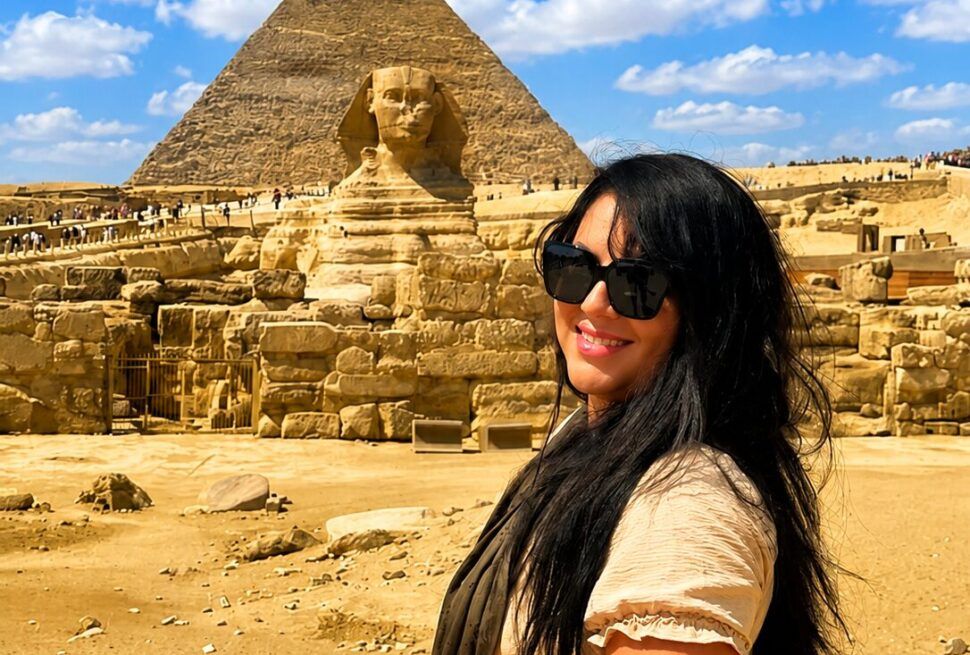


Few places on Earth inspire as much awe as the Great Sphinx of Giza. Standing proudly on the edge of the Giza Plateau for more than 4,500 years, this colossal limestone guardian has watched over the pyramids through the rise and fall of kingdoms, empires, and civilizations. Millions of travelers visit every year, but only a select few ever have the privilege of stepping inside the protected enclosure and standing between the paws of the Great Sphinx, directly in front of the legendary Dream Stele.
This extraordinary experience is often referred to as the VIP Between the Legs of the Sphinx Tour, although the correct description is standing between the Sphinx’s front paws. It offers a perspective of Egypt’s most iconic monument that almost no ordinary visitor will ever see.
Unlike standard tours around the Giza Plateau, this exclusive visit requires special permissions from the relevant Egyptian authorities. Because access is highly restricted, it has become one of the rarest cultural experiences available in Egypt. Travelers who obtain approval enjoy a peaceful encounter with the monument before or after regular visiting hours, away from the crowds that fill the plateau during the day.
Whether you are a history enthusiast, a professional photographer, a luxury traveler, or someone celebrating a once-in-a-lifetime occasion, standing just a few meters from the face of the Great Sphinx creates memories that remain unforgettable forever.
In this complete guide, you’ll discover everything you need to know about this remarkable VIP experience, including the history of the Sphinx, why the area is normally closed, how special access works, what makes the Dream Stele so important, and why this visit is considered one of Egypt’s most exclusive adventures.
Meet the Great Sphinx of Giza
The Great Sphinx of Giza is one of the oldest and largest monumental sculptures ever created by human hands. Carved directly from a single limestone outcrop on the Giza Plateau, the monument measures approximately:
- Length: 73 meters (240 feet)
- Height: 20 meters (66 feet)
- Width: 19 meters (62 feet)
It combines the powerful body of a lion with the head of a king, symbolizing strength, wisdom, and divine authority.
Most Egyptologists believe the monument was carved during the reign of Pharaoh Khafre, around 2500 BCE, during Egypt’s Fourth Dynasty. The Sphinx stands close to Khafre’s pyramid complex and appears to guard the sacred necropolis where the pyramids of Khufu, Khafre, and Menkaure dominate the horizon.
For thousands of years, the Sphinx has represented mystery. Despite centuries of archaeological research, scholars continue to debate several aspects of its construction, symbolism, original appearance, and religious significance.
Its missing nose, damaged ceremonial beard, and weathered body have only increased its legendary reputation.
Today, it remains one of the world’s most photographed monuments and an enduring symbol of ancient Egypt.
Standard Visit vs VIP Experience
| Feature | Standard Visit | VIP Experience |
|---|---|---|
| Distance from Sphinx | Outside barriers | Between the front paws (subject to approval) |
| Dream Stele Access | View from a distance | Close-up view |
| Crowds | High | Very limited |
| Photography | Standard viewpoints | Rare perspectives |
| Egyptologist | Optional | Usually included in private tours |
| Experience | Public | Exclusive (subject to approval) |
Why the Sphinx Continues to Fascinate the World
Unlike many ancient monuments that consist of individual blocks assembled together, the Great Sphinx was carved directly into the natural bedrock of the plateau. This remarkable engineering achievement required extraordinary planning, labor, and artistic vision.
Several factors contribute to the Sphinx’s global fascination:
Incredible Age
The monument has survived more than four millennia of earthquakes, desert winds, political upheavals, and environmental erosion.
Monumental Scale
Standing beside the Sphinx reveals details that photographs cannot capture. Its massive paws alone are larger than many modern vehicles.
Historical Mystery
Many questions remain unanswered:
- Why exactly was the Sphinx built?
- What rituals were performed here?
- Why was it buried beneath sand for centuries?
- What did it originally look like?
These unanswered questions continue to inspire archaeologists, historians, and travelers alike.
Symbol of Egypt
Few monuments represent Egypt as instantly as the Great Sphinx. Alongside the pyramids, it has become one of the most recognizable landmarks on Earth.
What Is the VIP Between the Legs of the Sphinx Experience?
Most visitors explore the Sphinx from designated public viewpoints located several meters away. Security barriers protect the monument, preserving its fragile limestone from millions of annual visitors.
The VIP experience is completely different.
Instead of viewing the Sphinx from outside the enclosure, approved guests enter the protected archaeological zone and walk directly toward the monument.
Here, visitors stand between the enormous front paws of the Sphinx, only a short distance from the famous Dream Stele. Looking upward, they can admire the Sphinx’s face from an angle that very few people ever experience.
The feeling is impossible to compare with ordinary sightseeing.
From this perspective, the Sphinx appears dramatically larger than it does from public viewing areas. Every carved detail becomes visible, including weathered limestone textures, restoration work, and the immense scale of the monument.
Many visitors describe the experience as deeply emotional.
Instead of sharing the monument with hundreds of tourists, they often enjoy a peaceful atmosphere where they can truly appreciate one of humanity’s greatest artistic achievements.
What Does “Between the Legs” Actually Mean?

The phrase “Between the Legs of the Sphinx” has become popular in tourism marketing, but technically it refers to standing between the Sphinx’s front paws, where the famous Dream Stele is located.
The body of the Sphinx stretches backward toward its tail, while the front paws extend forward into an open ceremonial space.
Visitors with authorized access stand in this protected area, facing the Sphinx and the granite stele installed during Egypt’s New Kingdom.
This location offers one of the most dramatic photographic angles anywhere in Egypt.
The Dream Stele: The Heart of the VIP Experience

Positioned between the massive paws of the Sphinx stands one of Egypt’s most important historical monuments: the Dream Stele.
The granite monument was erected by Pharaoh Thutmose IV around 1400 BCE.
According to the inscription, the young prince fell asleep in the shadow of the partially buried Sphinx during a hunting expedition.
While sleeping, he dreamed that the Sphinx spoke to him.
The ancient guardian promised that if he cleared away the desert sand covering its body, he would become Pharaoh of Egypt.
After ascending the throne, Thutmose IV fulfilled his promise.
He ordered workers to excavate the monument and placed the Dream Stele between the Sphinx’s paws to commemorate the event.
Today, this inscription remains one of the most significant historical texts connected with the Great Sphinx.
Standing directly in front of it creates a powerful connection with events that occurred more than 3,400 years ago.
Why Is This Area Normally Closed?
The enclosure surrounding the Great Sphinx is one of Egypt’s most carefully protected archaeological zones.
Several reasons explain the restrictions.
Preservation
The limestone used to carve the Sphinx is extremely fragile.
Millions of footsteps every year would gradually damage the ancient stone.
Restricting access helps preserve the monument for future generations.
Conservation Projects
Archaeologists and conservators regularly monitor the monument.
Restoration work has taken place for decades to stabilize weathered limestone and repair areas affected by erosion.
Keeping the enclosure controlled allows specialists to continue this work safely.
Visitor Safety
The archaeological area includes uneven ancient surfaces and sensitive excavation zones.
Limiting access reduces risks for visitors while protecting priceless historical remains.
Cultural Importance
The Great Sphinx is one of Egypt’s national treasures.
Special regulations help ensure the monument remains preserved under the supervision of the relevant Egyptian heritage authorities.
Why Luxury Travelers Seek This Experience
Modern luxury travel is no longer defined only by five-star hotels or private transportation.
Today’s discerning travelers increasingly value exclusive access—the chance to experience world-famous landmarks in ways that most people never can.
Standing between the Sphinx’s front paws offers exactly that.
Instead of viewing the monument from a crowded observation point, guests enjoy a quiet, intimate encounter with one of history’s greatest masterpieces.
For photographers, it provides rare compositions unavailable from public areas.
For history lovers, it creates a deeper appreciation of ancient Egypt’s artistry and engineering.
For couples celebrating honeymoons or anniversaries, it becomes a once-in-a-lifetime memory.
For families, it offers an educational experience that children and adults alike will remember for years.
This combination of rarity, history, and atmosphere explains why the experience is considered one of the most prestigious additions to a luxury Egypt itinerary.
Why This Experience Is So Rare
Many visitors assume they can simply purchase a premium ticket to enter the Sphinx enclosure.
In reality, access is far more limited.
The protected area is not part of standard admission to the Giza Plateau. Entry is subject to official permissions, operational considerations, and preservation requirements. Availability may vary, and requests are not guaranteed.
Because of these restrictions, relatively few visitors ever have the opportunity to stand in front of the Dream Stele between the Sphinx’s paws, making it one of the most exclusive experiences at the Giza Plateau.
How Does VIP Access to the Sphinx Work?
Standing between the front paws of the Great Sphinx is not part of a regular visit to the Giza Plateau. Unlike entering the Great Pyramid or visiting one of the surrounding tombs, there is no standard ticket that grants access to this protected area.
The space between the Sphinx’s paws is considered one of the most sensitive archaeological locations in Egypt. As a result, entry is carefully controlled to protect both the monument and the Dream Stele.
For travelers interested in this rare experience, arrangements typically need to be made well in advance through a licensed Egyptian tour operator. Access depends on official approvals, operational conditions, and monument conservation requirements. Approval is never guaranteed and may be unavailable during restoration work, official visits, or special events.
This careful process helps ensure that visitor numbers remain very limited while preserving one of the world’s most important archaeological treasures.
Why Is Permission Required?
The Great Sphinx is more than a tourist attraction—it is a priceless cultural monument that has survived for over four millennia.
Every visitor who enters the enclosure increases the risk of wear to the ancient limestone, which has already endured centuries of erosion from wind, sand, temperature changes, and pollution.
Restricting access serves several important purposes:
Protecting the Monument
The limestone surface is surprisingly fragile. Even repeated foot traffic can contribute to long-term deterioration. Limiting the number of visitors helps preserve the monument for future generations.
Supporting Conservation Work
Archaeologists, engineers, and conservators regularly inspect the Sphinx for cracks, weathering, and structural changes. Controlled access allows this work to continue safely.
Managing Visitor Safety
The protected enclosure contains uneven surfaces, historic stonework, and areas that require careful navigation. Limiting access helps reduce safety risks while protecting the archaeological site.
Preserving the Visitor Experience
A quieter, controlled environment allows approved guests to appreciate the monument without the crowds found elsewhere on the Giza Plateau.
Planning Ahead
Because access is limited, planning is essential.
Travelers who hope to include this experience in their Egypt itinerary should:
- Contact a licensed Egyptian tour operator well before arrival.
- Build flexibility into their travel schedule.
- Understand that availability depends on official approvals and site conditions.
- Be prepared for the possibility that access may not be granted.
Experienced tour operators can explain the current procedures and advise whether the experience is feasible during your travel dates.
What Happens During the VIP Experience?
Although every visit is slightly different, a typical experience follows a carefully managed sequence.
Arrival at the Giza Plateau
Your private guide and driver meet you at your hotel and accompany you to the Giza Plateau. Depending on your itinerary, this may take place before the busiest hours or later in the day when visitor numbers are lower.
The drive itself offers beautiful views of the pyramids rising above Cairo’s skyline.
Security and Entry
After arriving, the guide coordinates with the relevant authorities before entering the restricted area.
Because this is a protected archaeological site, visitors are expected to follow all instructions from site officials and remain within the designated areas.
Respect for the monument is an essential part of the experience.
Walking Toward the Sphinx
Unlike the standard visitor route, approved guests proceed through the protected enclosure toward the Great Sphinx.
With each step, the monument appears larger.
Photographs rarely convey the true scale of the Sphinx. Standing nearby reveals details such as:
- Individual limestone layers.
- Ancient restoration blocks.
- Carved facial features.
- Massive paws extending across the ground.
- Weathered textures shaped by thousands of years of desert conditions.
The closer you get, the more impressive the monument becomes.
Standing Between the Front Paws
This is the highlight of the experience.
Positioned between the Sphinx’s front paws, visitors stand beside the famous Dream Stele while looking directly up toward the face of the monument.
It is a perspective that very few people ever experience.
Many visitors describe this moment as deeply moving. Without the noise of large crowds, the atmosphere feels calm and timeless, making it easier to appreciate the craftsmanship and history surrounding you.
Learning From Your Egyptologist Guide
A knowledgeable Egyptologist can transform the visit from a sightseeing stop into an engaging historical experience.
Topics often include:
- The construction of the Sphinx.
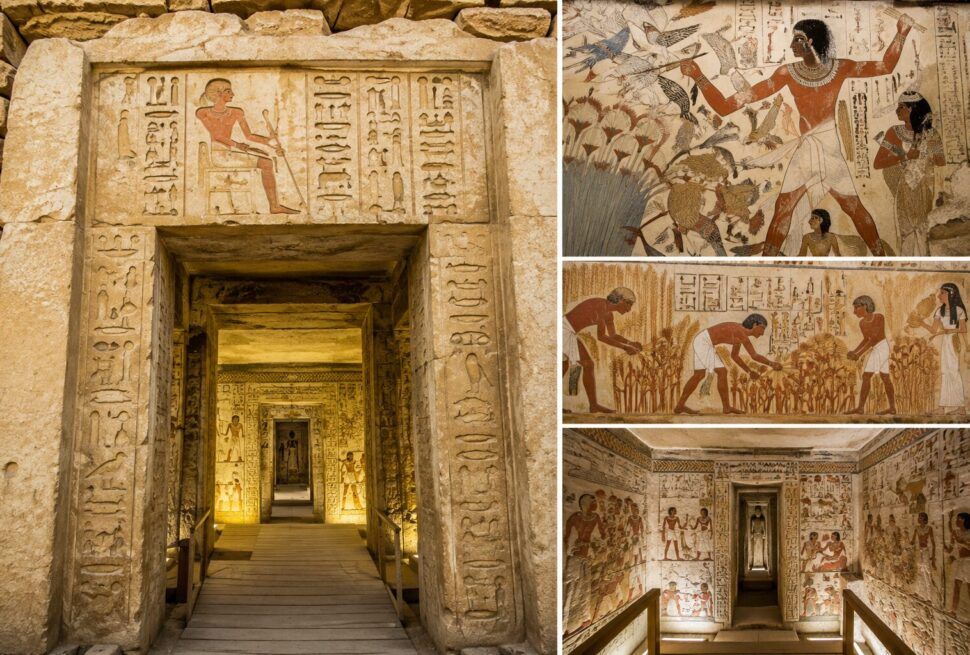
- Ancient religious beliefs.
- Symbolism of lions in Egyptian culture.
- The history of the Dream Stele.
- Restoration efforts through the centuries.
- Modern archaeological discoveries.
Seeing the monument while hearing these stories helps bring ancient Egypt to life.
Sunrise or Sunset: Which Is Better?
The time of day can dramatically change the atmosphere of your visit.
Sunrise
Many travelers consider sunrise the most magical time to experience the Giza Plateau.
As the first light reaches the limestone, the Sphinx gradually emerges from the morning shadows.
Benefits include:
- Cooler temperatures.
- Soft golden light.
- Peaceful surroundings.
- Excellent photography conditions.
- A quieter atmosphere before peak visitor hours.
For photographers, sunrise often provides the most flattering natural light.
Sunset
Sunset offers a different but equally memorable experience.
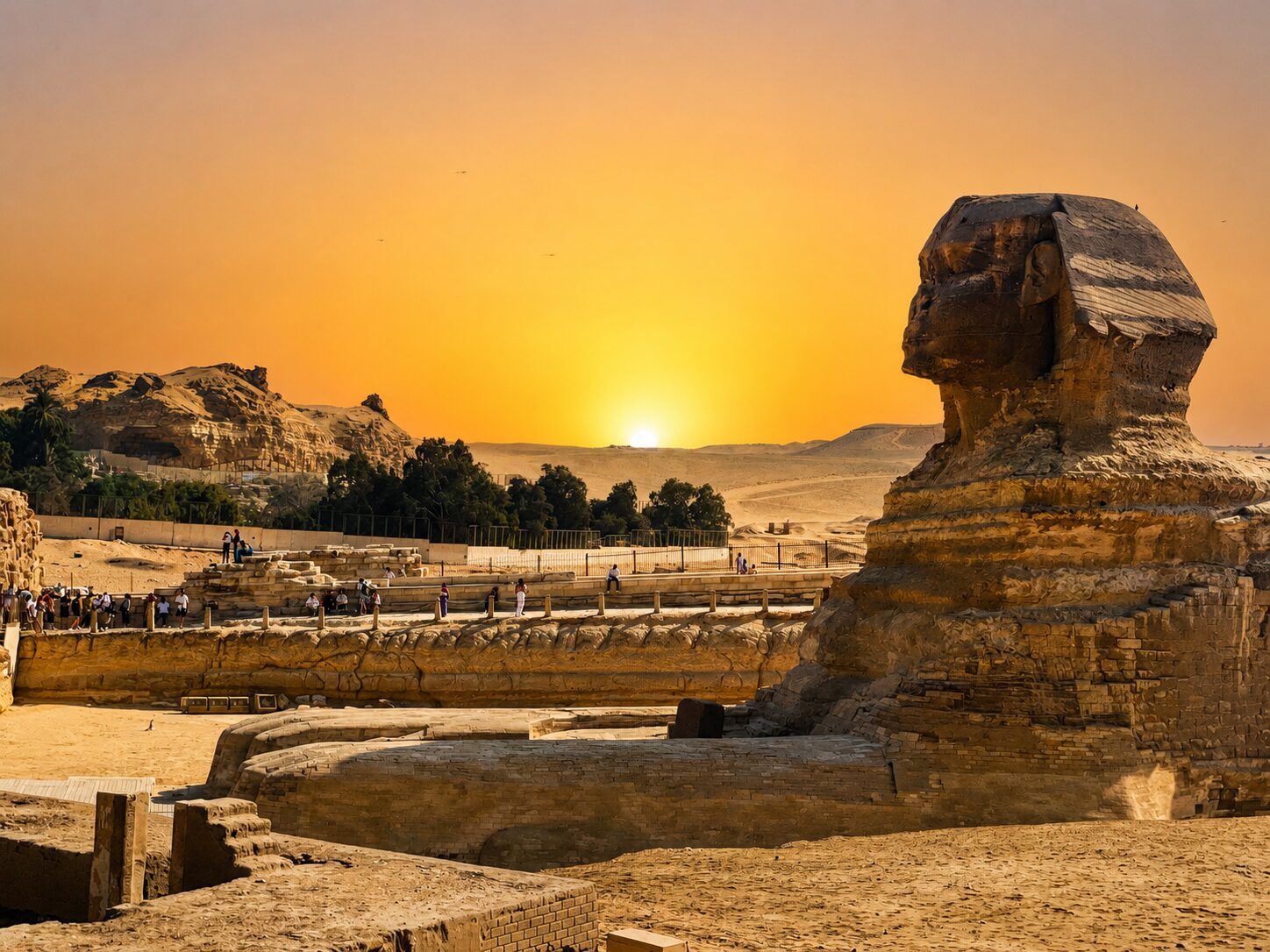
As the sun lowers toward the western desert, warm orange and golden tones illuminate the Sphinx and the pyramids.
Advantages include:
- Rich, dramatic colors.
- Long shadows that emphasize the monument’s shape.
- Beautiful desert atmosphere.
- Romantic setting for couples.
- Memorable end to a day of sightseeing.
Each season produces slightly different lighting conditions, making every visit unique.
Photography Opportunities
Table 4: Photography Checklist
| Item | Recommended |
|---|---|
| DSLR / Mirrorless Camera | ✔ |
| Smartphone | ✔ |
| Wide-angle Lens | ✔ |
| Telephoto Lens | ✔ |
| Tripod | Check current site rules before bringing one |
| Extra Battery | ✔ |
| Memory Cards | ✔ |
| Polarizing Filter | Optional |
Few places in Egypt offer photography opportunities as exceptional as the area between the Sphinx’s front paws.
Professional photographers especially appreciate:
Rare Perspective
Most tourists photograph the Sphinx from outside the enclosure.
Standing inside creates compositions that are rarely seen.
Incredible Scale
Including a person in the frame highlights the monument’s immense size.
The massive paws provide a striking foreground while the Sphinx’s face dominates the background.
Dream Stele Details
The granite Dream Stele becomes an important visual element, adding historical context to photographs.
Its inscriptions connect the image with one of ancient Egypt’s most famous royal stories.
Natural Light
Because the enclosure is relatively open, photographers can take advantage of changing sunlight throughout the day.
Golden hour often produces especially dramatic images.
What Should Visitors Wear?
Comfort and cultural respect are both important.
Recommended clothing includes:
- Lightweight breathable fabrics.
- Comfortable walking shoes.
- Sunglasses.
- Sunscreen.
- A wide-brimmed hat during warmer months.
- Modest attire suitable for visiting cultural and archaeological sites.
Bright colors can create attractive contrast against the warm tones of the limestone and desert landscape.
Respecting the Monument
The Great Sphinx has survived for more than 4,500 years because of ongoing conservation and careful management.
Visitors should always:
- Follow instructions from guides and site officials.
- Stay within authorized areas.
- Avoid touching or climbing on the monument.
- Refrain from bringing food or drinks into restricted zones unless permitted.
- Help preserve the site by leaving no litter behind.
Responsible tourism ensures that future generations can continue to appreciate this extraordinary landmark.
Combining the Experience With Other Attractions
A VIP Sphinx visit can be part of a broader private tour of the Giza Plateau.
Many travelers combine it with:
- The Great Pyramid of Khufu.
- The Pyramid of Khafre.
- The Pyramid of Menkaure.
- The Valley Temple.
- The Solar Boat Museum area (subject to current operations).
- Panoramic viewpoints overlooking all three pyramids.
- Camel rides around the plateau.
- The Grand Egyptian Museum.
- Saqqara and the Step Pyramid.
- Memphis, Egypt’s ancient capital.
This combination creates a full day exploring the highlights of ancient Egypt.
Is the Experience Worth It?
For travelers seeking something beyond a standard sightseeing tour, the answer is often yes.
What makes this experience memorable is not just the proximity to the monument but the sense of exclusivity and connection to history.
Standing quietly between the Sphinx’s front paws, beside the Dream Stele, offers a perspective that most visitors never see. The combination of history, architecture, and atmosphere creates a moment that feels truly unique.
However, because access depends on official approvals and site conditions, travelers should view it as a special opportunity rather than a guaranteed part of their itinerary.
The Mysteries That Make the Great Sphinx So Fascinating
For more than 4,500 years, the Great Sphinx of Giza has captured the imagination of travelers, historians, archaeologists, and storytellers. While the pyramids showcase the engineering brilliance of ancient Egypt, the Sphinx represents something more mysterious. Its silent expression, monumental scale, and unknown secrets continue to inspire countless theories and legends.
Standing between the Sphinx’s front paws during a VIP experience allows visitors to appreciate not only its physical grandeur but also the many mysteries that still surround this incredible monument.
Why Was the Great Sphinx Built?
Although many Egyptologists attribute the Great Sphinx to Pharaoh Khafre of the Fourth Dynasty, its exact purpose is still debated.
Several theories have been proposed over the years.
A Royal Guardian
The most widely accepted interpretation is that the Sphinx served as the guardian of the royal necropolis. Positioned in front of Khafre’s pyramid complex, the lion-bodied figure symbolized strength, protection, and royal authority.
Ancient Egyptians often associated lions with power and divine kingship, making the Sphinx a fitting protector of the pyramids.
A Solar Symbol
Some scholars believe the Sphinx had a strong connection to the sun god Ra.
Its eastward orientation means that it faces the rising sun every morning. This alignment may have linked the monument with rebirth, renewal, and the daily journey of the sun across the sky.
The sunrise continues to be one of the most breathtaking moments to admire the Sphinx.
A Sacred Monument
Others suggest the Sphinx functioned as part of a larger ceremonial landscape.
The Valley Temple, causeway, and pyramid complexes surrounding it may have been connected through religious rituals honoring deceased pharaohs and the gods of ancient Egypt.
The Missing Nose
One of the most common questions asked by visitors is:
“What happened to the Sphinx’s nose?”
Contrary to a popular myth, there is no reliable historical evidence that Napoleon’s soldiers destroyed it.
Historical drawings made before Napoleon’s Egyptian campaign already show the nose missing.
Most historians believe it disappeared centuries earlier, although the exact cause remains uncertain.
The mystery continues to intrigue visitors from around the world.
The Lost Beard
Few travelers realize that the Great Sphinx originally wore a ceremonial beard.
Fragments of this beard were discovered during archaeological excavations in the nineteenth century.
Today, several pieces are displayed in museums, including the British Museum, while others remain in Egypt.
The beard was probably added after the monument was originally carved, emphasizing its connection to royal and divine symbolism.
Was the Sphinx Once Painted?
Many visitors imagine the Sphinx as always appearing in the natural color of limestone.
In reality, archaeological evidence suggests that it was once brightly painted.
Scientists have identified traces of:
- Red pigment on the face.
- Blue and yellow coloring on parts of the ceremonial headdress.
- Decorative details that have disappeared over thousands of years.
Standing close to the monument makes it easier to imagine how magnificent it must have looked when newly completed.
Centuries Beneath the Sand
One of the most remarkable chapters in the Sphinx’s history is that it spent long periods almost completely buried by desert sand.
Throughout ancient history, strong desert winds gradually covered much of its body.
Only the head often remained visible.
Several pharaohs ordered excavation projects to uncover the monument, including Thutmose IV, whose Dream Stele commemorates one of the earliest recorded restoration efforts.
Even in the nineteenth century, large portions of the Sphinx remained buried before extensive archaeological excavations revealed the monument we see today.
Engineering Beyond Imagination
Creating the Great Sphinx required extraordinary planning.
Instead of transporting stone blocks, ancient builders carved directly into the natural limestone bedrock of the Giza Plateau.
The process involved:
- Surveying the landscape.
- Shaping massive limestone layers.
- Removing thousands of tons of rock.
- Creating detailed facial features.
- Constructing surrounding temples using quarried stone removed from the site.
Modern engineers continue to admire the precision achieved using Bronze Age tools.
The Best Photography Tips
A VIP visit offers photography opportunities that are simply impossible during a standard tour.
Here are some professional tips for capturing unforgettable images.
Photograph the Scale
One mistake many travelers make is photographing only the Sphinx.
Including a person in the frame immediately shows its enormous size.
The front paws provide an excellent foreground while the face towers dramatically above.
Use the Dream Stele
The Dream Stele adds historical context.
Including it in your composition creates a stronger visual story than photographing only the monument itself.
Shoot During Golden Hour
Shortly after sunrise and before sunset, sunlight becomes warmer and softer.
This creates:
- Rich golden colors.
- Gentle shadows.
- Better skin tones.
- Greater texture on the limestone.
Professional photographers often schedule sessions specifically during these times.
Wide-Angle Lens
A wide-angle lens helps capture both the Sphinx and its surroundings.
This works particularly well when photographing:
- The paws.
- The Dream Stele.
- Visitors.
- The enormous face above.
Telephoto Lens
A telephoto lens allows photographers to isolate details including:
- Facial features.
- Limestone textures.
- Ancient repairs.
- Hieroglyphic carvings.
- The weathered headdress.
Luxury Experiences to Combine With the Visit
A VIP Sphinx experience is often part of a carefully designed luxury itinerary.
Popular additions include:
Private Egyptologist Guide
Having a knowledgeable Egyptologist brings the site to life with stories, historical context, and insights that go far beyond guidebooks.
Luxury Transportation
Many premium travelers choose private, air-conditioned vehicles with professional drivers, allowing them to explore Egypt in comfort and at their own pace.
Fine Dining
After visiting the plateau, many travelers enjoy lunch or dinner at restaurants overlooking the pyramids, combining excellent cuisine with spectacular views.
Professional Photography
Some visitors arrange a professional photographer to document the experience, creating lasting memories of this once-in-a-lifetime visit.
Nearby Attractions Worth Visiting
The Giza Plateau offers much more than the Sphinx alone.
Many visitors include these remarkable sites in their itinerary.
The Great Pyramid of Khufu
The largest and oldest pyramid at Giza remains the only surviving Wonder of the Ancient World.
Visitors may enter the pyramid when entry tickets are available, experiencing one of history’s greatest engineering achievements.
The Pyramid of Khafre
Often mistaken for the tallest pyramid because it stands on higher ground, Khafre’s pyramid still retains some of its original smooth casing stones near the summit.
The Pyramid of Menkaure
Although smaller than its neighboring pyramids, Menkaure’s pyramid is equally fascinating and offers insight into the evolution of pyramid construction.
Valley Temple
Located beside the Sphinx, the Valley Temple is among the best-preserved structures from Egypt’s Old Kingdom.
Many archaeologists believe the mummification rituals of Pharaoh Khafre were closely connected with this remarkable building.
Grand Egyptian Museum (GEM)
A visit to the Grand Egyptian Museum complements the Giza Plateau perfectly.
Its extensive collections, modern galleries, and conservation facilities provide deeper insight into Egypt’s rich cultural heritage.
Saqqara
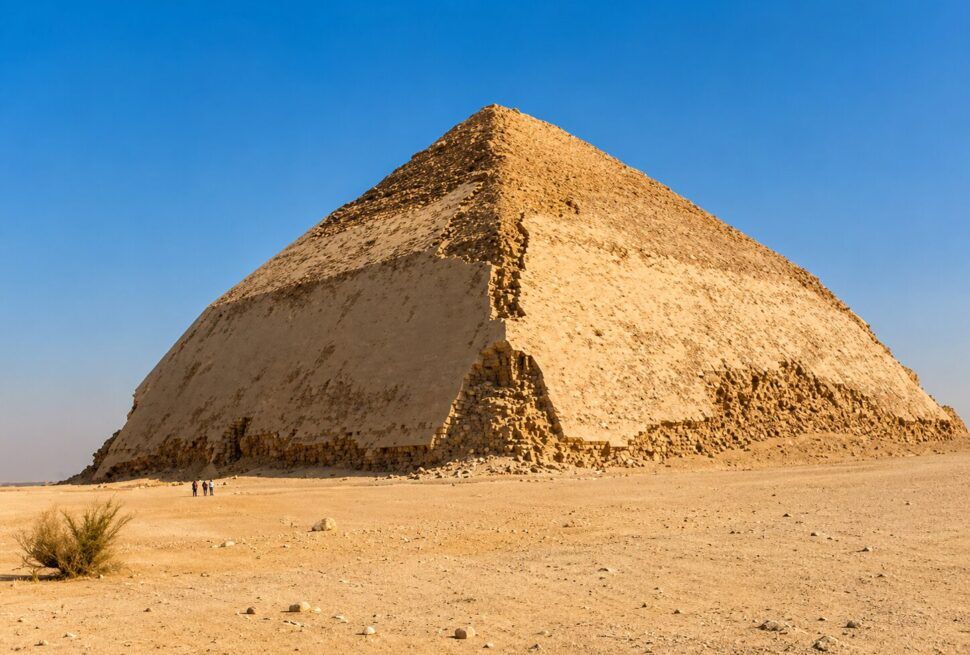
Home to the famous Step Pyramid of Djoser, Saqqara marks the beginning of pyramid construction in ancient Egypt and offers an entirely different archaeological experience.
Tips for an Exceptional Visit
To make the most of your experience:
- Wear comfortable walking shoes.
- Carry bottled water, especially during warmer months.
- Bring sunscreen and sunglasses.
- Keep your camera fully charged with extra memory cards.
- Listen carefully to your Egyptologist guide.
- Respect all archaeological regulations.
- Allow plenty of time to enjoy the experience without rushing.
A Once-in-a-Lifetime Memory
There are many impressive archaeological sites around the world, but few offer the emotional impact of standing between the front paws of the Great Sphinx.
Looking upward at the ancient guardian while surrounded by thousands of years of history creates a profound sense of connection to one of humanity’s greatest civilizations.
For many travelers, it becomes the defining highlight of their journey through Egypt.
Planning Your VIP Sphinx Experience
A visit between the front paws of the Great Sphinx is unlike any ordinary sightseeing activity. Because this is one of the most restricted archaeological experiences in Egypt, careful planning is essential.
The first step is working with a licensed Egyptian tour operator familiar with the procedures for requesting special access. While operators can assist with the application process, entry is always subject to approval by the relevant Egyptian authorities and may not be available on every date.
To maximize your chances:
- Plan several weeks or months in advance.
- Remain flexible with your travel schedule.
- Avoid relying on this experience as the only highlight of your itinerary.
- Confirm all arrangements before arriving in Egypt.
Early planning also makes it easier to combine the visit with other premium experiences, such as the Grand Egyptian Museum, Saqqara, or a luxury Nile cruise.
Why Responsible Tourism Matters
The Great Sphinx has survived for more than 4,500 years, but its preservation depends on careful management and responsible visitors.
Every traveler who enjoys this extraordinary experience has a role in protecting it for future generations.
Responsible tourism includes:
- Following all instructions from site officials.
- Remaining within authorized areas.
- Avoiding any contact with the monument.
- Never climbing on archaeological structures.
- Respecting photography rules where applicable.
- Leaving the site exactly as you found it.
By respecting these guidelines, visitors help preserve one of humanity’s greatest cultural treasures.
Who Should Consider This Experience?
Although almost anyone interested in ancient Egypt would appreciate this unique opportunity, it is especially suited to:
Luxury Travelers
Those seeking exclusive access to iconic landmarks beyond standard tourist routes.
History Enthusiasts
Visitors who want a deeper understanding of ancient Egyptian civilization with the guidance of an expert Egyptologist.
Professional Photographers
The protected enclosure provides perspectives that are unavailable from public viewing areas.
Couples
The quiet atmosphere and extraordinary setting make this a memorable addition to honeymoons, anniversaries, or milestone celebrations.
Families
Older children and adults interested in archaeology often find this one of the most educational experiences in Egypt.
What to Bring
| Item | Why |
|---|---|
| Passport | Identification if required |
| Sunglasses | Desert sun |
| Sunscreen | UV protection |
| Hat | Shade |
| Comfortable Shoes | Walking on uneven ground |
| Water | Stay hydrated |
| Camera | Capture the experience |
| Portable Charger | Backup power |
Nearby Attractions
| Attraction | Distance |
|---|---|
| Great Pyramid of Khufu | 5 minutes |
| Pyramid of Khafre | 5 minutes |
| Pyramid of Menkaure | 8 minutes |
| Valley Temple | 2 minutes |
| Grand Egyptian Museum | 10 minutes |
| Saqqara | 30–40 minutes |
| Memphis | 40–45 minutes |
Frequently Asked Questions
1. Can anyone visit between the Sphinx’s front paws?
No. This area is not open with a standard Giza Plateau ticket. Access depends on official permissions and operational conditions, and approval is not guaranteed.
2. How far in advance should I plan?
It is advisable to begin planning well ahead of your travel dates, especially during peak tourist seasons.
3. Is this experience available every day?
Not necessarily. Availability may change due to conservation work, official events, weather conditions, security measures, or other operational requirements.
4. Can I take photographs?
Photography is generally permitted according to the rules in effect at the time of your visit. Always follow the guidance of your tour guide and site officials.
5. Is sunrise better than sunset?
Both offer beautiful lighting and a unique atmosphere.
- Sunrise: Cooler temperatures, softer light, and a quieter environment.
- Sunset: Warm golden tones, dramatic shadows, and stunning desert scenery.
The best choice depends on your schedule and photography preferences.
6. Is the visit suitable for children?
Yes, provided children are supervised and can comfortably walk around the archaeological site while respecting its rules.
7. How long does the experience last?
The duration varies depending on the approved itinerary, security procedures, and the overall tour schedule.
8. Is transportation included?
Many private tour packages include transportation, but inclusions vary by operator. Always confirm the details when booking.
9. What should I wear?
Comfortable walking shoes, lightweight clothing, a hat, sunglasses, and sunscreen are recommended. Dressing modestly is also appropriate for cultural and archaeological sites.
10. Why is this considered one of Egypt’s most exclusive experiences?
Because very few travelers receive the opportunity to enter the protected enclosure and stand beside the Dream Stele between the Sphinx’s front paws. The combination of rarity, history, and breathtaking views makes it an unforgettable experience.
| Question | Short Answer |
|---|---|
| Is access guaranteed? | No, it depends on official approvals and site conditions. |
| Can children join? | Yes, with adult supervision. |
| Can I take photos? | Usually yes, subject to current site rules. |
| Is it private? | Typically arranged as a private experience. |
| How long does it last? | Usually 30–60 minutes within the broader itinerary. |
| Best season? | October–April offers milder weather. |
Expert Tips for Your Visit
To enjoy the best possible experience:
- Arrive well rested and hydrated.
- Wear comfortable footwear suitable for uneven ground.
- Bring a fully charged camera or smartphone.
- Consider hiring a professional photographer if you want high-quality memories.
- Take time to appreciate the history instead of rushing through the visit.
- Ask your Egyptologist questions—the stories behind the Sphinx are just as fascinating as the monument itself.
- Pair your visit with other nearby highlights, such as the Great Pyramid, the Valley Temple, and the Grand Egyptian Museum.
The Lasting Legacy of the Great Sphinx
For thousands of years, the Great Sphinx has symbolized mystery, endurance, and the extraordinary achievements of ancient Egypt.
It has witnessed the rise and fall of dynasties, changing civilizations, and millions of visitors from around the world. Despite centuries of research, many of its secrets remain unsolved, adding to its timeless appeal.
Standing between the Sphinx’s front paws is more than simply visiting an archaeological site. It is an opportunity to connect with one of the world’s oldest and most recognizable monuments from a perspective that very few people experience.
Whether you are drawn by history, photography, architecture, or the desire for an unforgettable journey, this exclusive encounter offers a rare glimpse into Egypt’s remarkable past.
With thoughtful planning, respect for the site’s preservation, and guidance from experienced professionals, your visit can become one of the defining moments of your travels.
Final Thoughts
The VIP Between the Legs of the Sphinx experience is one of Egypt’s most extraordinary cultural opportunities. While access is limited and dependent on official approval, those who are fortunate enough to receive permission enjoy an unforgettable encounter with one of humanity’s greatest ancient masterpieces.
Combined with the Pyramids of Giza, the Grand Egyptian Museum, Saqqara, Memphis, or a luxury Nile cruise, this experience forms part of an exceptional journey through the heart of ancient Egypt.
For travelers seeking something beyond the ordinary, standing beside the Dream Stele between the Sphinx’s front paws is a memory that will last a lifetime.
Quick Facts
| Feature | Details |
|---|---|
| Location | Giza Plateau, Cairo, Egypt |
| Monument Age | Approximately 4,500 years |
| Height | 20 meters (66 feet) |
| Length | 73 meters (240 feet) |
| Famous Feature | Dream Stele between the front paws |
| Standard Ticket Access | No |
| Special Permission Required | Yes |
| Best Time to Visit | Sunrise or sunset |
| Ideal For | Luxury travelers, photographers, history enthusiasts |
| Nearby Attractions | Great Pyramid, Khafre Pyramid, Menkaure Pyramid, Valley Temple, Grand Egyptian Museum, Saqqara |
Ready to Experience the Sphinx Like Few Ever Will?
Imagine standing just steps from the Great Sphinx, between its monumental front paws beside the legendary Dream Stele—an experience that very few travelers have the opportunity to enjoy.
At Let’s Explore Egypt, we specialize in creating unforgettable private journeys with expert Egyptologist guides, luxury transportation, and personalized itineraries. If you’re interested in this exclusive experience, our team can advise you on the current procedures and help you explore whether special access may be possible for your travel dates. Please note that all access is subject to approval by the relevant Egyptian authorities and cannot be guaranteed.
Why Book With Let’s Explore Egypt?
- 🏛 Licensed Egyptian Tour Operator
- 👨🏫 Professional Egyptologist Guides
- 🚗 Private Air-Conditioned Vehicles
- 📸 Personalized Luxury Experiences
- 💬 24/7 WhatsApp Support
- ⭐ Thousands of Happy Travelers Worldwide
- 💳 Flexible Booking Options
Start Planning Your VIP Egypt Adventure Today
Whether you’re celebrating a honeymoon, marking a special occasion, or simply seeking an extraordinary travel experience, we’ll help design a private itinerary tailored to your interests.
Contact us today for a personalized quote and discover the wonders of Egypt in comfort, style, and exclusivity.
📞 Get in Touch
WhatsApp: +201203233365
Email: info@lets-explore-egypt.com
✨ Request Your Private Egypt Tour Today
Contact Let’s Explore Egypt now and let our local experts help you create the journey of a lifetime.
Recommended Egypt Tours
Why You Can Trust Let's Explore Egypt
This article was written and reviewed by the Let's Explore Egypt Editorial Team, a licensed Egyptian tour operator specializing in private Egypt tours, Nile cruises, and tailor-made travel experiences since 2009.
- 🏛 Licensed Egyptian Tour Operator Since 2009
- ⭐ Trusted by Thousands of Travelers Worldwide
- 👨🏫 Written & Reviewed by Local Egypt Travel Experts
- 🚐 Private Tours & Tailor-Made Travel Experiences
- 📞 24/7 Customer Support