Introduction, History & Overview
The Grand Egyptian Museum (GEM): Egypt’s New Crown Jewel and the World’s Largest Archaeological Museum
Standing majestically just two kilometers from the legendary Giza Pyramids, the Grand Egyptian Museum (GEM) represents one of the most ambitious cultural projects ever undertaken. Designed to celebrate over 5,000 years of Egyptian civilization, the museum is not only the largest archaeological museum dedicated to a single civilization but also a masterpiece of modern architecture that bridges Egypt’s ancient past with its innovative future.
Covering nearly 500,000 square meters, the Grand Egyptian Museum houses more than 100,000 priceless artifacts, including the complete collection of King Tutankhamun’s treasures displayed together for the first time in history. Visitors can admire monumental statues, royal mummies, intricate jewelry, ancient papyri, beautifully preserved coffins, and everyday objects that reveal the fascinating story of one of humanity’s greatest civilizations.
Unlike traditional museums, GEM offers a fully immersive experience. Advanced multimedia technology, interactive exhibitions, digital displays, spacious galleries, panoramic pyramid views, elegant restaurants, and beautifully landscaped gardens make it one of the most exciting cultural attractions in the world.
Whether you are visiting Egypt for the first time or returning to explore more of its incredible history, the Grand Egyptian Museum promises an unforgettable journey through thousands of years of civilization
Quick Facts About the Grand Egyptian Museum
| Feature | Details |
|---|---|
| 📍 Location | Giza, Egypt |
| 🏛 Opening | Officially opened in stages, with full public access now available |
| 📦 Collection | Over 100,000 artifacts |
| 👑 Tutankhamun Collection | Complete collection displayed together |
| 📏 Total Area | Approximately 500,000 m² |
| 🖼 Main Galleries | 12 chronological galleries |
| ⭐ Famous Statue | Ramses II Colossus |
| 🌍 Distance from Pyramids | About 2 km |
The History of the Grand Egyptian Museum

The idea of creating a new national museum emerged during the early 1990s as Egypt’s growing archaeological discoveries began to exceed the capacity of existing museums.
1992 – The Vision Begins
Egyptian authorities announced plans to create a museum unlike any other in the world—a place where ancient history could be displayed using modern technology while preserving priceless artifacts under ideal environmental conditions.
2002 – International Design Competition
More than 1,500 architectural firms from around the globe competed to design the museum. The winning proposal came from Heneghan Peng Architects, whose striking triangular façade echoes the geometry of the nearby pyramids while embracing contemporary design.
2005–2010 – Construction Starts
Construction began on the Giza Plateau, only a short distance from the pyramids. Engineers faced enormous challenges due to the project’s unprecedented scale and the need to protect nearby archaeological sites.
2011–2020 – Delays and Progress
Political changes, economic pressures, and global events slowed construction, but work continued steadily. During this period, thousands of artifacts were transported to advanced conservation laboratories, where experts meticulously restored them.
Today – A New Era for Egyptian Heritage
The Grand Egyptian Museum now stands as one of the most important museums in the world, welcoming visitors from across the globe and serving as a symbol of Egypt’s commitment to preserving its extraordinary history.
An Architectural Masterpiece
The museum itself is an attraction worth visiting, even before stepping inside.
Its massive façade, built from translucent stone panels, reflects sunlight during the day and glows beautifully at night. Inspired by the triangular forms of the pyramids, the architecture creates a visual dialogue between ancient and modern Egypt.
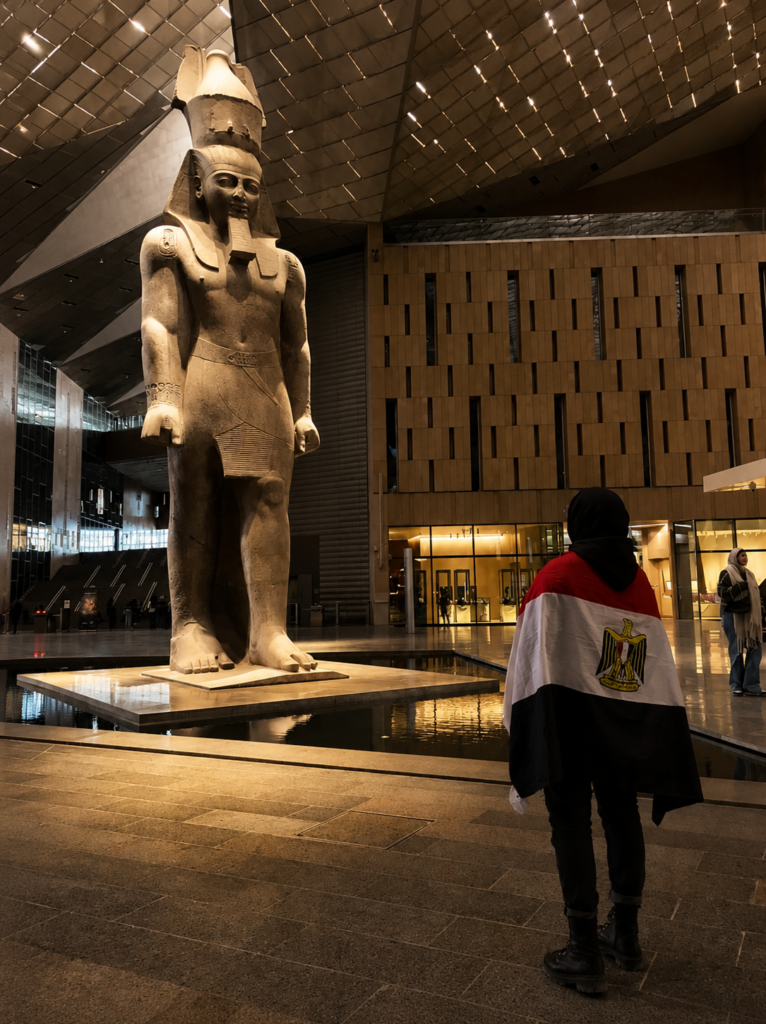
Inside, visitors enter a breathtaking Grand Hall dominated by the colossal statue of Ramses II. Natural light floods the interior through vast glass walls, while wide open spaces and clean lines create a calm, welcoming atmosphere.
Every detail—from the museum’s landscaping to its exhibition design—was carefully planned to enhance the visitor experience while respecting the surrounding archaeological landscape.
📍 Image Placement Suggestions for WordPress
- Hero Image: Exterior view of GEM with the Pyramids in the background.
- Section Image: Ramses II statue inside the Grand Hall.
- Section Image: Aerial view of the museum complex.
- Section Image: Museum façade at sunset.
Architecture, the Grand Staircase, and the 12 Main Galleries

A Modern Landmark Inspired by Ancient Egypt
One of the first things visitors notice about the Grand Egyptian Museum (GEM) is that the building itself feels like an exhibit. Rather than competing with the nearby Giza Pyramids, the museum was designed to complement them through clean geometric lines, natural stone, and expansive glass walls.
The museum covers nearly 500,000 square meters, making it one of the largest museum complexes in the world. Its enormous size allows visitors to explore Egypt’s history in a spacious and comfortable environment, unlike many traditional museums where galleries can feel crowded.
The museum’s façade consists of thousands of triangular stone panels inspired by the shape of the pyramids. During the day, sunlight creates changing patterns across the exterior, while the illuminated building becomes a spectacular landmark after sunset.
Another remarkable feature is the panoramic glass wall overlooking the Giza Plateau. On clear days, visitors can admire the Great Pyramid while standing inside one of the world’s most advanced museums.
The Grand Hall: Your Journey Begins
After entering the museum, visitors arrive in the Grand Hall, an impressive open space designed to create an unforgettable first impression.
Natural light floods the hall through enormous windows, while polished stone floors and soaring ceilings create a sense of scale that reflects the greatness of ancient Egyptian civilization.
The Grand Hall also serves as the starting point for the museum experience, providing access to the Grand Staircase, temporary exhibitions, visitor information, shops, cafés, and other facilities.
The combination of modern architecture and ancient masterpieces immediately demonstrates the museum’s goal: connecting Egypt’s rich past with today’s visitors.
The Colossal Statue of Ramses II
Standing proudly in the Grand Hall is one of the museum’s most iconic masterpieces—the 11-meter-tall granite statue of Pharaoh Ramses II.
Carved more than 3,200 years ago, this extraordinary sculpture originally stood in the ancient city of Memphis before being moved to Cairo in the 20th century. In 2006, engineers transported the 83-ton statue to its new home at the Grand Egyptian Museum in one of Egypt’s most celebrated engineering achievements.
The statue welcomes every visitor and symbolizes the power and artistic excellence of Ancient Egypt.
Did You Know?
- Height: 11 meters (36 feet)
- Weight: Approximately 83 tons
- Material: Pink granite
- Age: More than 3,200 years old
It is one of the most photographed attractions inside the museum.
The Grand Staircase

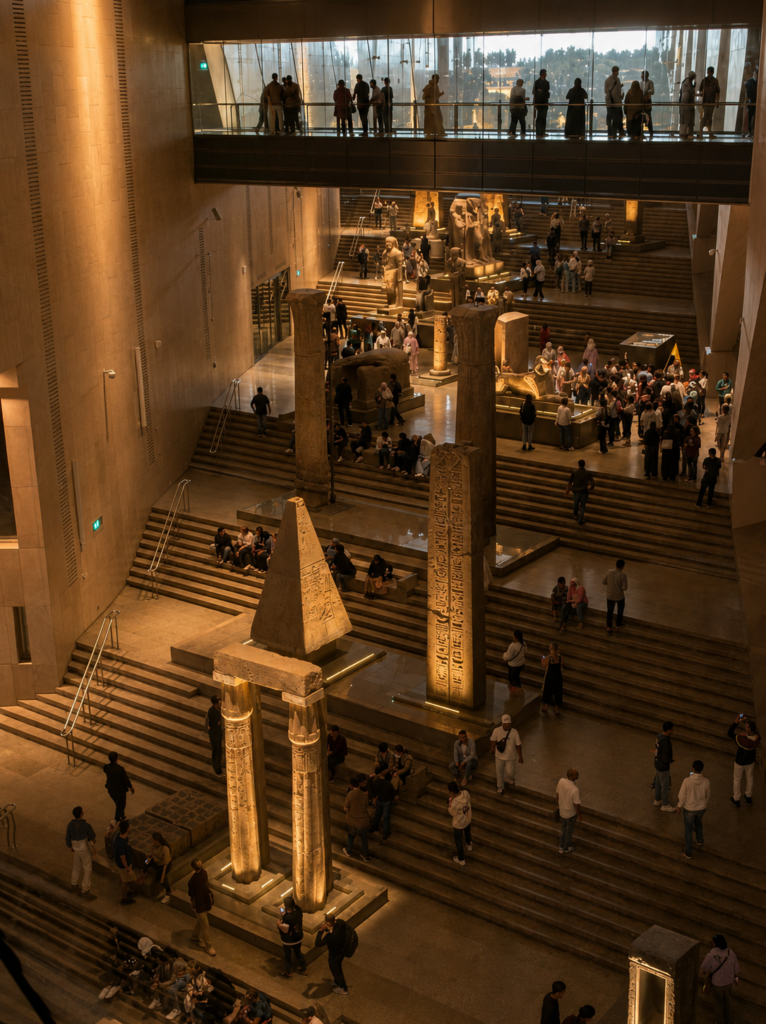
The Grand Staircase is much more than a way to reach the upper galleries—it is a curated exhibition in its own right.
Stretching dramatically upward, the staircase is lined with dozens of monumental sculptures representing different eras of Egyptian history.
Visitors encounter:
- Kings and queens
- Ancient gods and goddesses
- Massive stone statues
- Temple reliefs
- Royal columns
- Architectural fragments
- Ceremonial monuments
As visitors ascend, they follow the evolution of Egyptian civilization while enjoying breathtaking views toward the pyramids through large glass windows.
Many experts consider the Grand Staircase one of the museum’s signature architectural achievements.
The Twelve Main Galleries
The permanent exhibition is organized into 12 spacious galleries that guide visitors through over three millennia of Egyptian history.
Instead of displaying objects randomly, the museum presents them in chronological order, making it easier to understand how Egyptian civilization evolved.
The galleries explore three major themes:
- Society
- Kingship
- Beliefs
These themes are repeated across different historical periods, helping visitors compare how life changed over thousands of years.
Gallery Highlights
Prehistoric Egypt
Discover the earliest communities along the Nile River and learn how agriculture transformed ancient society.
Highlights include:
- Stone tools
- Pottery
- Jewelry
- Early burial practices
Early Dynastic Period
Explore the formation of the first unified Egyptian kingdom under its earliest rulers.
Visitors can see:
- Royal inscriptions
- Decorative palettes
- Ceremonial objects
- Early writing examples
Old Kingdom
Known as the Age of Pyramid Builders, this gallery showcases the era when the Great Pyramid of Khufu was constructed.
Important exhibits include:
- Limestone statues
- Tomb reliefs
- Architectural models
- Funerary objects
Middle Kingdom
Often described as Egypt’s cultural renaissance, this period features remarkable achievements in literature, sculpture, and administration.
Highlights include:
- Wooden coffins
- Fine jewelry
- Painted statues
- Administrative records
New Kingdom
The New Kingdom represents Egypt’s golden age and includes famous rulers such as:
- Hatshepsut
- Akhenaten
- Tutankhamun
- Seti I
- Ramses II
Visitors can admire magnificent statues, temple reliefs, royal artifacts, and ceremonial objects from one of history’s most powerful empires.
Late Period and Greco-Roman Egypt
The final galleries illustrate how Egyptian traditions continued under foreign rulers while blending with Greek and Roman influences.
Artifacts include:
- Bronze statues
- Coins
- Mummies
- Religious sculptures
- Painted coffins
Interactive Technology
Unlike traditional museums, the Grand Egyptian Museum uses advanced digital technology to enhance learning.
Visitors can enjoy:
- Interactive touchscreens
- Multimedia presentations
- Digital reconstructions
- Educational films
- Accessible multilingual information
These features make the museum engaging for adults, children, students, and history enthusiasts alike.
A Museum Designed for Everyone
The Grand Egyptian Museum was planned with accessibility and visitor comfort in mind.
Facilities include:
- Wheelchair-friendly routes
- Family services
- Children’s museum
- Restaurants and cafés
- Gift shops
- Rest areas
- Prayer rooms
- Modern restrooms
- Visitor information desks
- Outdoor gardens
This thoughtful design allows guests to spend an entire day exploring the museum at a relaxed pace.
Infographic: The Visitor Journey
Entrance
     │
Grand Hall
     │
Ramses II Statue
     │
Grand Staircase
     │
12 Main Galleries
     │
Tutankhamun Galleries
     │
Temporary Exhibitions
     │
Restaurants & Cafés
     │
Museum Shop
     │
Exit
The Complete Tutankhamun Collection, Must-See Masterpieces, and Visitor Highlights

The Complete Tutankhamun Collection: A Once-in-a-Lifetime Experience
The Grand Egyptian Museum (GEM) is the first museum in history to display King Tutankhamun’s complete treasure collection together in one location. More than 5,000 artifacts, discovered in the young pharaoh’s tomb by British archaeologist Howard Carter in 1922, are presented in a carefully designed sequence that tells the story of Tutankhamun’s life, reign, death, and journey into the afterlife.
For decades, many of these priceless objects remained in storage or were displayed separately due to space limitations. At GEM, visitors can finally appreciate the collection as it was originally intended—showcasing the artistry, beliefs, and royal traditions of Ancient Egypt.
The exhibition is one of the museum’s biggest highlights and is expected to attract millions of visitors from around the world.
Who Was King Tutankhamun?
King Tutankhamun, often called “The Boy King,” became pharaoh at around nine years old and ruled during the 18th Dynasty of Ancient Egypt.
Although his reign lasted only about ten years, Tutankhamun became the most famous Egyptian ruler after the discovery of his nearly intact tomb in the Valley of the Kings in 1922.
His tomb contained extraordinary treasures that had remained untouched for more than 3,000 years, offering archaeologists an unprecedented glimpse into royal life during Egypt’s New Kingdom.
Today, those treasures form one of the greatest archaeological collections ever discovered.
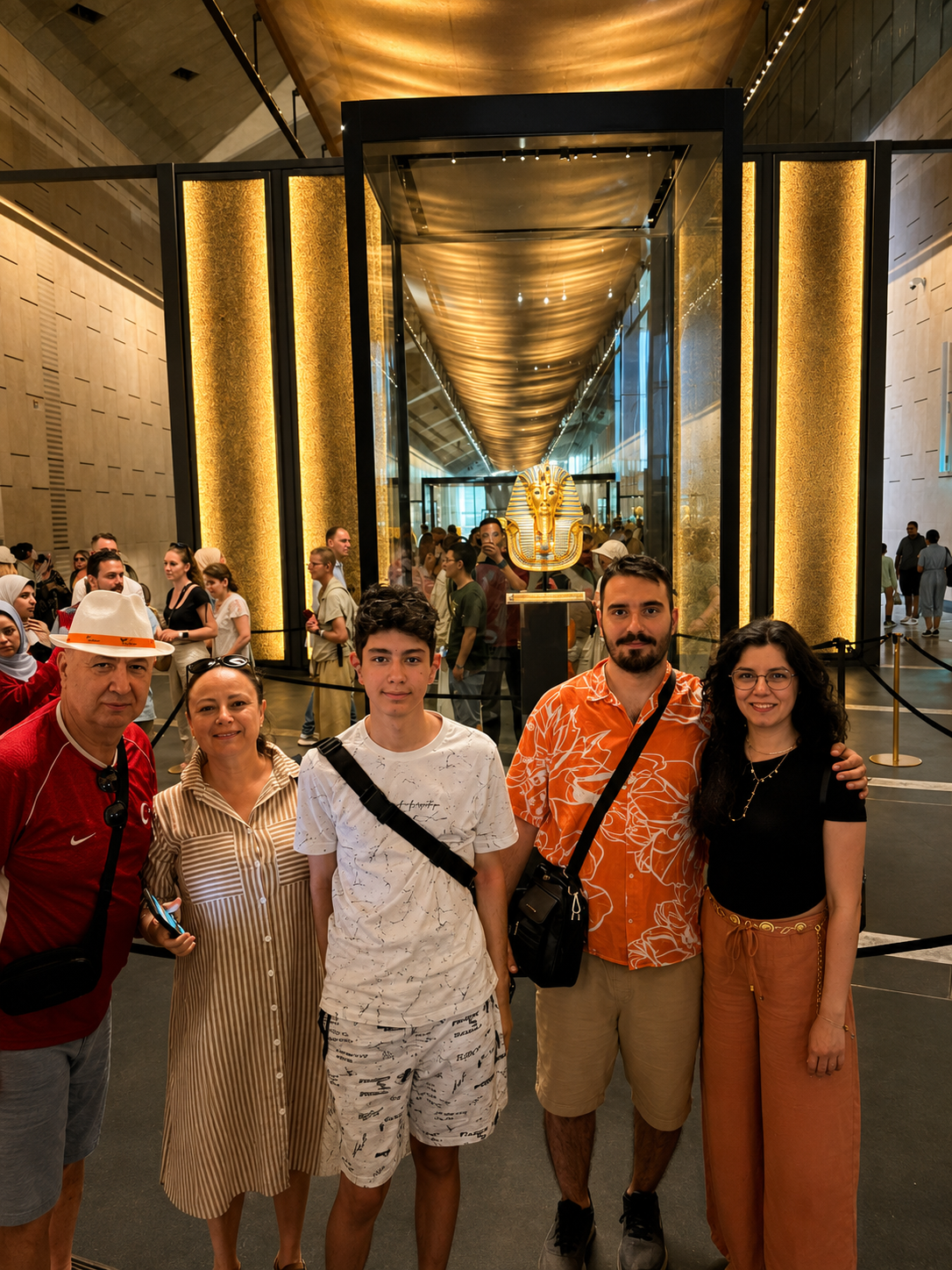
The Golden Mask of Tutankhamun
Perhaps the most recognizable artifact in Egyptian history, the Golden Mask of Tutankhamun is the symbol of Ancient Egypt itself.
Crafted from solid gold and decorated with lapis lazuli, quartz, obsidian, turquoise, and colored glass, the mask was placed over the young king’s mummy to protect him during his journey to the afterlife.
| Feature | Details |
|---|---|
| Material | Solid Gold |
| Weight | About 10.2 kg |
| Height | Approximately 54 cm |
| Age | Over 3,300 years |
| Purpose | Royal Funerary Mask |
Its craftsmanship demonstrates the incredible skill of Egyptian goldsmiths and remains one of the greatest masterpieces ever created.
The Golden Throne
Among the exhibition’s finest works of art is Tutankhamun’s famous Golden Throne.
The throne depicts the young king seated while his wife, Queen Ankhesenamun, lovingly applies perfume to his shoulder.
This intimate scene is exceptionally rare in Ancient Egyptian art because it portrays the royal couple with warmth and affection rather than formal ceremony.
The throne is decorated with:
- Gold leaf
- Colored glass
- Silver
- Semi-precious stones
- Detailed hieroglyphs
It is considered one of the most beautiful royal chairs ever discovered.
Royal Jewelry

Tutankhamun’s tomb contained hundreds of extraordinary pieces of jewelry that reveal the wealth and artistic sophistication of the New Kingdom.
Highlights include:
- Gold necklaces
- Bracelets
- Rings
- Earrings
- Scarab amulets
- Protective pendants
- Ceremonial collars
Each piece combines beauty with symbolic meaning, often representing protection, rebirth, or divine power.
Chariots of the Boy King
One of the exhibition’s most impressive displays features several of Tutankhamun’s ceremonial and hunting chariots.
These lightweight vehicles showcase remarkable engineering and craftsmanship.
Experts believe they were used for:
- Royal processions
- Hunting expeditions
- Military ceremonies
- Religious festivals
Their preservation provides valuable insight into transportation and royal life more than 3,300 years ago.
Weapons and Military Equipment
Tutankhamun’s collection also includes a fascinating assortment of weapons.
Visitors can see:
- Bows
- Arrows
- Shields
- Daggers
- Battle axes
- Ceremonial swords
One of the most famous artifacts is an iron dagger, believed to have been crafted from meteoritic iron—a rare and highly prized material in the ancient world.
Everyday Life of a Pharaoh
Unlike many royal burials, Tutankhamun’s tomb contained objects used in daily life, helping historians understand how an Egyptian king lived.
These include:
- Sandals
- Linen clothing
- Walking sticks
- Beds
- Chairs
- Cosmetic containers
- Food offerings
- Wine jars
- Board games
- Musical instruments
Together, these items paint a vivid picture of palace life during Egypt’s Golden Age.
The Canopic Shrine
One of the exhibition’s sacred masterpieces is the elaborate Canopic Shrine, which protected the jars containing the king’s preserved internal organs.
Covered in gold and decorated with protective goddesses, the shrine demonstrates the Egyptians’ profound beliefs about death, rebirth, and eternal life.
Visitor Highlights Beyond Tutankhamun
Although Tutankhamun’s treasures are the museum’s main attraction, GEM offers many other unforgettable experiences.
Colossal Statues
Visitors encounter monumental sculptures of famous pharaohs, including Ramses II, Amenhotep III, and other legendary rulers.
Royal Sculptures
The galleries feature beautifully carved statues of kings, queens, priests, and deities spanning thousands of years.
Ancient Reliefs
Temple walls and tomb reliefs illustrate scenes of daily life, religious rituals, warfare, farming, and festivals.
Animal Mummies
Discover the important role animals played in Egyptian religion through remarkably preserved mummified cats, crocodiles, birds, and other sacred creatures.
Papyrus Manuscripts
Ancient texts reveal stories, religious beliefs, legal records, and medical knowledge preserved for millennia.
Photography Tips
📸 To capture the best memories of your visit:
- Visit early in the morning for softer natural light.
- Use wide-angle shots in the Grand Hall and Grand Staircase.
- Capture the museum façade with the Giza Pyramids in the background.
- Follow museum photography guidelines, as flash or tripod use may be restricted in some galleries.
| Rank | Masterpiece |
|---|---|
| ⭐ 1 | Golden Mask of Tutankhamun |
| ⭐ 2 | Ramses II Colossus |
| ⭐ 3 | Tutankhamun’s Golden Throne |
| ⭐ 4 | Solid Gold Coffin |
| ⭐ 5 | Royal Chariots |
| ⭐ 6 | Canopic Shrine |
| ⭐ 7 | Ancient Papyrus Collection |
| ⭐ 8 | Monumental Granite Statues |
| ⭐ 9 | Royal Jewelry Collection |
| ⭐ 10 | Animal Mummies |
Infographic: Treasures of Tutankhamun
👑 5,000+ Artifacts
        │
────────┼────────
        │
🎭 Golden Mask
👑 Golden Throne
⚱️ Golden Coffins
💍 Royal Jewelry
🏹 Weapons
🛞 Chariots
🪑 Furniture
🥾 Sandals
🎲 Games
📜 Sacred Objects
Pro Visitor Tip
Plan at least 3–4 hours for your visit if you want to explore the Tutankhamun galleries in detail. History enthusiasts and photographers often spend an entire day at the museum to appreciate the exhibitions at a relaxed pace.
Visitor Information, Tickets, Best Time to Visit, Nearby Attractions, FAQs & Conclusion

Planning Your Visit to the Grand Egyptian Museum
Whether you’re spending one day in Cairo or enjoying a longer Egyptian adventure, the Grand Egyptian Museum (GEM) deserves a place at the top of your itinerary. Thanks to its location near the Giza Pyramids, excellent visitor facilities, and world-class exhibitions, it is easy to combine with other iconic attractions in a single day.
To make the most of your visit, it’s worth planning ahead. The museum is enormous, and many travelers spend four to six hours exploring the galleries.
Where Is the Grand Egyptian Museum?
The museum is located on the western edge of Cairo, close to the Giza Plateau.
Location Highlights
- 📍 Approximately 2 km from the Great Pyramid of Giza
- 🚗 Around 30–40 minutes from Downtown Cairo (depending on traffic)
- ✈️ About 45–60 minutes from Cairo International Airport
- 🚌 Easily accessible by taxi, Uber, tour vehicles, and private transfers
Its strategic location makes it an ideal stop before or after visiting the Pyramids of Giza and the Great Sphinx.
Opening Hours
Opening hours may vary slightly during holidays and special events, so always check the official museum website before your visit.
Typical operating hours are:
| Day | Hours |
|---|---|
| Monday–Sunday | 9:00 AM – 6:00 PM |
| Evening Events (Selected Days) | Extended Hours |
The last admission is usually one hour before closing.
Ticket Information
Ticket prices may change, especially for special exhibitions and temporary displays.
Visitors generally choose from:
- Adult International Ticket
- Egyptian Resident Ticket
- Student Ticket
- Child Ticket
- Family Packages
- Guided Tour Options
Some exhibitions may require separate admission.
Tip: Booking online in advance is recommended during peak travel seasons.
How Much Time Should You Spend?
The museum is significantly larger than most visitors expect.
Recommended visit durations:
| Visitor Type | Suggested Time |
|---|---|
| Quick Visit | 2 Hours |
| Standard Visit | 4 Hours |
| History Enthusiasts | 5–6 Hours |
| Photographers | Full Day |
The Tutankhamun galleries alone can easily occupy two hours.
Best Time to Visit
The Grand Egyptian Museum welcomes visitors throughout the year, but some months offer a more comfortable experience.
October – April ⭐⭐⭐⭐⭐
The cooler weather makes sightseeing much more enjoyable.
Average temperatures:
- 18°C–28°C (64°F–82°F)
Perfect for combining:
- GEM
- Giza Pyramids
- Saqqara
- Memphis
May – September
Summer offers fewer crowds but significantly hotter temperatures.
Morning visits are highly recommended.
Best Time of Day
Morning (9:00–11:00 AM)
✔ Smaller crowds
✔ Cooler temperatures
✔ Excellent photography
✔ Easier parking
Afternoon
Ideal if combining the museum with lunch or other Cairo attractions.
Visitor Facilities
The Grand Egyptian Museum has been designed to provide a world-class visitor experience.
Facilities include:
- Restaurants
- Cafés
- Gift Shop
- ATM Machines
- Free Wi-Fi
- Lockers
- Prayer Rooms
- Family Restrooms
- Baby Changing Facilities
- Wheelchair Access
- Visitor Information Center
- Medical Assistance
Photography Tips
Photography is one of the highlights of visiting GEM.
For the best results:
📷 Visit early in the morning.
📷 Capture the museum façade with the pyramids behind it.
📷 Use the Grand Staircase for dramatic wide-angle photos.
📷 Respect museum rules regarding flash photography and restricted exhibition areas.
Nearby Attractions

Your museum visit can easily be combined with several of Egypt’s most famous attractions.
1. The Great Pyramids of Giza
Only minutes away, the Great Pyramid, Pyramid of Khafre, and Pyramid of Menkaure are among the Seven Wonders of the Ancient World.
2. The Great Sphinx
The mysterious limestone guardian of the pyramids remains one of Egypt’s most photographed monuments.
3. Saqqara
Home to the Step Pyramid of Djoser, Saqqara is considered the birthplace of pyramid construction.
4. Memphis
The ancient capital of Egypt features colossal statues and fascinating open-air archaeological remains.
5. Khan El Khalili Bazaar
Finish your day exploring Cairo’s historic market filled with traditional crafts, spices, jewelry, cafés, and souvenirs.
Sample One-Day Itinerary
| Time | Activity |
|---|---|
| 9:00 AM | Arrive at GEM |
| 9:15 AM | Grand Hall & Ramses II |
| 10:00 AM | Grand Staircase |
| 11:00 AM | Main Galleries |
| 1:00 PM | Lunch |
| 2:00 PM | Tutankhamun Collection |
| 4:00 PM | Museum Shop |
| 5:00 PM | Giza Pyramids Sunset |
Travel Tips
✔ Wear comfortable walking shoes.
✔ Carry a refillable water bottle.
✔ Book tickets in advance during peak seasons.
✔ Allow extra time for security checks.
✔ Bring a fully charged camera or phone.
✔ Consider hiring a licensed Egyptologist guide for deeper insights.
✔ Visit early to avoid crowds.
Frequently Asked Questions
Is the Grand Egyptian Museum worth visiting?
Absolutely. It is one of the world’s most important archaeological museums and offers an experience unlike any other.
Can I visit the museum and the pyramids on the same day?
Yes. They are located only a few minutes apart and are commonly combined in one itinerary.
How long does it take to visit?
Most visitors spend between four and six hours exploring the museum.
Is photography allowed?
Photography is generally permitted in many public areas and galleries, but restrictions may apply in certain exhibitions. Always follow museum signage and staff instructions.
Is the museum suitable for children?
Yes. Interactive displays, spacious galleries, and family-friendly facilities make it enjoyable for visitors of all ages.
Are restaurants available?
Yes. The museum offers cafés and restaurants serving Egyptian and international cuisine.
Why the Grand Egyptian Museum Should Be on Every Traveler’s Bucket List
The Grand Egyptian Museum is far more than a place to display artifacts. It is a celebration of one of humanity’s greatest civilizations, combining timeless history with innovative design and immersive storytelling.
From the monumental statue of Ramses II and the breathtaking Grand Staircase to the complete treasures of Tutankhamun, every gallery reveals another chapter of Egypt’s remarkable past.
Whether you are a history enthusiast, a family seeking an educational adventure, or a first-time visitor to Egypt, GEM offers an unforgettable journey through more than 5,000 years of civilization.
No visit to Cairo is complete without experiencing this extraordinary museum.
Explore Cairo’s World-Class Museums
If you enjoy history and ancient Egyptian treasures, make time for Cairo’s remarkable museums during your stay. From the Grand Egyptian Museum to other important collections of Egyptian heritage, you can discover fascinating artifacts and learn more about the civilization of the pharaohs.
Explore our Egypt Museum Tours to find a museum experience that fits your itinerary, available time, and interests.
Ready to Experience the Grand Egyptian Museum?
Make your visit effortless with Let’s Explore Egypt.
Our private guided tours include:
- ✅ Hotel Pickup & Drop-off
- ✅ Licensed Egyptologist Guide
- ✅ Private Air-Conditioned Vehicle
- ✅ Flexible Itinerary
- ✅ Skip the Stress of Planning
- ✅ Optional Visit to the Giza Pyramids & Sphinx
- ✅ Pay on Arrival Available
Book your private Grand Egyptian Museum tour today and discover Egypt’s greatest treasures with local experts.
Recommended Trips
Discover our recommended private tours in Cairo, combining ancient Egyptian treasures, fascinating historical landmarks, and unforgettable experiences along the Nile.
1. Grand Egyptian Museum + Felucca Cruise
Explore the wonders of ancient Egypt at the Grand Egyptian Museum, then enjoy a relaxing traditional felucca ride on the Nile.
2. Islamic Cairo & Grand Egyptian Museum Tour
Combine the extraordinary collections of the Grand Egyptian Museum with the historic mosques, streets, and cultural heritage of Islamic Cairo.
3. Private Islamic Cairo Tour | Citadel, Mosques & Khan El Khalili Bazaar
Discover Cairo’s rich Islamic heritage, visit the historic Citadel, admire magnificent mosques, and explore the lively Khan El Khalili Bazaar.
4. Grand Egyptian Museum Day Tour from Cairo
Spend your day discovering ancient Egyptian artifacts, monumental statues, and fascinating stories from the time of the pharaohs at the Grand Egyptian Museum.
5. Cairo City Tour | Explore the Best of Egypt’s Historic Capital
Experience Cairo’s rich history and culture on a private city tour featuring some of the capital’s most remarkable historical attractions.
Plan Your Cairo Adventure
Looking for the perfect experience in Cairo? Explore our recommended trips and choose the tour that best matches your interests, schedule, and travel plans. Contact Let’s Explore Egypt to confirm availability and arrange your private tour.
Recommended Egypt Tours

Why You Can Trust Let's Explore Egypt
This article was written and reviewed by the Let's Explore Egypt Editorial Team, a licensed Egyptian tour operator specializing in private Egypt tours, Nile cruises, and tailor-made travel experiences since 2009.
- 🏛 Licensed Egyptian Tour Operator Since 2009
- ⭐ Trusted by Thousands of Travelers Worldwide
- 👨🏫 Written & Reviewed by Local Egypt Travel Experts
- 🚐 Private Tours & Tailor-Made Travel Experiences
- 📞 24/7 Customer Support