

Cairo is one of the most fascinating cities in the world. It is a city where ancient history, Islamic architecture, Coptic heritage, modern Egyptian culture, traditional markets, contemporary restaurants, and the Nile River all exist side by side.
For many travellers, Cairo is the gateway to Egypt. It is where visitors arrive before traveling to Luxor, Aswan, Hurghada, or Alexandria. But Cairo deserves much more than a quick overnight stay. The Egyptian capital offers enough attractions, neighbourhoods, museums, restaurants, historic monuments, and local experiences to fill several days.
The obvious highlight is the Giza Pyramids, and seeing them in person is an unforgettable experience. However, the pyramids are only one part of what makes Cairo special. You can spend the morning exploring ancient Egyptian monuments, the afternoon walking through medieval Islamic Cairo, and the evening enjoying dinner overlooking the Nile. You can visit historic churches and mosques, shop in a centuries-old bazaar, ride a traditional felucca, taste Egyptian street food, explore archaeological museums, or simply sit in a local café and watch Cairo life unfold around you.
This guide covers the best things to do in Cairo, from the world-famous attractions to lesser-known experiences. It also includes recommendations for families, couples, history lovers, first-time visitors, and travelers with limited time.
1. Visit the Great Pyramids of Giza
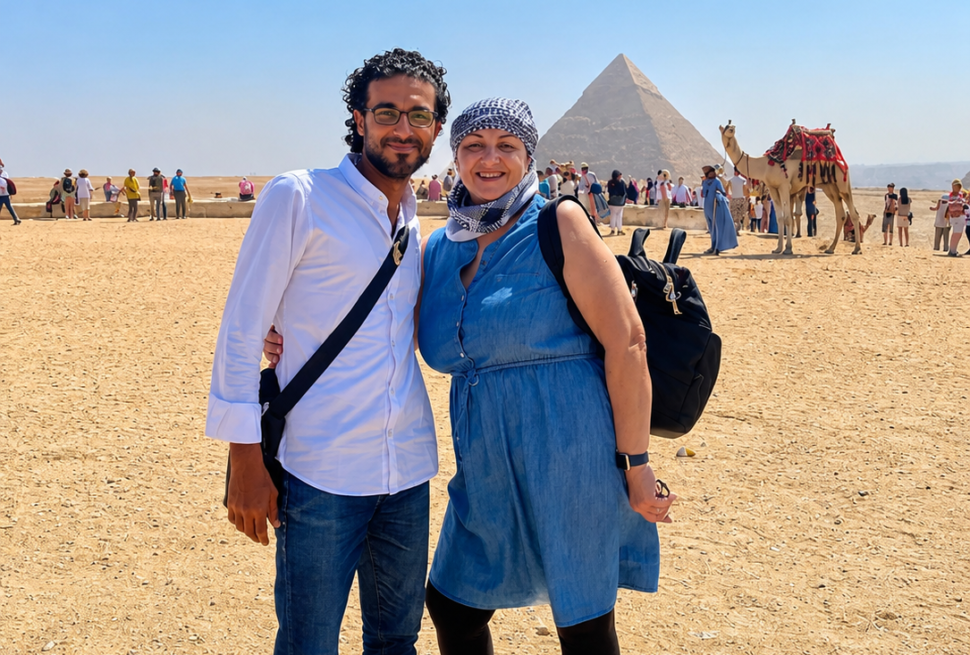
The Great Pyramids of Giza are the most famous attraction in Cairo and one of the most recognizable landmarks on Earth.
The Giza Plateau is home to three major pyramids: the Great Pyramid of Khufu, the Pyramid of Khafre, and the Pyramid of Menkaure. Together with the Great Sphinx and associated temples, they form one of the most extraordinary archaeological landscapes in the world.
Nothing quite prepares you for seeing the pyramids in person.
Photographs cannot fully communicate their scale. When you stand near the base of the Great Pyramid, the enormous blocks of stone and steep sides make it clear why this monument has fascinated travelers for thousands of years.
The Great Pyramid was built for Pharaoh Khufu during Egypt’s Fourth Dynasty. It is the largest of the three main pyramids and the only surviving monument of the ancient Seven Wonders of the World.
Visitors can walk around the plateau, photograph the pyramids from different viewpoints, and, with the appropriate ticket, enter certain pyramid interiors.
Entering the Great Pyramid can be physically demanding because passages can be narrow and steep. Travelers who are uncomfortable in enclosed spaces may prefer to explore the exterior.
The best time to visit is generally early in the morning, particularly during the warmer months. The light is beautiful, temperatures are more comfortable, and the site can be less crowded than later in the day.
A private Giza tour is especially useful for first-time visitors because a guide can explain the history of each monument while a driver handles transportation between viewpoints.
2. See the Pyramid of Khafre
The Pyramid of Khafre is the second-largest pyramid at Giza, but it often appears taller than the Great Pyramid because it was constructed on higher ground.
One of its most recognizable features is the remaining section of smooth limestone casing near its summit.
Khafre’s pyramid is also visually connected to the Great Sphinx and the Valley Temple, making it an essential part of a complete Giza visit.
Spend some time viewing the pyramid from different angles. The appearance changes dramatically depending on the light and your position on the plateau.
For photography, some viewpoints allow all three major pyramids to be included in a single panoramic composition.
3. Explore the Pyramid of Menkaure
The smallest of Giza’s three main pyramids is the Pyramid of Menkaure.
Although it is significantly smaller than the Great Pyramid, it is an important part of the archaeological complex and offers an interesting contrast to the huge monuments built for Khufu and Khafre.
Many visitors rush through Giza because they are focused only on the Great Pyramid. Take your time instead.
Walking around the plateau helps you appreciate how the monuments were arranged and gives you a stronger sense of the scale of the entire complex.
4. Visit the Great Sphinx
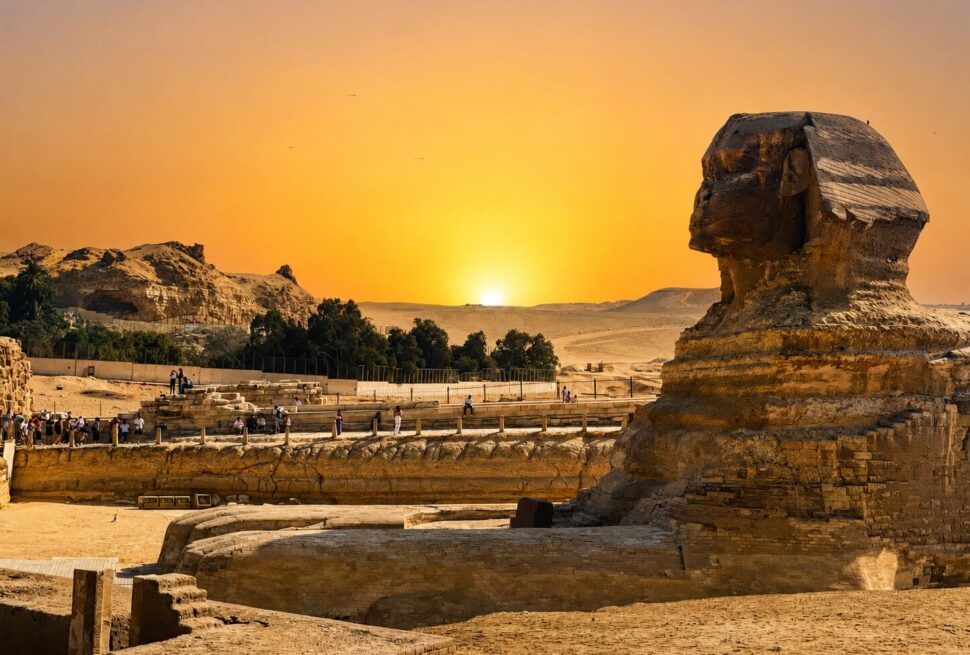
The Great Sphinx is one of the most iconic monuments in Egypt.
The enormous limestone sculpture has the body of a lion and the head of a human, traditionally interpreted as a representation of royal power and strength.
The Sphinx is closely associated with the Pyramid of Khafre and the surrounding temple complex.
Visitors usually have access to a viewing area where they can admire the monument and photograph it with the pyramids in the background.
The best photographs often come from angles where the Sphinx and pyramid appear in the same composition.
A knowledgeable Egyptologist guide can also explain the various theories surrounding the monument’s construction, symbolism, and historical development.
5. Explore the Grand Egyptian Museum
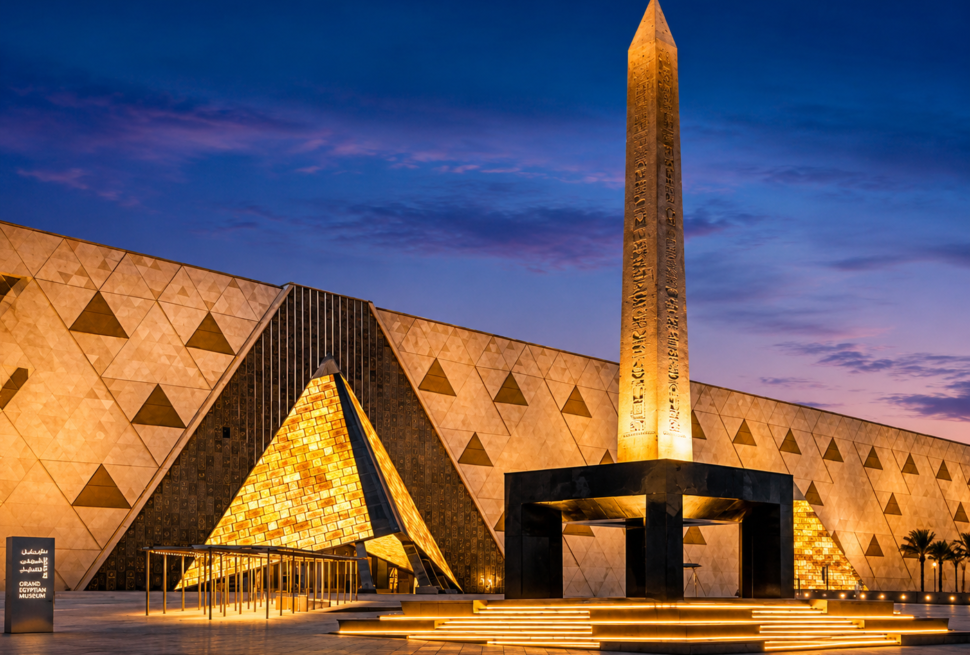
The Grand Egyptian Museum has become one of the most important attractions for travelers visiting Cairo and Giza.
Located close to the pyramids, the museum was designed as a major institution for ancient Egyptian history and archaeology.
Its enormous architectural spaces are impressive even before you enter the main galleries.
The official museum information highlights areas including the Grand Hall, Grand Stairs, Main Galleries, and Tutankhamun Galleries, along with other visitor areas and experiences depending on ticket access.
For visitors interested in ancient Egypt, the museum offers an opportunity to see artifacts in a more modern museum environment while remaining close to the monuments where the civilization developed.
The Tutankhamun collection is particularly important for many travelers.
King Tutankhamun’s tomb became famous because of the extraordinary wealth of objects discovered inside it. Seeing these artifacts within a broader historical context makes the story more understandable than simply viewing individual objects in isolation.
Plan to spend several hours here.
A common mistake is trying to combine the pyramids and museum into an impossibly short schedule. Both deserve enough time to be enjoyed properly.
6. Take Photographs at the Grand Egyptian Museum
The museum is not only an archaeological attraction. It is also an architectural destination.
The building’s scale, open spaces, stairways, views, and relationship with the Giza landscape create many photography opportunities.
If you enjoy photography, consider visiting during a time when the light changes throughout your stay.
A private guide can also help you understand which parts of the museum deserve more attention based on your interests.
7. Visit the Egyptian Museum in Tahrir Square
Even with the rise of the Grand Egyptian Museum, the Egyptian Museum in Tahrir remains an important destination.
Its historic atmosphere is completely different from the modern architectural experience at the GEM.
The museum contains a huge collection of ancient Egyptian objects representing different periods and aspects of life, religion, government, burial practices, and art.
You can see statues, sarcophagi, jewelry, funerary objects, everyday items, and royal artifacts.
For archaeology enthusiasts, the sheer quantity of objects can be overwhelming in the best possible way.
A guided visit is useful because it helps you focus on the most important pieces instead of trying to see everything.
8. Visit the National Museum of Egyptian Civilization
The National Museum of Egyptian Civilization presents Egypt’s story across different periods rather than focusing exclusively on the pharaonic era.
This makes it a valuable complement to the Pyramids and other ancient Egyptian sites.
One of the museum’s best-known attractions is its Royal Mummies collection.
Seeing the preserved remains of ancient rulers creates a direct connection between the monuments and the people who built and ruled the civilization.
The museum is located in the historic area of Old Cairo and can be combined with a visit to Coptic Cairo.
9. Explore Coptic Cairo
Coptic Cairo offers a completely different experience from Giza.
The neighborhood contains churches, religious monuments, museums, historic streets, and sites associated with Egypt’s Christian heritage.
Walking through the area is an excellent way to understand the diversity of Egyptian history.
Cairo is often described primarily through its pharaonic monuments, but the city’s Christian heritage is an important part of its identity.
A guide can explain the history of the Coptic community, the architecture of the churches, and how the neighborhood developed over the centuries.
10. Visit the Hanging Church
The Hanging Church is one of the most famous churches in Coptic Cairo.
Its architecture, religious importance, and long history make it a major stop for visitors interested in Egypt’s Christian heritage.
The church is associated with the historic heart of Coptic Cairo and is usually included in walking tours of the area.
Take time to appreciate the details rather than treating it as a quick photo stop.
The surrounding neighborhood contains several other important religious sites, so allow enough time to explore.
11. Visit the Coptic Museum
The Coptic Museum preserves and displays objects associated with Egypt’s Christian history.
Its collection provides insight into religious art, manuscripts, textiles, sculpture, architecture, and everyday life.
For travelers who are already interested in Egyptian archaeology, the museum creates a useful bridge between ancient Egypt and later historical periods.
It also helps explain how local traditions evolved through changing political and religious environments.
12. See the Ben Ezra Synagogue
The Ben Ezra Synagogue is another important historic site in Old Cairo.
It reflects the long history of Jewish communities in Egypt and demonstrates how multiple religious traditions have existed within the same urban landscape.
A visit can be particularly meaningful when combined with the area’s churches and Islamic monuments.
In a single day, visitors can experience several chapters of Cairo’s religious and cultural history.
13. Explore Islamic Cairo
Islamic Cairo is one of the most rewarding areas for travelers who enjoy architecture and history.
The district contains historic mosques, madrasas, gates, houses, markets, fountains, and streets dating from different periods of Cairo’s development.
It is impossible to understand Cairo fully without spending time here.
Unlike the isolated monument of the Giza Plateau, Islamic Cairo is a living urban environment. Historic buildings are surrounded by shops, workshops, cafés, markets, and residential areas.
That combination is what makes the area so memorable.
14. Walk Along Al-Muizz Street
Al-Muizz Street is one of the best places to explore medieval Cairo.
The street contains numerous historic Islamic monuments and provides an extraordinary concentration of architecture within a walkable area.
As you walk, pay attention to doorways, carved stone, wooden screens, domes, minarets, and decorative details.
This is an area where having a guide can significantly improve the experience because many buildings look impressive but have stories that are difficult to understand independently.
Visit during the cooler parts of the day and allow time for photographs.
15. Visit the Citadel of Saladin
The Citadel of Saladin is one of Cairo’s most important medieval landmarks.
Located on elevated ground, the fortress was built as a major defensive complex and later became closely associated with Egypt’s rulers.
The site also offers broad views across Cairo.
On a clear day, the contrast between the historic fortress and the enormous modern city spreading beyond it is striking.
The Citadel is often combined with the Mosque of Muhammad Ali and other historic attractions.
16. See the Mosque of Muhammad Ali
The Mosque of Muhammad Ali is one of Cairo’s most recognizable landmarks.
Its large central dome, surrounding smaller domes, and tall minarets dominate the Citadel skyline.
The mosque reflects strong Ottoman architectural influence and contains an impressive interior.
Visitors should dress modestly and respect the religious nature of the site.
The mosque is also a beautiful location for photography, particularly when viewed against the Cairo skyline.
17. Visit the Mosque-Madrasa of Sultan Hassan
Sultan Hassan Mosque and Madrasa is one of the major monuments of medieval Cairo.
The scale of the building is impressive, and the architecture demonstrates the sophistication of Mamluk Cairo.
Visitors interested in Islamic architecture should make time for this monument.
A guide can explain the historical context of the Mamluk period and why the building was such an ambitious project.
Nearby monuments can be combined with the visit to create a broader tour of medieval Cairo.
18. Explore the Gayer-Anderson Museum
The Gayer-Anderson Museum is a historic house museum built around traditional Cairene architecture and domestic life.
The house contains furniture, art, decorative objects, and architectural details.
It is particularly interesting for visitors who want to understand how wealthy residents lived in historic Cairo.
Unlike monumental mosques and pyramids, historic houses reveal more personal aspects of the past.
The rooms, courtyards, balconies, and decorative details provide a sense of everyday life that archaeological sites cannot always communicate.
19. Visit Manial Palace
The Prince Muhammad Ali Palace on Manial Island is another excellent attraction.
The complex combines architecture, gardens, decorative arts, and historic collections.
It is a useful stop for travelers who have already seen several archaeological sites and want something different.
The palace has an intimate atmosphere compared with the enormous scale of the pyramids or major museums.
The gardens also provide a welcome break from Cairo’s busy streets.
20. Explore Khan el-Khalili Bazaar
Khan el-Khalili is one of the city’s most famous markets.
Walking through the narrow lanes is an experience in itself.
You will find souvenir shops, jewelry, perfumes, traditional lamps, crafts, clothing, spices, cafés, and restaurants.
The market can be busy and sometimes chaotic, but that energy is part of the experience.
Do not feel that you must buy something.
Sometimes simply walking through the market, watching artisans work, and observing local life is more memorable than shopping.
If you do shop, remember that bargaining is common in many stores.
21. Drink Tea at El-Fishawy Café
A classic experience in the Khan el-Khalili area is sitting at a traditional café.
El-Fishawy Café is famous for its long history and atmospheric setting.
Order tea, mint tea, coffee, or another traditional drink and spend some time simply watching the street.
The experience is particularly enjoyable in the evening when the surrounding market becomes more lively.
22. Explore Cairo’s Traditional Cafés
Café culture is an important part of Egyptian social life.
A traditional café may be a place where people meet friends, play backgammon, watch sports, talk, or simply relax.
Visitors should experience at least one local café during their Cairo trip.
You do not need an elaborate plan.
Order a drink, sit down, and watch the neighborhood.
These simple interactions can reveal more about daily life than another tourist attraction.
23. Take a Felucca Ride on the Nile
The Nile is at the heart of Cairo.
One of the most relaxing ways to experience it is by taking a traditional felucca ride.
Feluccas are simple sailing boats that have been used on the Nile for generations.
A private felucca ride is especially enjoyable at sunset.
As the sun goes down, the skyline changes color and the lights of Cairo begin to appear along the river.
This experience is peaceful and offers a welcome contrast to the traffic and noise of central Cairo.
Bring water, sunglasses, sunscreen, and a light layer if you are traveling during cooler months.
24. Watch the Sunset on the Nile
Even if you do not book a full boat tour, make time to see the Nile at sunset.
The river reflects the changing sky while bridges, boats, and buildings create an urban panorama.
Sunset is one of the best times for photography.
For couples, families, and travelers celebrating something special, a private sunset felucca can become one of the highlights of the entire trip.
25. Take a Nile Dinner Cruise
A Nile dinner cruise offers a more structured evening experience than a felucca.
Depending on the boat, dinner may be accompanied by music and traditional entertainment.
It can be a convenient option for travelers who want dinner, views, and entertainment in one activity.
A felucca is quieter and more intimate.
A dinner cruise is usually more social and entertainment-focused.
Both offer a different perspective on Cairo.
26. Visit Cairo Tower
Cairo Tower stands on Gezira Island in Zamalek and offers panoramic views across the city.
From the observation areas, visitors can see parts of Cairo, the Nile, bridges, neighborhoods, and the surrounding urban landscape.
Sunset is one of the best times to visit because you can see the city both in daylight and after the lights turn on.
The tower is especially useful for understanding just how enormous Cairo really is.
27. Explore Zamalek
Zamalek is one of Cairo’s most popular neighborhoods for restaurants, cafés, art galleries, and nightlife.
Located on an island in the Nile, Zamalek feels different from historic Cairo.
You can spend an afternoon here exploring cafés and restaurants before enjoying a boat ride.
For travelers who want a more modern and relaxed side of Cairo, Zamalek is worth exploring.
28. Walk Around Downtown Cairo
Downtown Cairo offers a glimpse into the city’s modern history.
The streets around Tahrir Square and Talaat Harb Square are filled with shops, restaurants, cafés, offices, bookstores, and historic buildings.
Many of the buildings feature architecture reflecting Cairo’s development in the nineteenth and twentieth centuries.
Take some time to look upward.
Balconies, facades, signs, and decorative details often tell the story of a neighborhood better than a quick drive through it.
29. Taste Koshari
Koshari is one of Egypt’s most famous comfort foods.
It combines rice, pasta, lentils, chickpeas, fried onions, and tomato sauce.
The dish is filling, inexpensive, and widely available.
It may look simple, but the combination of textures and flavors makes it one of the essential foods to try in Egypt.
A good food tour can help you discover local places that specialize in traditional Egyptian dishes.
30. Try Ful Medames
Ful medames is a traditional Egyptian breakfast made from cooked fava beans.
It is often served with bread, vegetables, olive oil, lemon, garlic, or other seasonings.
Breakfast at a local Egyptian restaurant can be a great cultural experience.
It is one of those dishes that is strongly associated with everyday life rather than tourism.
31. Try Egyptian Taameya
Egyptian taameya is often compared with falafel, but it is traditionally made primarily from fava beans rather than chickpeas.
It is commonly eaten for breakfast or as a snack.
Fresh taameya can be crispy on the outside and soft inside.
It is often served with bread, salad, beans, and other accompaniments.
32. Try Molokhia
Molokhia is one of Egypt’s signature dishes.
It is made from finely chopped jute leaves cooked in broth and traditionally flavored with garlic and other seasonings.
It is commonly served with rice and meat or poultry.
The texture is unusual for first-time visitors, but it is an important part of Egyptian cuisine and worth trying at least once.
33. Try Hawawshi
Hawawshi is seasoned minced meat cooked inside bread.
The bread becomes crisp while the meat remains flavorful and moist.
It is a popular casual meal and can be found at many local restaurants and food shops.
Food-focused travelers should add it to their Cairo tasting list.
34. Save Room for Egyptian Desserts
Egyptian sweets are often rich, syrupy, creamy, and full of nuts.
Popular options include basbousa, kunafa, om ali, zalabya, and rice pudding.
Om Ali is particularly associated with Egypt.
Try desserts from both traditional bakeries and restaurants.
Egyptian sweets are often shared with family or friends, making them another part of the social side of Egyptian food culture.
35. Take an Egyptian Cooking Class
A cooking class is one of the best ways to turn food into a deeper cultural experience.
Depending on the class, you may prepare traditional dishes and learn how ingredients are used in Egyptian homes.
A good class also explains the cultural role of food.
You are not simply learning to cook a recipe. You are learning how Egyptians eat, celebrate, host guests, and share meals.
36. Visit a Local Market
Beyond tourist-oriented Khan el-Khalili, Cairo has many markets where locals shop for daily necessities.
Depending on the neighborhood, you might find fresh produce, spices, bread, clothing, household goods, sweets, or other everyday products.
Markets can be crowded, so keep valuables secure.
A local guide can help you navigate the area comfortably and explain the products you see.
37. Explore Cairo’s Historic Gates
Historic Cairo was once protected by important city gates and defensive walls.
Several gates remain as evidence of the medieval city’s structure.
Bab Zuweila is among the best-known.
Historic gates are easy to overlook if you only visit the major mosques, but they are important pieces of Cairo’s urban history.
38. Discover the City Through Photography
Cairo is a photographer’s dream.
Of course, the pyramids are spectacular, but the city offers many other subjects.
Photograph historic doors, minarets, markets, streets, boats, rooftops, cafés, bridges, and sunsets.
A private photographer can be useful for travelers who want professional images, particularly couples, honeymooners, families, and visitors celebrating a special occasion.
39. Enjoy a Pyramid-View Breakfast
If you stay near Giza, look for a hotel or restaurant with a view toward the pyramids.
Breakfast in front of the ancient monuments can be a memorable way to begin your day.
Morning light is usually attractive for photography, and the atmosphere can be much calmer than later in the day.
For travelers staying in central Cairo, a short trip to Giza for breakfast can also be arranged as part of a larger itinerary.
40. Watch the Sunset Near the Pyramids
The pyramids look completely different at sunset.
As the sun moves lower, the limestone changes color, the desert becomes softer, and the surrounding city begins to light up.
A rooftop restaurant or terrace in the Giza area can be an excellent place to enjoy the view.
For couples, a sunset meal with a pyramid view can be a particularly memorable experience.
41. Take a Camel Ride
A short camel ride around the Giza Plateau can add an adventurous element to a pyramid visit.
Agree on the price, length, and route before starting.
Choose a responsible operator and follow safety instructions.
The camel ride should be considered an optional experience rather than the main reason to visit Giza.
The pyramids remain the star attraction.
42. Ride a Quad Bike in the Desert
Travelers looking for an adrenaline-filled activity can combine sightseeing with a desert quad bike experience.
Riding through the desert gives you a different perspective on the landscape around the pyramids.
It is especially popular with friends, couples, and younger travelers.
Wear appropriate clothing and follow the operator’s safety requirements.
43. Visit Saqqara
Saqqara is one of the most important archaeological areas near Cairo.
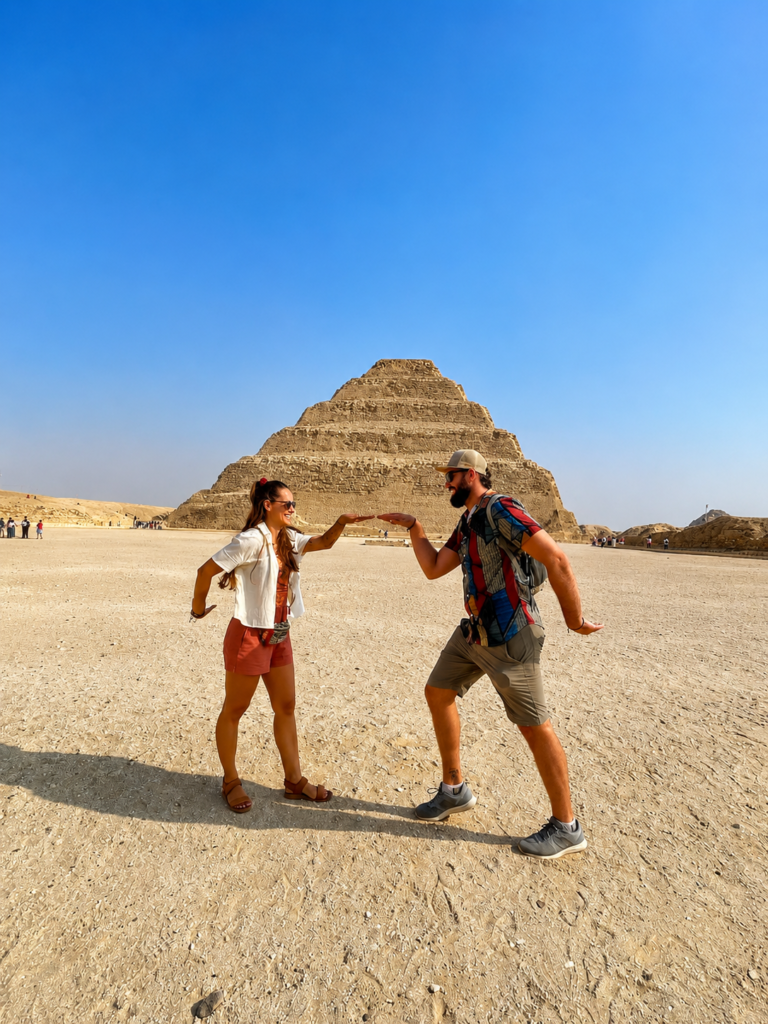
Its most famous monument is the Step Pyramid of Djoser.
The Step Pyramid represents a major development in the history of Egyptian pyramid construction.
The wider Saqqara archaeological area contains tombs, pyramids, temples, and other monuments.
Unlike Giza, Saqqara often feels less concentrated around a single landmark.
A guide can help you understand how the site evolved over different periods.
44. Visit the Step Pyramid of Djoser
The Step Pyramid is one of the most significant monuments in ancient Egyptian architecture.
It was built for Pharaoh Djoser and is associated with the architect Imhotep.
The monument represents an early stage in the evolution from mastaba-style tombs to the giant smooth-sided pyramids that later appeared at Giza.
For anyone interested in the development of Egyptian architecture, it is an essential stop.
45. Explore Memphis
Memphis was one of ancient Egypt’s great cities and played a major role in the development of the Egyptian state.
Today the archaeological site contains monuments and statues that offer a glimpse into the city’s past.
One of the best-known objects is the large reclining statue of Ramesses II.
Memphis is usually combined with Saqqara and Dahshur as part of a full-day archaeological tour.
46. Visit Dahshur
Dahshur is another essential destination for travelers interested in pyramid architecture.
The area is famous for the Bent Pyramid and Red Pyramid.
The Bent Pyramid is especially unusual because its angle changes partway up the structure.
The Red Pyramid is one of the earliest successful true pyramids with smooth sides.
Dahshur is generally quieter than Giza, making it ideal for travelers who want a more peaceful archaeological experience.
47. Take a Giza, Saqqara, Memphis and Dahshur Tour
A full-day private archaeological tour can combine several of Egypt’s most important ancient sites.
A typical itinerary could include:
Morning:
Giza Pyramids, Sphinx, and Valley Temple.
Midday:
Lunch at a local restaurant.
Afternoon:
Saqqara, Memphis, and Dahshur.
This is a long day, but it gives you a much deeper understanding of ancient Egyptian history than a simple pyramid visit.
48. Visit the Museum of Islamic Art
The Museum of Islamic Art is a valuable attraction for travelers interested in the later history of Egypt.
Its collections cover Islamic art and decorative traditions from different regions and periods.
You may see ceramics, manuscripts, metalwork, textiles, woodwork, and other objects.
A visit here helps explain the cultural world that developed long after the pharaonic period.
49. Explore Contemporary Cairo
Cairo is not a museum.
It is a living city with a dynamic contemporary culture.
Explore modern restaurants, galleries, cafés, bookstores, music venues, and shopping districts.
Neighborhoods such as Zamalek and Downtown can provide a much more current perspective on Egyptian life.
This balance between ancient and modern is one of Cairo’s greatest strengths.
50. Visit Contemporary Art Galleries
Cairo has an active contemporary art scene.
Galleries and cultural spaces in central neighborhoods present work by Egyptian and regional artists.
For travelers who have already explored several ancient sites, an afternoon of contemporary art can refresh the itinerary.
It also provides a different way to understand what Egypt looks like today rather than only studying its past.
51. Enjoy Cairo at Night
Cairo changes significantly after sunset.
Restaurants fill up, cafés become busy, streets remain active, and the Nile becomes illuminated by city lights.
Popular evening experiences include:
- Khan el-Khalili
- Felucca rides
- Nile dinner cruises
- Rooftop restaurants
- Cairo Tower
- Traditional cafés
- Downtown walks
- Egyptian food tours
During hot periods, evening sightseeing can also be more comfortable than afternoon outdoor activities.
52. Experience Ramadan in Cairo
Traveling to Cairo during Ramadan can provide a unique cultural experience.
After sunset, streets and restaurants become lively as families gather for iftar and evening activities.
Special decorations, foods, and social traditions become visible throughout the city.
Travelers should remember that operating hours and daily schedules can change.
Respect local customs and be mindful that people’s routines during Ramadan are different from the rest of the year.
53. Enjoy a Traditional Egyptian Evening
A cultural evening can combine dinner with music and traditional entertainment.
Depending on the venue, you may encounter traditional instruments, tanoura performances, Egyptian music, or other forms of entertainment.
This can be an enjoyable way to end a sightseeing day.
Choose a venue based on whether you prefer an intimate dinner or a more energetic performance-oriented experience.
54. Take a Food Tour Through Cairo
A food tour is particularly worthwhile in a city like Cairo because many of its best food experiences are small and local.
A guide can introduce you to restaurants and street-food stalls that you might otherwise overlook.
You may taste koshari, taameya, hawawshi, desserts, tea, and other local specialties.
Food tours are also excellent for travelers who want to understand Egyptian culture through everyday life.
55. Visit Cairo With Children
Cairo can be an exciting family destination.
Children often enjoy the pyramids because they can physically walk around the monuments rather than simply looking at them from a distance.
Other popular family experiences include camel rides, felucca trips, museum visits, local sweets, and Nile cruises.
The key is not to schedule too much.
Children usually have more fun when the itinerary includes breaks and changes of scenery.
A half-day outdoors followed by an indoor museum and relaxed dinner may work better than eight continuous hours of sightseeing.
56. Visit Cairo as a Couple
Cairo offers plenty of romantic experiences.
Couples can enjoy:
- Sunset felucca rides
- Pyramid-view breakfasts
- Rooftop dinners
- Nile cruises
- Cairo Tower
- Private photography sessions
- Khan el-Khalili evenings
- Romantic dinners
- Sunrise pyramid visits
A private itinerary is often ideal for couples because it provides flexibility and avoids wasting time on unnecessary stops.
57. Visit Cairo as a Solo Traveler
Solo travelers can enjoy Cairo by combining major attractions with local experiences.
Join a guided tour for historical sites, then spend some time independently exploring cafés, restaurants, markets, or museums.
Using organized transportation can make longer sightseeing days easier.
As with any large city, remain aware of your surroundings and keep personal belongings secure.
58. Take a Private Cairo Tour
A private tour is particularly useful if you have limited time.
Cairo’s attractions are spread across a huge metropolitan area, and traffic can make travel slow.
A private driver allows the itinerary to be arranged logically.
For example, you can explore Giza and the Grand Egyptian Museum together, then dedicate another day to Islamic and Coptic Cairo.
A professional Egyptologist guide can also answer questions and adapt the tour to your interests.
59. Combine Giza and the Grand Egyptian Museum
For first-time visitors, this is one of the strongest combinations.
The pyramids show the monuments in their original landscape.
The museum provides context, artifacts, artwork, and historical information.
Together they create a much more complete understanding of ancient Egypt.
Give both attractions enough time.
Trying to finish each in one short visit can leave you exhausted and unable to appreciate what you are seeing.
60. Take a Day Trip to Alexandria
Alexandria is located on the Mediterranean coast and offers a different atmosphere from Cairo.
For travelers with extra time, a private day trip can include:
- Bibliotheca Alexandrina
- Qaitbay Citadel
- Catacombs
- Pompey’s Pillar
- Mediterranean waterfront
- Seafood lunch
The trip from Cairo is relatively long, so it is better suited to travelers staying several days in Egypt.
Best Things to Do in Cairo in One Day
If you only have one day, do not try to see everything.
A good itinerary would be:
Early Morning
Start with the Giza Pyramids.
Visit the Great Pyramid, Pyramid of Khafre, Pyramid of Menkaure, and Great Sphinx.
Midday
Have lunch.
Afternoon
Visit the Grand Egyptian Museum.
Evening
Finish the day with Khan el-Khalili and dinner.
An alternative is a sunset felucca ride instead of a long market visit.
The most important thing is to build a realistic schedule.
Best Things to Do in Cairo in Two Days
Day One
Great Sphinx
Sunset felucca
Day Two
Citadel of Saladin
Mosque of Muhammad Ali
Coptic Cairo
National Museum of Egyptian Civilization
Khan el-Khalili
Traditional Egyptian dinner
This gives you a balanced introduction to ancient, Islamic, Christian, and modern Cairo.
Best Things to Do in Cairo in Three Days
Day One
Giza Pyramids
Sphinx
Grand Egyptian Museum
Sunset felucca
Day Two
Khan el-Khalili
Day Three
Citadel
Islamic Cairo
Coptic Cairo
National Museum of Egyptian Civilization
Downtown Cairo
This is a strong itinerary for first-time visitors.
Best Things to Do in Cairo in Five Days
With five days, you can slow down.
Day 1
Day 2
Saqqara, Memphis, and Giza Pyramids
Day 3
Coptic Cairo and the National Museum of Egyptian Civilization.
Day 4
Citadel, Islamic Cairo, Al-Muizz Street, and Khan el-Khalili.
Day 5
Downtown Cairo, Cairo Tower, Zamalek, local food tour, and Nile felucca.
This pace provides more time for photography and spontaneous experiences.
Best Time to Visit Cairo
Cairo can be visited throughout the year.
Many travelers prefer the cooler months because outdoor sightseeing is more comfortable.
Winter can be especially pleasant for walking around archaeological sites.
Summer can be very hot, especially in exposed areas such as Giza and Saqqara.
If traveling during warmer months, start outdoor sightseeing early, drink plenty of water, use sunscreen, and schedule indoor attractions during the hottest part of the day.
What to Wear in Cairo
Cairo is a major international tourist destination, but it remains culturally conservative in many areas.
Comfortable, breathable clothing is important.
When visiting mosques and churches, dress respectfully.
Good walking shoes are essential.
A hat, sunglasses, and sunscreen are highly recommended for archaeological sites.
How to Get Around Cairo
Cairo is enormous, so transportation matters.
Private vehicles are often the most convenient option for tourists with a busy itinerary.
Ride-hailing services are also widely used, while the metro can be useful for certain routes.
However, attractions are spread out, and traffic can be unpredictable.
For a sightseeing-heavy day, having a dedicated driver allows you to move between attractions without repeatedly arranging transportation.
Should You Hire a Guide?
For major historical attractions, a professional guide can add significant value.
The pyramids are spectacular, but without context you may miss the historical significance of the temples, burial practices, engineering, and religious beliefs.
The same is true in Islamic Cairo.
A guide can help explain architectural details and historical figures that would otherwise be easy to overlook.
For travelers interested in history, an Egyptologist guide is often worth the additional cost.
Cairo Travel Tips
Start early for major archaeological sites.
Carry water throughout the day.
Wear comfortable shoes.
Use sunscreen and sunglasses.
Keep valuables secure in crowded markets.
Agree on prices before taking optional services.
Allow extra travel time because of traffic.
Dress respectfully at religious sites.
Do not attempt to see every attraction in one day.
Leave time to enjoy food, cafés, and local neighborhoods.
Most importantly, remain flexible.
Cairo is a busy city, and unexpected delays can happen.
Frequently Asked Questions About Things to Do in Cairo
What is the number one thing to do in Cairo?
The Giza Pyramids are the essential first attraction for most visitors. They are followed by the Great Sphinx and Grand Egyptian Museum.
Is two days enough for Cairo?
Two days can cover the major attractions, but three days or more will allow you to explore at a more comfortable pace.
Can I visit the pyramids and Grand Egyptian Museum in one day?
Yes. They are located relatively close to one another, making them a natural combination. However, allow several hours for each attraction rather than rushing.
Is Cairo good for families?
Yes. Children often enjoy the pyramids, camel rides, felucca trips, museums, desserts, and Nile cruises.
What should couples do in Cairo?
Sunset felucca rides, pyramid-view breakfasts, rooftop restaurants, Nile cruises, and private tours are excellent choices.
What should I do in Cairo at night?
Visit Khan el-Khalili, enjoy a traditional café, take a felucca ride, have dinner overlooking the Nile, visit Cairo Tower, or book a Nile dinner cruise.
What food should I try in Cairo?
Try koshari, ful, taameya, hawawshi, molokhia, fatta, and traditional Egyptian desserts.
Is Cairo only about ancient Egypt?
No. Cairo is also a major center of Islamic, Christian, Jewish, modern Egyptian, culinary, artistic, and contemporary culture.
Final Thoughts: Why Cairo Is Worth Exploring
Cairo is a city that should not be experienced as a simple checklist of monuments.
The pyramids are extraordinary, but they are only the beginning.
The real character of Cairo comes from the way different periods of history overlap.
You can begin your morning beside a pyramid constructed thousands of years ago.
You can spend the afternoon walking through a medieval Islamic street surrounded by mosques and historic houses.
You can visit a centuries-old church in Old Cairo.
You can explore a museum filled with royal mummies or ancient treasures.
You can sit in a café drinking Egyptian tea while the city moves around you.
You can eat koshari at a local restaurant.
You can walk through Khan el-Khalili after dark.
And you can end your day sailing quietly along the Nile beneath the Cairo skyline.
That combination is what makes Cairo so special.
The city can be loud, crowded, chaotic, hot, and exhausting. Traffic can test your patience. Some tourist areas can feel intense. But those challenges exist alongside remarkable history, incredible architecture, delicious food, welcoming people, vibrant neighborhoods, and unforgettable experiences.
Cairo is not polished in the way some major international capitals are.
It is alive.
And that is precisely its appeal.
For a first-time visitor, the best strategy is to combine the famous sites with experiences that reveal everyday Egyptian culture.
Spend enough time at the pyramids to appreciate their scale.
Do not rush through the Grand Egyptian Museum.
Walk through Islamic Cairo.
Visit Coptic Cairo.
Explore Khan el-Khalili.
Try traditional food.
Take a felucca at sunset.
Watch Cairo’s lights appear along the Nile.
Leave time for a café.
Talk to your guide.
Explore beyond the main tourist route.
If you have only one day, focus on Giza and the Grand Egyptian Museum.
With two days, add historic Cairo and the Nile.
With three days or more, explore Saqqara, Memphis, and Dahshur.
With five days, slow down and experience Cairo as a city rather than simply as a collection of attractions.
There is something for almost every type of traveler.
History lovers can spend days exploring archaeological sites.
Families can enjoy monuments, boats, museums, and local food.
Couples can enjoy sunsets, cruises, rooftop dinners, and private experiences.
Photographers will find endless subjects.
Food lovers can build an entire itinerary around Egyptian cuisine.
Travelers interested in religion and architecture can explore churches, mosques, synagogues, and historic neighborhoods.
And travelers who simply want to experience a different culture can spend time walking through markets and cafés.
Cairo also works as a base for exploring the wider region.
From the city, travelers can continue to Luxor, Aswan, Alexandria, the Red Sea, or the Western Desert.
But even if your wider Egypt itinerary is packed with destinations, do not make the mistake of giving Cairo only a few hours.
This city deserves time.
The Pyramids of Giza may be the image that brings you to Cairo, but the city’s history, food, architecture, neighborhoods, and people are what make you remember it.
So when planning your Egypt vacation, think beyond the pyramids.
Explore the museums.
Walk the historic streets.
Try Egyptian food.
Take a boat on the Nile.
Visit the markets.
Watch the sunset.
Discover the neighborhoods.
And allow yourself to get a little lost.
Cairo is a city with thousands of years of stories, and the best way to experience it is to give yourself enough time to listen to them.
Whether you are visiting for a single day, spending a long weekend, or staying for a full week, Cairo offers far more than most travelers expect.
The city combines ancient wonders with modern life in a way that few destinations on Earth can match.
That is why Cairo remains one of the world’s most unforgettable travel destinations.
Plan Your Cairo Experience With Let’s Explore Egypt Travel
Exploring Cairo independently can be rewarding, but a private tour can make the experience much easier.
Let’s Explore Egypt Travel offers private Cairo and Giza tours designed around travellers’ schedules and interests, including Giza Pyramids tours, Grand Egyptian Museum visits, Saqqara and Memphis excursions, Old Cairo experiences, Islamic Cairo tours, Nile felucca rides, airport transfers, and customized Egypt itineraries.
A private itinerary allows you to decide how much time you want to spend at each attraction and combine the experiences that matter most to you.
For first-time visitors, a private guide and driver can also make it easier to manage Cairo’s large distances and unpredictable traffic.
Whether your priority is ancient history, photography, food, culture, family travel, romance, or simply seeing as much of Cairo as possible, the city offers enough experiences to create a completely customized Egyptian adventure.
If you’re planning your first visit, our Giza Pyramids Guide covers everything you need to know about visiting the pyramids, including tickets, opening hours, and practical tips.
Some Trips You May Also Like :
Giza Pyramids Day Tour with Lunch Inside the Pyramids Complex
Cairo City Tour | Explore the Best of Egypt’s Historic Capital
Get in Touch
Planning your trip to Egypt? Our team at Let’s Explore Egypt Travel is ready to help you create the perfect Cairo and Egypt experience.
Whether you need a private Cairo tour, Giza Pyramids experience, airport transfer, Nile cruise, day trip, multi-day Egypt itinerary, or a customized private tour, contact us and we’ll be happy to assist.
Let’s Explore Egypt Travel
📧 Email: info@lets-explore-egypt.com
📱 WhatsApp: +20 212 032 33365
🌍 Private Tours & Transfers Across Egypt
🏛 Licensed Egyptian Tourism Company
📅 Available 24/7 for booking assistance
Recommended Egypt Tours


Why You Can Trust Let's Explore Egypt
This article was written and reviewed by the Let's Explore Egypt Editorial Team, a licensed Egyptian tour operator specializing in private Egypt tours, Nile cruises, and tailor-made travel experiences since 2009.
- 🏛 Licensed Egyptian Tour Operator Since 2009
- ⭐ Trusted by Thousands of Travelers Worldwide
- 👨🏫 Written & Reviewed by Local Egypt Travel Experts
- 🚐 Private Tours & Tailor-Made Travel Experiences
- 📞 24/7 Customer Support