

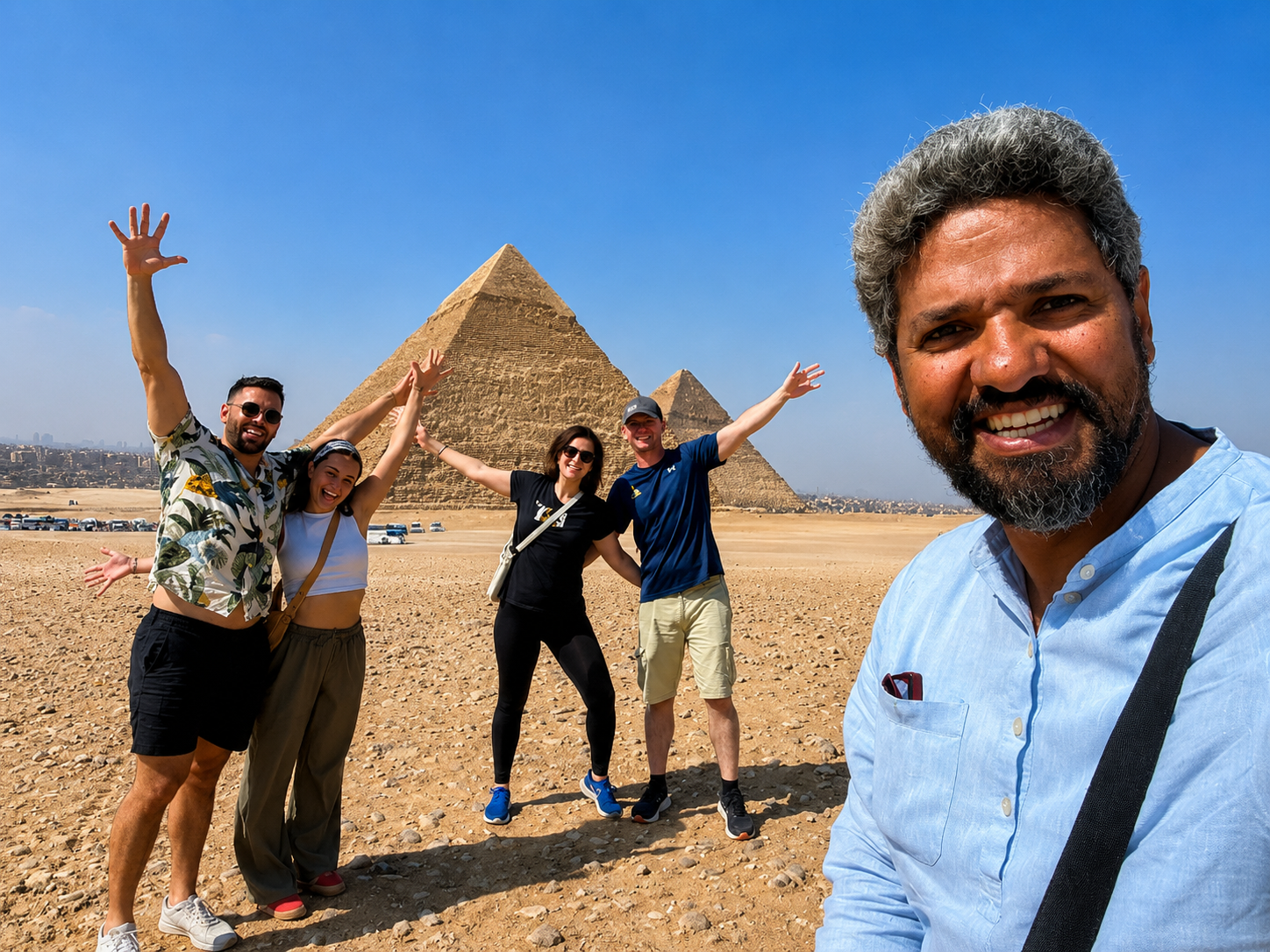
Cairo in One Day: The Perfect Itinerary
Cairo is a city unlike any other. Home to one of the Seven Wonders of the Ancient World, thousands of years of history, vibrant bazaars, world-class museums, and a culture that blends ancient traditions with modern life, Egypt’s capital offers an unforgettable experience.
Many travelers believe Cairo deserves several days, and while that is certainly true, the good news is that you can experience the city’s greatest highlights in just one well-planned day.
Whether you’re visiting during a short stay, a cruise stop, a business trip, or a long airport layover, this guide will help you make every hour count.
By following this carefully designed itinerary, you’ll discover the legendary Giza Pyramids, stand before the mysterious Great Sphinx, admire priceless treasures inside the Grand Egyptian Museum, enjoy authentic Egyptian cuisine, explore centuries-old streets, and finish your day immersed in one of the world’s oldest marketplaces.
If you’re looking for the best way to experience Cairo without stress, a professionally guided private tour remains the most comfortable and efficient option.
| Tour Information | |
|---|---|
| Duration | 8 Hours |
| Pickup | Included |
| Guide | Egyptologist |
| Transportation | Private AC Vehicle |
| Best For | First-Time Visitors |
| Cancellation | Free |
| Language | English, Spanish, French |
Why Visit Cairo?
Few cities on Earth can compete with Cairo when it comes to history.
Founded more than one thousand years ago and located beside the mighty Nile River, Cairo serves as the gateway to Ancient Egypt.
Every year millions of visitors come to witness monuments that have fascinated explorers, historians, archaeologists, and travelers for centuries.
Cairo offers a unique combination of:
- Ancient Wonders
- Medieval Islamic Architecture
- Christian Heritage
- Vibrant Local Markets
- Luxury Hotels
- Excellent Restaurants
- Modern Museums
- Friendly Hospitality
The city perfectly combines the old and the new.
One moment you’re standing beside monuments over 4,500 years old.
Minutes later you’re enjoying coffee inside one of Cairo’s modern cafés overlooking the Nile.
That’s what makes Cairo unforgettable.
Can You Really See Cairo in One Day?
Absolutely.
While one day isn’t enough to discover every hidden treasure, it is enough to visit the city’s most famous attractions if your itinerary is well organized.
The biggest mistake many travelers make is trying to see too much.
Instead of rushing through dozens of locations, focus on Cairo’s greatest highlights.
A carefully planned itinerary allows enough time for:
✔ The Giza Pyramids
✔ The Great Sphinx
✔ The Grand Egyptian Museum
✔ Lunch
✔ Khan El Khalili Bazaar
✔ Historic Cairo
without feeling exhausted.
The Perfect Cairo One-Day Schedule
Here’s the ideal timeline.
| Time | Activity |
|---|---|
| 8:00 AM | Hotel Pickup |
| 8:30 AM | Giza Plateau |
| 11:30 AM | Great Sphinx |
| 12:15 PM | Valley Temple |
| 1:00 PM | Lunch |
| 2:00 PM | Grand Egyptian Museum |
| 4:30 PM | Old Cairo |
| 5:30 PM | Khan El Khalili Bazaar |
| 7:00 PM | Return to Hotel |
This itinerary minimizes traffic and gives you enough time to enjoy every stop.
Stop One: The Great Pyramids of Giza
No visit to Egypt is complete without seeing the Great Pyramids.
Standing on the edge of the Sahara Desert, the Giza Plateau is home to the world’s most famous archaeological site.
These monuments have survived for more than 45 centuries and continue to amaze engineers, historians, and travelers alike.
The Three Main Pyramids
The Great Pyramid of Khufu
The Great Pyramid is the largest pyramid ever built.
Originally reaching nearly 147 meters (481 feet) in height, it remained the tallest man-made structure on Earth for almost 4,000 years.
Constructed using more than 2.3 million limestone blocks, the pyramid demonstrates an astonishing level of engineering that still puzzles researchers today.
Visitors can admire its immense scale from the base or purchase a separate ticket to explore the internal passageways leading toward the King’s Chamber.
Stepping inside offers a unique glimpse into one of history’s greatest architectural achievements.
Pyramid of Khafre
Often mistaken as the tallest pyramid because it stands on higher ground, the Pyramid of Khafre is easily recognized by the remaining casing stones still visible near its summit.
This pyramid was built for Pharaoh Khafre and is closely associated with the nearby Great Sphinx.
Pyramid of Menkaure
The smallest of the three royal pyramids, Menkaure’s pyramid may be more modest in size, but it remains an impressive monument showcasing the continued evolution of pyramid construction during Egypt’s Fourth Dynasty.
The Great Sphinx
Just a short drive from the pyramids stands one of the world’s most mysterious monuments.
The Great Sphinx has guarded the Giza Plateau for over 4,500 years.
Carved directly from limestone bedrock, the statue combines the body of a lion with the head of a pharaoh, symbolizing wisdom, strength, and royal authority.
Despite centuries of research, historians continue to debate several mysteries surrounding the Sphinx, including:
- Who built it?
- Why was it carved?
- What happened to its nose?
- Were there hidden chambers beneath it?
These unanswered questions only add to its legendary status.
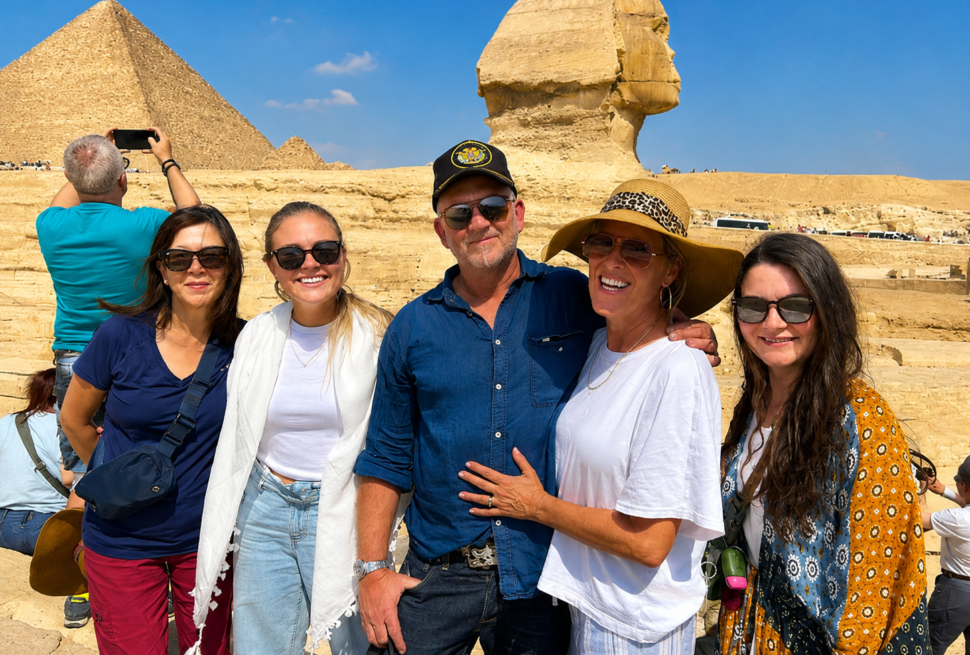
For photographers, the panoramic viewpoint overlooking both the pyramids and the Sphinx provides one of the most iconic photo opportunities in Egypt.
Don’t Miss the Panoramic Viewpoint
One of the highlights of any visit to the Giza Plateau is the panoramic viewpoint.
From here, all three pyramids align against the desert horizon, creating the classic postcard image recognized around the world.
Many visitors choose to:
- Ride a camel
- Ride a horse
- Take professional photographs
- Enjoy the breathtaking scenery
- Capture sunrise or morning light
Early morning offers the best lighting and fewer crowds, making it the ideal time for photography.
Camel Ride Experience
For many travelers, riding a camel beside the pyramids is a once-in-a-lifetime experience.
Friendly local camel handlers offer short rides that allow visitors to experience the desert landscape much as ancient travelers once did.
Before riding, always:
- Agree on the price in advance.
- Confirm the duration of the ride.
- Wear comfortable clothing.
- Bring sunglasses and sunscreen.
- Hold your camera securely.
If you’re on a private guided tour, your guide can help arrange a trustworthy camel ride and ensure a smooth experience.
Inside the Great Pyramid: Is It Worth It?
Many visitors wonder whether entering the Great Pyramid is worth the extra ticket.
The answer depends on your interests.
Inside, you’ll walk through narrow ascending and descending passages leading to the King’s Chamber. While there are no decorated walls or treasures remaining, standing inside the only surviving Wonder of the Ancient World is an unforgettable experience for history enthusiasts.
Keep in mind:
- The passages can be steep and narrow.
- It may become warm inside.
- Visitors with claustrophobia or mobility issues may prefer to admire the pyramid from the outside.
Even if you decide not to enter, the exterior views and the surrounding plateau provide an extraordinary experience.
Valley Temple of Khafre
Adjacent to the Great Sphinx is the Valley Temple, one of the best-preserved temples from Egypt’s Old Kingdom.
Built from massive limestone and granite blocks, this temple was used during the mummification and burial rituals of Pharaoh Khafre.
Its remarkable stone architecture, polished granite columns, and historical significance make it an essential stop before leaving the Giza Plateau.
What’s Next?
After exploring the Giza Plateau, it’s time to enjoy a delicious Egyptian lunch before heading to one of the world’s newest cultural landmarks—the Grand Egyptian Museum (GEM), where thousands of ancient treasures, including the complete collection of King Tutankhamun, await.
Part 2: Lunch with a View & Exploring the Grand Egyptian Museum (GEM)
After spending the morning exploring the legendary Giza Plateau, it’s time to relax, recharge, and continue your journey through Egypt’s incredible history. The afternoon combines authentic Egyptian cuisine with one of the most exciting cultural attractions in the world—the Grand Egyptian Museum (GEM).
This part of your day offers a perfect balance between sightseeing and relaxation, giving you the opportunity to enjoy delicious local food before stepping inside the largest archaeological museum ever built.
Lunch with a View of the Pyramids
A visit to Cairo isn’t complete without experiencing traditional Egyptian food. Fortunately, many excellent restaurants near the Giza Plateau offer panoramic views of the pyramids, allowing you to enjoy lunch while admiring one of the world’s greatest landmarks.
Imagine sitting on a rooftop terrace, enjoying freshly grilled kebabs, warm Egyptian bread, colorful mezze, and refreshing drinks while the Great Pyramid rises in the background. It’s one of the most memorable dining experiences you’ll have in Egypt.
Many private tours include lunch at carefully selected restaurants known for their quality, cleanliness, and exceptional views.
What to Eat in Cairo
Egyptian cuisine is rich in flavor, fresh ingredients, and centuries-old traditions. Whether you’re trying local dishes for the first time or already love Middle Eastern food, Cairo has something for everyone.
Mixed Grill
One of the most popular meals in Egypt, a mixed grill includes a delicious combination of grilled chicken, kofta, lamb, and beef served with rice, fresh salads, tahini, and warm baladi bread.
Koshary
Often considered Egypt’s national dish, Koshary is a hearty mix of rice, pasta, lentils, chickpeas, crispy fried onions, tomato sauce, and garlic vinegar. It’s vegetarian, filling, and loved by locals.
Molokhia
This traditional green soup, made from finely chopped jute leaves, is served with rice and chicken or rabbit. Its unique flavor makes it a favorite among Egyptians.
Stuffed Vegetables
Known locally as Mahshi, vegetables such as zucchini, peppers, grape leaves, and cabbage are stuffed with seasoned rice and herbs, then slowly cooked to perfection.
Fresh Egyptian Bread
Warm baladi bread is served with almost every meal and is perfect for dipping into hummus, baba ganoush, or tahini.
Traditional Desserts
Don’t miss Egyptian sweets such as:
- Basbousa
- Kunafa
- Om Ali
- Baklava
These desserts pair perfectly with traditional Egyptian tea or strong Arabic coffee.
The Grand Egyptian Museum (GEM)
Following lunch, continue your journey to what many consider the most important museum opening of the century.
Located just minutes from the Giza Pyramids, the Grand Egyptian Museum is the largest archaeological museum in the world dedicated to a single civilization.
Spanning nearly half a million square meters, GEM was designed to showcase Egypt’s extraordinary heritage using modern architecture, cutting-edge technology, and world-class exhibitions.
Even before entering, visitors are greeted by breathtaking views of the pyramids through the museum’s enormous glass façade.
Why the Grand Egyptian Museum Is So Special
The Grand Egyptian Museum represents a new era for Egyptian tourism.
Unlike traditional museums, GEM combines:
- Interactive exhibits
- State-of-the-art conservation laboratories
- Digital displays
- Multimedia presentations
- Immersive storytelling
- Spacious galleries
- Family-friendly visitor experiences
Every gallery has been carefully designed to guide visitors through more than 5,000 years of Egyptian history.
Whether you’re passionate about archaeology or simply curious about Ancient Egypt, GEM offers something for every visitor.
The Iconic Ramses II Statue
The highlight of the museum’s entrance hall is the colossal statue of Pharaoh Ramses II.
Standing over 11 meters (36 feet) tall and weighing approximately 83 tons, this magnificent granite statue welcomes visitors into the museum with remarkable grandeur.
Originally discovered in the ancient city of Memphis, the statue was carefully transported to its new home after an extraordinary conservation project.
Its intricate carvings and remarkably preserved facial features provide an unforgettable first impression.
The Grand Staircase
After entering the museum, visitors ascend the spectacular Grand Staircase.
Unlike a typical staircase, this impressive architectural feature serves as an open-air gallery lined with monumental statues, sarcophagi, columns, and royal artifacts.
As you climb, you’ll pass sculptures representing different periods of Egyptian history, offering a visual journey through the civilization’s evolution.
At the top, floor-to-ceiling windows reveal one of Cairo’s most spectacular views—the Great Pyramids framed perfectly in the distance.
King Tutankhamun’s Complete Collection
Perhaps the museum’s greatest attraction is the complete collection of treasures belonging to the famous boy king, Tutankhamun.
For the first time in history, all of the artifacts discovered inside Tutankhamun’s tomb are displayed together in one location.
This extraordinary collection includes more than 5,000 objects, many of which had never been publicly exhibited before.
Highlights include:
- The legendary golden funerary mask
- Golden coffins
- Royal jewelry
- Ceremonial chariots
- Thrones
- Furniture
- Clothing
- Weapons
- Sandals
- Toys
- Cosmetics
- Everyday personal belongings
Together, these treasures offer an intimate glimpse into the life and burial of one of Egypt’s most famous pharaohs.
Ancient Egyptian Daily Life
One of the most fascinating sections of GEM focuses not on kings but on ordinary people.
Visitors can explore exhibits showcasing:
- Farming tools
- Pottery
- Jewelry
- Cosmetics
- Musical instruments
- Furniture
- Children’s toys
- Writing materials
- Food preparation techniques
These displays reveal how ancient Egyptians lived, worked, celebrated, and worshipped thousands of years ago.
Royal Statues and Temples
Throughout the museum, you’ll encounter magnificent statues of Egypt’s greatest rulers, including:
- Khufu
- Khafre
- Menkaure
- Hatshepsut
- Thutmose III
- Amenhotep III
- Akhenaten
- Ramses II
Many statues retain remarkable detail despite being thousands of years old.
You’ll also see temple reliefs depicting religious ceremonies, military victories, and scenes of everyday life.
The Children’s Museum Experience
Families traveling with children will appreciate GEM’s interactive learning spaces.
Young visitors can enjoy:
- Digital archaeology games
- Educational workshops
- Interactive touch screens
- Ancient writing demonstrations
- Family-friendly exhibits
These activities help make ancient history engaging and accessible for visitors of all ages.
Museum Photography Tips
Photography is allowed in many areas of the museum, making it an excellent place to capture lasting memories.
For the best photos:
- Visit during the afternoon for natural lighting.
- Use the panoramic windows overlooking the pyramids.
- Photograph the Grand Staircase from the upper levels.
- Capture the Ramses II statue from multiple angles.
- Turn off your flash where required.
Always follow museum photography guidelines, especially in galleries with sensitive artifacts.
How Much Time Should You Spend at GEM?
The museum is enormous, and history enthusiasts could easily spend an entire day exploring its galleries.
However, if you’re following a one-day Cairo itinerary, plan to spend approximately 2 to 2.5 hours at the museum.
This allows enough time to experience the main highlights while leaving the afternoon free to discover Historic Cairo.
Visitor Tips for the Grand Egyptian Museum
To make the most of your visit:
- Wear comfortable walking shoes.
- Bring a refillable water bottle.
- Purchase tickets in advance when possible.
- Allow extra time during weekends and holidays.
- Carry a light jacket—the galleries are air-conditioned.
- Consider visiting with a licensed Egyptologist guide for deeper insight into the collections.
Why a Guided Visit Is Worth It
Although the museum provides excellent information panels, exploring with a knowledgeable guide transforms the experience.
A professional Egyptologist can explain:
- The significance of royal artifacts
- Ancient religious beliefs
- Hieroglyphics and symbolism
- Burial customs
- The stories behind famous pharaohs
- The latest archaeological discoveries
These insights help visitors appreciate the exhibits far beyond what labels alone can provide.
Afternoon Journey into Historic Cairo
As your museum visit comes to an end, your adventure shifts from the world of the pharaohs to the heart of medieval Cairo.
Next, you’ll explore narrow streets filled with centuries-old mosques, churches, bustling markets, and hidden courtyards where Cairo’s rich cultural heritage comes alive.
Historic Cairo offers a completely different atmosphere from the Giza Plateau—one where Islamic architecture, Coptic history, and vibrant local life blend into an unforgettable experience.
Coming Up in Part 3
Part 3: Discover Historic Cairo, Coptic Cairo & Khan El Khalili Bazaar
After exploring the ancient wonders of Giza and the treasures of the Grand Egyptian Museum, your journey continues into the heart of Historic Cairo—a UNESCO World Heritage Site where more than a thousand years of history come alive.
Unlike the monumental landscapes of the pyramids, Historic Cairo is a maze of narrow streets, beautiful mosques, ancient churches, traditional markets, and centuries-old buildings. This is where you’ll experience the living culture of Egypt and discover why Cairo has been called “The City of a Thousand Minarets.”
Historic Cairo: A UNESCO World Heritage Site
Founded in 969 AD by the Fatimid dynasty, Historic Cairo became one of the most influential cities in the Islamic world.
Today, visitors can walk through streets that have witnessed over a millennium of history. Every corner reveals remarkable architecture, local cafés, artisan workshops, and monuments that tell the story of Egypt’s Islamic, Christian, and Jewish heritage.
Unlike modern Cairo, Historic Cairo moves at a slower pace. Here, locals shop in traditional markets, craftsmen continue centuries-old trades, and the call to prayer echoes across the city’s famous skyline.
Coptic Cairo
One of Cairo’s oldest districts is Coptic Cairo, a peaceful neighborhood that preserves Egypt’s early Christian history.
Long before Islam arrived in Egypt, this area became an important center of Christianity and remains home to some of the country’s oldest churches.
According to Christian tradition, the Holy Family—Mary, Joseph, and the infant Jesus—sought refuge in Egypt and stayed in this area during their flight from King Herod.
Whether or not visitors come for religious reasons, Coptic Cairo offers a fascinating glimpse into Egypt’s diverse cultural heritage.
The Hanging Church
The most famous landmark in Coptic Cairo is the Hanging Church, officially known as Saint Virgin Mary’s Coptic Orthodox Church.
Built above the gatehouse of an ancient Roman fortress, the church appears to “hang” over the entrance, giving it its popular name.
Dating back to the 7th century, the church features:
- Beautiful wooden ceilings shaped like Noah’s Ark
- Marble pulpits
- Stunning icons
- Ancient religious manuscripts
- Peaceful courtyards
The atmosphere inside is calm and reflective, offering a welcome contrast to Cairo’s busy streets.
Ben Ezra Synagogue
Just a short walk from the Hanging Church stands the historic Ben Ezra Synagogue, one of Egypt’s most important Jewish heritage sites.
Tradition holds that this location is where baby Moses was found in the reeds of the Nile.
Although the synagogue is no longer an active place of worship, it remains an important historical landmark and symbolizes Egypt’s multicultural past.
The Roman Fortress of Babylon
Many visitors are surprised to discover Roman ruins in the heart of Cairo.
The Fortress of Babylon was built by the Romans nearly two thousand years ago to defend an important crossing along the Nile.
Sections of its massive stone walls still stand today and form the foundation for several churches within Coptic Cairo.
Walking through these ancient ruins offers a fascinating reminder that Cairo’s history extends far beyond the age of the pharaohs.
Islamic Cairo
Leaving Coptic Cairo behind, your journey continues into Islamic Cairo, one of the largest collections of medieval Islamic architecture in the world.
This district is famous for:
- Historic mosques
- Elegant minarets
- Ancient schools
- Caravanserais
- Ottoman houses
- Traditional cafés
- Artisan workshops
The architecture reflects centuries of artistic achievement, with intricate stone carvings, colorful marble, carved wooden balconies, and beautifully decorated domes.
Al-Muizz Street
Often described as the open-air museum of Islamic architecture, Al-Muizz Street is one of Cairo’s greatest treasures.
Stretching for nearly one kilometer through the heart of Historic Cairo, the street is lined with beautifully restored monuments dating from the Fatimid, Mamluk, and Ottoman periods.
As you stroll along the stone-paved street, you’ll discover:
- Historic mosques
- Ancient schools (madrasas)
- Sabils (public fountains)
- Traditional houses
- Ornate gates
- Hidden courtyards
The street is especially beautiful in the late afternoon when golden sunlight illuminates its historic buildings.
Sultan Qalawun Complex
One of the architectural highlights of Al-Muizz Street is the magnificent Qalawun Complex.
Built in the 13th century, this masterpiece combines:
- A mosque
- A madrasa
- A mausoleum
- A hospital
The richly decorated marble, stained glass, and carved stonework showcase the extraordinary craftsmanship of the Mamluk period.
Traditional Egyptian Coffeehouses
Exploring Historic Cairo is not just about monuments—it’s also about experiencing local life.
Take time to relax in one of Cairo’s traditional cafés, where locals gather to drink mint tea, Turkish coffee, or fresh juice while chatting, playing backgammon, or simply watching the world go by.
Many of these cafés have welcomed visitors for generations and offer an authentic glimpse into everyday Egyptian culture.
Khan El Khalili Bazaar
No visit to Cairo is complete without wandering through the famous Khan El Khalili Bazaar.
Established in the 14th century, this historic marketplace remains one of the oldest and most vibrant bazaars in the Middle East.
Walking through its narrow alleys is an unforgettable sensory experience.
You’ll hear merchants greeting visitors in dozens of languages, smell aromatic spices and perfumes, and admire colorful displays of handcrafted goods.
What Can You Buy?
Khan El Khalili offers an incredible variety of souvenirs and handmade products.
Popular items include:
- Papyrus artwork
- Hand-painted ceramics
- Silver jewelry
- Gold jewelry
- Egyptian cotton products
- Leather bags
- Handwoven scarves
- Alabaster statues
- Miniature pyramids
- Perfumes
- Essential oils
- Spices
- Traditional lanterns
- Handcrafted chess sets
- Decorative boxes
Many items are handmade by local artisans, making them meaningful souvenirs from your trip.
Bargaining Tips
Negotiating prices is part of the shopping experience in Khan El Khalili.
A few simple tips can help:
- Be friendly and smile.
- Ask the price politely.
- Don’t accept the first offer.
- Compare prices at several shops.
- Carry small denominations of cash.
- If you’re not interested, politely thank the seller and continue walking.
Shopping here should be enjoyable rather than stressful.
El Fishawy Café
Hidden within Khan El Khalili is one of Cairo’s most famous cafés—El Fishawy Café.
Established more than 200 years ago, it has welcomed writers, artists, politicians, and travelers from around the world.
Sit down with a glass of fresh mint tea, Turkish coffee, or hibiscus juice and enjoy the lively atmosphere while watching the bazaar come alive around you.
Best Time to Visit the Bazaar
Late afternoon and early evening are ideal.
The weather becomes cooler, the lights begin to illuminate the historic streets, and the market takes on a magical atmosphere.
Many travelers say this is their favorite part of the day because it feels authentic, energetic, and full of life.
Experiencing Local Culture
Historic Cairo isn’t simply a collection of monuments—it is a living neighborhood.
As you explore, you’ll encounter:
- Families shopping for daily necessities
- Bakers preparing fresh bread
- Craftsmen making copper lamps
- Calligraphers creating artwork
- Street musicians
- Spice merchants
- Traditional perfume makers
These encounters create memories that go far beyond sightseeing.
Evening Views of Cairo
If time allows, end your afternoon with a viewpoint overlooking Cairo’s skyline.
As the sun begins to set, the city’s countless minarets glow in warm golden light while the call to prayer echoes across the rooftops.
It’s a peaceful and unforgettable way to reflect on a day spent exploring one of the world’s oldest continuously inhabited cities.
Why Historic Cairo Shouldn’t Be Missed
Many visitors come to Egypt solely for the pyramids.
However, those who also explore Historic Cairo often discover a completely different side of the country.
Here you’ll experience:
- Living history
- Rich cultural traditions
- Incredible architecture
- Authentic local food
- Friendly hospitality
- World-famous shopping
- Religious diversity
- Centuries-old craftsmanship
Together, these experiences create a deeper understanding of Egypt beyond its ancient monuments.
Coming Up in Part 4 (Final)
Part 4: Practical Travel Tips, Costs, FAQs & Why a Private Tour Is the Best Choice
Congratulations! By following this itinerary, you’ve experienced the very best of Cairo in just one unforgettable day. From standing before the Great Pyramids to exploring the treasures of the Grand Egyptian Museum and wandering through the vibrant streets of Historic Cairo, you’ve discovered why Egypt’s capital is one of the world’s greatest travel destinations.
This final section answers the most common traveler questions and provides practical tips to help you plan the perfect visit.
Before visiting the pyramids, explore our detailed Giza Pyramids Guide to learn about the best viewpoints, entrance tickets, opening hours, what to expect, and practical tips for planning your visit.
How to Get Around Cairo
Cairo is one of Africa’s largest cities, with more than 20 million residents. While its attractions are relatively close together, traffic can be unpredictable, especially during rush hours.
Private Tour (Recommended ⭐⭐⭐⭐⭐)
A private tour is the easiest and most comfortable way to explore Cairo in one day.
Benefits include:
- Hotel pickup and drop-off
- Modern air-conditioned vehicle
- Professional licensed Egyptologist guide
- Flexible itinerary
- No waiting for other travelers
- Stops whenever you want for photos
- Local recommendations
- Stress-free transportation
If you’re visiting Cairo for the first time, a private guide can also help you better understand Egypt’s history, avoid common tourist scams, and make the most of your limited time.
Taxi
Ride-hailing apps like Uber are widely available and generally reliable. Traditional taxis are also common, but it’s best to agree on the fare before your journey if the meter isn’t used.
Metro
Cairo’s metro system is affordable and efficient for certain routes, though it doesn’t directly connect all major tourist attractions.
Rental Car
Driving in Cairo is generally not recommended for visitors due to heavy traffic, unfamiliar road conditions, and limited parking near popular attractions.
Entrance Tickets
Ticket prices may change periodically, so it’s always a good idea to check the latest information before your visit.
Popular attractions include:
- Giza Pyramids Complex
- Great Pyramid Interior (optional)
- Grand Egyptian Museum
- Historic Cairo attractions (many are free or have modest admission fees)
Some private tours include all entrance tickets in the overall price, saving time and simplifying your day.
Suggested Budget for One Day in Cairo
Your overall budget depends on your travel style.
| Budget Level | Estimated Daily Cost |
|---|---|
| Budget Traveler | $60–90 |
| Mid-Range Traveler | $100–180 |
| Private Premium Experience | $200–350+ |
These estimates may include transportation, meals, attraction tickets, and optional activities such as a camel ride.
What to Wear in Cairo
Comfortable clothing is essential, especially if you’ll be walking for several hours.
Recommended items:
- Lightweight clothing
- Comfortable walking shoes
- Sunglasses
- Hat or cap
- Sunscreen
- Reusable water bottle
- Camera
- Power bank
When visiting religious sites, dress modestly by covering your shoulders and knees out of respect for local customs.
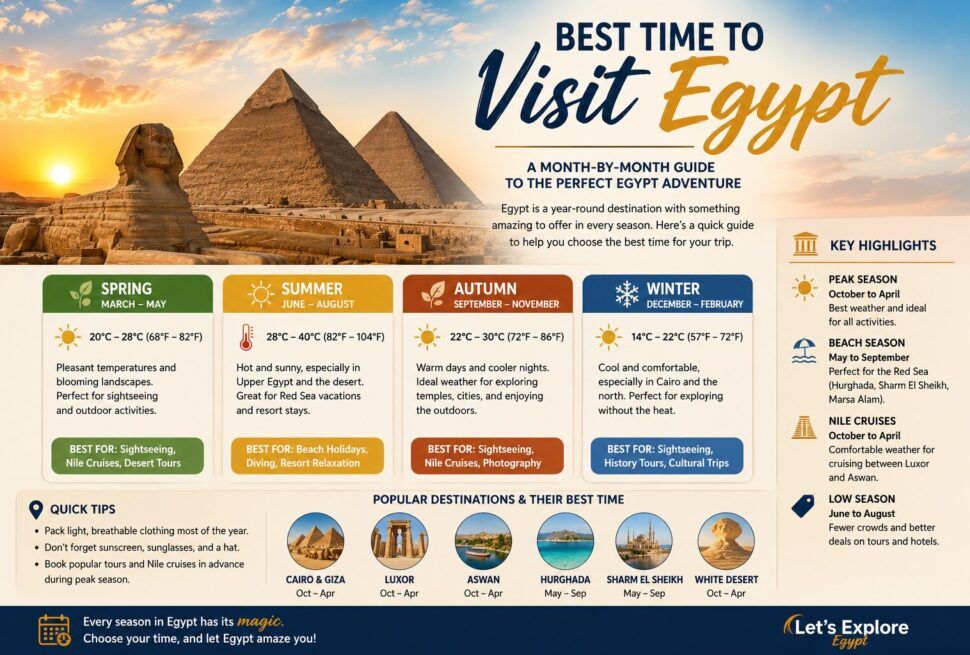
Best Time to Visit Cairo
Cairo can be visited year-round, but some seasons are more comfortable than others.
October to April ⭐⭐⭐⭐⭐
This is widely considered the best time to visit, with pleasant temperatures ideal for sightseeing.
May and September ⭐⭐⭐⭐☆
Warm weather with fewer tourists.
June to August ⭐⭐⭐☆☆
Summer is hot, but starting your tour early in the morning helps you avoid the strongest heat.
Is Cairo Safe for Tourists?
Yes. Millions of visitors travel to Cairo each year without any issues.
As with any major city:
- Keep valuables secure.
- Stay aware of your surroundings.
- Use licensed tour operators.
- Follow local guidance.
- Drink bottled water.
- Respect local customs.
Booking with a reputable company adds an extra layer of convenience and peace of mind.
Should You Choose a Private or Group Tour?
Private Tour
Pros
- Flexible schedule
- Personalized experience
- More time at favorite attractions
- Comfortable transportation
- Ideal for couples, families, and photographers
Cons
- Higher price than group tours
Group Tour
Pros
- Lower cost
- Opportunity to meet other travelers
Cons
- Fixed schedule
- Less flexibility
- Larger groups
- Limited time at each attraction
If you have only one day in Cairo, a private tour is often the best choice because it maximizes your time and allows you to tailor the experience to your interests.
Travel Tips for a Perfect Day
- Start your tour early to avoid traffic and crowds.
- Wear comfortable shoes—you’ll be walking quite a bit.
- Carry some small cash for tips or souvenirs.
- Bring a fully charged phone or camera.
- Stay hydrated throughout the day.
- Don’t hesitate to ask your guide for local recommendations.
- Take your time and enjoy the experience rather than rushing from place to place.
Planning a one-day Cairo itinerary also means knowing how much you should budget for transportation, entrance tickets, food, and other expenses. For a better idea of Egypt travel costs, check our detailed guide before planning your trip.
Frequently Asked Questions
Is one day enough to see Cairo?
Yes. While you’ll only scratch the surface, a well-planned itinerary allows you to visit the city’s main highlights in a single day.
What is the best attraction in Cairo?
The Giza Pyramids remain Cairo’s most iconic attraction, followed closely by the Grand Egyptian Museum.
Can I enter the Great Pyramid?
Yes. A separate ticket is required to access the interior.
Is the Grand Egyptian Museum worth visiting?
Absolutely. It’s one of the world’s most significant archaeological museums and showcases thousands of priceless artifacts from Ancient Egypt.
How long should I spend at the pyramids?
Allow at least three hours to fully explore the Giza Plateau.
Are camel rides safe?
Yes, when arranged through trusted operators or your tour provider.
What currency is used in Egypt?
The Egyptian Pound (EGP), though many tourist businesses also accept major credit cards.
Can I pay by card?
Most hotels, museums, and larger restaurants accept cards, but carrying some cash is useful for small purchases and local markets.
What language is spoken?
Arabic is the official language, but English is widely spoken in tourist areas.
Is tipping expected?
Tipping is customary in Egypt and appreciated for good service.
Why Book with Let’s Explore Egypt?
At Let’s Explore Egypt, we believe that every traveler deserves a personalized and memorable experience.
Our private Cairo tours are designed to combine comfort, flexibility, and authentic local insight.
When you travel with us, you’ll enjoy:
- Private, modern, air-conditioned transportation
- Licensed Egyptologist guides
- Hotel pickup and drop-off
- Flexible itineraries tailored to your interests
- No unnecessary shopping stops
- Transparent pricing with no hidden fees
- Friendly local support before and during your trip
- Optional all-inclusive packages with entrance tickets and lunch
Whether you’re visiting Cairo for the first time or returning to explore more of Egypt, our team is dedicated to making your day smooth, enjoyable, and unforgettable.
Final Thoughts
Cairo is a city where every street tells a story. In just one day, you can stand before monuments that have inspired the world for over 4,500 years, admire extraordinary treasures preserved through the ages, enjoy authentic Egyptian cuisine, and experience the vibrant culture of one of the Middle East’s most fascinating capitals.
Whether you’re gazing at the Great Pyramid, discovering the treasures of Tutankhamun, or wandering through the colorful lanes of Khan El Khalili, every moment in Cairo offers something remarkable.
A thoughtfully planned itinerary ensures you experience the city’s highlights without feeling rushed, making even a single day an unforgettable adventure.
Ready to Explore Cairo?
If you’re planning your visit, let Let’s Explore Egypt take care of every detail. Our private tours combine expert local knowledge, comfortable transportation, and carefully crafted itineraries so you can focus on creating lifelong memories.
Book your Cairo day tour today and discover why millions of travelers fall in love with Egypt every year.
At Let’s Explore Egypt, we specialize in:
- Private Egypt tour
- Grand Egyptian Museum tours
- Cairo day Tours
- Luxor Day Tour
- Egypt Multi-Day Tours
- Egypt Solo Tours
- Egypt Family Tours
Choose your Cairo Day Tour
find the best for you
keep Looking for one of our Cairo Day Tour
Experience Cairo after dark with a fun and social evening of karaoke or live music. Whether you want to take…
Turn your visit to Khan El Khalili into an exciting Egyptian market adventure with the Local Market Challenge. Instead of…
Turn your Cairo sightseeing into an exciting photography adventure with the Photography Challenge with the Pyramids and Hidden Cairo Spots….

Enjoy a peaceful private felucca sailing experience on the Nile at sunset, offering a beautiful combination of traditional Egyptian culture,…
Experience a relaxed and authentic side of Cairo with a Traditional Egyptian Tea & Shisha Challenge at a Local Café….
Recommended Egypt Tours

Why You Can Trust Let's Explore Egypt
This article was written and reviewed by the Let's Explore Egypt Editorial Team, a licensed Egyptian tour operator specializing in private Egypt tours, Nile cruises, and tailor-made travel experiences since 2009.
- 🏛 Licensed Egyptian Tour Operator Since 2009
- ⭐ Trusted by Thousands of Travelers Worldwide
- 👨🏫 Written & Reviewed by Local Egypt Travel Experts
- 🚐 Private Tours & Tailor-Made Travel Experiences
- 📞 24/7 Customer Support