

Seeing the Pyramids of Giza is often described as a bucket-list experience. But if you have difficulty walking, use a wheelchair, rely on a cane, or simply cannot stand for long periods, you may wonder whether the famous Giza Plateau is realistic for you.
The answer is yes — but you should approach the Pyramids differently from a typical sightseeing day.
You don’t need to climb ancient monuments. You don’t need to walk from one end of the plateau to the other. And you don’t need to spend an entire day outdoors.
The most enjoyable experience comes from deciding what you really want to see, where you can comfortably stop, and when you should rest.
This guide focuses specifically on the practical side of visiting Giza with mobility limitations.
If you’re planning a complete Egypt vacation for an older traveler, start with our Egypt Tours for Seniors: Complete Guide to Comfortable & Easy Travel.
For travelers who want to understand the country more broadly, our Is Egypt Suitable for Older Travelers? A Complete Guide for Seniors explains how to approach transportation, sightseeing, hotels, weather, and daily schedules.
And if you’re looking for a complete itinerary with less walking, see Egypt Tours with Less Walking: Best Itineraries for Seniors & Travelers with Limited Mobility.
The First Thing to Understand About Giza
The Pyramids are not a modern theme park with smooth paths connecting every attraction.
The Giza Plateau is an enormous archaeological landscape.
There are paved areas, sandy sections, rocky surfaces, slopes, steps, and open spaces.
That means accessibility isn’t simply a question of whether you can enter the site.
The better question is:
Which parts of the site can you comfortably experience with your particular level of mobility?
Someone who walks with a cane may have completely different needs from someone using a wheelchair.
Someone who can walk for 10 minutes but cannot stand for an hour needs a different itinerary again.
That’s why generic “accessible tour” descriptions aren’t enough.
Your tour should be planned around your actual abilities.
Start by Describing Your Mobility Needs
Before booking a private Egypt tour, don’t just tell the company:
“I have mobility problems.”
Give practical information.
For example:
- I use a wheelchair.
- I can walk short distances.
- I cannot climb stairs.
- I can transfer from a wheelchair to a vehicle.
- I need somewhere to sit every 15–20 minutes.
- I use a folding walker.
- I have difficulty walking on sand.
- I cannot stand for long periods.
This information is much more useful to a tour operator.
It allows the driver and guide to prepare the right vehicle and create a realistic sightseeing route.
A Wheelchair Doesn’t Mean You Have to Skip Giza
One of the biggest misconceptions is that wheelchair users cannot enjoy the Pyramids.
That’s not true.
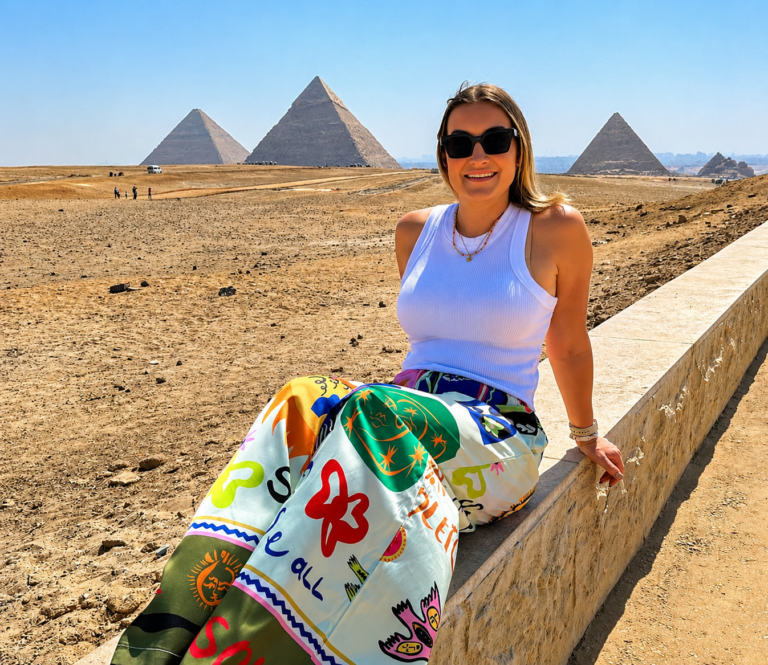
You can still experience the enormous scale of the Great Pyramid, see the other major pyramids, photograph the desert landscape, and visit the Sphinx area.
The experience simply needs to be organized around accessible or easier viewpoints rather than trying to cover the entire plateau.
And there’s an important psychological point here:
You don’t have to reach the base of every pyramid to appreciate it.
Sometimes the best photograph — and the best view — is from farther away.
Think in Viewpoints, Not Distances
This is one of the best ways to plan Giza.
Don’t think:
“How do I walk around the Pyramids?”
Think:
“Which viewpoints do I want to experience?”
For example:
Viewpoint 1
A close exterior view of the Great Pyramid.
Viewpoint 2
A wider view showing multiple pyramids.
Viewpoint 3
A panoramic location for photographs.
Viewpoint 4
The Sphinx.
You can move between appropriate areas using transportation where permitted rather than walking the entire distance.
This approach saves energy while still giving you a complete visual experience.
The Great Pyramid: You Don’t Need to Go Inside
Many travelers feel that visiting the Pyramids means entering one.
It doesn’t.
The Great Pyramid is one of the most impressive structures ever created even when viewed entirely from outside.
For someone with limited mobility, the exterior can actually be the better experience.
The internal passages are narrow and involve climbing.
If you have difficulty with stairs, bending, crawling, or confined spaces, entering the pyramid may be uncomfortable or inappropriate.
There is absolutely no reason to feel that you haven’t “really visited” the Pyramids if you stay outside.
What Makes the Pyramid Interior Difficult?
The interior experience is very different from looking at the monument.
You may encounter:
- Narrow passages
- Steps
- Steep sections
- Low ceilings
- Restricted movement
- Heat
- Crowded areas
If any of these are difficult for you, enjoy the exterior instead.
Your Egyptologist can also explain how the internal chambers were designed, allowing you to understand the monument without physically entering it.
The Sphinx Can Be a Better Experience for Some Travelers
For travelers who don’t want a long walking route, the Sphinx is an important part of the visit because it provides an iconic attraction within a relatively focused sightseeing area.
The Sphinx itself is extraordinary.
You can photograph it from the appropriate visitor areas and learn about its symbolism and history without needing to explore the entire Giza Plateau.
Your guide should help you choose the practical viewing route based on your mobility.
Don’t Make the Pyramids a Race
A common mistake is trying to complete Giza in two hours because that’s what a standard itinerary says.
If you’re traveling with a mobility limitation, don’t follow someone else’s pace.
Stop when you need to.
Sit when you can.
Drink water.
Take photographs.
Look at the landscape.
Listen to your guide.
The Pyramids have been there for thousands of years.
You don’t need to rush through them.
The Best Time of Day for a Mobility-Friendly Visit
Timing can make a huge difference.
A short walk in comfortable weather may be easy.
The same walk under intense midday heat can become exhausting.
For this reason, an early start is usually preferable.
Morning offers:
- More comfortable temperatures
- Better conditions for outdoor sightseeing
- Softer photographic light
- More energy at the beginning of the day
During warmer periods, this becomes even more important.
Don’t Plan Five Attractions After Giza
If mobility is limited, reconsider the traditional “maximum attractions per day” approach.
A day that includes:
Pyramids → Sphinx → Saqqara → Memphis → Dahshur
may be impressive on an itinerary spreadsheet.
It may not be enjoyable in real life.
Instead, consider:
Pyramids + Sphinx + lunch + hotel
Then visit Saqqara another day.
This gives you something extremely valuable:
energy.
Why Lunch Matters More Than You Think
Lunch isn’t simply a meal between attractions.
For a traveler with limited mobility, it can be a recovery period.
After several hours outside, sitting in a comfortable restaurant, drinking water, eating, and getting away from the sun can make the difference between enjoying the afternoon and feeling completely exhausted.
A private tour allows you to take that break when you actually need it.
The Vehicle Becomes Part of the Experience
For a traveler with mobility challenges, the private vehicle isn’t simply transportation.
It becomes a mobile rest area.
You can return to the vehicle after a viewpoint.
Sit in air conditioning.
Drink water.
Rest your legs.
Then continue when you’re ready.
This is one reason private transportation is particularly valuable for mobility-conscious travelers.
Tell Us About the Wheelchair Before You Arrive
Not every wheelchair is the same.
A lightweight folding wheelchair is different from a large electric mobility device.
Before the trip, provide details such as:
Manual or electric?
Foldable or fixed?
Approximate dimensions?
Can the traveler transfer into a regular vehicle seat?
Is assistance needed?
This allows the transportation arrangements to be made properly.
What If You Use a Walker?
A walker can be extremely useful on smooth surfaces.
The problem is that sand and loose gravel can make certain archaeological areas more difficult.
Don’t assume you will be able to use the walker everywhere.
Instead:
- Use it where the surface is appropriate.
- Take assistance on difficult sections.
- Rest frequently.
- Avoid unnecessary distances.
- Use transportation between major areas whenever possible.
What If You Only Have Mild Mobility Problems?
You may not need a wheelchair or special equipment.
Perhaps you can walk normally for 10–15 minutes but become tired after that.
In this case, your strategy is simple:
short walks + transportation + breaks.
You can still experience most of the important parts of Giza.
The key is not waiting until you’re exhausted.
What Shoes Should You Wear?
This is one of the most underestimated parts of a Giza visit.
Leave the fashionable shoes at the hotel.
Choose:
- Supportive walking shoes
- Shoes with good grip
- Comfortable soles
- Secure footwear
Sand and uneven surfaces can make unstable shoes dangerous.
If you use a walking aid, stable footwear becomes even more important.
Clothing for the Giza Plateau
Choose lightweight, breathable clothing.
A hat is useful.
Sunglasses and sunscreen are also important.
During cooler months, mornings can feel surprisingly cool, while temperatures may rise later.
Dress in layers when necessary.
Bring Water Even for a Short Visit
Don’t assume that a short tour means you won’t need water.
Outdoor sightseeing in Egypt can become dehydrating quickly.
Carry bottled water and drink regularly rather than waiting until you feel thirsty.
If you have specific medical restrictions regarding fluids or heat exposure, follow your healthcare provider’s advice.
What About Restrooms?
If you have mobility limitations, restroom planning is important.
Ask your guide about suitable facilities before beginning a long sightseeing section.
Don’t wait until you urgently need one.
A private itinerary makes it easier to build restroom and rest stops into the day.
Can You Visit Giza With a Senior Parent?
Absolutely.
In fact, visiting the Pyramids with a parent can be one of the most memorable family experiences in Egypt.
But don’t make the mistake of treating the day like a normal sightseeing excursion.
The goal should be:
“Let’s make this enjoyable for Mom or Dad.”
Not:
“Let’s see everything possible before lunch.”
Take photographs.
Sit together.
Listen to the Egyptologist.
Enjoy the moment.
That’s what the trip is really about.
A Better Giza Itinerary for Limited Mobility
Here’s an example of how we would structure a relaxed visit.
8:00 AM – Hotel Pickup
Your private driver meets you at your Cairo or Giza hotel.
No rushing to public transportation.
No large group waiting.
8:30 AM – Arrival at Giza
Begin the visit at a suitable location.
Your guide explains the history of the plateau before moving between the major viewpoints.
8:45 AM – Great Pyramid
Enjoy the Great Pyramid from an appropriate exterior viewpoint.
Take photographs.
Sit and rest when necessary.
9:30 AM – Other Pyramid Views
Move to another suitable viewpoint rather than walking the entire plateau.
See the pyramids of Khafre and Menkaure.
10:15 AM – Panoramic Photography
Stop at a scenic viewpoint.
This can be one of the best parts of the visit because you can appreciate the relationship between the three pyramids without needing to explore every area.
10:45 AM – Sphinx
Visit the Sphinx area and enjoy one of Egypt’s most recognizable monuments.
11:30 AM – Return to Vehicle
Take a proper break.
Water.
Air conditioning.
Rest.
12:00 PM – Lunch
Enjoy a relaxed lunch rather than immediately moving to another archaeological site.
Afternoon – Optional
If you’re feeling good, continue to another attraction.
If you’re tired, return to the hotel.
The second option is completely acceptable.
Should You Visit Saqqara on the Same Day?
For travelers with limited mobility, I’d usually recommend considering a separate day.
Saqqara deserves time.
It also contains its own archaeological landscape and uneven terrain.
Separating the visits means:
Day 1: Giza
Day 2: Saqqara + Memphis
This is slower but considerably more comfortable.
What About the Grand Egyptian Museum?
The museum is a good complement to Giza because it gives you an indoor experience after the outdoor desert environment.
However, don’t assume that a museum means no walking.
Large museums can involve significant distances.
Plan a shorter museum visit if necessary and prioritize the collections you’re most interested in.
A Comfortable Two-Day Pyramid Experience
For travelers with significant mobility limitations, this can be an excellent approach.
Day One
Giza Pyramids + Sphinx + relaxed lunch.
Day Two
Grand Egyptian Museum + relaxed Cairo experience.
This is much more manageable than trying to combine everything into one exhausting day.
What About Travelers With Serious Mobility Limitations?
If you have very limited mobility, don’t simply book a standard tour and hope everything works.
Contact the tour operator first.
Explain exactly what you need.
A responsible operator should tell you honestly:
- Which areas may be difficult
- Which activities are optional
- Where assistance may be required
- What vehicle will be used
- What walking is unavoidable
That’s much better than promising “100% accessible” without explaining the reality of an ancient archaeological site.
Accessibility Doesn’t Mean Perfect Accessibility
This is an important distinction.
A destination can be possible to visit without being fully accessible everywhere.
The Pyramids are a perfect example.
You can experience them with limited mobility.
But some areas remain difficult because of the age and physical environment of the site.
Honest planning is therefore more valuable than unrealistic promises.
The Experience Is More Important Than the Checklist
Imagine two travelers.
Traveler A visits:
- Giza
- Saqqara
- Memphis
- Dahshur
- Museum
all in one day.
They’re exhausted by the evening.
Traveler B spends the morning at Giza, takes photographs, enjoys lunch, and returns to the hotel.
Who had the better Pyramid experience?
For someone with mobility limitations, Traveler B often does.
Travel isn’t a competition.
Combining Giza With a Nile Cruise
If you’re planning a longer Egypt vacation, consider following Cairo with a Nile Cruise.
This creates a natural rhythm:
Cairo sightseeing → Nile relaxation → Red Sea rest
Instead of constantly changing hotels, you can stay aboard the ship while traveling between major destinations.
For senior travelers, this can be particularly appealing.
End Your Trip Somewhere Relaxing
After several days of ancient monuments, consider adding a Red Sea stay.
Hurghada, El Gouna, or another suitable resort can provide several days without a demanding sightseeing schedule.
You can relax by the pool, enjoy the sea, have meals at the resort, and recover before returning home.
A Simple Rule for Mobility-Friendly Egypt Travel
Here’s the rule we recommend:
Never spend energy on something that doesn’t matter to you.
If you love archaeology, spend your energy inside the monuments you can comfortably reach.
If photography is your priority, focus on viewpoints.
If you’re traveling with family, focus on the shared experience.
If comfort is your priority, spend more time relaxing.
There is no single “correct” way to visit the Pyramids.
Frequently Asked Questions
Can someone in a wheelchair visit the Pyramids?
Yes. Wheelchair users can experience important exterior areas of Giza, although terrain and access vary. The itinerary should be planned around the specific wheelchair and the traveler’s abilities.
Can I visit the Pyramids without climbing?
Absolutely. You can enjoy the monuments entirely from exterior viewpoints.
Do I have to enter the Great Pyramid?
No. Entering the pyramid is optional.
Is Giza suitable for seniors?
Yes. Seniors can enjoy Giza when the visit is paced appropriately and unnecessary walking is reduced.
Can I use a walker at the Pyramids?
Yes, in suitable areas, although sand and uneven surfaces can make some sections difficult.
How long should a mobility-friendly Giza visit take?
Around three to four hours can be a comfortable starting point, but the ideal duration depends on the traveler.
Should I combine Giza and Saqqara?
If you have limited mobility, separating them into two days can provide a much more comfortable experience.
Is a private tour better for wheelchair users?
A private tour generally provides greater flexibility because transportation, timing, stops, and sightseeing can be adapted to the traveler.
Final Advice: Don’t Let Mobility Limit Your Dream
The Pyramids are more than a place you walk around.
They’re something you experience.
You can sit and look up at the Great Pyramid.
You can photograph the Sphinx.
You can listen to an Egyptologist explain how these monuments were created.
You can share the moment with your children or grandchildren.
You can take your time.
You can rest.
You can skip the parts that aren’t right for you.
And you can still leave Giza knowing that you stood in front of one of the greatest achievements of the ancient world.
Limited mobility may change the way you visit the Pyramids, but it doesn’t have to stop you from visiting them.
The best itinerary is not the one that takes you everywhere.
It’s the one that lets you enjoy the places you came all the way to Egypt to see.
Recommended Egypt Tours
Why You Can Trust Let's Explore Egypt
This article was written and reviewed by the Let's Explore Egypt Editorial Team, a licensed Egyptian tour operator specializing in private Egypt tours, Nile cruises, and tailor-made travel experiences since 2009.
- 🏛 Licensed Egyptian Tour Operator Since 2009
- ⭐ Trusted by Thousands of Travelers Worldwide
- 👨🏫 Written & Reviewed by Local Egypt Travel Experts
- 🚐 Private Tours & Tailor-Made Travel Experiences
- 📞 24/7 Customer Support