

History, Discovery & the Mystery of Egypt’s Alabaster Guardian
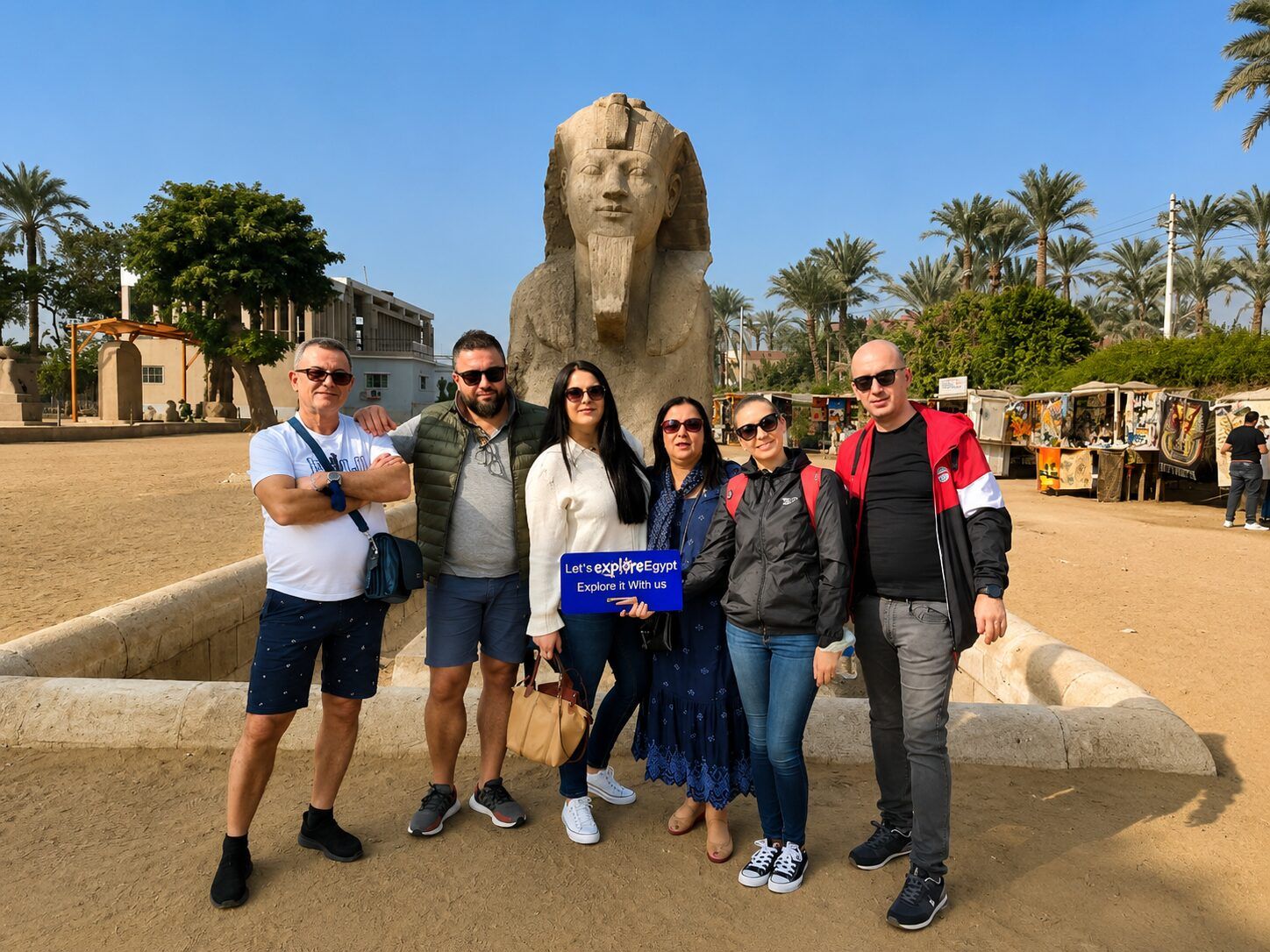
The Alabaster Sphinx of Memphis is one of Ancient Egypt’s most remarkable yet often overlooked monuments. Located in the Memphis Open-Air Museum, this magnificent sculpture has guarded the ruins of Egypt’s first capital for thousands of years.
Unlike the famous Great Sphinx of Giza, which is carved directly from limestone bedrock, the Alabaster Sphinx was carved from a single block of calcite alabaster, giving it a smooth surface and a light golden-white appearance that glows beautifully under the Egyptian sun.
Although smaller than the Great Sphinx, it remains one of the finest examples of royal sculpture from Ancient Egypt and offers visitors a fascinating glimpse into the artistic and religious traditions of one of the world’s oldest civilizations.
Today, the Alabaster Sphinx is one of the highlights of any visit to Memphis and is frequently included in tours that also visit Saqqara, Dahshur, and the Giza Pyramids.
Table 1: Alabaster Sphinx at a Glance
| Feature | Details |
|---|---|
| Name | Alabaster Sphinx of Memphis |
| Location | Memphis Open-Air Museum |
| Material | Egyptian Calcite (commonly called Egyptian alabaster) |
| Length | Approximately 8 meters (26 feet) |
| Height | Approximately 4 meters (13 feet) |
| Period | New Kingdom (likely) |
| Famous For | One of the largest alabaster sphinxes in Egypt |
What Is the Alabaster Sphinx?
A sphinx is one of the most recognizable symbols of Ancient Egypt.
It combines:
- The body of a lion
- The head of a king
- Royal authority
- Divine protection
- Strength and wisdom
The lion represented courage and power, while the human head symbolized intelligence and royal leadership.
Together, these features created a powerful guardian figure placed at temples, royal complexes, and sacred spaces.
The Alabaster Sphinx of Memphis served as both a religious monument and a symbol of royal authority in Egypt’s ancient capital.
Table 2: Symbolism of the Sphinx
| Feature | Meaning |
|---|---|
| Lion’s Body | Strength and protection |
| Human Head | Wisdom and kingship |
| Royal Pose | Stability and authority |
| Monumental Scale | Eternal power |
| Sacred Location | Divine guardianship |
Ancient Memphis: Egypt’s First Capital
The Alabaster Sphinx originally stood in Memphis, the first capital of a unified Egypt.
Founded around 3100 BCE, Memphis became:
- Egypt’s political center
- Home of the Temple of Ptah
- Residence of kings
- Major trading hub
- Center of religion and craftsmanship
For centuries, Memphis remained one of the most influential cities in the ancient world, attracting rulers, priests, merchants, and craftsmen from across the Nile Valley.
The presence of the Alabaster Sphinx emphasized the city’s prestige and sacred status.
Table 3: Memphis at a Glance
| Feature | Information |
|---|---|
| Founded | Around 3100 BCE |
| Founder | Traditionally King Menes (Narmer) |
| Ancient Role | First capital of Egypt |
| Main Deity | Ptah |
| UNESCO Status | World Heritage Site |
Who Built the Alabaster Sphinx?
The exact identity of the pharaoh represented by the Alabaster Sphinx remains uncertain.
Many Egyptologists believe it dates to the New Kingdom, possibly during the reign of Amenhotep II or another king of the Eighteenth Dynasty, based on its artistic style and proportions. Other scholars have proposed different rulers, but there is no definitive inscription identifying the monument.
Regardless of its precise date, the sphinx clearly reflects the sophisticated craftsmanship and royal symbolism that characterized one of Ancient Egypt’s most prosperous periods.
Table 4: Possible Attribution
| Theory | Evidence |
|---|---|
| Amenhotep II | Similar artistic style and dating proposed by many scholars |
| Another New Kingdom Pharaoh | Lack of identifying inscription leaves room for debate |
| Exact Identity | Still uncertain |
Discovery of the Monument
Over the centuries, Memphis gradually declined as Egypt’s political center shifted elsewhere.
Floods from the Nile, earthquakes, and the reuse of building materials caused many monuments to collapse or become buried beneath layers of earth.
The Alabaster Sphinx remained hidden for centuries before archaeologists uncovered it during excavations at Memphis.
Its remarkable state of preservation immediately attracted international attention, making it one of the museum’s most treasured exhibits.
Table 5: Discovery Timeline
| Period | Event |
|---|---|
| Ancient Egypt | Sphinx erected in Memphis |
| Late Antiquity | Memphis declined |
| Centuries Later | Monument buried beneath debris |
| Modern Archaeology | Rediscovered and preserved |
Why Is It Made of Alabaster?
Unlike most Egyptian sphinxes carved from limestone or granite, this monument was sculpted from Egyptian calcite, traditionally known as Egyptian alabaster.
This luxurious stone was highly valued because it:
- Has a smooth texture.
- Can be polished to a soft shine.
- Reflects sunlight beautifully.
- Was associated with prestige and royal monuments.
Its warm cream-colored appearance gives the Memphis Sphinx a distinctive elegance that sets it apart from other sphinxes in Egypt.
Table 6: Properties of Egyptian Alabaster
| Property | Benefit |
|---|---|
| Fine Grain | Allows detailed carving |
| Natural Luster | Beautiful polished finish |
| Light Color | Elegant appearance |
| Durability | Long-lasting monument |
| Prestige | Favored for royal works |
Artistic Excellence
The Alabaster Sphinx showcases the remarkable abilities of Ancient Egyptian sculptors.
Notable artistic features include:
- Graceful lion’s body
- Calm facial expression
- Carefully carved royal features
- Balanced proportions
- Smooth polished surface
- Elegant craftsmanship
Although weathering has affected some details, the sculpture remains one of the finest examples of Egyptian monumental art.
Table 7: Artistic Features
| Feature | Description |
|---|---|
| Material | Egyptian calcite (alabaster) |
| Body | Reclining lion |
| Face | Idealized royal portrait |
| Style | New Kingdom sculpture |
| Finish | Smooth polished surface |
Historical Importance
The Alabaster Sphinx is more than an impressive sculpture.
It represents:
- Royal authority
- Religious devotion
- Artistic excellence
- Ancient Egyptian engineering
- The enduring importance of Memphis
Its survival for thousands of years offers valuable insight into the political, religious, and artistic traditions of Ancient Egypt.
Table 8: Historical Significance
| Category | Importance |
|---|---|
| Art | Monumental sculpture |
| Religion | Sacred guardian |
| History | Symbol of royal power |
| Archaeology | Major Memphis discovery |
| Tourism | Museum highlight |
Amazing Facts About the Alabaster Sphinx
- It is carved from a single block of Egyptian calcite (alabaster).
- It is one of the largest alabaster sphinxes ever discovered in Egypt.
- The identity of the pharaoh it represents remains uncertain.
- It stands within the Memphis Open-Air Museum.
- It has survived for more than 3,000 years despite the decline of ancient Memphis.
- Its polished stone creates a beautiful glow in natural sunlight.
Table 9: Quick Facts
| Fact | Information |
|---|---|
| Age | More than 3,000 years |
| Material | Egyptian calcite (alabaster) |
| Museum | Memphis Open-Air Museum |
| Best Combined With | Temple of Ptah & Colossus of Ramses II |
| UNESCO Site | Memphis and its Necropolis |
Why the Alabaster Sphinx Captivates Visitors
The Alabaster Sphinx of Memphis offers a unique perspective on Ancient Egyptian art and royal symbolism. While it may not be as famous as the Great Sphinx of Giza, its exceptional craftsmanship, elegant material, and mysterious origins make it one of the hidden treasures of Egypt.
Visitors who take the time to explore this remarkable monument discover a quieter but equally rewarding experience that deepens their understanding of Memphis, Egypt’s first capital, and the civilization that flourished there.
Architecture, Artistic Features & Engineering of the Alabaster Sphinx
A Masterpiece of Ancient Egyptian Sculpture
The Alabaster Sphinx of Memphis is one of the finest surviving examples of Ancient Egyptian monumental sculpture. Although smaller than the famous Great Sphinx of Giza, it stands out because it was carved from a single block of Egyptian calcite (traditionally called Egyptian alabaster), a luxurious stone prized for its smooth texture and natural brilliance.
The sculpture perfectly combines artistic elegance with royal symbolism, representing the strength of a lion and the wisdom of a pharaoh. More than three thousand years after it was created, the sphinx continues to impress visitors with its graceful proportions, carefully carved features, and remarkable preservation.
Table 1: Monument Overview
| Feature | Details |
|---|---|
| Monument | Alabaster Sphinx of Memphis |
| Material | Egyptian Calcite (Egyptian Alabaster) |
| Length | Approximately 8 meters |
| Height | Approximately 4 meters |
| Style | New Kingdom Sculpture |
| Current Location | Memphis Open-Air Museum |
| Condition | Well Preserved |
Egyptian Calcite (Egyptian Alabaster)
One of the monument’s most distinctive characteristics is its material.
Although commonly called alabaster, the stone is actually Egyptian calcite, a form of calcite that has been used in Egypt for thousands of years.
Ancient craftsmen valued this stone because it offered:
- A smooth carving surface
- Fine details
- Natural translucency
- Elegant cream-colored appearance
- Excellent polishing qualities
The stone’s subtle glow under sunlight gave royal monuments a luxurious appearance that reinforced their importance.
Table 2: Properties of Egyptian Calcite
| Property | Benefit |
|---|---|
| Fine Grain | Precise carving |
| Smooth Texture | Elegant finish |
| Natural Translucency | Reflects light beautifully |
| Cream Color | Luxurious appearance |
| Durability | Long-lasting monument |
The Lion’s Body
The body of the sphinx is carved in the traditional reclining position adopted throughout Ancient Egypt.
The lion symbolized:
- Courage
- Strength
- Royal protection
- Military power
- Stability
The powerful front paws stretch forward while the body rests calmly, expressing both readiness and control.
This balance between power and serenity became one of the defining characteristics of Egyptian sphinx sculpture.
Table 3: Symbolism of the Lion
| Feature | Meaning |
|---|---|
| Lion’s Body | Strength |
| Reclining Pose | Stability |
| Powerful Paws | Protection |
| Muscular Form | Royal authority |
| Calm Position | Eternal vigilance |
The Royal Face
The human face represents the ruling pharaoh, although scholars continue to debate exactly which king is portrayed.
Despite centuries of weathering, several artistic details remain visible:
- Almond-shaped eyes
- Broad cheeks
- Straight nose
- Full lips
- Calm expression
- Balanced facial proportions
Rather than depicting an individual realistically, Ancient Egyptian sculptors aimed to create an ideal image of eternal kingship.
Table 4: Facial Features
| Feature | Symbolism |
|---|---|
| Almond Eyes | Divine awareness |
| Calm Expression | Royal confidence |
| Straight Nose | Ideal beauty |
| Full Lips | Majesty |
| Balanced Proportions | Perfection |
Royal Regalia
Although parts of the monument have been damaged over time, traces of royal iconography remain.
The sphinx originally displayed elements associated with Egyptian kingship, including:
- Nemes headdress
- Royal cobra (uraeus)
- Ceremonial beard (possibly)
- Broad royal collar
These features identified the figure as a divine ruler protected by the gods.
Table 5: Royal Symbols
| Symbol | Meaning |
|---|---|
| Nemes Headdress | Kingship |
| Uraeus Cobra | Divine protection |
| Ceremonial Beard | Sacred authority |
| Broad Collar | Royal prestige |
Artistic Style
The Alabaster Sphinx reflects the refined artistic traditions of the New Kingdom.
Artists emphasized:
- Symmetry
- Harmony
- Ideal proportions
- Smooth surfaces
- Elegant curves
- Balanced composition
Instead of creating dramatic facial expressions, Egyptian sculptors portrayed rulers as calm, powerful, and eternal.
This timeless style influenced Egyptian art for centuries.
Table 6: Artistic Characteristics
| Characteristic | Importance |
|---|---|
| Symmetry | Harmony |
| Idealized Form | Eternal kingship |
| Smooth Surface | Artistic excellence |
| Monumental Scale | Royal authority |
| Fine Detailing | Master craftsmanship |
Engineering the Monument
Carving the Alabaster Sphinx required remarkable planning and technical skill.
Ancient craftsmen first selected a massive block of Egyptian calcite before shaping it using stone hammers, copper chisels, bronze tools, and abrasive sand.
The process included:
- Selecting suitable stone
- Rough carving
- Fine sculpting
- Surface polishing
- Final detailing
- Transportation to its ceremonial location
Considering the weight of the finished monument, moving it to Memphis was itself an extraordinary engineering achievement.
Table 7: Construction Process
| Stage | Activity |
|---|---|
| Quarrying | Extract calcite block |
| Rough Carving | Shape the monument |
| Fine Detailing | Facial features and body |
| Polishing | Smooth surface |
| Transportation | Move to Memphis |
| Installation | Position near the sacred complex |
Comparison with the Great Sphinx of Giza
Although both monuments combine a lion’s body with a royal head, they differ significantly in size, material, and historical context.
Table 8: Alabaster Sphinx vs. Great Sphinx
| Feature | Alabaster Sphinx of Memphis | Great Sphinx of Giza |
|---|---|---|
| Material | Egyptian Calcite (Alabaster) | Limestone Bedrock |
| Length | About 8 meters | About 73 meters |
| Location | Memphis | Giza Plateau |
| Period | Likely New Kingdom | Fourth Dynasty |
| Purpose | Temple guardian | Royal monument and guardian |
| Visitor Experience | Museum setting | Outdoor archaeological site |
Conservation and Preservation
Because Egyptian calcite is softer than granite, preserving the Alabaster Sphinx requires careful conservation.
Modern efforts include:
- Structural monitoring
- Stone cleaning
- Climate protection
- Surface stabilization
- Visitor management
- Digital documentation
These measures help protect the monument from weathering, pollution, and physical damage while ensuring that future generations can continue to admire this exceptional work of art.
Table 9: Conservation Projects
| Project | Objective |
|---|---|
| Structural Monitoring | Preserve stability |
| Stone Cleaning | Protect surface |
| Environmental Control | Reduce deterioration |
| Visitor Management | Prevent accidental damage |
| Digital Recording | Long-term preservation |
Why the Alabaster Sphinx Is Unique
The Alabaster Sphinx of Memphis is unlike any other sphinx in Egypt. Its rare material, elegant craftsmanship, and association with Egypt’s oldest capital make it one of the country’s most distinctive archaeological treasures.
While the Great Sphinx of Giza dominates the desert landscape, the Memphis Sphinx offers a more intimate experience, allowing visitors to appreciate the fine details of Ancient Egyptian sculpture up close.
Table 10: Why the Alabaster Sphinx Is Special
| Feature | Rating |
|---|---|
| Artistic Quality | ⭐⭐⭐⭐⭐ |
| Historical Importance | ⭐⭐⭐⭐⭐ |
| Material Rarity | ⭐⭐⭐⭐⭐ |
| Preservation | ⭐⭐⭐⭐⭐ |
| Photography | ⭐⭐⭐⭐⭐ |
| Overall Experience | ⭐⭐⭐⭐⭐ |
A Timeless Symbol of Royal Power
The Alabaster Sphinx of Memphis remains one of Ancient Egypt’s most elegant sculptures. Its graceful proportions, polished calcite surface, and enduring symbolism demonstrate the extraordinary skill of Egyptian artists and craftsmen.
More than three thousand years after its creation, it continues to guard the ancient city of Memphis, offering visitors a rare opportunity to admire one of Egypt’s most refined examples of royal sculpture.
Archaeology, the Temple of Ptah, Religious Significance & Lasting Legacy
A Guardian of Egypt’s First Capital
For more than 3,000 years, the Alabaster Sphinx of Memphis has stood as one of the finest surviving symbols of Ancient Egyptian royal authority. Although smaller than the Great Sphinx of Giza, its importance lies in its connection with Memphis, the political and religious heart of Ancient Egypt for much of its early history.
Positioned near the sacred precinct of the Temple of Ptah, the sphinx served as both a guardian of holy ground and a powerful reminder of the divine authority of the pharaoh. Today, it remains one of the most treasured monuments in the Memphis Open-Air Museum, attracting visitors interested in archaeology, religion, and Ancient Egyptian art.
Table 1: Historical Importance
| Feature | Significance |
|---|---|
| Monument | Alabaster Sphinx of Memphis |
| Ancient City | Memphis |
| Associated Temple | Temple of Ptah |
| Material | Egyptian Calcite (Alabaster) |
| Estimated Date | Likely New Kingdom |
| UNESCO Site | Memphis and its Necropolis |
The Temple of Ptah
The Alabaster Sphinx was closely associated with the Temple of Ptah, the largest and most important sanctuary in Memphis.
Ptah was worshipped as:
- Creator god
- Patron of craftsmen
- Protector of architects
- Guardian of sculptors
- Divine master builder
Because Memphis was Egypt’s principal center for skilled artisans, placing a royal sphinx near the temple emphasized the close relationship between kingship, craftsmanship, and divine creation.
Although only portions of the temple survive today, archaeological discoveries continue to reveal its former grandeur.
Table 2: Temple of Ptah
| Feature | Information |
|---|---|
| Main Deity | Ptah |
| Location | Memphis |
| Religious Role | Major state temple |
| Worshippers | Kings, priests, craftsmen |
| Historical Importance | Center of Memphis theology |
Archaeological Excavations
Excavations at Memphis have uncovered numerous monuments that help reconstruct the city’s ancient landscape.
Among the most important discoveries are:
- The Colossus of Ramses II
- Temple foundations
- Stone reliefs
- Granite statues
- Royal inscriptions
- Ceremonial gateways
- Architectural fragments
The discovery of the Alabaster Sphinx added another remarkable chapter to the archaeological history of Memphis, highlighting the city’s artistic sophistication and religious importance.
Table 3: Major Discoveries at Memphis
| Discovery | Importance |
|---|---|
| Colossus of Ramses II | Monumental royal sculpture |
| Alabaster Sphinx | Royal guardian statue |
| Temple of Ptah | Religious center |
| Stone Reliefs | Historical records |
| Temple Foundations | Architectural evidence |
Religious Symbolism
In Ancient Egypt, sphinxes were far more than decorative sculptures.
They represented:
- Royal protection
- Divine wisdom
- Solar power
- Eternal kingship
- Sacred guardianship
The lion’s body symbolized immense physical strength, while the human head represented intelligence and royal authority.
Placed near temples, sphinxes protected sacred spaces and reinforced the belief that the pharaoh ruled with the support of the gods.
Table 4: Symbolism of the Sphinx
| Symbol | Meaning |
|---|---|
| Lion’s Body | Strength and courage |
| Human Head | Wisdom and kingship |
| Calm Expression | Stability |
| Sacred Position | Protection of holy places |
| Monumental Scale | Eternal authority |
The Mystery of the Pharaoh
Unlike many royal statues, the Alabaster Sphinx does not preserve an inscription clearly identifying the king it portrays.
Most Egyptologists believe it dates to the New Kingdom, and many suggest Amenhotep II because of the artistic style and historical context. However, no definitive evidence confirms this identification.
This uncertainty has made the monument one of Memphis’s most intriguing archaeological mysteries, encouraging continued research and scholarly debate.
Table 5: Theories About the Pharaoh
| Theory | Supporting Evidence |
|---|---|
| Amenhotep II | Artistic style and proposed dating |
| Another New Kingdom King | Lack of identifying inscription |
| Unknown Pharaoh | Identity remains unconfirmed |
Preservation Through the Centuries
After Memphis lost its political importance, many monuments gradually became buried beneath layers of sand, mud, and debris.
Unlike monuments exposed to constant human activity, the Alabaster Sphinx remained partially protected beneath these deposits for centuries.
Following its rediscovery, conservation specialists undertook careful work to preserve the delicate calcite surface while minimizing further deterioration.
Today, the sphinx is displayed in the open-air museum, where visitors can admire it while preservation efforts continue.
Table 6: Preservation Timeline
| Period | Event |
|---|---|
| New Kingdom | Sphinx created |
| Later Periods | Memphis declined |
| Centuries Later | Monument buried |
| Modern Era | Excavated and conserved |
Myths vs. Historical Facts
The Alabaster Sphinx has inspired many legends, but archaeological evidence provides a clearer picture of its history.
Table 7: Myths vs. Facts
| Myth | Historical Fact |
|---|---|
| It is older than the Great Sphinx | It is generally believed to date to the New Kingdom, much later than the Great Sphinx |
| It depicts Ramses II | The identity of the pharaoh remains uncertain |
| It is carved from marble | It is carved from Egyptian calcite (traditionally called Egyptian alabaster) |
| It guarded the pyramids | It stood in the ancient city of Memphis near the Temple of Ptah |
UNESCO World Heritage Status
The Alabaster Sphinx forms part of the UNESCO World Heritage Site “Memphis and its Necropolis – the Pyramid Fields from Giza to Dahshur.”
This internationally recognized archaeological landscape includes:
- Memphis
- Saqqara
- Dahshur
- Giza
Together, these sites tell the story of more than two millennia of Egyptian civilization, from the earliest dynasties through the height of royal pyramid construction.
Table 8: UNESCO Facts
| Feature | Information |
|---|---|
| Heritage Site | Memphis and its Necropolis |
| UNESCO Listing | 1979 |
| Country | Egypt |
| Category | Cultural Heritage |
| Includes | Memphis, Saqqara, Dahshur & Giza |
Why the Alabaster Sphinx Still Inspires Visitors
Although it often receives less attention than Egypt’s larger monuments, the Alabaster Sphinx rewards visitors with exceptional craftsmanship, fascinating history, and a peaceful setting.
Its elegant form, mysterious origins, and close association with Memphis provide a deeper understanding of Ancient Egyptian religion, royal ideology, and artistic achievement.
For travelers seeking to explore beyond the famous pyramids, the Alabaster Sphinx is one of Egypt’s true hidden gems.
Table 9: Historical Legacy
| Category | Contribution |
|---|---|
| Art | Masterpiece of royal sculpture |
| Religion | Sacred guardian monument |
| Archaeology | Key discovery at Memphis |
| Tourism | Highlight of the Memphis Open-Air Museum |
| Heritage | Part of a UNESCO World Heritage Site |
A Hidden Treasure of Ancient Egypt
The Alabaster Sphinx of Memphis continues to stand as a graceful symbol of Ancient Egypt’s artistic excellence and royal traditions. Its beautifully carved form, rare material, and enduring mystery make it one of the country’s most captivating archaeological monuments.
For visitors exploring Memphis, the sphinx offers a unique opportunity to experience a quieter side of Egypt’s history—one where remarkable craftsmanship, sacred symbolism, and centuries of archaeological discovery come together in a single unforgettable monument.
Table 10: Why Visit the Alabaster Sphinx?
| Experience | Rating |
|---|---|
| Ancient Sculpture | ⭐⭐⭐⭐⭐ |
| Historical Importance | ⭐⭐⭐⭐⭐ |
| Archaeology | ⭐⭐⭐⭐⭐ |
| Photography | ⭐⭐⭐⭐⭐ |
| Educational Value | ⭐⭐⭐⭐⭐ |
| Overall Experience | ⭐⭐⭐⭐⭐ |
Visitor Guide, Travel Tips, FAQs & Planning Your Visit
Planning Your Visit to the Alabaster Sphinx of Memphis
The Alabaster Sphinx of Memphis is one of the highlights of the Memphis Open-Air Museum and an essential stop for travelers interested in Ancient Egyptian history, sculpture, and archaeology. While the Great Sphinx of Giza attracts millions of visitors each year, the Memphis Sphinx offers a quieter and more intimate experience, allowing you to admire one of Egypt’s finest royal sculptures without large crowds.
Its elegant form, carved from beautiful Egyptian calcite (traditionally known as Egyptian alabaster), makes it one of the most unique monuments in the country. Combined with nearby attractions such as the Colossus of Ramses II and the Temple of Ptah, it provides a fascinating introduction to the history of Egypt’s first capital.
Table 1: Visitor Information
| Feature | Details |
|---|---|
| Location | Memphis Open-Air Museum, Mit Rahina |
| Monument Type | Royal Sphinx |
| Material | Egyptian Calcite (Alabaster) |
| Estimated Date | Likely New Kingdom |
| Average Visit Time | 20–30 minutes |
| Guided Tour | Highly Recommended |
Best Time to Visit
The Alabaster Sphinx can be visited throughout the year, but the cooler months provide the most comfortable experience.
Best months:
- October
- November
- December
- January
- February
- March
- April
Morning visits are recommended because temperatures are lower, lighting is ideal for photography, and the museum is generally less crowded.
Table 2: Best Seasons
| Season | Weather | Recommendation |
|---|---|---|
| October–November | Pleasant | ⭐⭐⭐⭐⭐ |
| December–February | Cool | ⭐⭐⭐⭐⭐ |
| March–April | Warm | ⭐⭐⭐⭐☆ |
| May–September | Hot | ⭐⭐⭐☆☆ |
Opening Hours
The Alabaster Sphinx is located inside the Memphis Open-Air Museum, which generally follows the official operating hours of the Memphis archaeological site.
Opening times may occasionally vary due to conservation work, public holidays, or special events. It is always advisable to check the latest visitor information before your trip.
Table 3: Suggested Visiting Schedule
| Time | Activity |
|---|---|
| 8:00 AM | Arrive at Memphis |
| 8:15 AM | Colossus of Ramses II |
| 9:00 AM | Alabaster Sphinx |
| 9:30 AM | Temple of Ptah |
| 10:30 AM | Continue to Saqqara |
How to Get There
The Memphis Open-Air Museum is located approximately 30 kilometers (19 miles) south of downtown Cairo and only a few kilometers from Saqqara.
The easiest transportation options include:
- Private guided tour
- Private driver
- Taxi
- Ride-hailing services
Most visitors combine Memphis with Saqqara and Dahshur as part of a full-day archaeological tour.
Table 4: Transportation Options
| Option | Comfort | Best For |
|---|---|---|
| Private Tour | ⭐⭐⭐⭐⭐ | First-time visitors |
| Private Driver | ⭐⭐⭐⭐⭐ | Flexible itineraries |
| Taxi | ⭐⭐⭐⭐☆ | Independent travelers |
| Ride-Hailing App | ⭐⭐⭐⭐☆ | Budget-conscious visitors |
Nearby Attractions
The Alabaster Sphinx is surrounded by some of Egypt’s most fascinating archaeological sites.
Nearby attractions include:
- Colossus of Ramses II
- Temple of Ptah
- Memphis Open-Air Museum
- Saqqara Necropolis
- Step Pyramid of Djoser
- Imhotep Museum
- Serapeum of Saqqara
- Bent Pyramid
- Red Pyramid
Together, these monuments offer an unforgettable journey through more than 4,000 years of Ancient Egyptian history.
Table 5: Nearby Attractions
| Attraction | Approximate Distance | Suggested Visit |
|---|---|---|
| Colossus of Ramses II | Within the museum | 20–30 min |
| Temple of Ptah | Within the archaeological area | 20–30 min |
| Saqqara Necropolis | About 4 km | 2–3 hours |
| Step Pyramid of Djoser | About 5 km | 60–90 min |
| Imhotep Museum | About 5 km | 45–60 min |
| Bent Pyramid | About 16 km | 60–90 min |
| Red Pyramid | About 18 km | 60–90 min |
Photography Tips
The Alabaster Sphinx is an excellent subject for photography thanks to its light-colored stone and open surroundings.
For the best images:
- Visit early in the morning.
- Photograph both side and front views.
- Capture close-up details of the face and paws.
- Include surrounding monuments for context.
- Respect current photography regulations within the museum.
Table 6: Best Photography Locations
| Location | Best Time |
|---|---|
| Front View | Early Morning |
| Side Profile | Morning |
| Close-Up Details | Morning |
| Wide Museum View | Early Morning |
| Temple Background | Morning |
Frequently Asked Questions
Why is the Alabaster Sphinx famous?
It is one of the largest surviving sphinxes carved from Egyptian calcite (traditionally called alabaster) and one of the highlights of the Memphis Open-Air Museum.
Who does the Alabaster Sphinx represent?
The exact identity of the pharaoh remains uncertain. Many scholars believe it dates to the New Kingdom and may represent Amenhotep II, although no definitive inscription confirms this.
Is it as old as the Great Sphinx of Giza?
No. The Great Sphinx is generally dated to the Fourth Dynasty, while the Alabaster Sphinx is widely believed to belong to the New Kingdom.
Is a guide recommended?
Yes. A licensed Egyptologist guide can explain the monument’s symbolism, artistic features, archaeological context, and connection to the Temple of Ptah and Ancient Memphis.
Table 7: Quick Answers
| Question | Answer |
|---|---|
| Worth Visiting? | ⭐ Absolutely |
| Guided Tour | Highly Recommended |
| Family Friendly | Yes |
| Photography | Excellent |
| Educational Value | Outstanding |
Visitor Checklist
To make the most of your visit, bring:
- Comfortable walking shoes
- Camera or smartphone
- Portable charger
- Water bottle
- Hat
- Sunglasses
- Sunscreen
- Small backpack
Table 8: Packing Checklist
| Item | Bring? |
|---|---|
| Comfortable Shoes | ✅ |
| Camera | ✅ |
| Portable Charger | ✅ |
| Water Bottle | ✅ |
| Hat | ✅ |
| Sunglasses | ✅ |
| Sunscreen | ✅ |
| Backpack | ✅ |
Suggested One-Day Memphis & Saqqara Itinerary
The Alabaster Sphinx is best explored as part of a full-day tour covering Memphis, Saqqara, and Dahshur.
Table 9: Suggested Itinerary
| Time | Activity |
|---|---|
| 8:00 AM | Arrive at Memphis Open-Air Museum |
| 8:15 AM | Colossus of Ramses II |
| 9:00 AM | Alabaster Sphinx |
| 9:30 AM | Temple of Ptah |
| 10:30 AM | Saqqara Necropolis |
| 11:00 AM | Step Pyramid of Djoser |
| 12:00 PM | Imhotep Museum |
| 1:00 PM | Lunch |
| 2:30 PM | Bent Pyramid |
| 3:45 PM | Red Pyramid |
Table 10: Why Visit the Alabaster Sphinx?
| Experience | Rating |
|---|---|
| Ancient Sculpture | ⭐⭐⭐⭐⭐ |
| Historical Importance | ⭐⭐⭐⭐⭐ |
| Archaeology | ⭐⭐⭐⭐⭐ |
| Photography | ⭐⭐⭐⭐⭐ |
| Educational Value | ⭐⭐⭐⭐⭐ |
| Overall Experience | ⭐⭐⭐⭐⭐ |
Final Thoughts
The Alabaster Sphinx of Memphis is one of Egypt’s hidden archaeological treasures. Its graceful design, rare Egyptian calcite construction, mysterious origins, and close connection to the ancient city of Memphis make it an unforgettable destination for anyone interested in Ancient Egyptian history.
Whether you are visiting Memphis for the first time or exploring beyond the famous pyramids of Giza, the Alabaster Sphinx offers a unique opportunity to experience one of the country’s finest examples of royal sculpture. Together with the Colossus of Ramses II, the Temple of Ptah, Saqqara, and Dahshur, it forms an essential part of any journey through the heart of Ancient Egypt.
Discover the Alabaster Sphinx of Memphis with Let’s Explore Egypt
Step into the ancient city of Memphis, Egypt’s first capital, and admire one of the country’s most elegant royal monuments—the Alabaster Sphinx of Memphis. Carved from a single block of beautiful Egyptian calcite (traditionally known as alabaster), this remarkable sculpture has watched over the sacred landscape of Memphis for more than 3,000 years.
With Let’s Explore Egypt, you’ll enjoy a 100% private guided tour led by a licensed Egyptologist who will bring the history of Memphis to life, explaining the symbolism of the sphinx, the importance of the Temple of Ptah, and the fascinating stories behind one of Ancient Egypt’s greatest archaeological treasures.
Why Book with Let’s Explore Egypt?
- 🏛️ Licensed Egyptian Tour Operator
- 👨🏫 Professional English-Speaking Egyptologist Guides
- 🚗 Private Air-Conditioned Transportation
- 🦁 Visit the Alabaster Sphinx of Memphis
- 👑 Explore the Colossus of Ramses II
- 🏛️ Discover the Temple of Ptah
- 🔺 Visit the Step Pyramid of Djoser
- 🏺 Explore the Imhotep Museum
- 🐂 Discover the Serapeum of Saqqara
- 📜 Visit the Pyramid of Unas
- 🏛️ Explore the Tomb of Ti
- 🏺 Discover the Mastaba of Mereruka
- 🔺 Visit the Bent Pyramid
- 🔺 Explore the Red Pyramid
- 📸 Plenty of Time for Photography
- 🌅 Flexible Departure Times
- 👨👩👧 100% Private & Tailor-Made Tours
- 💬 24/7 WhatsApp Support
- ⭐ Highly Rated by Travelers Worldwide
- 💳 Transparent Pricing – No Hidden Fees
Explore the Ancient Wonders of Memphis, Saqqara & Dahshur
Our carefully designed private tours allow you to experience the evolution of Ancient Egyptian civilization in a single unforgettable day.
Your journey can include:
- 🦁 Alabaster Sphinx of Memphis – Admire one of Egypt’s largest and finest sphinxes carved from Egyptian calcite.
- 👑 Colossus of Ramses II – See the colossal limestone statue of one of Egypt’s greatest pharaohs.
- 🏛️ Temple of Ptah – Explore the religious heart of Ancient Memphis.
- 🔺 Step Pyramid of Djoser – Visit the world’s first pyramid, designed by the legendary Imhotep.
- 🐂 Serapeum of Saqqara – Descend into the underground galleries of the sacred Apis Bulls.
- 📜 Pyramid of Unas – Discover the earliest Pyramid Texts ever carved inside a royal tomb.
- 🏛️ Tomb of Ti – Admire beautifully preserved Old Kingdom reliefs.
- 🏺 Mastaba of Mereruka – Explore Ancient Egypt’s largest private tomb.
- 🔺 Bent Pyramid – Witness Egypt’s most unique pyramid with its distinctive change in angle.
- 🔺 Red Pyramid – Step inside Egypt’s first true smooth-sided pyramid.
This complete itinerary is perfect for travelers who want to go beyond the famous Giza Pyramids and discover the remarkable monuments that shaped the history of Ancient Egypt.
Book Your Private Memphis Tour Today
Explore the timeless beauty of the Alabaster Sphinx of Memphis, uncover the secrets of Egypt’s first capital, and experience some of the country’s most important archaeological sites with the guidance of passionate local experts.
Whether you’re fascinated by history, archaeology, photography, or Ancient Egyptian art, Let’s Explore Egypt will create a personalized private tour tailored to your interests and schedule.
Why Travelers Choose Let’s Explore Egypt
✅ 100% Private & Personalized Tours
✅ Licensed Egyptologist Guides
✅ Comfortable Air-Conditioned Vehicles
✅ Flexible Pickup from Cairo, Giza & Cairo Airport
✅ Family-Friendly Experiences
✅ Easy WhatsApp Booking
✅ Excellent Reviews from International Travelers
✅ Safe, Reliable & Hassle-Free Service
Let’s Explore Egypt – Discover the Alabaster Sphinx of Memphis and Experience the Timeless Legacy of Ancient Egypt.
Contact us today for a free personalized itinerary and explore the Alabaster Sphinx of Memphis, the Colossus of Ramses II, the Temple of Ptah, the Step Pyramid of Djoser, the Imhotep Museum, the Serapeum of Saqqara, the Pyramid of Unas, the Tomb of Ti, the Mastaba of Mereruka, the Bent Pyramid, and the Red Pyramid with Egypt’s trusted local experts.
📞 Contact Let’s Explore Egypt
📱 WhatsApp: +20 120 323 3365
📧 Email: info@lets-explore-egypt.com
Recommended Egypt Tours

Why You Can Trust Let's Explore Egypt
This article was written and reviewed by the Let's Explore Egypt Editorial Team, a licensed Egyptian tour operator specializing in private Egypt tours, Nile cruises, and tailor-made travel experiences since 2009.
- 🏛 Licensed Egyptian Tour Operator Since 2009
- ⭐ Trusted by Thousands of Travelers Worldwide
- 👨🏫 Written & Reviewed by Local Egypt Travel Experts
- 🚐 Private Tours & Tailor-Made Travel Experiences
- 📞 24/7 Customer Support