

Trip Info
-
Cancellation up to 24 hours before departure can be offered according to the applicable booking terms
-
Professional Egyptologist
-
English Spanish French German Italian
-
Luxor, Egypt
-
Nile River Cruise – Luxor to Aswan
-
Air-conditioned vehicle during excursions
-
1-15
-
Aswan, Egypt
-
1
-
99
Overview
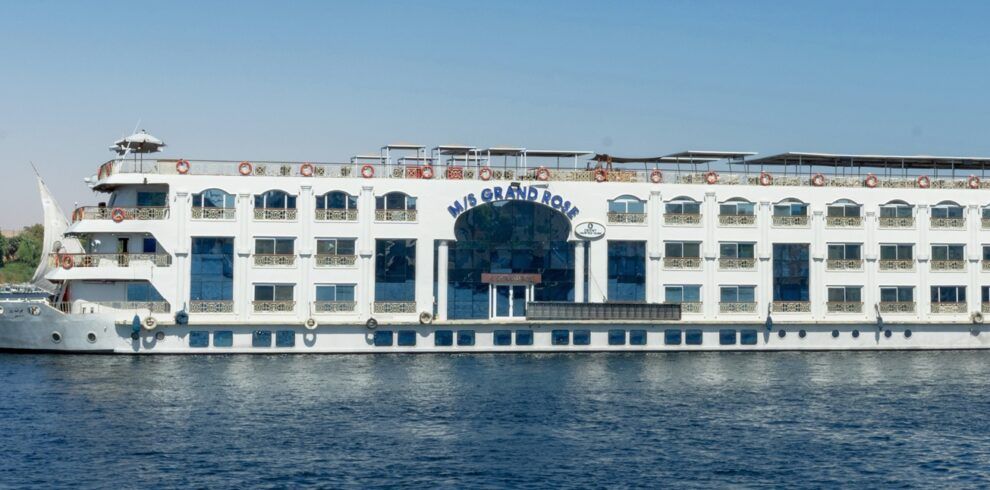
The Nile Crown Cruise – 4 Nights from Luxor to Aswan is an ideal way to explore the ancient wonders of Upper Egypt while enjoying a comfortable journey along the Nile River.
This five-day cruise follows one of the most popular Nile routes in Egypt, connecting Luxor, Esna, Edfu, Kom Ombo and Aswan.
Rather than traveling between these destinations by road and changing hotels every night, guests stay onboard the cruise ship while sailing south along the Nile. This creates a more relaxed travel experience and allows travelers to enjoy the landscapes surrounding the river.
The journey begins in Luxor, one of the world’s most important archaeological destinations. Ancient Thebes once stood here, and the area contains an extraordinary concentration of temples and royal tombs.
The East Bank sightseeing program introduces guests to Karnak Temple and Luxor Temple, while the West Bank is home to the Valley of the Kings, Temple of Queen Hatshepsut and Colossi of Memnon.
After leaving Luxor, the cruise sails south toward Edfu, passing through the Nile Valley and, depending on the sailing schedule, the Esna Lock.
At Edfu, travelers visit the remarkably preserved Temple of Horus, one of the finest surviving examples of ancient Egyptian temple architecture.
The cruise then continues to Kom Ombo, where guests explore the unusual double temple dedicated to Sobek and Horus the Elder.
The final destination is Aswan. Here, the journey continues with visits to the High Dam, Philae Temple and Unfinished Obelisk, depending on the confirmed cruise program.
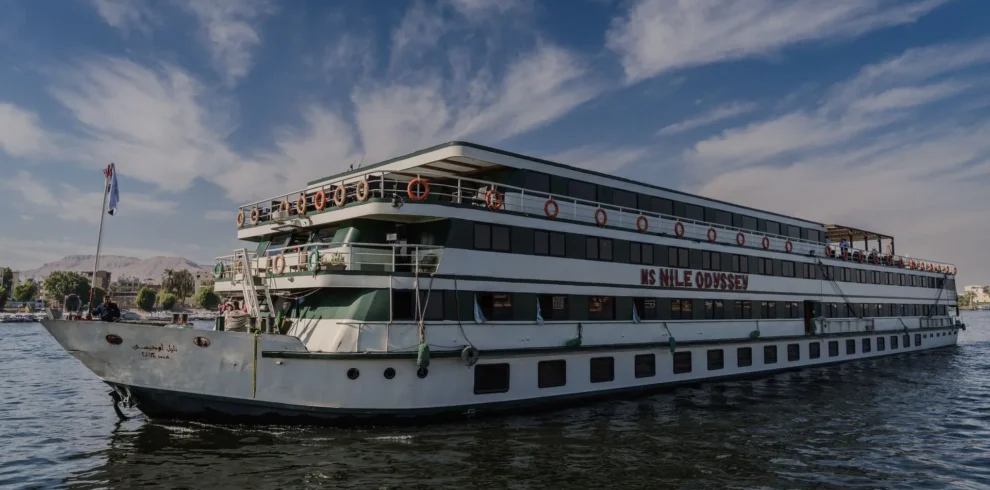
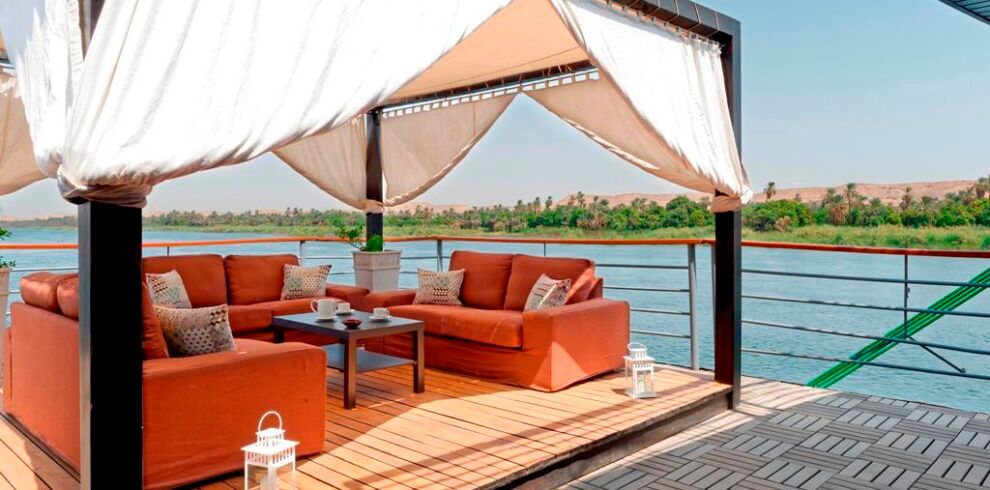
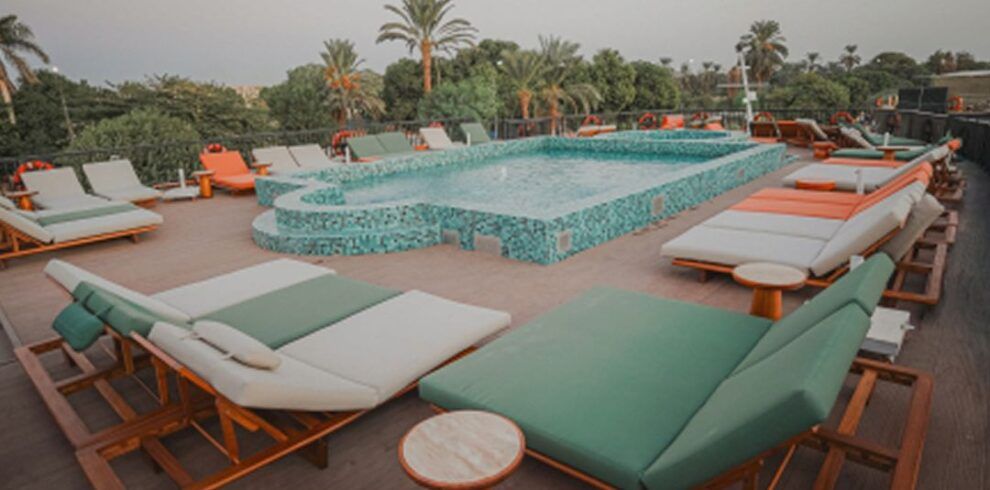
Published descriptions of Nile Crown ships also list facilities such as a swimming pool, Sun Deck, restaurant, lounge/bar and other onboard services
Highlights
- 4 Nights / 5 Days Nile Cruise
- Luxor to Aswan
- Five-star Nile cruise experience
- Sail along the legendary Nile River
- Explore the ancient city of Luxor
- Visit Karnak Temple
- Visit Luxor Temple
- Explore the Valley of the Kings
- Visit the Temple of Queen Hatshepsut
- See the Colossi of Memnon
- Sail through the Nile Valley
- Visit Esna
- Explore the Temple of Horus at Edfu
- Visit Kom Ombo Temple
- Discover Aswan
- Visit the Aswan High Dam
- Visit Philae Temple
- Explore the Unfinished Obelisk
- Full-board cruise accommodation
- Professional Egyptologist guide
- Air-conditioned sightseeing transportation
- Swimming pool and Sun Deck
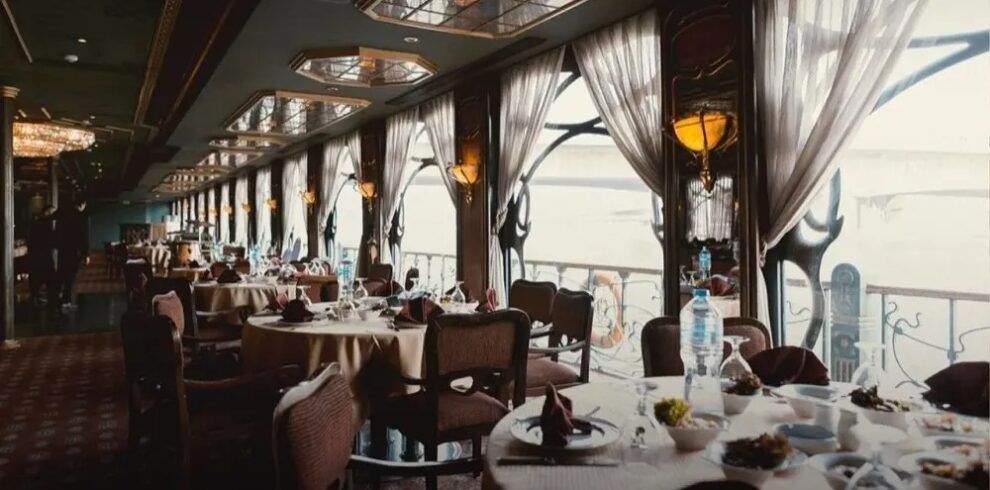
- Onboard restaurant and lounge
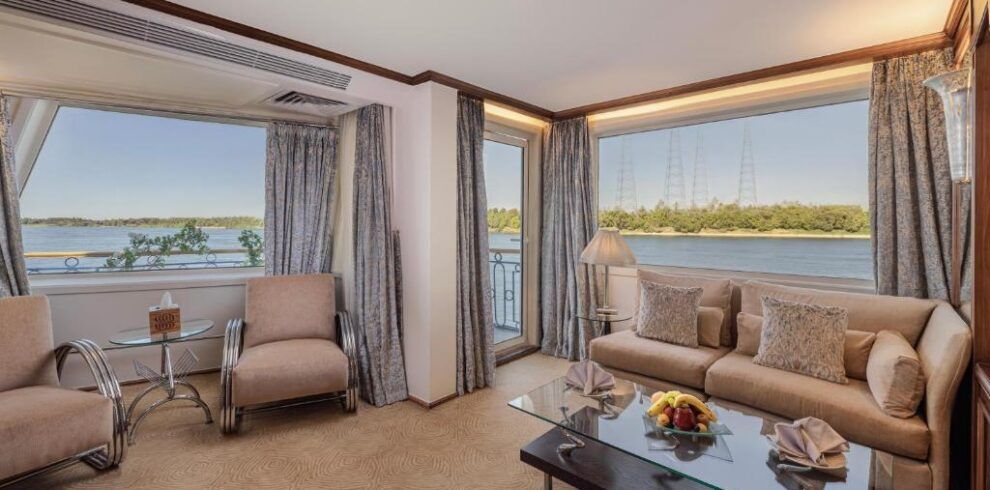
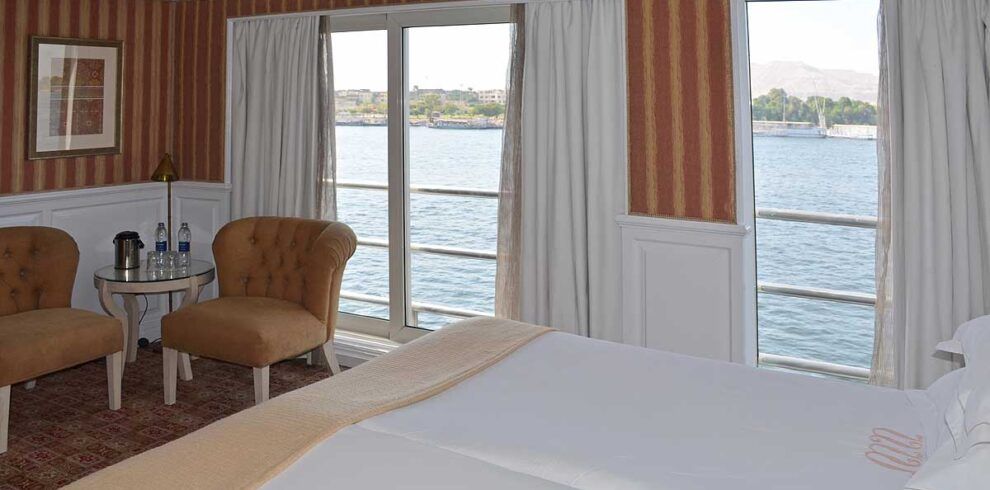
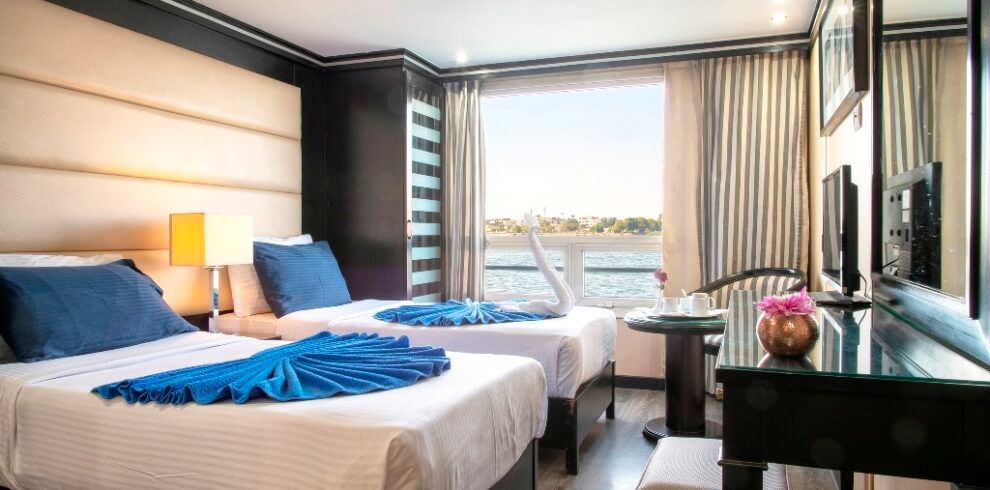
- Comfortable air-conditioned cabins
- Optional Abu Simbel excursion
- Suitable for couples, families and groups
Reviews
Itinerary Description
The Nile Crown Cruise – 4 Nights from Luxor to Aswan is a five-day journey through the heart of Upper Egypt, combining ancient monuments, cultural experiences, relaxing sailing, and comfortable accommodation onboard the Nile.
The cruise begins in Luxor, where guests embark and start exploring the remarkable heritage of ancient Thebes. The East Bank sightseeing program includes the magnificent Karnak Temple and Luxor Temple, two monuments that reflect the religious and royal importance of the ancient city.
The following sightseeing program focuses on Luxor's West Bank, including the Valley of the Kings, the Temple of Queen Hatshepsut, and the Colossi of Memnon. These sites provide an opportunity to discover the burial traditions, architecture, and royal history of ancient Egypt.
After the Luxor excursions, the ship begins sailing south. Guests can relax onboard while enjoying views of agricultural land, palm trees, villages, traditional boats, and desert landscapes along the Nile.
The cruise continues toward Edfu, home to the remarkably preserved Temple of Horus. The temple's monumental architecture and detailed reliefs provide an excellent example of ancient Egyptian religious construction.
The journey then continues to Kom Ombo. Here, guests visit the distinctive double temple dedicated to Sobek and Horus the Elder. Its location beside the Nile makes this one of the most scenic stops on the cruise route.
The final destination is Aswan, where guests explore some of southern Egypt's most important landmarks, including the High Dam, Unfinished Obelisk, and Philae Temple according to the confirmed sailing program.
Throughout the journey, travelers can enjoy the convenience of staying in the same cruise cabin while moving between destinations. This eliminates the need for daily hotel changes and creates a comfortable balance between sightseeing and relaxation.
Welcome to Luxor and the beginning of your Nile cruise.
Meet your representative and transfer to the Nile Crown cruise ship for embarkation and check-in.
Settle into your cabin and enjoy lunch onboard.
In the afternoon, begin your East Bank sightseeing tour with your professional Egyptologist.
Visit:
- Karnak Temple
- Luxor Temple
Explore the enormous Karnak Temple complex, including its monumental pylons, courtyards, statues, obelisks, and famous columned halls.
Continue to Luxor Temple and discover its impressive statues, columns, reliefs, and ancient architectural features.
Return to the cruise ship after the tour.
Enjoy dinner and spend the evening relaxing onboard.
Meals: Lunch & Dinner
Overnight: Nile Crown Cruise
Enjoy breakfast onboard.
Begin your West Bank excursion.
Visit:
- Valley of the Kings
- Temple of Queen Hatshepsut
- Colossi of Memnon
Explore selected royal tombs in the Valley of the Kings and learn about the beliefs and burial traditions of ancient Egyptian rulers.
Continue to the Temple of Queen Hatshepsut at Deir el-Bahari, built dramatically against the surrounding cliffs.
Stop at the Colossi of Memnon before returning to the cruise.
Enjoy lunch onboard as the ship begins sailing south.
Spend the afternoon relaxing on the Sun Deck and watching the Nile Valley scenery.
Depending on the operating schedule, the vessel may pass through the Esna Lock.
Meals: Breakfast, Lunch & Dinner
Overnight: Onboard
Enjoy breakfast onboard.
After arrival in Edfu, visit the impressive Temple of Horus.
Explore its monumental entrance, courtyards, columns, reliefs, and inscriptions while your Egyptologist explains the history and mythology of the temple.
Return to the cruise ship and continue sailing south.
Enjoy lunch onboard.
Later, visit Kom Ombo Temple.
Discover the unusual double temple dedicated to Sobek and Horus the Elder and learn about the religious traditions associated with the two deities.
Return to the ship and continue sailing toward Aswan.
Enjoy dinner and relax onboard.
Meals: Breakfast, Lunch & Dinner
Overnight: Onboard
Enjoy breakfast onboard.
Begin your Aswan sightseeing program.
Visit:
- Aswan High Dam
- Unfinished Obelisk
- Philae Temple
Start with the High Dam and learn about its role in modern Egypt and its importance in controlling the Nile's water resources.
Continue to the Unfinished Obelisk, located in an ancient granite quarry. Discover how ancient craftsmen worked enormous blocks of stone.
Then take a motorboat across the Nile to Philae Temple.
Explore the temple complex dedicated primarily to the goddess Isis and admire its pylons, columns, reliefs, and sanctuaries.
Return to the cruise ship.
Enjoy lunch and spend the afternoon relaxing onboard.
Depending on the cruise schedule, guests may have additional free time to explore Aswan or enjoy optional activities.
Meals: Breakfast, Lunch & Dinner
Overnight: Nile Crown Cruise in Aswan
Enjoy breakfast onboard.
Check out and disembark from the cruise ship.
Your onward transfer can be arranged according to your travel plans.
Possible destinations include:
- Aswan International Airport
- Aswan Railway Station
- Aswan hotel
- Abu Simbel
- Private accommodation
- Another agreed destination
Meal: Breakfast
Route at a Glance
Luxor → Esna → Edfu → Kom Ombo → Aswan
The exact order and timing of visits may change according to the cruise company's navigation schedule, docking arrangements, local regulations, and operational conditions.
Includes/Excludes
Includes
- 4 nights accommodation onboard the Nile Crown Cruise
- Air-conditioned cruise cabin
- Full-board cruise accommodation
- Breakfast onboard
- Lunch onboard
- Dinner onboard
- Meet and assist service
- Professional Egyptologist guide
- Guided sightseeing according to the confirmed itinerary
- Entrance fees to included sightseeing sites
- Karnak Temple
- Luxor Temple
- Valley of the Kings
- Temple of Queen Hatshepsut
- Colossi of Memnon
- Temple of Horus at Edfu
- Kom Ombo Temple
- Aswan High Dam
- Unfinished Obelisk
- Philae Temple
- Motorboat to Philae Temple
- Air-conditioned transportation during land excursions
- Cruise assistance
- Transfers included in the selected package
- Drinks
Excludes
- International flights
- Domestic flights unless specifically stated
- Egypt entry visa
- Travel insurance
- Personal expenses
- Alcoholic beverages
- Laundry
- Telephone calls
- Internet charges where applicable
- Tips and gratuities
- Optional excursions
- Abu Simbel excursion unless specifically included
- Felucca rides unless specifically included
- Hot-air balloon ride
- Additional hotel nights
- Personal shopping
- Any service not specifically mentioned under Includes
More Info
The Nile Crown Cruise – 4 Nights from Luxor to Aswan offers an unforgettable way to explore the ancient treasures of Upper Egypt while enjoying the peaceful scenery of the Nile River. This five-day journey combines archaeological discovery, Egyptian culture, comfortable accommodation, and scenic sailing into one carefully organized travel experience.
A Nile cruise is one of the best ways to understand the relationship between ancient Egyptian civilization and the river that made life possible in the middle of the desert. As the cruise travels south from Luxor toward Aswan, guests experience a constantly changing landscape of fertile farmland, palm trees, traditional villages, desert mountains, islands, and historic monuments.
The Luxor-to-Aswan route is especially popular because it connects some of Egypt’s most important archaeological attractions. Instead of spending long hours traveling between destinations by road and changing hotels frequently, travelers remain onboard the cruise ship while sailing between the major sightseeing locations.
Experience Upper Egypt From the Nile
The Nile has shaped Egyptian civilization for thousands of years.
Ancient communities depended on the river for agriculture, transportation, fishing, and trade. Major cities and religious centers developed along its banks, and many of Egypt’s most important temples were constructed close to the river.
Traveling on the Nile today provides an opportunity to experience this landscape from a unique perspective.
During the sailing portions of the journey, guests can relax on the ship and watch everyday life along the river. Farmers work in the fields, small boats move across the water, palm trees line the banks, and villages appear between the fertile land and the surrounding desert.
This combination of cultural sightseeing and natural scenery is one of the defining features of a Nile cruise.
Why Choose a Luxor to Aswan Cruise?
A four-night cruise offers a convenient balance between sightseeing and relaxation.
Luxor, Edfu, Kom Ombo, and Aswan contain an extraordinary concentration of ancient monuments. Visiting all of these destinations independently can involve considerable transportation and hotel arrangements.
With a Nile cruise, accommodation travels with you.
Guests can unpack once, settle into their cabin, and enjoy the journey while the ship moves between destinations.
This makes the experience particularly convenient for travelers who want to see many of Egypt’s most important archaeological sites without constantly changing hotels.
Luxor and Ancient Thebes
Luxor is the natural starting point for exploring Upper Egypt.
The modern city developed around the ancient city of Thebes, which was one of the most important political and religious centers of ancient Egypt.
The Nile separates Luxor into two major areas.
The East Bank contains major temples associated with religious ceremonies and royal traditions, while the West Bank is famous for royal tombs and funerary monuments.
This geographical division allows visitors to experience two different sides of ancient Egyptian civilization during their stay.
Karnak Temple
Karnak is one of the largest and most impressive temple complexes in Egypt.
It was developed and expanded over many centuries by different pharaohs.
Rather than being a single structure, Karnak contains a collection of temples, pylons, courtyards, sanctuaries, statues, obelisks, and enormous columns.
The Great Hypostyle Hall is one of its most famous areas.
Standing among its monumental columns gives visitors a strong impression of the scale and ambition of ancient Egyptian architecture.
The hieroglyphic inscriptions and reliefs throughout the complex also provide valuable information about ancient religious traditions and royal history.
A professional Egyptologist can explain the stories represented on the walls and help visitors understand how the complex evolved over time.
Luxor Temple
Luxor Temple is another important monument on the East Bank.
Its location within the modern city creates an interesting contrast between contemporary Luxor and the remains of ancient Thebes.
The temple contains monumental statues, courtyards, columns, reliefs, and inscriptions.
It was closely connected with royal ceremonies and ancient religious traditions.
The visit provides another opportunity to understand how architecture, religion, and royal power were connected in ancient Egypt.
The Valley of the Kings
The West Bank of Luxor is dominated by the rugged landscape surrounding the Valley of the Kings.
The valley served as a royal burial ground during the New Kingdom.
Instead of constructing large pyramids, pharaohs were buried in underground tombs cut into the surrounding limestone mountains.
Many tombs contain elaborate decorations depicting gods, religious texts, scenes of the afterlife, and symbolic imagery.
The tombs provide an extraordinary insight into ancient Egyptian beliefs about death and the journey to the afterlife.
The specific tombs open to visitors can vary according to local regulations and ticket arrangements.
Visitors should be prepared for walking in warm and dry conditions.
Temple of Queen Hatshepsut
The Temple of Queen Hatshepsut at Deir el-Bahari is one of the most recognizable monuments in Luxor.
The temple is built into the natural landscape beneath dramatic cliffs.
Queen Hatshepsut was one of ancient Egypt’s most significant female rulers, and her monument reflects both her political authority and religious role.
The temple’s terraces, colonnades, statues, and reliefs demonstrate the sophistication of New Kingdom architecture.
Its dramatic setting also makes it one of the most memorable photography locations along the Nile cruise route.
Colossi of Memnon
The Colossi of Memnon are two enormous seated statues representing Pharaoh Amenhotep III.
They once stood at the entrance of a much larger mortuary temple.
Although much of that temple has disappeared, the two statues remain impressive examples of ancient Egyptian monumental sculpture.
The stop is generally brief but provides an excellent opportunity to appreciate the scale of ancient stone construction.
Sailing Through the Nile Valley
After exploring Luxor, the cruise continues south.
This is where the rhythm of the journey changes.
Instead of moving continuously from one archaeological site to another, travelers have time to relax onboard and enjoy the river.
The scenery changes gradually as the ship moves through Upper Egypt.
Green agricultural fields appear close to the water, while palm trees and villages provide evidence of modern life along the river.
Beyond the fertile land, the desert begins to dominate the horizon.
The contrast between green farmland and dry desert is one of the most distinctive features of the Nile Valley.
The Sun Deck is an excellent place to enjoy these views.
Early mornings and late afternoons are particularly pleasant for photography and relaxing outdoors.
Esna and the Nile Lock
The cruise route may include passage through the Esna Lock depending on the vessel’s sailing schedule.
The lock allows vessels to move between different water levels along the Nile.
Passing through the lock can be an interesting part of the journey because guests can observe the ship being raised or lowered as it continues toward the next section of the river.
The timing of this experience depends on navigation and operational conditions.
Edfu and the Temple of Horus
Edfu is home to one of the best-preserved temples in Egypt.
The Temple of Horus was dedicated to Horus, the falcon-headed deity associated with kingship and protection.
Its monumental entrance, large courtyard, columns, inscriptions, and reliefs remain remarkably well preserved.
The temple provides visitors with an unusually clear understanding of the design of an ancient Egyptian religious complex.
The walls contain scenes related to mythology, ceremonies, and the relationship between the pharaoh and the gods.
The visit is particularly valuable for travelers interested in Egyptian mythology and temple architecture.
Kom Ombo
The cruise continues to Kom Ombo, where the landscape and architecture offer another unique experience.
The Temple of Kom Ombo is unusual because it was dedicated to two different deities: Sobek and Horus the Elder.
The temple’s design reflects this dual dedication, with symmetrical architectural elements associated with the two religious traditions.
Sobek was represented as a crocodile or a human with a crocodile head and was strongly associated with the Nile and fertility.
The temple’s location directly beside the river adds to its visual appeal.
Visitors can explore the remaining columns, reliefs, courtyards, and inscriptions while enjoying views across the river.
Arriving in Aswan
Aswan provides a beautiful conclusion to the cruise.
The city is famous for its islands, granite formations, palm trees, river scenery, and connections with Nubian culture.
The Nile landscape around Aswan is different from the scenery farther north.
The river is surrounded by rocky islands and granite outcrops, creating a distinctive and peaceful environment.
After several days of archaeological sightseeing, Aswan offers an opportunity to slow down and enjoy the natural beauty of southern Egypt.
Philae Temple
Philae Temple is one of the most memorable attractions in Aswan.
The temple complex is primarily dedicated to the goddess Isis and contains impressive pylons, columns, reliefs, sanctuaries, and ceremonial spaces.
Its island setting makes the visit especially distinctive.
Guests normally travel to the temple by motorboat, providing a scenic journey across the Nile before reaching the archaeological site.
Philae also has an important modern history.
The original temple complex was threatened by rising water following the construction of the Aswan High Dam.
An international preservation project helped relocate the monuments to their present location.
The story of Philae demonstrates the importance of international cooperation in protecting Egypt’s archaeological heritage.
Aswan High Dam
The High Dam represents an important part of modern Egyptian history.
The project was constructed to regulate the Nile, control flooding, store water, and generate hydroelectric power.
Its construction had a significant impact on the landscape and also created major challenges for ancient monuments in southern Egypt.
The preservation efforts associated with the dam became one of the most important archaeological rescue operations of the modern era.
Visiting the High Dam therefore adds a modern historical dimension to a journey that otherwise focuses heavily on ancient Egypt.
The Unfinished Obelisk
The Unfinished Obelisk is located in an ancient granite quarry in Aswan.
The monument was abandoned before completion, leaving visible evidence of the techniques used by ancient craftsmen to work enormous blocks of granite.
The site helps visitors understand the technical challenges faced by ancient Egyptian builders.
Granite from Aswan was transported to different parts of Egypt and used for important temples, statues, obelisks, and monumental structures.
The unfinished monument therefore provides a rare opportunity to observe the stone-working process before the final stages of construction.
Life Onboard the Cruise
One of the biggest advantages of the Nile Crown experience is the convenience of onboard accommodation.
Travelers do not need to move their luggage between different hotels during the cruise.
The cabin remains their base while the ship travels between destinations.
Between excursions, guests can spend time relaxing in their cabin, enjoying the common areas, sitting on the Sun Deck, or watching the Nile scenery.
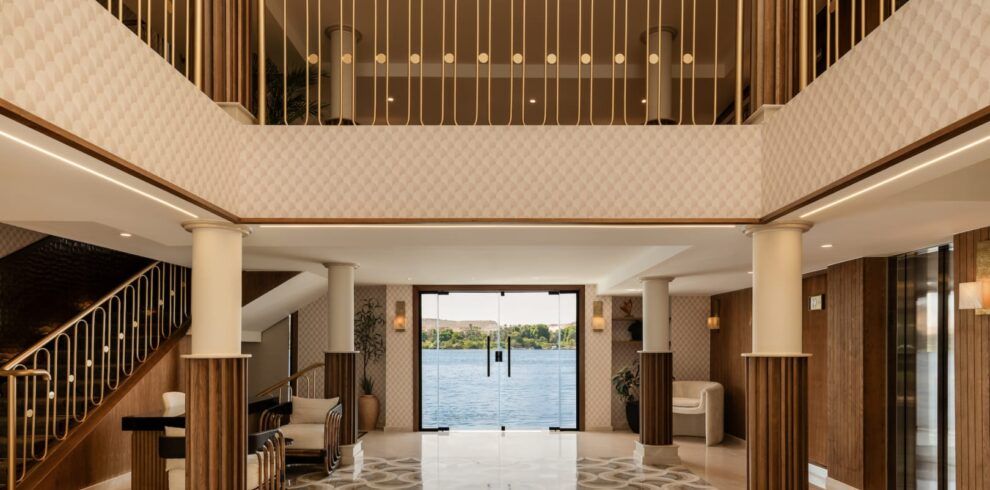
Depending on the vessel and operating schedule, onboard facilities may include a swimming pool, restaurant, lounge, bar, and other recreational areas.
The exact facilities available should be confirmed according to the specific Nile Crown vessel booked.
Dining Experience
Meals are an important part of the cruise experience.
The cruise package is generally arranged on a full-board basis, providing breakfast, lunch, and dinner during the journey.
Menus may combine Egyptian specialties with international dishes to accommodate different preferences.
Travelers with food allergies or dietary restrictions should communicate their requirements before departure.
Beverages may be charged separately unless specifically included in the selected package.
Evening Relaxation
Evenings onboard provide a welcome opportunity to relax after sightseeing.
Depending on the cruise program, guests may enjoy entertainment, music, cultural activities, or traditional Egyptian performances.
Travelers who prefer a quieter evening can simply sit on deck and watch the river after sunset.
The atmosphere becomes particularly peaceful when the ship is sailing away from the larger cities.
Best Time for the Nile Crown Cruise
The cooler months are generally considered the most comfortable time for exploring Luxor and Aswan.
From approximately October through April, temperatures are usually more suitable for outdoor archaeological sightseeing.
Summer cruises are also available, but Upper Egypt can become extremely hot during the day.
Travelers visiting during warmer months should carry water, wear suitable clothing, use sun protection, and take advantage of cooler morning and evening periods whenever possible.
What to Pack
Travelers should pack practical clothing and accessories for both sightseeing and time onboard.
Recommended items include:
- Comfortable walking shoes
- Lightweight clothing
- Sun hat
- Sunglasses
- Sunscreen
- Swimwear
- Small day bag
- Reusable water bottle
- Camera or smartphone
- Personal toiletries
- Light jacket during cooler months
Comfortable footwear is especially important because several archaeological sites involve walking across uneven surfaces.
Adding Abu Simbel
Travelers who reach Aswan often choose to extend their journey with a visit to Abu Simbel.
The temples of Abu Simbel were built during the reign of Ramses II and are famous for their monumental façades carved into the rock.
The excursion can be arranged before or after disembarkation depending on the travel schedule.
Because Abu Simbel requires additional transportation and several hours of travel, advance arrangements are recommended.
Combining the Cruise With Cairo
The Nile Crown Cruise works especially well as part of a complete Egypt vacation.
Travelers can begin in Cairo to explore the Giza Pyramids, the Great Sphinx, museums, and historic Cairo before continuing south to Luxor.
After the cruise, they can explore Aswan and Abu Simbel or continue toward another destination.
A popular combination is:
Cairo → Giza → Luxor → Nile Crown Cruise → Aswan → Abu Simbel
Travelers interested in beaches can add Hurghada or another Red Sea destination to their itinerary.
Who Is the Cruise Suitable For?
The Nile Crown Cruise can accommodate a wide variety of travel styles.
Couples can enjoy the peaceful river scenery and relaxed atmosphere.
Honeymooners can combine the cruise with luxury hotels in Cairo or a Red Sea stay.
Families benefit from having accommodation, meals, transportation, and sightseeing organized within one journey.
History enthusiasts can explore a remarkable concentration of temples and tombs.
First-time visitors to Egypt can experience many of the country’s most important ancient sites without arranging separate transportation between each destination.
Photography enthusiasts will find opportunities throughout the journey, from ancient temples and desert landscapes to sunsets, traditional boats, and Nile Valley villages.
A Complete Upper Egypt Experience
The Nile Crown Cruise is more than a method of traveling between Luxor and Aswan.
It provides a continuous journey through different periods of Egyptian history.
Luxor introduces the monumental world of ancient Thebes.
The Valley of the Kings reveals the burial traditions of New Kingdom rulers.
Edfu showcases one of the best-preserved temples dedicated to Horus.
Kom Ombo introduces the fascinating traditions surrounding Sobek and Horus the Elder.
Aswan combines ancient monuments with modern engineering and the distinctive scenery of southern Egypt.
The Nile connects all of these experiences.
Final Experience
The Nile Crown Cruise – 4 Nights from Luxor to Aswan offers a comfortable and memorable way to discover the history, culture, and landscapes of Upper Egypt.
The journey combines some of Egypt’s most famous archaeological attractions with the relaxed pace of river travel.
From the monumental temples of Luxor to the royal tombs of the Valley of the Kings, from the Temple of Horus at Edfu to the double temple of Kom Ombo, each destination adds another chapter to the story of ancient Egypt.
The journey concludes in Aswan, where Philae Temple, the High Dam, and the Unfinished Obelisk provide a fascinating combination of ancient heritage and modern history.
For travelers seeking an organized, scenic, and culturally rich way to experience the Nile Valley, the Nile Crown Cruise from Luxor to Aswan provides an excellent foundation for an unforgettable Egypt itinerary
Frequently Asked Questions
The cruise is 4 nights and 5 days.
The cruise starts in Luxor.
The journey ends in Aswan.
The route includes Luxor, Esna, Edfu, Kom Ombo, and Aswan.
Yes, Karnak Temple is included in the Luxor sightseeing program.
Yes.
Yes, the Valley of the Kings is included.
Yes, the Temple of Queen Hatshepsut is included.
Yes. Guests visit the Temple of Horus at Edfu.
Yes. Kom Ombo Temple is included