

Trip Info
-
Free cancellation up to 24 hours before the tour starts for a full refund
-
Professional Licensed Egyptologist Guide
-
English, Arabic, and other languages upon request
-
Your private driver and guide can meet you at: Your hotel in Aswan Your Nile cruise ship Aswan Railway Station Aswan International Airport Another agreed location in Aswan Pickup time: Usually early morning, with the exact time confirmed according to your itinerary and transportation arrangements.
-
Private Day Tour
-
Private Air-Conditioned Vehicle
-
1-15
-
At the end of the tour, your private driver can drop you off at
-
1
-
99
Overview
Discover one of Egypt’s most spectacular ancient monuments on a private Abu Simbel Tour from Aswan. Travel south through the Nubian desert to the magnificent temples of Ramses II and Queen Nefertari, carved into the rock on the western shore of Lake Nasser.
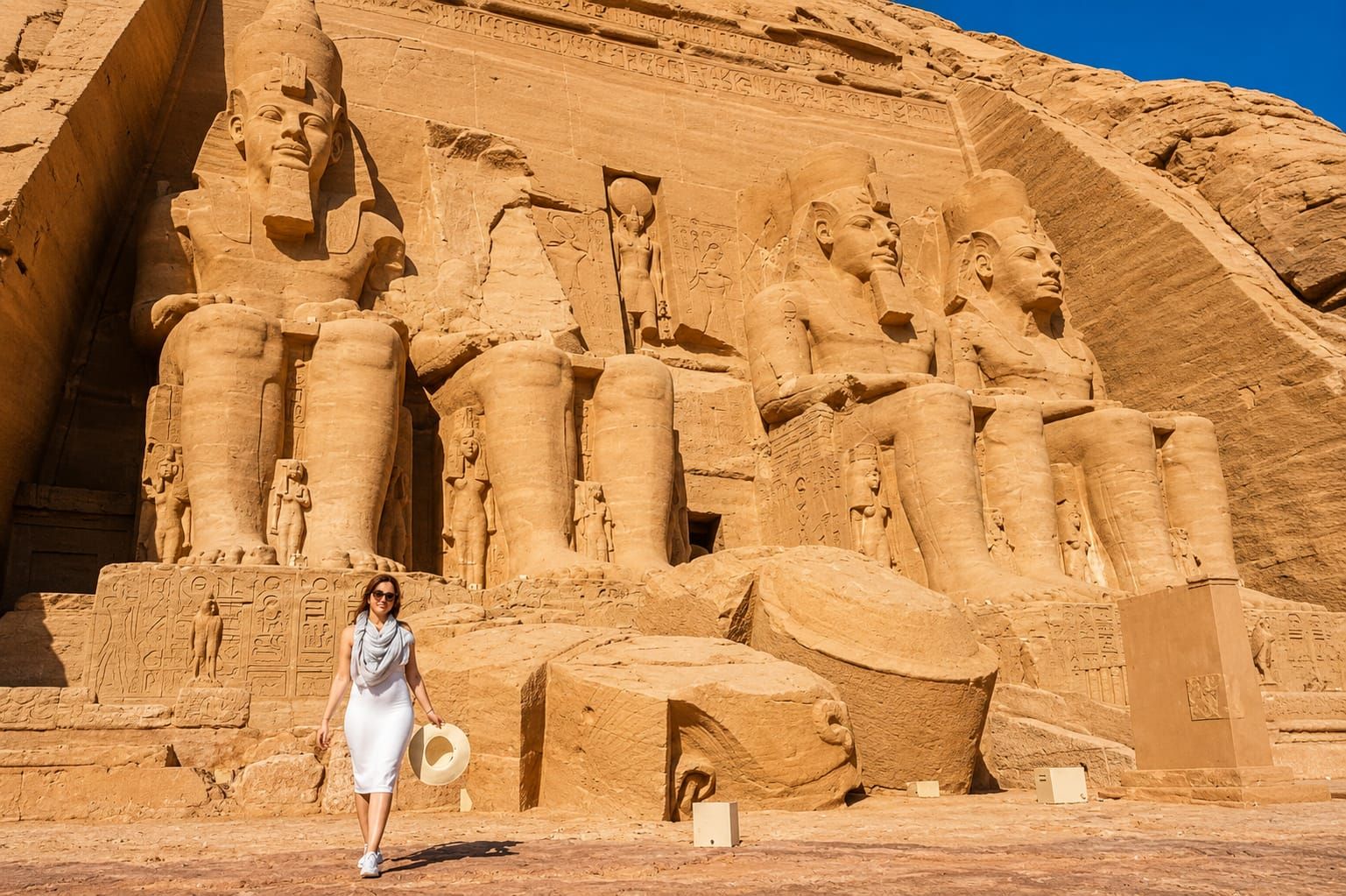
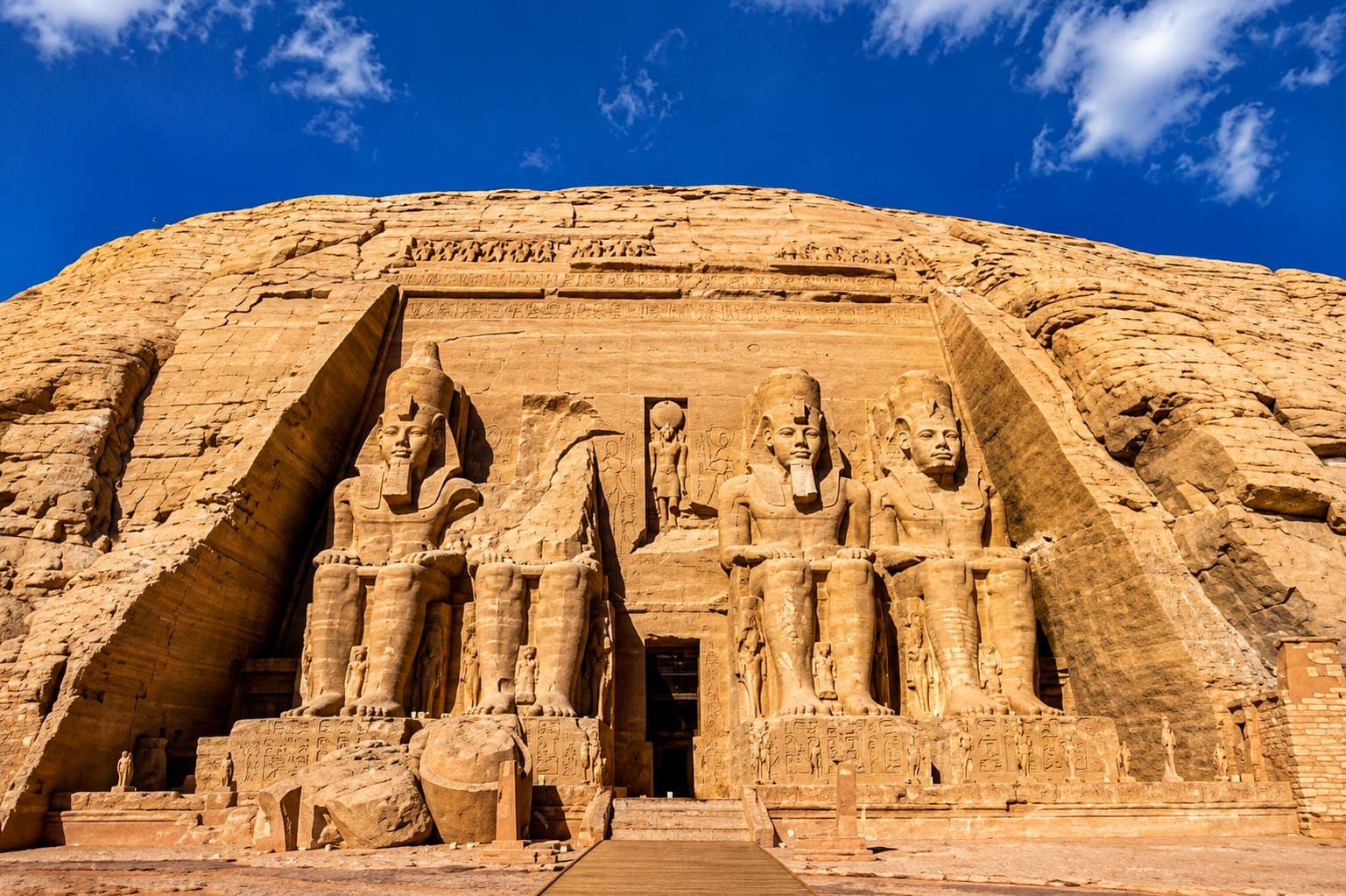
The Great Temple of Abu Simbel is famous for its four colossal statues of Ramses II, each approximately 21 meters high. The neighboring Temple of Nefertari was dedicated to the queen and the goddess Hathor. Together, the temples form part of the Nubian Monuments from Abu Simbel to Philae, a UNESCO World Heritage property.
One of the most remarkable chapters in the temples’ history is their rescue during the construction of the Aswan High Dam. Between 1960 and 1980, an international UNESCO campaign helped save threatened Nubian monuments from the rising waters of Lake Nasser. Abu Simbel was dismantled and reconstructed approximately 60 meters above its original location.
This private day trip is ideal for travelers staying in Aswan, Nile cruise passengers, couples, families, and anyone who wants to see one of Egypt’s greatest archaeological achievements
Highlights
- Visit the Great Temple of Ramses
- See the four colossal statues of Ramses
- Explore the Temple of Queen Nefertari
- Enjoy views of Lake Nasser
- Discover ancient Nubian history
- Learn about the famous solar alignment inside the Great Temple
- Explore rock-cut chambers and ancient reliefs
- Visit a UNESCO World Heritage Site
- Private air-conditioned transportation from Aswan
- Professional Egyptologist guide
- Excellent photography opportunities
- Private and customizable experience
- No forced shopping stops
Reviews
Itinerary Description
Your Abu Simbel Tour from Aswan begins with an early-morning pickup from your hotel or Nile cruise.
Travel south through the Nubian desert in a private air-conditioned vehicle toward Abu Simbel.
After arriving, meet your Egyptologist guide and begin exploring the two magnificent temples.
Start with the Great Temple of Ramses II, famous for its enormous façade featuring four colossal statues of the pharaoh. The temple was carved into the rock during the 13th century BCE and is considered one of the great masterpieces of ancient Egyptian architecture.
Continue to the Temple of Queen Nefertari, dedicated to Nefertari and the goddess Hathor.
Explore the decorated halls, chambers, statues, and reliefs while your guide explains the history and religious symbolism of the temples.
After sightseeing, return to Aswan by private vehicle.
Early Morning Pickup 🚐
Your private driver will pick you up from your hotel or Nile cruise in Aswan.
The journey begins early to make the most of the day and allow plenty of time to explore the temples.
Travel comfortably through the desert landscape toward southern Nubia.
Arrival at Abu Simbel
After reaching Abu Simbel, your guide will accompany you into the archaeological area.
The first sight of the temples is spectacular.
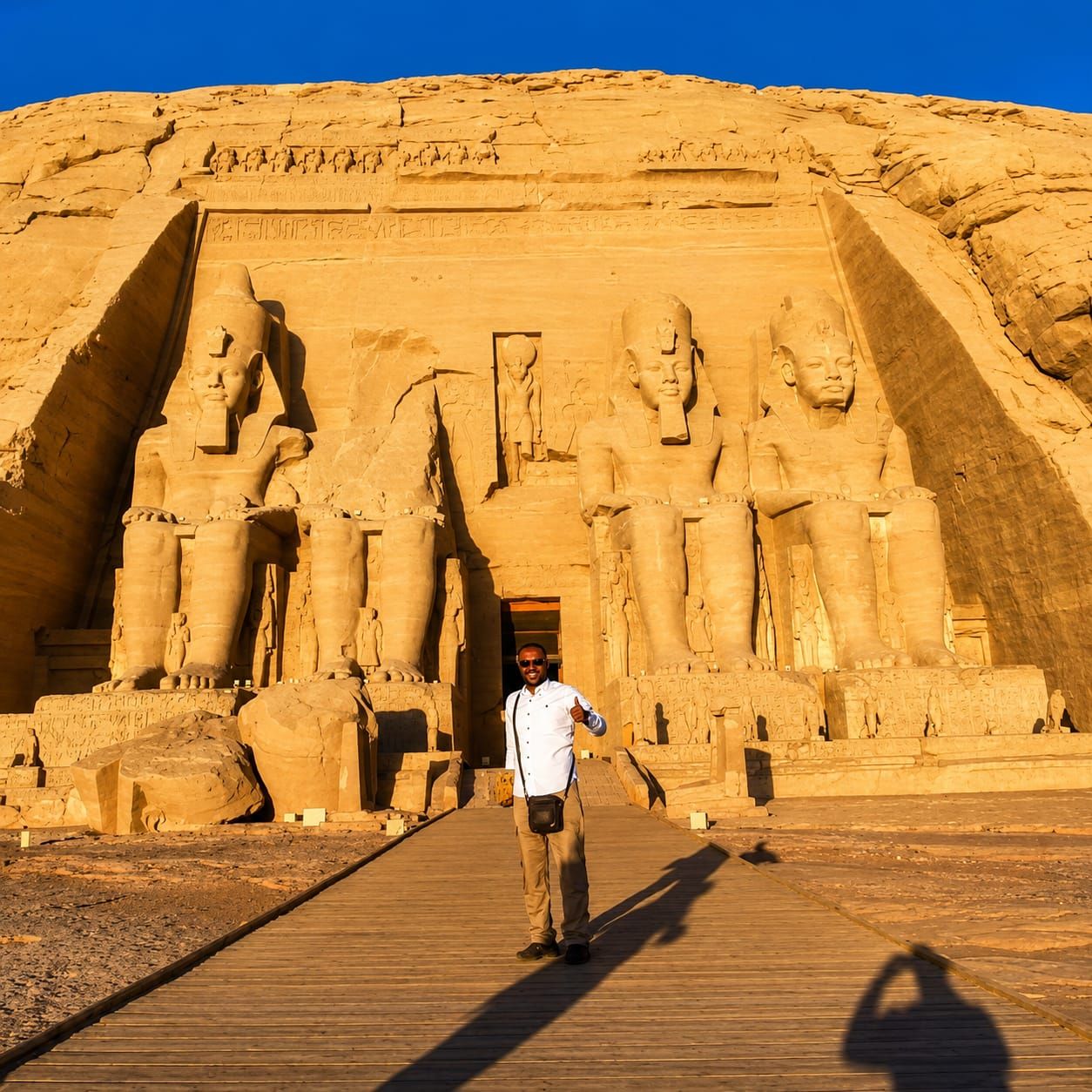
The enormous façade of the Great Temple emerges dramatically from the surrounding landscape.
Take time to admire the monumental architecture before entering the temple.
Great Temple of Ramses II 🏛️
The Great Temple is dedicated primarily to Ramses II and several important deities.
The façade is dominated by four colossal seated statues of Ramses II. UNESCO describes these figures as approximately 21 meters high, making them one of the most impressive monumental façades of ancient Egypt.
Your Egyptologist guide will explain:
The reign of Ramses II
The purpose of the temple
The meaning of the colossal statues
Ancient Egyptian religious beliefs
The temple's military scenes
The significance of the inner sanctuary
Inside the Great Temple
Enter the temple and explore its impressive interior.
The walls contain beautifully carved scenes showing Ramses II, gods, religious ceremonies, and royal achievements.
The temple's architecture leads visitors gradually deeper into the rock.
As you move from the entrance toward the sanctuary, the spaces become more intimate and sacred.
One of the most fascinating features is the temple's famous solar alignment. UNESCO notes that sunlight reaches the innermost sanctuary twice each year in connection with the temple's astronomical design.
Your guide can explain the ancient Egyptians' understanding of the sun, kingship, and divine power.
Temple of Queen Nefertari 👸
After exploring Ramses II's temple, continue to the neighboring Temple of Queen Nefertari.
The temple was dedicated to Nefertari, one of the most important queens of ancient Egypt, and to the goddess Hathor.
The façade features impressive statues of Ramses II and Nefertari.
Inside, you will see colorful reliefs and scenes connected with the queen and the goddess Hathor.
The temple is smaller than the Great Temple but is exceptionally beautiful.
Its artwork provides an opportunity to learn about the role of queens in ancient Egyptian religion and royal life.
UNESCO recognizes both Abu Simbel temples as part of the outstanding Nubian monuments protected as World Heritage.
The Incredible Rescue of Abu Simbel
One of the most fascinating parts of visiting Abu Simbel is learning that the temples you see today are not standing at their original elevation.
When Egypt began constructing the Aswan High Dam, the resulting Lake Nasser threatened to submerge numerous ancient Nubian monuments.
UNESCO launched an international campaign to save these monuments.
The Abu Simbel temples were carefully cut into thousands of blocks, moved, and reconstructed on higher ground.
UNESCO reports that more than 1,000 blocks, some weighing around 30 tons, were numbered, moved, and reassembled approximately 64 meters above the original site and 180 meters inland. The relocated temples were inaugurated in 1968.
This extraordinary engineering project is one of the most remarkable archaeological rescue operations ever undertaken.
Lake Nasser 🌊
After exploring the temples, take some time to appreciate the surrounding landscape.
Abu Simbel overlooks the vast Lake Nasser, created by the Aswan High Dam.
The lake transformed the landscape of southern Egypt and Nubia and was the reason the temples had to be rescued.
Today, the combination of the enormous temples, desert landscape, and deep blue water creates a spectacular setting.
Return to Aswan
After completing your visit, meet your private driver and begin the journey back to Aswan.
Relax in your air-conditioned vehicle after your morning of sightseeing.
You can be dropped off at your hotel, Nile cruise, railway station, airport, or another agreed location.
Includes/Excludes
Includes
- Private pickup and drop-off in Aswan
- Private air-conditioned transportation
- Professional licensed Egyptologist guide
- Visit to the Great Temple of Ramses II
- Visit to the Temple of Queen Nefertari
- Bottled water during the tour
- All service charges and taxes
- Private tour exclusively for your group
- No forced shopping stops
- Entrance fees
- Lunch and drinks
Excludes
- Personal expenses
- Gratuities
- Optional activities
- Travel insurance
- Any service not specifically mentioned under Includes
More Info
Discover the Magnificent Temples of Abu Simbel
The Abu Simbel Tour from Aswan is one of the most remarkable day trips you can take in southern Egypt. Located near Egypt’s border with Sudan, Abu Simbel is home to two extraordinary rock-cut temples built during the reign of King Ramses II.
The temples are famous for their enormous statues, detailed reliefs, fascinating religious symbolism, and remarkable history. They are also famous because they were moved to higher ground during an international archaeological rescue campaign in the 1960s to protect them from the rising waters of Lake Nasser.
Traveling from Aswan to Abu Simbel takes several hours, but the journey is well worth it. When you arrive, the first sight of the enormous statues of Ramses II rising from the desert is an unforgettable moment.
This private tour is designed for travelers who want to explore Abu Simbel comfortably with private transportation and a professional Egyptologist guide.
Why Visit Abu Simbel?
Abu Simbel is unlike most other ancient Egyptian temples.
Instead of being constructed from individual blocks in the traditional manner, the temples were largely carved directly into the sandstone cliffs.
The monumental façade of the Great Temple features four enormous seated statues of Ramses II.
Nearby is the smaller but beautifully decorated temple dedicated to Queen Nefertari and the goddess Hathor.
The temples were designed to demonstrate the power of Ramses II and the importance of the royal family.
Today, Abu Simbel is one of Egypt’s most recognizable archaeological sites and forms part of the UNESCO World Heritage property known as the Nubian Monuments from Abu Simbel to Philae.
Journey from Aswan to Abu Simbel
Your adventure begins early in the morning with pickup from your hotel or Nile cruise in Aswan.
The journey takes you south through the desert toward Abu Simbel.
The road provides a fascinating view of southern Egypt’s landscape as the fertile Nile Valley gradually gives way to an expansive desert environment.
Because Abu Simbel is located approximately 280 kilometers south of Aswan, this is a full-day excursion.
A private air-conditioned vehicle allows you to travel comfortably and stop when necessary.
The exact departure time can be adjusted according to your itinerary and the operating arrangements for the day.
Arrival at Abu Simbel
As you approach Abu Simbel, the landscape begins to reveal the importance of the site.
The temples stand beside Lake Nasser, surrounded by desert.
Once you reach the archaeological area, your Egyptologist guide will accompany you toward the temples.
The first view of the Great Temple is spectacular.
Four enormous statues of Ramses II dominate the façade, creating one of the most impressive entrances to any ancient monument in Egypt.
Take some time to appreciate the scale of the statues and capture photographs before entering the temple.
The Great Temple of Ramses II
The larger temple was built by Ramses II, one of ancient Egypt’s most famous pharaohs.
The temple was dedicated primarily to Ramses II and important gods associated with the Egyptian religious tradition.
The four colossal statues on the façade represent Ramses II seated on his throne.
Each statue is approximately 21 meters high, making the façade an extraordinary example of ancient Egyptian monumental art.
The scale was intentional.
Ramses II wanted the temple to communicate royal authority and demonstrate the power of Egypt to travelers approaching from the south.
The Colossal Statues
The four statues of Ramses II are among the most recognizable images in Egypt.
Although the statues are similar, each represents the pharaoh in his royal form.
Smaller figures of members of the royal family appear around the larger statues.
These include representations of queens and royal children.
The arrangement demonstrates the importance of the pharaoh as the central figure of the royal family.
Your Egyptologist guide will explain the symbolism of the statues and the history of Ramses II.
Entering the Great Temple
After admiring the façade, enter the temple and explore its enormous interior.
The temple consists of a series of halls and chambers that become progressively smaller and more sacred as you move deeper inside.
The walls are decorated with detailed reliefs showing Ramses II, gods, religious ceremonies, and royal achievements.
One of the most famous scenes depicts Ramses II at the Battle of Kadesh.
The battle against the Hittites became an important part of Ramses II’s royal propaganda.
Your guide will explain the story behind the scenes and how ancient Egyptian kings used temple artwork to communicate their victories and divine status.
The Great Hypostyle Hall
Inside the Great Temple, you will find a monumental hall containing enormous pillars decorated with representations of Ramses II.
The pillars contribute to the temple’s imposing atmosphere.
As you walk between them, your guide will point out hieroglyphic inscriptions and religious scenes.
The combination of monumental architecture and detailed artwork demonstrates the extraordinary skill of ancient Egyptian architects, sculptors, and artists.
The Inner Sanctuary
Continue deeper into the temple toward its most sacred area.
The sanctuary contains representations of important deities and Ramses II.
The temple was designed around a fascinating astronomical alignment.
At specific times of the year, sunlight enters the temple and reaches the sanctuary.
This extraordinary design demonstrates the ancient Egyptians’ sophisticated understanding of the movement of the sun and the relationship between architecture and religious beliefs.
The exact solar phenomenon has become one of Abu Simbel’s most famous features.
Temple of Queen Nefertari
After visiting the Great Temple, continue to the nearby Temple of Queen Nefertari.
This temple was dedicated to Nefertari, the principal wife of Ramses II, and the goddess Hathor.
Although it is smaller than the Great Temple, the temple is exceptionally beautiful.
Its façade includes monumental statues representing Ramses II and Queen Nefertari.
The presence of the queen at such a prominent scale is significant and reflects her importance in royal and religious life.
Inside the Temple of Nefertari
The interior contains beautifully preserved scenes showing Nefertari in the presence of the goddess Hathor and other deities.
The colorful reliefs provide an insight into ancient Egyptian ideas about queenship, femininity, divine protection, and the afterlife.
Your guide will explain the meaning of the scenes and the relationship between Nefertari and Hathor.
For many visitors, this smaller temple becomes one of the unexpected highlights of Abu Simbel.
The Story Behind the Relocation of Abu Simbel
Perhaps the most fascinating part of Abu Simbel’s modern history is that the temples are not standing in their original location.
When Egypt began constructing the Aswan High Dam, the creation of Lake Nasser threatened to flood numerous ancient Nubian monuments.
Abu Simbel was among the most important sites at risk.
An international campaign led by UNESCO was launched to save the monuments.
The temples were carefully documented, cut into large blocks, transported, and reconstructed on higher ground.
UNESCO reports that the temples were relocated approximately 64 meters higher and 180 meters inland from their original position.
The project was an extraordinary engineering achievement.
Without this international rescue effort, the temples could have been lost beneath the waters of Lake Nasser.
Lake Nasser
The modern location of Abu Simbel overlooks the vast waters of Lake Nasser.
The lake was created following the construction of the Aswan High Dam.
Today, the combination of the ancient temples, desert landscape, and deep blue water creates an extraordinary setting.
Visitors can appreciate the contrast between the monumental architecture and the enormous modern lake.
The story of the lake also provides an important reminder of the challenges involved in preserving archaeological heritage while developing modern infrastructure.
Abu Simbel and Nubian Heritage
Abu Simbel is located in the historic region of Nubia.
Nubia has a rich cultural history that extends along the Nile south of ancient Egypt.
The construction of the temples at Abu Simbel was partly connected with Egypt’s relationship with Nubia and its southern territories.
Visiting Abu Simbel therefore offers more than an encounter with Ramses II.
It also provides an opportunity to learn about the wider history of southern Egypt and Nubia.
Private Egyptologist Guide
A private Egyptologist guide can make your Abu Simbel visit much more informative.
The temples contain an enormous amount of symbolism that can be difficult to understand without expert explanation.
Your guide can explain:
The reign of Ramses II
The role of Queen Nefertari
Ancient Egyptian gods
Temple architecture
The Battle of Kadesh
Hieroglyphic inscriptions
The ancient Egyptian afterlife
The solar alignment
The rescue of Abu Simbel
Nubian history
Because the tour is private, you can ask questions and spend more time on the parts of the temples that interest you most.
Comfortable Private Transportation
The journey from Aswan to Abu Simbel is long, so comfortable transportation is essential.
Your private air-conditioned vehicle allows you to relax during the journey.
You will have your own driver rather than traveling as part of a large group.
This also provides greater flexibility when arranging your departure and return.
After spending several hours exploring the temples, you can relax during the return journey to Aswan.
What to Wear
Abu Simbel is located in a desert environment, so appropriate clothing is important.
We recommend:
Lightweight clothing
Comfortable walking shoes
Sunglasses
Hat
Sunscreen
The early morning can sometimes be cooler, especially during winter, so carrying a light jacket is useful.
Comfortable footwear is particularly important because you will be walking around the temple complex.
What to Bring
For your Abu Simbel excursion, bring:
Passport or identification if required
Camera or smartphone
Sunscreen
Sunglasses
Hat
Bottled water
Power bank
Comfortable shoes
Personal medication
Small day bag
Avoid carrying unnecessary heavy luggage.
Best Time to Visit Abu Simbel
Abu Simbel can be visited throughout the year.
The cooler months from October to April are generally more comfortable for outdoor sightseeing.
During summer, temperatures can become extremely high.
An early departure from Aswan is therefore recommended.
Starting early also gives you more time to explore the temples before the strongest heat of the day.
Is Abu Simbel Suitable for Families?
Yes.
Children can find the enormous statues and ancient temples fascinating.
The private nature of the tour allows families to take breaks and move at their own pace.
However, parents should consider the long road journey and early start.
If traveling with young children, bring snacks, water, and entertainment for the journey.
Can You Combine Abu Simbel with Other Aswan Attractions?
Yes, depending on your schedule.
You can potentially combine Abu Simbel with other Aswan attractions such as:
Philae Temple
Unfinished Obelisk
Aswan High Dam
Nubian Village
Felucca ride
However, because Abu Simbel is a long-distance excursion, combining too many attractions can make the day unnecessarily tiring.
For most travelers, it is better to dedicate the main sightseeing time to the Abu Simbel temples.
Abu Simbel for Nile Cruise Travelers
The tour is especially popular with Nile cruise passengers.
If your cruise itinerary gives you enough time in Aswan, Abu Simbel can be arranged before or after your cruise depending on your schedule.
Pickup from your cruise ship can be arranged where operationally possible.
When booking, provide your cruise name, arrival time, and departure time so the itinerary can be planned appropriately.
Photography at Abu Simbel
Abu Simbel is one of the most photogenic archaeological sites in Egypt.
The enormous statues create dramatic photographs, especially during the early morning.
Good photography opportunities include:
The Great Temple façade
Colossal statues of Ramses II
Temple entrance
Interior halls
Ancient reliefs
Temple of Nefertari
Lake Nasser
Desert landscape
Photography rules inside the temples can change, so always follow the instructions provided by site staff and your guide.
Why Abu Simbel Is Worth the Journey
Some travelers hesitate because of the distance from Aswan.
However, Abu Simbel is widely considered one of the most impressive archaeological experiences in Egypt.
The scale of the monuments is extraordinary.
The temples’ location is spectacular.
The artwork is fascinating.
And the modern rescue story adds another remarkable chapter to their history.
You are not simply visiting an ancient temple.
You are seeing a monument that survived both the passage of thousands of years and one of the greatest preservation challenges of the modern era.
Book Your Abu Simbel Tour from Aswan
The Abu Simbel Tour from Aswan is an unforgettable journey into the history of ancient Egypt and Nubia.
Travel through the desert from Aswan to the magnificent temples of Ramses II and Queen Nefertari.
Stand before the enormous statues of Ramses II, explore beautifully decorated chambers, learn about ancient Egyptian religion, and discover the incredible story of how the temples were saved from the rising waters of Lake Nasser.
With private air-conditioned transportation and a professional Egyptologist guide, you can enjoy the journey comfortably while discovering one of Egypt’s most extraordinary archaeological treasures.
Travel from Aswan to Abu Simbel and experience the monumental temples, ancient history, Nubian landscape, and remarkable UNESCO rescue story that make this destination one of the highlights of any Egypt adventure.
Frequently Asked Questions
Abu Simbel is approximately 280 km south of Aswan, making the road journey a significant part of the day.
The complete experience usually takes approximately 8–10 hours, depending on transportation arrangements and sightseeing time.
Yes. This is a private tour exclusively for you and your group
The tour includes both major temples at Abu Simbel:
- Great Temple of Ramses II
- Temple of Queen Nefertari
The Great Temple was commissioned by Ramses II during the 13th century BCE.
The smaller temple was dedicated to Queen Nefertari and the goddess Hathor.
The temples were threatened by the rising waters created by the Aswan High Dam and Lake Nasser. An international UNESCO campaign saved them by relocating them to higher ground
Yes. Abu Simbel forms part of the Nubian Monuments from Abu Simbel to Philae, which was inscribed as a World Heritage property in 1979.
Yes. Families are welcome, although parents should consider the long road journey and early departure.
There is a moderate amount of walking around the temple complex. Comfortable shoes are strongly recommended.