Trip Info
-
Free cancellation up to 24 hours before the tour starts
-
Professional English-Speaking Egyptologist Guide
-
English-speaking Egyptologist guide (other languages available upon request).
-
Pickup from Luxor Airport, Luxor train station, hotel or another agreed location in Luxor.
-
Private air-conditioned vehicle for sightseeing and road transfers.
-
1-15
-
Aswan Airport, Aswan train station, hotel or another agreed location in Aswan.
-
Private Tour
-
1
-
99
Overview
Discover the wonders of Upper Egypt on this unforgettable 5-Day Luxor, Aswan & Abu Simbel Tour. Explore the magnificent temples of Luxor, visit the remarkable monuments of Aswan, and experience the breathtaking temples of Abu Simbel. Journey through thousands of years of ancient Egyptian history, from the Valley of the Kings and Karnak Temple to Philae Temple and the colossal statues of Ramses II.
This tour combines Egypt’s most iconic archaeological treasures with the beauty of the Nile Valley, offering an unforgettable experience for history lovers and cultural travelers.
Highlights
- Explore the magnificent Karnak Temple Complex, one of the largest religious sites ever built.
- Discover the impressive Luxor Temple in the heart of ancient Thebes
- Visit the Valley of the Kings and explore the royal tombs of the New Kingdom pharaohs
- Admire the colorful wall paintings inside selected ancient tombs
- See the towering Colossi of Memnon on Luxor's West Bank
- Discover the beautiful Temple of Hatshepsut, built into the cliffs of Deir el-Bahari.
- Enjoy a scenic journey through the Nile Valley from Luxor to Aswan
- Visit the beautiful Philae Temple, dedicated to the goddess Isis
- Explore the impressive Unfinished Obelisk and learn about ancient Egyptian stone-carving techniques.
- Discover the magnificent Abu Simbel Temples, built by Pharaoh Ramses II
- Admire the colossal statues and remarkable architecture of Abu Simbel
- Experience the history, culture and breathtaking landscapes of Upper Egypt.
- Enjoy private sightseeing arrangements and comfortable transportation throughout your journey
Reviews
Itinerary Description
Discover the extraordinary history of ancient Egypt on this 5-Day Luxor, Aswan & Abu Simbel Tour. Explore the magnificent temples of Luxor, uncover the secrets of the royal tombs in the Valley of the Kings, admire the beautiful monuments of Aswan and visit the spectacular Abu Simbel Temples, one of Egypt's most impressive archaeological treasures.
This journey through Upper Egypt takes you along the historic Nile Valley, where some of the greatest monuments of the ancient Egyptian civilization have survived for thousands of years. From the monumental columns of Karnak Temple to the colorful tombs of the pharaohs and the enormous statues of Ramses II at Abu Simbel, every destination offers a fascinating connection to Egypt's past.
Whether you are passionate about ancient history, architecture, archaeology or cultural travel, this private five-day experience offers an excellent opportunity to discover some of Egypt's most remarkable historical sites
Upon arrival in Luxor, meet your representative or private guide and begin exploring the magnificent ancient monuments of the East Bank.
Karnak Temple Complex
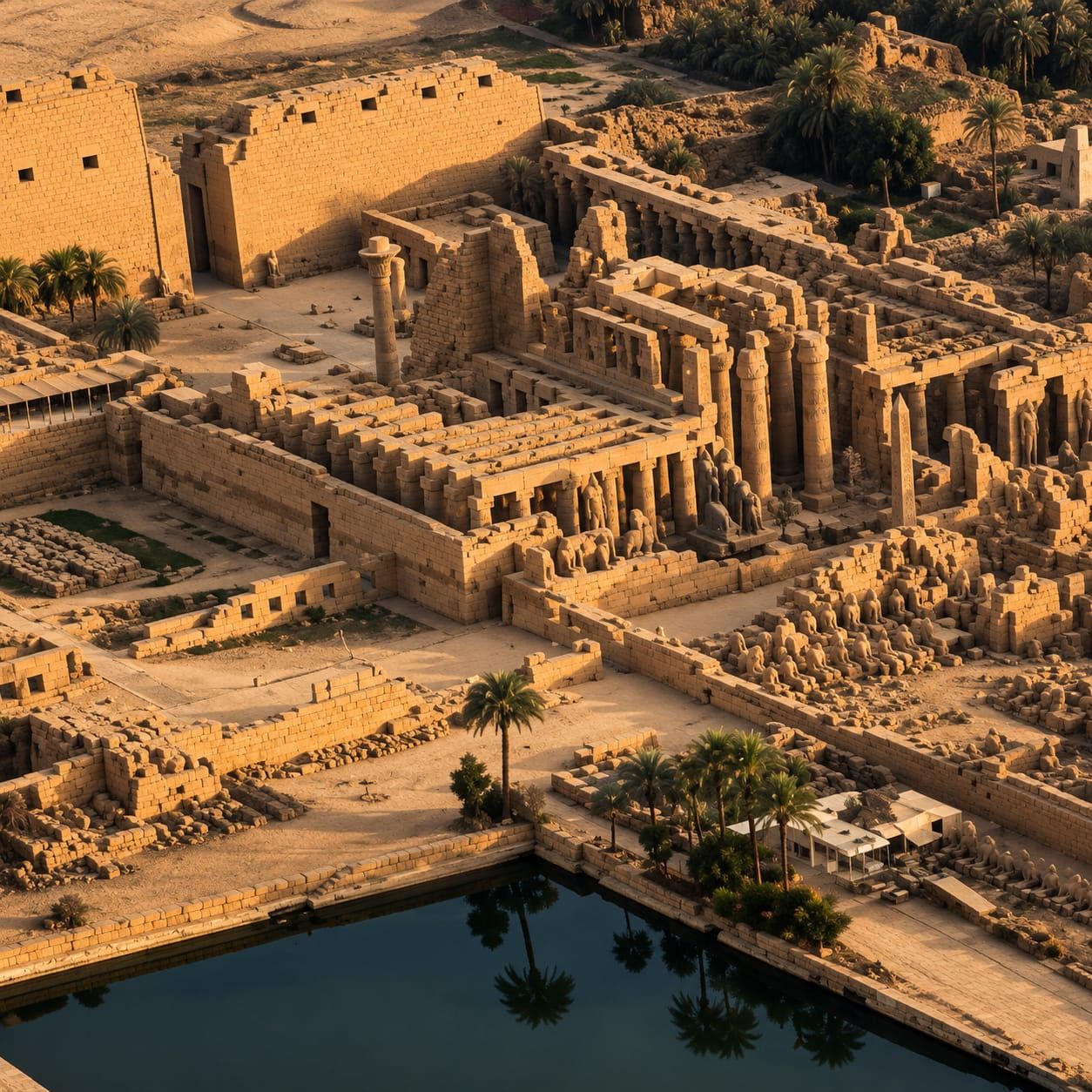
Start your sightseeing at Karnak Temple, one of the largest religious complexes ever built. Discover its impressive Great Hypostyle Hall, enormous columns, ancient obelisks and beautifully decorated walls. Learn about the pharaohs who expanded this extraordinary complex over many centuries.
Luxor Temple
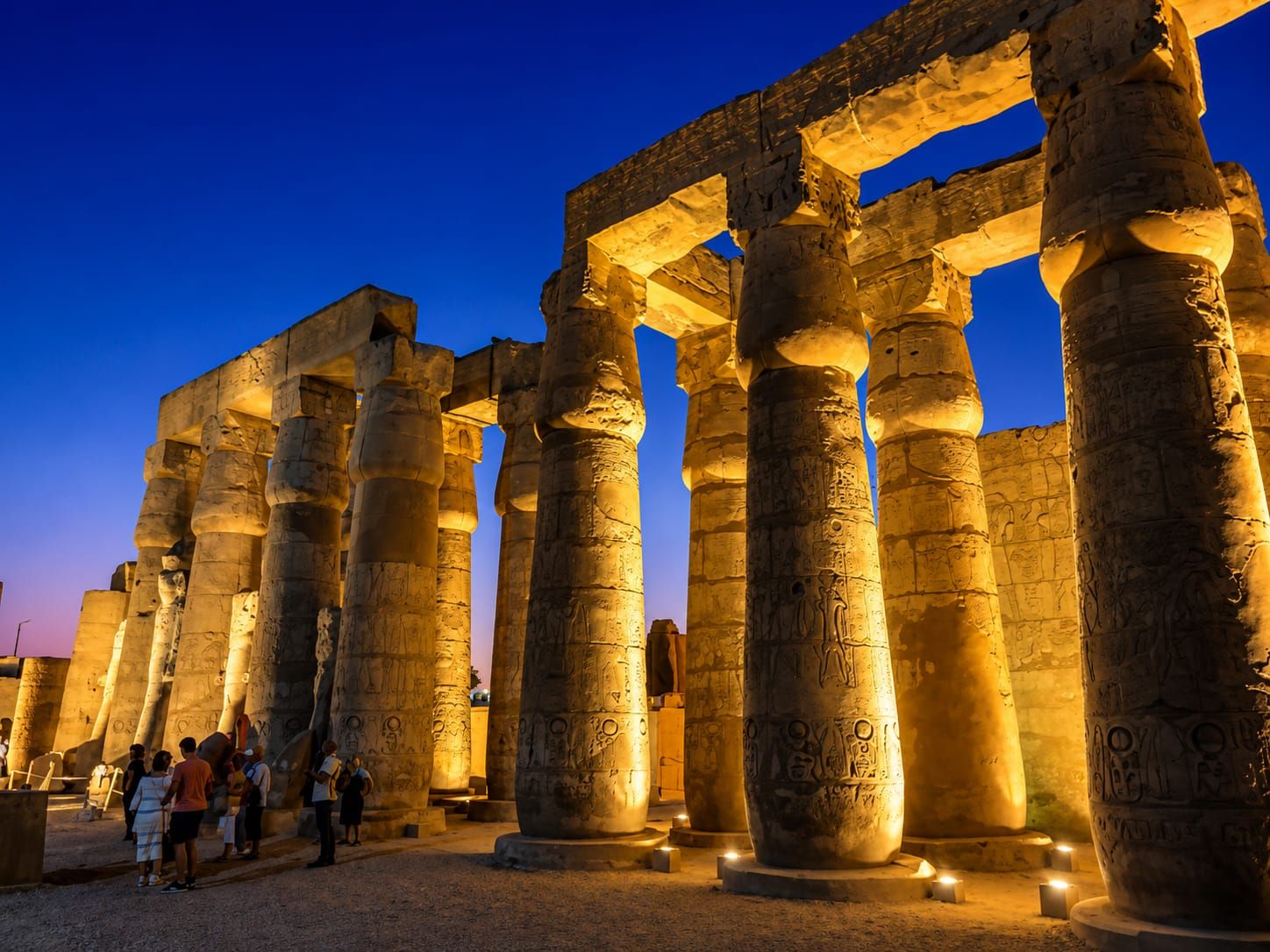
Continue to Luxor Temple, located in the heart of the city. Explore its impressive entrance, statues of Ramses II, courtyards and ancient columns. Learn about its connection to the Opet Festival and the religious traditions of ancient Thebes.
After sightseeing, transfer to your hotel and enjoy the rest of the day at leisure.
Overnight: Luxor.
After breakfast, cross the Nile to explore the remarkable archaeological sites on Luxor's West Bank.
Valley of the Kings
Visit the famous royal burial ground where many New Kingdom pharaohs were buried. Explore selected open tombs decorated with colorful paintings and ancient inscriptions illustrating the Egyptians' beliefs about the afterlife.
Temple of Queen Hatshepsut
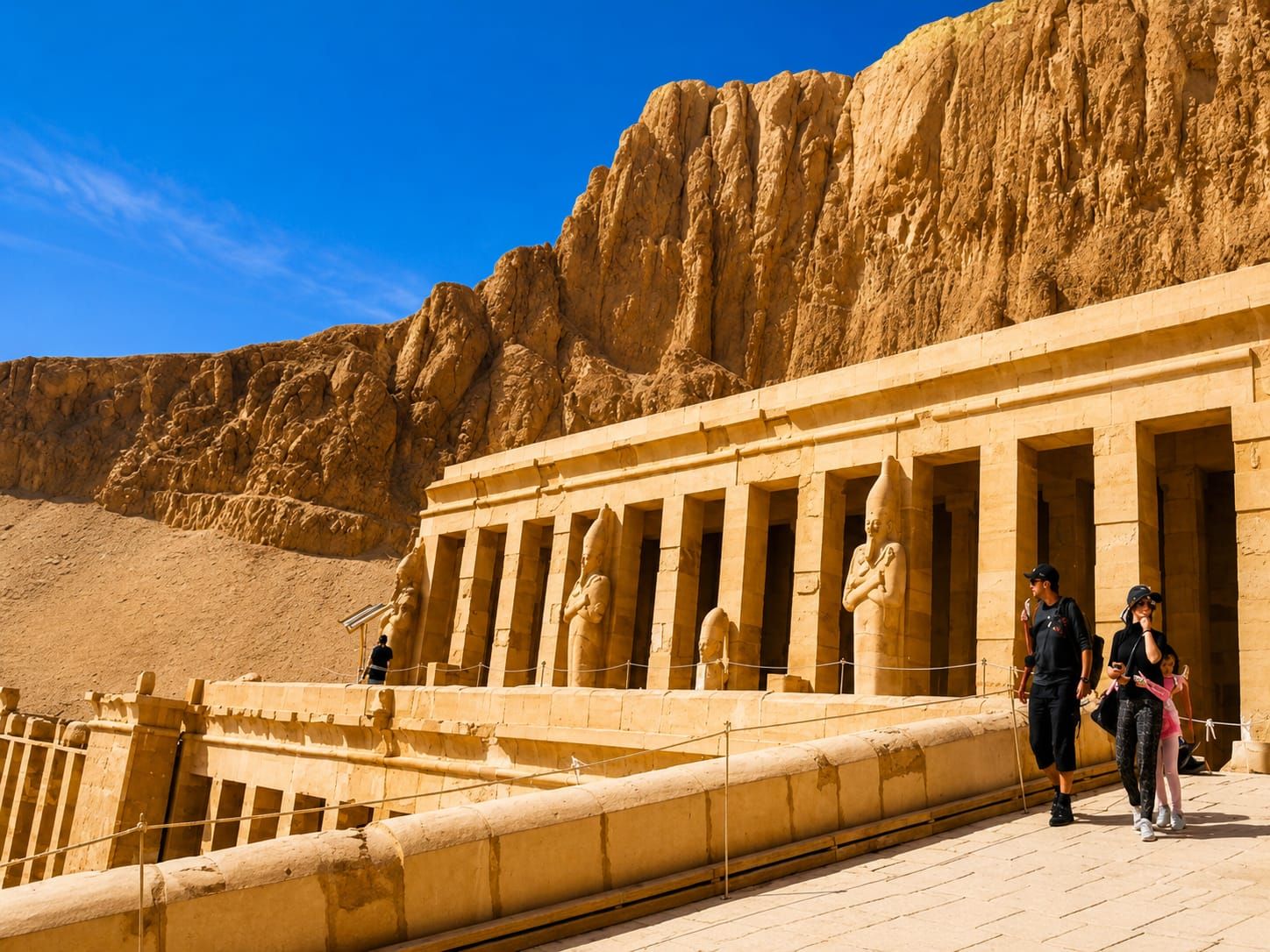
Continue to the magnificent mortuary temple of Queen Hatshepsut at Deir el-Bahari. Admire its impressive terraces, architectural design and dramatic location beneath the limestone cliffs.
Colossi of Memnon
Stop to see the two enormous statues of Pharaoh Amenhotep III, which have stood on Luxor's West Bank for more than 3,000 years.
After completing your sightseeing, continue toward Aswan by private vehicle or your selected transportation arrangement.
Overnight: Aswan.
After breakfast, discover the beautiful city of Aswan and its remarkable ancient monuments.
Philae Temple
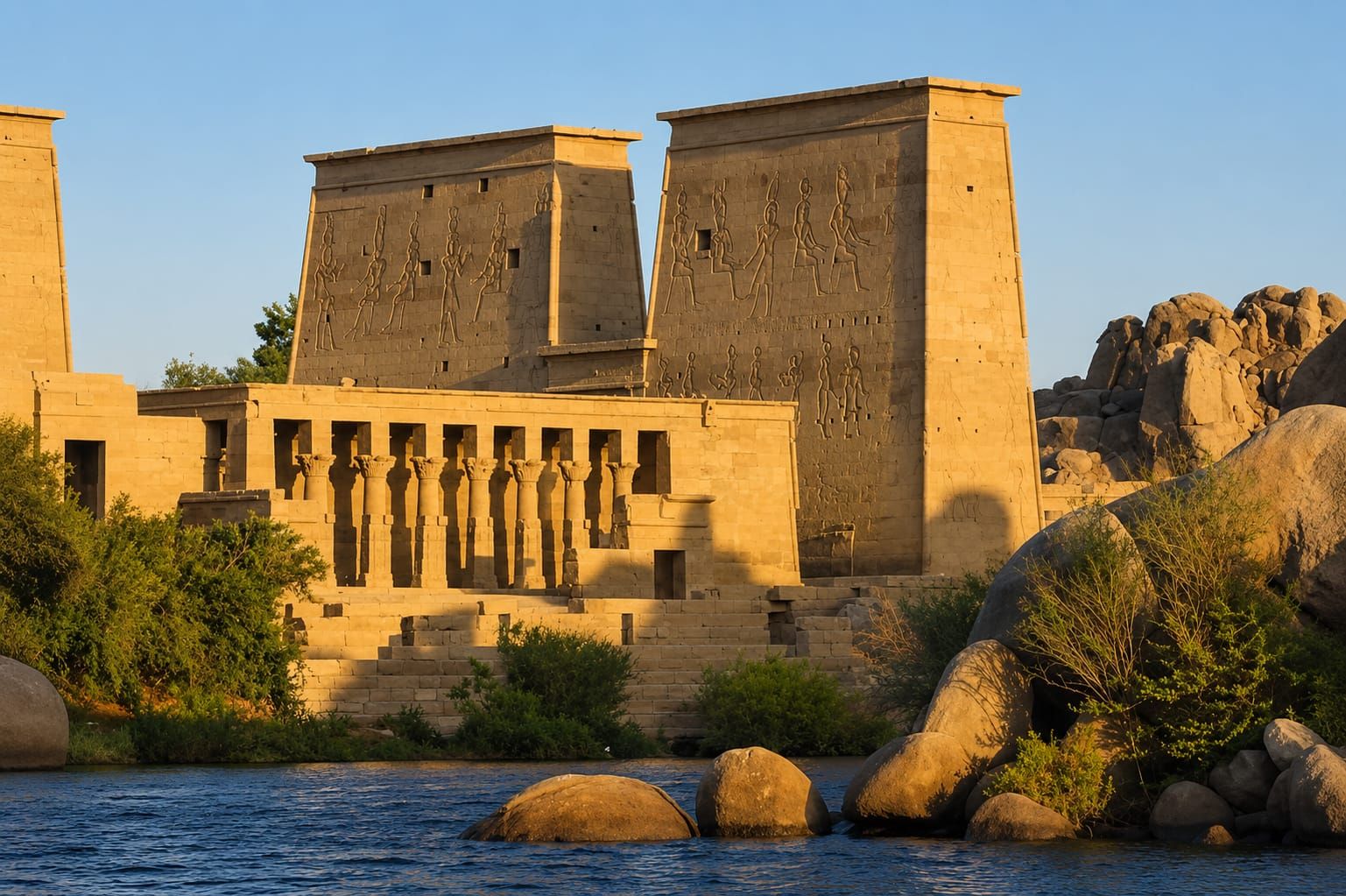
Take a motorboat to Agilkia Island and visit the beautiful Philae Temple, dedicated primarily to the goddess Isis. Explore its impressive gateways, decorated columns and ancient reliefs. Learn about the international campaign that rescued the temple from the rising waters of the Nile.
Unfinished Obelisk
Visit the ancient granite quarry and discover the famous Unfinished Obelisk. See how ancient Egyptian craftsmen worked with enormous blocks of granite to create monumental structures.
Enjoy the rest of the day at leisure or choose an optional activity, such as a traditional felucca ride on the Nile.
Overnight: Aswan.
Start early in the morning for your journey to Abu Simbel, one of Egypt's most spectacular archaeological destinations.
Great Temple of Ramses II
Discover the magnificent Great Temple, famous for its four colossal statues of Pharaoh Ramses II carved into the mountainside. Explore the interior halls and admire the detailed reliefs depicting the pharaoh's military victories and religious ceremonies.
Temple of Queen Nefertari
Visit the smaller temple dedicated to Queen Nefertari and the goddess Hathor. Admire its impressive façade, featuring statues of Ramses II and Nefertari, and discover the remarkable artistic details inside.
Learn about the extraordinary UNESCO rescue operation that relocated both temples to protect them from the rising waters of Lake Nasser.
After your visit, return to Aswan and enjoy the evening at leisure.
Overnight: Aswan.
Enjoy breakfast at your hotel and check out.
At the scheduled time, transfer to Aswan Airport, Aswan train station or another agreed drop-off location, according to your onward travel arrangements.
End of Your 5-Day Luxor, Aswan & Abu Simbel Tour.
Includes/Excludes
Includes
- Private air-conditioned transportation for sightseeing and scheduled road transfers.
- Pickup and drop-off at the agreed locations in Luxor and Aswan.
- Professional English-speaking Egyptologist guide during sightseeing tours.
- Guided visits to Karnak Temple and Luxor Temple.
- Guided visits to the Valley of the Kings, Hatshepsut Temple and Colossi of Memnon.
- Guided visits to Philae Temple and the Unfinished Obelisk.
- Abu Simbel excursion according to the selected transportation arrangement.
- Motorboat transfer to Philae Temple.
- Bottled water during sightseeing and transfers.
- All applicable taxes and service charges
- Entrance fees to archaeological sites
- Additional tickets for special tombs in the Valley of the Kings.
- Meals and drinks
Excludes
- International and domestic flights.
- Accommodation in Luxor and Aswan, unless specified in the selected package.
- Optional Nile felucca ride and other additional activities.
- Abu Simbel transportation, if not included in the selected package.
- Personal expenses and souvenirs.
- Tips for the guide, driver and boat crew.
- Any services not specifically mentioned under What's Included
More Info
Egypt is home to some of the world’s most extraordinary archaeological treasures, and nowhere is this more evident than in the historic region of Upper Egypt. Along the banks of the Nile River, ancient temples, royal tombs, enormous statues and sacred monuments tell the story of a civilization that flourished for thousands of years.
Our 5-Day Luxor, Aswan & Abu Simbel Tour offers an opportunity to explore three of Egypt’s most remarkable destinations in one memorable journey. Discover the ancient capital of Thebes in Luxor, experience the beautiful Nile landscapes of Aswan and stand before the magnificent temples of Ramses II at Abu Simbel.
This private journey is designed for travelers who want to explore Egypt’s most important southern attractions with comfortable transportation, professional guiding services and an organized sightseeing schedule.
Luxor: Discover the Ancient Capital of Thebes
Luxor is one of the most important archaeological destinations in the world. Known in ancient times as Thebes, it served as the capital of Egypt during important periods of the New Kingdom and became a major center of religious, political and cultural life.
Today, Luxor is famous for its remarkable collection of temples, royal tombs and monumental structures. The Nile divides the city into two main sightseeing areas, the East Bank and West Bank.
The East Bank contains major religious complexes, while the West Bank is known for royal burial grounds and mortuary temples.
Karnak Temple: A Monument Built by Generations of Pharaohs
Karnak Temple is one of the most impressive attractions in Egypt and a highlight of any visit to Luxor.
Rather than being a single building, Karnak is an enormous religious complex that developed over many centuries. Different pharaohs added temples, courtyards, gateways, statues and obelisks, creating one of the largest sacred architectural sites ever constructed.
The complex was dedicated primarily to Amun-Ra, one of the most important gods in ancient Egyptian religion.
One of its most remarkable sections is the Great Hypostyle Hall, which contains 134 massive columns arranged in several rows. The columns are decorated with inscriptions and scenes showing ancient religious ceremonies and royal offerings.
Walking through Karnak gives visitors a fascinating understanding of the religious beliefs, architectural achievements and political power of ancient Egypt.
Luxor Temple: The Heart of Ancient Thebes
Located in the center of modern Luxor, Luxor Temple is another extraordinary monument.
Unlike Karnak, which developed as a large religious complex, Luxor Temple was closely associated with royal ceremonies and the annual Opet Festival.
Pharaohs including Amenhotep III and Ramses II contributed to its construction and decoration.
Visitors can admire the impressive entrance, monumental statues, ancient courtyards and beautifully decorated columns. The temple is especially atmospheric because of its location within the modern city.
Luxor West Bank: The World of the Pharaohs
The West Bank of Luxor offers a completely different historical experience. This area was closely connected to ancient Egyptian funerary beliefs and royal burial traditions.
Valley of the Kings: Explore the Royal Tombs
The Valley of the Kings is one of Egypt’s most famous archaeological sites. It served as the burial ground for numerous New Kingdom rulers, who constructed elaborate tombs hidden within the desert mountains.
The tombs were carved into the rock and decorated with religious texts, colorful paintings and scenes representing the pharaoh’s journey into the afterlife.
Among the most famous discoveries is the tomb of Tutankhamun, uncovered by Howard Carter in 1922.
During your visit, you can enter selected tombs available under the standard entrance ticket. Certain special tombs require separate tickets.
The Valley of the Kings is an essential destination for understanding the beliefs and burial practices of ancient Egyptian royalty.
Temple of Queen Hatshepsut
The Mortuary Temple of Queen Hatshepsut at Deir el-Bahari is famous for its remarkable architecture and dramatic setting beneath towering limestone cliffs.
Queen Hatshepsut ruled during the 18th Dynasty and became one of ancient Egypt’s most successful female pharaohs.
Her temple features three main terraces connected by ramps, with surviving reliefs illustrating important events from her reign.
One of the most famous scenes represents the expedition to the Land of Punt, which brought valuable goods and exotic products to Egypt.
Colossi of Memnon
The Colossi of Memnon are two enormous statues of Pharaoh Amenhotep III. They once stood at the entrance of his vast mortuary temple, much of which has disappeared.
These impressive statues have survived for thousands of years and remain an important landmark on Luxor’s West Bank.
They offer an excellent opportunity to appreciate the scale of ancient Egyptian sculpture and monument construction.
Aswan: The Beauty of the Nile and Ancient Nubia
After exploring Luxor, continue south to Aswan, a beautiful city known for its peaceful atmosphere, Nile islands, granite quarries and cultural heritage.
Aswan has been an important settlement throughout Egyptian history. Its location near the southern frontier made it a strategic center for trade, transportation and the movement of valuable materials such as granite.
Today, Aswan offers visitors a different experience from Luxor. Its relaxed atmosphere, traditional communities and beautiful river scenery make it one of the most enjoyable destinations in Upper Egypt.
Philae Temple: Discover the Sanctuary of Isis
Philae Temple is one of the most beautiful ancient monuments in Aswan.
Dedicated primarily to the goddess Isis, the temple was an important center of religious worship in ancient Egypt.
Originally located on Philae Island, the complex was relocated to Agilkia Island during the international UNESCO campaign to protect it from the rising waters associated with the Aswan High Dam.
Visitors reach the temple by motorboat, enjoying beautiful views of the surrounding Nile landscape.
Explore its gateways, decorated walls, courtyards and columns while learning about the mythology of Isis and Osiris.
Philae is particularly important because it preserves elements of ancient Egyptian religious traditions from a later historical period.
Unfinished Obelisk: Discover Ancient Stoneworking
The Unfinished Obelisk is located in Aswan’s ancient granite quarry.
This enormous monument provides an excellent opportunity to understand how ancient Egyptian craftsmen worked with hard granite to create obelisks and other monumental structures.
The obelisk was abandoned after cracks appeared in the stone during construction. It remains connected to the bedrock, allowing visitors to observe the carving process.
If completed, it would have been among the largest obelisks ever constructed in ancient Egypt.
Abu Simbel: The Extraordinary Temples of Ramses II
The journey reaches one of its greatest highlights with a visit to Abu Simbel, located south of Aswan near Lake Nasser.
The temples were commissioned by Pharaoh Ramses II during the 13th century BC and represent some of the most impressive achievements of ancient Egyptian architecture.
The Great Temple of Ramses II
The Great Temple is famous for its four enormous seated statues of Ramses II, carved directly into the mountainside.
These colossal figures dominate the entrance and demonstrate the power and authority of the pharaoh.
Inside, visitors can explore impressive halls decorated with scenes from religious ceremonies, royal achievements and the famous Battle of Kadesh.
The temple was designed to honor Ramses II and several important ancient Egyptian gods.
The Temple of Queen Nefertari
A short distance from the Great Temple stands the smaller temple dedicated to Queen Nefertari and the goddess Hathor.
The façade features statues of Ramses II and Nefertari, with the queen represented on a scale comparable to the king, an unusual feature in ancient Egyptian monumental art.
Inside, beautiful reliefs show the queen participating in religious ceremonies and making offerings to the gods.
The UNESCO International Rescue Project
Abu Simbel is famous not only for its ancient history but also for one of the greatest archaeological preservation projects of modern times.
During the 1960s, the construction of the Aswan High Dam threatened to submerge the temples beneath the rising waters of Lake Nasser.
An international UNESCO campaign brought together specialists and countries to save the monuments.
The temples were carefully cut into large blocks, moved and reconstructed at a higher location.
This extraordinary operation preserved the temples for future generations and became an important example of international cooperation in protecting world heritage.
The Nile Valley: A Journey Through Egypt’s Living History
Traveling between Luxor and Aswan is an experience in itself.
The Nile River has supported Egyptian civilization for thousands of years. Its waters have provided irrigation, transportation and fertile agricultural land, allowing communities to flourish in an otherwise dry region.
Along the journey, visitors can see palm groves, fields, villages and traditional settlements.
The contrast between the green agricultural land and the surrounding desert is one of the most distinctive features of Upper Egypt.
Why Is This Five-Day Tour a Great Choice?
This tour combines three destinations that offer different perspectives on Egyptian history and culture.
Luxor introduces you to the power of the New Kingdom, the religious importance of ancient Thebes and the royal burial traditions of the pharaohs.
Aswan offers beautiful Nile scenery, the heritage of southern Egypt and remarkable monuments such as Philae Temple.
Abu Simbel reveals the extraordinary architectural ambition of Ramses II and the importance of preserving ancient monuments.
The private tour format allows your group to enjoy organized transportation, professional guiding arrangements and a flexible sightseeing experience.
It is particularly suitable for travelers who want to discover Upper Egypt’s most important historical attractions within a limited travel period.
Recommended Five-Day Travel Plan
- Day 1: Discover Karnak Temple and Luxor Temple.
- Day 2: Explore the Valley of the Kings, Hatshepsut Temple and Colossi of Memnon, followed by the journey to Aswan.
- Day 3: Visit Philae Temple and the Unfinished Obelisk.
- Day 4: Enjoy the Abu Simbel excursion and explore the Great Temple of Ramses II and the Temple of Queen Nefertari.
- Day 5: Breakfast, hotel checkout and departure from Aswan.
The schedule can be adjusted according to your arrival and departure times and selected transportation arrangements.
Best Time to Visit Luxor, Aswan and Abu Simbel
The most comfortable travel season is generally October through April.
During these months, temperatures are usually more suitable for walking around temples and archaeological sites.
November through February is particularly popular among international travelers. Winter mornings and evenings can be cooler, so carrying a light jacket is recommended.
Summer temperatures can be extremely high, especially in Aswan and Abu Simbel. Travelers visiting during this period should plan outdoor sightseeing carefully, stay hydrated and follow their guide’s recommendations.
Practical Travel Tips
To enjoy your journey, consider the following recommendations:
- Wear comfortable walking shoes for temples and archaeological sites.
- Bring sunscreen, sunglasses and a hat.
- Carry drinking water during sightseeing.
- Dress comfortably and respectfully when visiting cultural and religious locations.
- Bring a camera to capture the temples and Nile scenery.
- Keep some cash for personal expenses and optional activities.
- Prepare for an early departure on the Abu Simbel excursion.
- Confirm your transportation and accommodation arrangements before traveling.
Some archaeological sites have uneven surfaces, steps and exposed outdoor areas. Travelers with mobility concerns should discuss their requirements before booking.
Important Information Before Booking
The five-day tour includes long-distance travel between Luxor, Aswan and Abu Simbel.
The Luxor–Aswan road journey generally takes approximately three to four hours. The Aswan–Abu Simbel road journey also takes approximately three to four hours each way.
Accommodation, entrance tickets, meals, domestic flights, train tickets and Abu Simbel transportation depend on the selected package. Special tombs in the Valley of the Kings may require additional entrance tickets.
The motorboat transfer to Philae Temple should also be confirmed in your booking details.
Your final itinerary and pickup arrangements will be confirmed according to your selected services and travel schedule.
Book Your Upper Egypt Adventure with Let’s Explore Egypt Travel
Experience the most remarkable historical attractions of southern Egypt with Let’s Explore Egypt Travel.
Walk through the magnificent temples of ancient Thebes, discover the royal tombs of the pharaohs, admire the beauty of the Nile in Aswan and stand before the colossal statues of Ramses II at Abu Simbel.
This 5-Day Luxor, Aswan & Abu Simbel Tour offers a memorable journey through ancient Egyptian history, monumental architecture and the landscapes of the Nile Valley.
Reserve your journey today and discover the timeless wonders of Luxor, Aswan and Abu Simbel.
Frequently Asked Questions
The tour includes sightseeing in Luxor, Aswan and Abu Simbel, private transportation according to the itinerary and professional guiding services. Accommodation, entrance fees, meals and Abu Simbel transportation depend on the selected package. Please check your booking details for the exact inclusions.
You will discover some of Upper Egypt's most famous archaeological sites, including Karnak Temple, Luxor Temple, the Valley of the Kings, Hatshepsut Temple, the Colossi of Memnon, Philae Temple, the Unfinished Obelisk and Abu Simbel Temples.
Yes. This tour is designed as a private experience with transportation and sightseeing arrangements for your group. You will not share your main private vehicle with unrelated travelers.
A professional English-speaking Egyptologist guide is included according to the selected package. Other language-speaking guides may be available upon request, subject to availability.
The suggested itinerary includes one night in Luxor and three nights in Aswan, making four nights in total. Accommodation depends on your selected package.
The distance between Luxor and Aswan is approximately 215 km by road. The journey generally takes around 3–4 hours, depending on traffic and stops.
Abu Simbel is approximately 280 km south of Aswan by road. The drive generally takes around 3–4 hours each way, depending on road conditions
Yes, a visit to Abu Simbel is included in the itinerary. However, the transportation method and whether entrance tickets are included depend on your selected package.
You will visit the Great Temple of Ramses II, famous for its four colossal seated statues, and the smaller Temple of Queen Nefertari, dedicated to the goddess Hathor.
Yes. The Abu Simbel excursion usually starts very early in the morning because of the driving distance from Aswan. Your exact pickup time will be confirmed according to the transportation arrangements.