

Introduction
Egypt is one of the world’s most fascinating travel destinations. Home to the last surviving Wonder of the Ancient World, thousands of years of history, vibrant markets, breathtaking deserts, and the mighty Nile River, it’s a country unlike anywhere else.
However, many first-time visitors arrive with unrealistic expectations or little preparation. Small mistakes can lead to unnecessary stress, wasted money, long queues, or missed opportunities.
The good news? Almost all of these problems are easy to avoid.
In this guide, you’ll discover the 25 most common mistakes tourists make when visiting Egypt and learn practical tips from local travel experts to make your journey smooth, safe, and unforgettable.
Mistake #1: Visiting Without a Plan
Many travelers think they can simply arrive in Cairo and figure everything out later.
While spontaneous travel works in some destinations, Egypt rewards travelers who plan ahead. Major attractions such as the Giza Pyramids, the Grand Egyptian Museum, and popular Nile cruises are much easier to enjoy when tickets, transportation, and timing are arranged in advance.
Planning also helps you avoid long queues, reduce transportation costs, and fit more into each day.
How to avoid it
- Book popular attractions in advance.
- Reserve airport transfers before arrival.
- Create a realistic itinerary.
- Allow extra time for Cairo traffic.
- Decide which attractions are must-sees before your trip.
Mistake #2: Underestimating Cairo Traffic
One of the biggest surprises for visitors is Cairo’s traffic.
A trip that appears to take 20 minutes on a map can easily take over an hour during rush hour. Travelers often miss museum entry times, airport check-ins, or evening dinner cruises because they underestimate travel times.
How to avoid it
- Leave earlier than you think you need to.
- Schedule only two or three major attractions per day.
- Avoid unnecessary cross-city travel during peak hours.
Mistake #3: Choosing the Wrong Time to Visit
Many tourists visit Egypt during the hottest summer months without realizing how intense the heat can be.
Temperatures regularly exceed 40°C (104°F), especially in Luxor, Aswan, and desert areas.
Best time to visit
- October to April offers the most comfortable weather.
- Summer is possible, but sightseeing should start very early in the morning.
Mistake #4: Not Carrying Cash
Although credit cards are accepted in many hotels and restaurants, many small shops, local cafés, traditional markets, and tipping situations still require Egyptian Pounds.
Always carry some cash in small denominations.
Mistake #5: Ignoring Local Dress Customs
Egypt is welcoming and accustomed to international visitors, but dressing modestly—especially when visiting mosques, churches, or conservative neighborhoods—shows respect and often results in a more comfortable experience.
Lightweight clothing that covers shoulders and knees is a practical choice.
Mistake #6: Assuming Every Camel Ride Is the Same
One of the biggest dreams for many visitors is taking a camel ride with the Great Pyramid in the background. While this can be an unforgettable experience, many travelers make the mistake of accepting the first offer they receive at the entrance.
Some camel owners are excellent professionals, while others may quote very low prices initially and then request additional money for photos, longer rides, or returning to the starting point.
This doesn’t mean camel rides should be avoided—it simply means you should book wisely.
How to Avoid It
- Book through a reputable tour company whenever possible.
- Confirm the exact price before getting on the camel.
- Ask how long the ride lasts.
- Clarify whether photos are included.
- Pay only the agreed amount.
Pro Tip
The best lighting for photos is during sunrise or the late afternoon when the sun creates beautiful golden colors across the Giza Plateau.
Mistake #7: Spending Too Little Time at the Giza Pyramids
Many tourists believe they only need one hour to visit the pyramids.
In reality, the archaeological site is much larger than it appears on television or social media.
The Giza Plateau includes:
- The Great Pyramid of Khufu
- The Pyramid of Khafre
- The Pyramid of Menkaure
- The Great Sphinx
- Valley Temple
- Panoramic Viewpoint
- Camel Riding Area
- Solar Boat Museum area
- Multiple photography locations
If you rush through the complex, you’ll miss some of its best viewpoints and hidden photo spots.
Recommended Visit Time
- Quick visit: 2 hours
- Comfortable visit: 3–4 hours
- Full experience: 5–6 hours
Mistake #8: Forgetting to Visit the Grand Egyptian Museum
Many visitors still think the historic Egyptian Museum in Tahrir Square is the only museum worth visiting.
While it remains an important landmark, the Grand Egyptian Museum offers a modern experience with spacious galleries, interactive displays, panoramic pyramid views, and many remarkable artifacts.
For first-time visitors, combining the pyramids with the Grand Egyptian Museum makes for one of the best sightseeing days in Egypt.
Don’t Miss
- Grand Staircase
- Colossal Ramses II Statue
- Ancient royal artifacts
- Conservation Center viewing areas
- Restaurants overlooking the pyramids
- Gift shops with quality souvenirs
Mistake #9: Taking Every Taxi Instead of Using Ride-Hailing Apps
Some travelers immediately jump into the first taxi outside the airport or tourist attractions.
While many taxi drivers are honest, language barriers and unclear pricing can sometimes create confusion.
Ride-hailing apps have become one of the easiest ways to travel around Cairo.
Why Many Travelers Prefer Ride-Hailing Apps
- Fixed prices
- GPS tracking
- Cashless payment options
- Driver ratings
- Easier communication
If you choose a traditional taxi, always agree on the fare before starting the trip if the meter isn’t being used.
Mistake #10: Shopping Without Comparing Prices
Markets such as Khan El Khalili are fantastic places to buy handmade souvenirs, spices, jewelry, papyrus, perfumes, and traditional crafts.
However, first-time visitors often purchase from the very first shop they enter.
Prices can vary significantly between nearby stores.
Smart Shopping Tips
- Visit several shops before buying.
- Bargaining is common in traditional markets.
- Stay polite and smile.
- Don’t feel pressured to buy.
- Carry small Egyptian Pound notes.
Remember that authentic handmade products naturally cost more than factory-made souvenirs.
Infographic
Smart Shopping in Egypt
| Do | Avoid |
|---|---|
| Compare prices | Buying from the first shop |
| Negotiate politely | Arguing aggressively |
| Carry cash | Paying large bills everywhere |
| Buy handmade crafts | Cheap fake souvenirs |
| Take your time | Feeling rushed |
Mistake #11: Drinking Tap Water Immediately
Egyptians commonly drink filtered or treated water at home, but many international visitors have sensitive stomachs when adjusting to a different country’s water and food.
Most hotels provide bottled water, which is widely available and inexpensive.
Better Choices
- Bottled water
- Sealed beverages
- Fresh juices from reputable restaurants
- Ice from established hotels and restaurants
Staying hydrated is especially important during warmer months.
Mistake #12: Being Afraid to Try Egyptian Food
Some visitors spend their entire vacation eating only international fast food.
That’s a missed opportunity because Egyptian cuisine is rich, flavorful, and often surprisingly affordable.
Popular dishes include:
Koshari
Egypt’s national comfort food made with rice, lentils, pasta, chickpeas, tomato sauce, garlic, and crispy onions.
Ful Medames
Slow-cooked fava beans served with olive oil, lemon, and spices.
Taameya
Egyptian-style falafel made from fava beans rather than chickpeas.
Hawawshi
Fresh bread stuffed with seasoned minced meat and baked until crispy.
Molokhia
A traditional green soup served with chicken or rabbit.
Mahshi
Vegetables stuffed with seasoned rice and herbs.
Grilled Kofta & Kebab
Popular dishes served throughout Egypt.
Food Safety Tips
- Choose busy restaurants with a high turnover of customers.
- Eat freshly cooked food.
- Wash fruit before eating.
- Peel fruit when possible.
- Avoid food left in direct sunlight for long periods.
Most visitors enjoy Egyptian food without any issues when following these simple precautions.
Quick Checklist Before Leaving Your Hotel
✔ Carry bottled water.
✔ Bring sunscreen and sunglasses.
✔ Wear comfortable walking shoes.
✔ Keep some Egyptian Pounds in small bills.
✔ Charge your phone or carry a power bank.
✔ Take a hat during summer.
✔ Have a copy of your passport or ID available.
Mistake #13: Overpacking for Egypt
Many first-time visitors assume they need a different outfit for every day of their trip. The result? Heavy luggage that’s difficult to carry through airports, hotels, and domestic flights.
Egypt has a warm climate for much of the year, so lightweight, breathable clothing is usually all you need.
What to Pack Instead
Clothing
- Lightweight cotton or linen shirts
- Comfortable walking pants or shorts (where appropriate)
- A light jacket for winter evenings
- A scarf or shawl for visiting religious sites
- A swimsuit if staying at a Red Sea resort
Footwear
- Comfortable walking shoes
- Sandals for hotel or beach
- Closed shoes for desert excursions
Essentials
- Sunglasses
- Sunscreen (SPF 50+)
- Hat or cap
- Portable charger
- Reusable water bottle
- Universal travel adapter
- Personal medications
Pro Tip
If you’re visiting Luxor, Aswan, or Abu Simbel in summer, choose light-colored clothing to reflect the sun and stay cooler.
Mistake #14: Ignoring Local Etiquette
Egyptians are known for their hospitality and friendliness. A little cultural awareness goes a long way in creating positive interactions.
Simple gestures such as greeting people politely or asking before taking photos show respect and are always appreciated.
Cultural Tips
- Say “Hello” or “Salam Alaikum” when greeting someone.
- Ask permission before photographing locals.
- Dress modestly when visiting mosques or churches.
- Remove your shoes when required.
- Respect prayer times and religious customs.
- Public displays of affection are generally kept to a minimum.
Remember
You don’t need to behave perfectly—just be respectful and open-minded.
Mistake #15: Missing the Best Pyramid Photo Spots
Many visitors take all their photos near the entrance, then leave without discovering the spectacular viewpoints around the plateau.
Some of Egypt’s most iconic images are taken from the panoramic viewpoint, where all three pyramids appear together in one frame.
Best Photo Locations
1. Panoramic Viewpoint
Perfect for capturing all three pyramids.
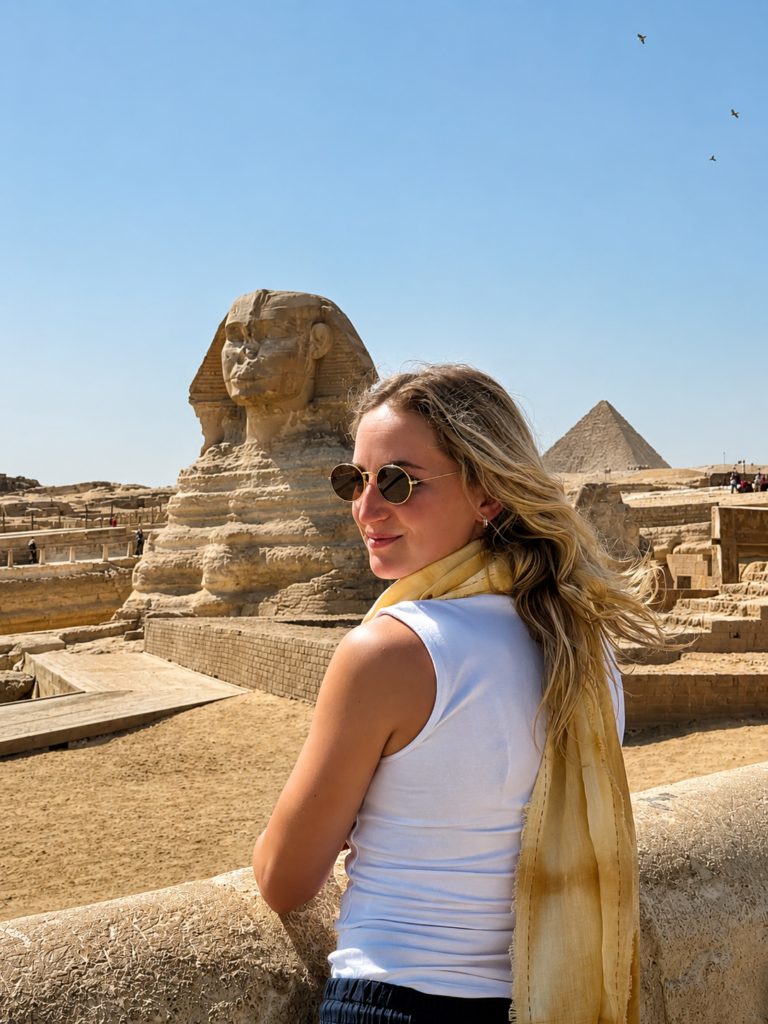
2. Great Sphinx Plaza
Excellent close-up shots with the Great Pyramid behind.
3. Desert Edge
Ideal for dramatic sunrise and sunset photography.
4. Camel Trail
Great for silhouette photos during golden hour.
5. Grand Egyptian Museum Plaza
Offers a unique modern perspective with the pyramids in the distance.
Photography Tips
- Visit early in the morning for softer light.
- Bring a wide-angle lens if you have one.
- Wear neutral-colored clothing for timeless photos.
- Avoid midday if possible, as the sunlight is harsh.
- Keep your camera ready—unexpected moments happen often.
Infographic
Best Times for Photography in Egypt
| Time | Quality |
|---|---|
| Sunrise | ⭐⭐⭐⭐⭐ |
| 8–10 AM | ⭐⭐⭐⭐ |
| Noon | ⭐⭐ |
| 3–5 PM | ⭐⭐⭐⭐ |
| Sunset | ⭐⭐⭐⭐⭐ |
Mistake #16: Skipping Travel Insurance
Many travelers believe nothing will go wrong during their vacation.
While Egypt is a popular and generally safe destination for millions of visitors each year, unexpected situations can happen anywhere.
Travel insurance can help cover:
- Flight delays
- Lost luggage
- Medical emergencies
- Trip cancellations
- Unexpected illness
- Emergency assistance
Compared to the total cost of an international vacation, travel insurance is usually inexpensive.
Mistake #17: Booking the Cheapest Tour Instead of the Best Value
Everyone loves saving money, but choosing the cheapest tour isn’t always the smartest decision.
Some very low-cost tours may include:
- Large groups
- Shopping stops you didn’t request
- Limited sightseeing time
- Older vehicles
- Hidden fees
- Rushed itineraries
Instead of focusing only on price, compare what’s included.
What to Look For
✅ Licensed guide
✅ Air-conditioned transportation
✅ Transparent pricing
✅ Verified customer reviews
✅ Hotel pickup
✅ Entrance ticket information
✅ Small group or private option
Questions to Ask Before Booking
- Are entrance tickets included?
- How many people are in the group?
- Is lunch included?
- Are there shopping stops?
- Can the itinerary be customized?
A well-organized tour often provides a much better overall experience and saves valuable vacation time.
Mistake #18: Staying Only in Cairo
Cairo is incredible, but Egypt offers much more than its capital.
Many travelers regret not spending extra time exploring other regions.
Places Worth Adding to Your Itinerary
Luxor
Often called the world’s greatest open-air museum, Luxor is home to magnificent temples, royal tombs, and the Valley of the Kings.
Aswan
Known for its relaxed atmosphere, beautiful Nile scenery, and ancient temples.
Abu Simbel
One of Egypt’s most impressive archaeological sites, famous for its colossal statues carved into the mountainside.
Alexandria
A Mediterranean city blending ancient history with seaside charm.
Hurghada
Perfect for snorkeling, diving, and beach relaxation on the Red Sea.
Sharm El Sheikh
A world-renowned destination for luxury resorts and underwater adventures.
Siwa Oasis
A peaceful desert escape with natural springs, salt lakes, and unique Berber culture.
White Desert
An unforgettable landscape of chalk rock formations that looks almost otherworldly.
Sample 10-Day Egypt Itinerary
| Day | Destination |
|---|---|
| 1 | Arrive in Cairo |
| 2 | Giza Pyramids & Sphinx |
| 3 | Grand Egyptian Museum & Old Cairo |
| 4 | Fly to Luxor |
| 5 | Valley of the Kings & Karnak Temple |
| 6 | Aswan |
| 7 | Abu Simbel |
| 8 | Hurghada |
| 9 | Red Sea relaxation |
| 10 | Return to Cairo & Departure |
Expert Tip
If you have 7–10 days, try combining Cairo with either Luxor and Aswan or a Red Sea destination like Hurghada or Sharm El Sheikh. This gives you a balanced experience of Egypt’s ancient history, culture, and natural beauty without feeling rushed.
Mistake #19: Exchanging All Your Money at the Airport
Many travelers exchange all their cash immediately after landing at Cairo International Airport.
While airport exchange counters are convenient, their exchange rates are not always the most competitive.
Better Options
- Exchange only enough money for your first day.
- Use official bank branches or reputable exchange offices in the city.
- Withdraw Egyptian Pounds from ATMs operated by major banks.
- Keep both cash and a credit card available.
Avoid
- Exchanging money through unofficial individuals.
- Carrying large amounts of cash while sightseeing.
Mistake #20: Not Understanding Tipping (Baksheesh)
Tipping is a normal part of daily life in Egypt and is often called “baksheesh.”
While it is usually not mandatory, small tips are appreciated for good service.
Typical Situations
- Hotel porters
- Drivers
- Tour guides
- Restaurant staff
- Public restroom attendants
- Boat crews
Carry small Egyptian Pound notes so you can tip conveniently without needing change.
Good Practice
Tip based on the quality of the service rather than feeling obligated in every situation.
Mistake #21: Buying Every Souvenir You See
Egypt has wonderful handicrafts, but many visitors purchase souvenirs at the first shop they enter.
Instead, compare quality and prices.
Popular Authentic Souvenirs
- Handmade papyrus art
- Alabaster carvings
- Egyptian cotton products
- Silver jewelry
- Scarab replicas
- Traditional lanterns
- Spices and herbal teas
- Handmade ceramics
Be Careful Of
- Plastic “papyrus”
- Factory-made imports sold as handmade
- Fake antiques (exporting genuine antiquities is illegal)
Buy from reputable shops and ask questions about how the items are made.
Infographic
Best Souvenirs to Buy in Egypt
| Souvenir | Authentic? | Easy to Pack |
|---|---|---|
| Papyrus | ⭐⭐⭐⭐⭐ | ✅ |
| Egyptian Cotton | ⭐⭐⭐⭐⭐ | ✅ |
| Spices | ⭐⭐⭐⭐ | ✅ |
| Alabaster | ⭐⭐⭐⭐⭐ | ⚠ Fragile |
| Silver Jewelry | ⭐⭐⭐⭐⭐ | ✅ |
| Handmade Pottery | ⭐⭐⭐⭐ | ⚠ Fragile |
Mistake #22: Forgetting to Check Opening Hours
Museum schedules, religious sites, and some attractions may have different operating hours depending on the season, holidays, or special events.
Before leaving your hotel:
- Check official opening times.
- Confirm ticket availability.
- Allow time for security checks.
- Arrive early for major attractions.
This is especially important during Ramadan and national holidays, when operating hours can vary.
Mistake #23: Ignoring Basic Safety Precautions
Egypt welcomes millions of tourists every year, and most visits are trouble-free.
Like any major destination, using common sense helps ensure a safe trip.
Smart Safety Tips
- Keep valuables secure.
- Avoid displaying large amounts of cash.
- Stay aware in crowded places.
- Use licensed transportation.
- Follow your guide’s instructions at archaeological sites.
- Carry a copy of your passport (or a digital backup).
If you need assistance, the Tourist Police are available in major tourist areas.
Mistake #24: Believing Every Myth You Read Online
The internet is full of outdated or exaggerated information about Egypt.
Some common myths include:
Myth:
Egypt is unsafe for tourists.
Reality: Millions of travelers visit Egypt each year without incident. Staying informed, using reputable services, and following local advice contribute to a safe and enjoyable trip.
Myth:
Everyone will try to scam you.
Reality: Most Egyptians are welcoming and genuinely helpful. As in any popular destination, staying aware and politely declining unwanted offers is usually enough.
Myth:
You can see all of Egypt in three days.
Reality: Egypt is a large country with thousands of years of history. A week or more allows for a much richer experience.
Mistake #25: Trying to Do Too Much
This is perhaps the biggest mistake of all.
Some visitors attempt to see Cairo, Alexandria, Luxor, Aswan, Abu Simbel, Hurghada, and the White Desert in one week.
Instead of enjoying each destination, they spend much of their vacation in transit.
A Better Approach
Choose fewer destinations and spend more time experiencing each one.
For example:
5 Days
- Cairo
- Giza
- Grand Egyptian Museum
7 Days
- Cairo
- Luxor
10 Days
- Cairo
- Luxor
- Aswan
- Hurghada
14 Days
Add Alexandria, Abu Simbel, or a Nile Cruise for a more comprehensive trip.
Quality experiences create better memories than simply checking attractions off a list.
Final Travel Checklist
Before heading out each day, make sure you have:
- Passport copy or digital backup
- Egyptian Pounds in small denominations
- Bottled water
- Sunscreen
- Sunglasses
- Comfortable walking shoes
- Fully charged phone
- Portable charger
- Hat or cap
- Camera
- Entrance tickets (if booked online)
- Emergency contact information
Frequently Asked Questions
Is Egypt safe for first-time visitors?
Yes. Egypt is a popular destination that welcomes millions of international visitors each year. Following standard travel precautions and using licensed transportation and guides can help ensure a smooth experience.
How many days do I need in Egypt?
A minimum of 7–10 days is recommended to experience Cairo, the Giza Pyramids, and either Upper Egypt (Luxor and Aswan) or a Red Sea destination.
Should I carry cash?
Yes. While cards are accepted in many places, cash is useful for small purchases, markets, and tips.
Can I wear shorts?
Yes, especially at tourist sites and beach resorts. However, lightweight clothing that covers the shoulders and knees is recommended when visiting religious sites or conservative neighborhoods.
Do I need a guide for the pyramids?
A guide is not required, but many visitors find that a knowledgeable guide greatly enhances the experience by explaining the history, symbolism, and lesser-known details of the site.
Is bargaining expected?
In traditional markets such as Khan El Khalili, polite bargaining is common. Fixed-price shops, malls, and many museums generally do not negotiate prices.
Final Thoughts
Egypt is more than a destination—it’s a journey through thousands of years of history, vibrant culture, and unforgettable landscapes. From the awe-inspiring Giza Pyramids to the temples of Luxor, the calm waters of the Nile, and the colorful reefs of the Red Sea, every region offers something unique.
Avoiding these 25 common mistakes will help you spend less time dealing with unexpected issues and more time enjoying everything Egypt has to offer. Plan ahead, stay curious, respect local customs, and allow yourself enough time to truly experience the country.
Whether it’s your first visit or your fifth, Egypt always has another story waiting to be discovered.
Ready to Explore Egypt?
Looking for a stress-free vacation with expert local guides?
At Let’s Explore Egypt, we specialize in:
- Private Egypt tour
- Grand Egyptian Museum tours
- Cairo day Tours
- Luxor Day Tour
- Egypt Multi-Day Tours
- Egypt Solo Tours
- Egypt Family Tours
Our experienced team helps you avoid the common mistakes covered in this guide, so you can focus on creating unforgettable memories.
Start planning your Egyptian adventure today and discover why millions of travelers fall in love with the Land of the Pharaohs.
Recommended Egypt Tours

Why You Can Trust Let's Explore Egypt
This article was written and reviewed by the Let's Explore Egypt Editorial Team, a licensed Egyptian tour operator specializing in private Egypt tours, Nile cruises, and tailor-made travel experiences since 2009.
- 🏛 Licensed Egyptian Tour Operator Since 2009
- ⭐ Trusted by Thousands of Travelers Worldwide
- 👨🏫 Written & Reviewed by Local Egypt Travel Experts
- 🚐 Private Tours & Tailor-Made Travel Experiences
- 📞 24/7 Customer Support