

History, Architecture & Amazing Facts
Welcome to the Pyramid of Menkaure
Although it is the smallest of the three main pyramids on the Giza Plateau, the Pyramid of Menkaure holds a unique place in Egypt’s history. Often overshadowed by the Great Pyramid of Khufu and the Pyramid of Khafre, this remarkable monument offers visitors a more intimate glimpse into the final phase of pyramid building during Egypt’s Fourth Dynasty.
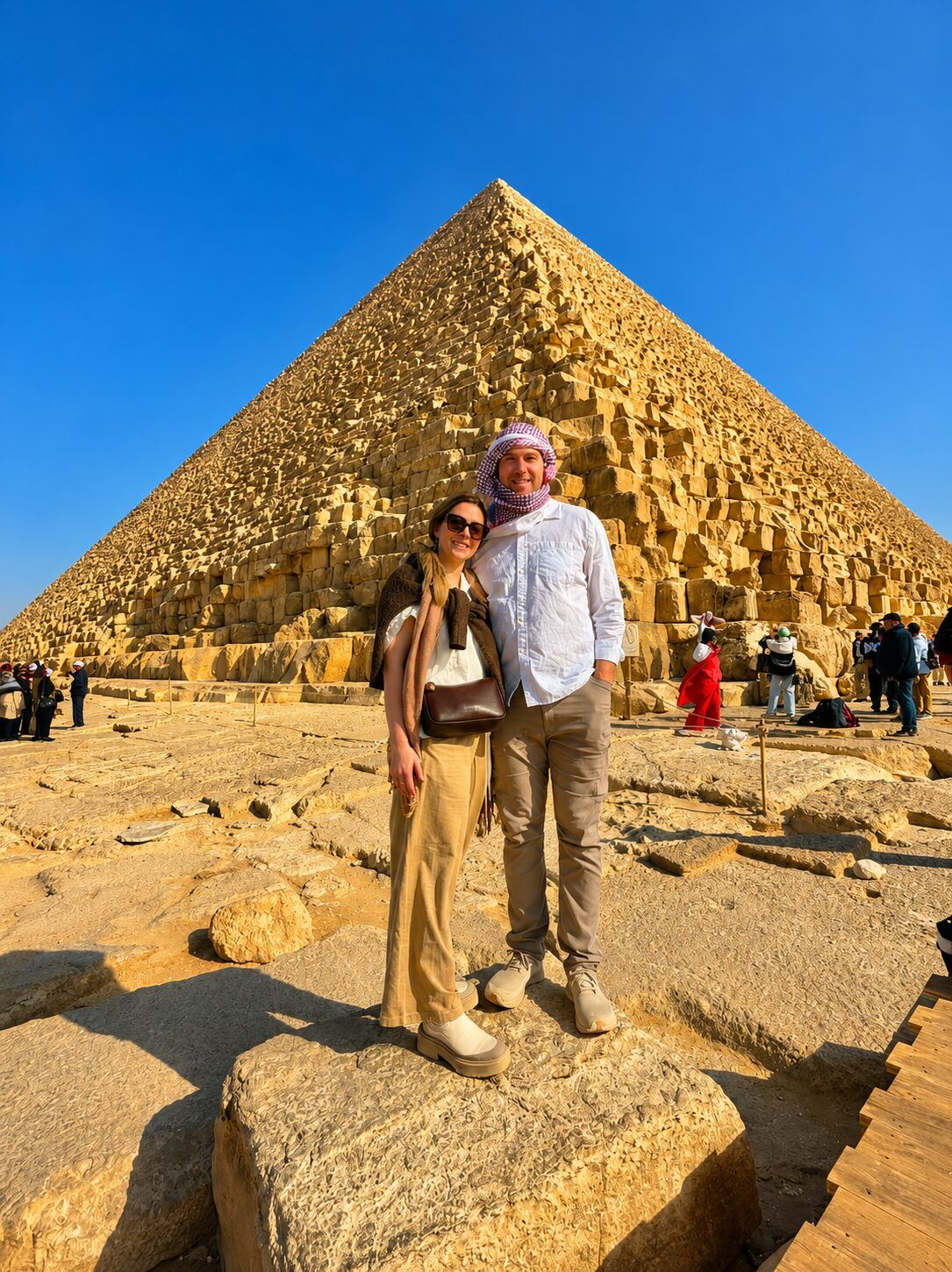
Known to the ancient Greeks as the Pyramid of Mykerinos, it was built more than 4,500 years ago as the royal tomb of Pharaoh Menkaure, the grandson of Khufu. Despite its smaller size, the pyramid showcases exceptional craftsmanship, including massive blocks of polished red granite that once covered much of its lower exterior.
Today, visitors are often surprised by how peaceful the area around Menkaure’s pyramid feels compared to its larger neighbors. The monument provides outstanding photography opportunities, fascinating archaeological discoveries, and a chance to appreciate one of the finest examples of Old Kingdom engineering.
Whether you are exploring the Giza Plateau for the first time or returning to discover every corner of Egypt’s most famous archaeological site, the Pyramid of Menkaure deserves a place on your itinerary.
Quick Facts About the Pyramid of Menkaure
| Feature | Details |
|---|---|
| Official Name | Pyramid of Menkaure |
| Greek Name | Pyramid of Mykerinos |
| Builder | Pharaoh Menkaure |
| Dynasty | Fourth Dynasty |
| Built Around | c. 2510 BCE |
| Location | Giza Plateau, Cairo, Egypt |
| Original Height | 65.5 meters (215 ft) |
| Current Height | Approximately 61 meters (200 ft) |
| Base Length | Approximately 102.2 meters (335 ft) |
| Main Materials | Limestone and Aswan Granite |
| UNESCO Status | Part of the Giza Necropolis World Heritage Site |
Who Was Pharaoh Menkaure?
Pharaoh Menkaure ruled Egypt during the later years of the Fourth Dynasty and was the son of Pharaoh Khafre and the grandson of Pharaoh Khufu.
Although fewer historical records survive from his reign, Menkaure has earned a reputation in ancient traditions as a fair and respected ruler.
His pyramid may be smaller than those of his predecessors, but it reflects a shift toward refined craftsmanship rather than sheer scale.
Several beautifully carved statues discovered in his valley temple show Menkaure standing alongside the goddess Hathor and regional deities. These masterpieces are considered among the finest examples of Old Kingdom sculpture and provide valuable insight into royal art and religion.
Table: Pharaoh Menkaure at a Glance
| Fact | Information |
|---|---|
| Royal Name | Menkaure |
| Greek Name | Mykerinos |
| Dynasty | Fourth Dynasty |
| Father | Pharaoh Khafre |
| Grandfather | Pharaoh Khufu |
| Reign | Approximately 18–28 years (estimated) |
| Famous Monument | Pyramid of Menkaure |
Why Was the Pyramid Built?
Like the pyramids built before it, the Pyramid of Menkaure was designed as a royal tomb and a monument celebrating the king’s eternal life.
Ancient Egyptians believed that death marked the beginning of another existence. To ensure a successful journey into the afterlife, the pharaoh required a carefully planned funerary complex that included:
- A pyramid
- A mortuary temple
- A valley temple
- A ceremonial causeway
- Satellite pyramids
- Burial equipment and religious offerings
The pyramid symbolized the sacred mound from which creation began and served as a staircase connecting the king with the gods.
Table: Purpose of the Pyramid
| Purpose | Explanation |
|---|---|
| Royal Tomb | Final resting place of Pharaoh Menkaure |
| Religious Symbol | Represented rebirth and eternal life |
| Royal Monument | Demonstrated the power of the Egyptian king |
| Funerary Complex | Center of burial ceremonies and daily offerings |
Construction of the Pyramid
Construction began around 2510 BCE on the southern side of the Giza Plateau.
Unlike the Great Pyramid and the Pyramid of Khafre, Menkaure’s pyramid incorporated an impressive combination of white limestone and red Aswan granite.
The lower courses of the pyramid were covered with carefully polished granite blocks, some of which remain visible today.
The upper sections were originally finished with smooth white limestone casing stones, giving the monument a striking two-tone appearance.
Although Menkaure died before the pyramid was completely finished, his successors completed much of the associated funerary complex.
Table: Construction Facts
| Feature | Details |
|---|---|
| Main Core | Local limestone |
| Lower Exterior | Red Aswan granite |
| Upper Exterior | White Tura limestone |
| Construction Period | Around the late Fourth Dynasty |
| Estimated Workforce | Skilled laborers and craftsmen |
Architecture and Design
Despite its modest size, the Pyramid of Menkaure demonstrates outstanding architectural precision.
Its square base is carefully aligned with the cardinal directions, while its smooth triangular sides originally created an elegant geometric form.
The pyramid was designed with:
- A descending entrance passage.
- Interior chambers.
- Granite-lined burial chamber.
- Complex temple system.
- Three satellite pyramids nearby.
Its proportions differ slightly from those of Khufu and Khafre, showing how pyramid design evolved during the Fourth Dynasty.
Table: Pyramid Dimensions
| Measurement | Size |
|---|---|
| Original Height | 65.5 m |
| Current Height | Approximately 61 m |
| Base Length | 102.2 m |
| Base Area | Approximately 10,445 m² |
| Estimated Volume | About 235,000 m³ |
| Pyramid Slope | Approximately 51° |
The Beautiful Granite Casing
One of the Pyramid of Menkaure’s most distinctive features is its granite casing.
Instead of covering the entire pyramid with limestone, builders used massive blocks of red granite imported from Aswan, located more than 800 kilometers (500 miles) south of Giza.
Transporting these stones across the Nile and then overland to the construction site required extraordinary organization and engineering skill.
Many of these granite blocks remain in place today, making Menkaure’s pyramid unique among the three main pyramids at Giza.
Table: Original Appearance vs Today
| Feature | Around 2510 BCE | Today |
|---|---|---|
| Upper Exterior | White polished limestone | Mostly weathered limestone |
| Lower Exterior | Smooth red granite | Many original granite blocks remain |
| Pyramidion | Present | Missing |
| Overall Appearance | Bright two-tone pyramid | Weathered but distinctive |
Amazing Facts About the Pyramid of Menkaure
Although smaller than its neighboring pyramids, Menkaure’s pyramid has several remarkable characteristics.
- It is the smallest of the three main pyramids at Giza.
- It features red granite casing, unlike the other pyramids.
- Three smaller queens’ pyramids stand nearby.
- It forms part of a complete royal funerary complex.
- Its valley temple produced some of the finest royal statues from Ancient Egypt.
- It remains one of the least crowded monuments on the Giza Plateau.
Table: Comparison of the Three Great Pyramids
| Pyramid | Builder | Original Height | Base Length |
|---|---|---|---|
| Great Pyramid of Khufu | Khufu | 146.6 m | 230.4 m |
| Pyramid of Khafre | Khafre | 143.5 m | 215.5 m |
| Pyramid of Menkaure | Menkaure | 65.5 m | 102.2 m |
Why Visit the Pyramid of Menkaure?
Many travelers overlook the Pyramid of Menkaure because of its smaller size, but those who visit often discover one of the most rewarding parts of the Giza Plateau.
Its preserved granite casing, quieter surroundings, and beautifully planned funerary complex offer a different perspective on Ancient Egypt. The monument demonstrates that greatness is not measured only by size but also by craftsmanship, innovation, and historical importance.
Whether you’re interested in archaeology, architecture, photography, or simply experiencing one of Egypt’s most remarkable landmarks, the Pyramid of Menkaure provides an unforgettable journey into the final chapter of the Fourth Dynasty’s pyramid-building tradition.
Inside the Pyramid of Menkaure – Exploring Egypt’s Third Great Pyramid
Focus Keyword: Inside the Pyramid of Menkaure
Secondary Keywords: Menkaure Pyramid Interior, Pyramid of Mykerinos, Menkaure Burial Chamber, Third Pyramid of Giza, Giza Pyramids
Stepping Inside the Pyramid of Menkaure
While the Great Pyramid of Khufu attracts the largest crowds and the Pyramid of Khafre impresses visitors with its preserved casing stones, the Pyramid of Menkaure offers a quieter and more intimate experience.
Entering the smallest of the three great pyramids allows visitors to appreciate the evolution of pyramid architecture during Egypt’s Fourth Dynasty. Although its interior is less complex than that of Khufu’s pyramid, it contains several remarkable architectural features and tells the fascinating story of one of Egypt’s last great pyramid builders.
Walking through its narrow corridors, ancient chambers, and burial rooms is like stepping back more than 4,500 years into the world of the pharaohs.
Can You Go Inside the Pyramid of Menkaure?
Yes.
Visitors can enter the Pyramid of Menkaure when it is open to the public and with the appropriate admission ticket. Interior access is occasionally restricted for conservation or maintenance, so it’s always best to check current conditions before your visit.
Compared with the Great Pyramid, the journey inside Menkaure’s pyramid is shorter and generally less physically demanding.
Visitors should still expect:
- Narrow corridors.
- Low ceilings.
- Warm temperatures.
- Uneven walking surfaces.
Comfortable shoes are highly recommended.
Table: Visitor Information
| Feature | Details |
|---|---|
| Interior Access | Available when open with the appropriate ticket |
| Average Visit Time | 20–30 minutes |
| Walking Difficulty | Moderate |
| Claustrophobic Areas | Yes |
| Photography | Subject to current regulations |
| Suitable for Children | Yes, with adult supervision |
The Entrance
Like many royal pyramids of the Old Kingdom, the entrance to the Pyramid of Menkaure is located on the north face.
From here, visitors descend through an ancient passage cut into limestone before reaching the pyramid’s internal chambers.
Although the entrance appears simple, it reflects the careful planning and engineering skills of ancient Egyptian builders.
The route follows a logical sequence designed to protect the royal burial chamber while supporting the enormous weight of the monument above.
The Descending Passage
After entering, visitors move through a descending limestone corridor leading toward the lower chambers.
This passage features:
- Smooth limestone walls.
- Carefully shaped ceiling blocks.
- Gentle downward slope.
- Original stone masonry preserved in many sections.
Unlike later royal tombs in the Valley of the Kings, there are no painted walls or hieroglyphics.
Instead, the focus is entirely on structural design.
Table: Descending Passage Facts
| Feature | Details |
|---|---|
| Direction | Downward toward the burial chambers |
| Material | Limestone |
| Ceiling | Low |
| Lighting | Modern artificial lighting |
| Original Purpose | Access to the king’s burial chamber |
The Antechamber
Before reaching the burial chamber, visitors pass through an antechamber.
This intermediate room likely played an important role during royal burial ceremonies.
Archaeologists believe it served as a transition space separating the entrance passages from the king’s final resting place.
Its simple appearance reflects the architectural traditions of the Fourth Dynasty, where functionality was prioritized over decoration.
The Burial Chamber
The burial chamber is the heart of the Pyramid of Menkaure.
Unlike the larger chambers inside the Great Pyramid, Menkaure’s burial room feels more intimate.
Originally, it contained one of the most remarkable royal sarcophagi ever discovered in Egypt.
The chamber itself includes:
- Massive limestone construction.
- Granite architectural elements.
- Vaulted ceiling sections.
- Carefully engineered structural support.
Standing inside the chamber provides an unforgettable sense of connection with Ancient Egypt.
Table: Burial Chamber Highlights
| Feature | Description |
|---|---|
| Chamber Type | Royal Burial Chamber |
| Main Material | Limestone |
| Ceiling Style | Stone vaulting |
| Decorations | None |
| Historical Purpose | Final resting place of Pharaoh Menkaure |
The Famous Basalt Sarcophagus
One of the Pyramid of Menkaure’s greatest treasures was its magnificent basalt sarcophagus.
Discovered in the 19th century by British officer Richard William Howard Vyse, the beautifully carved coffin featured decorative palace-façade panels unlike those found in earlier pyramids.
Unfortunately, tragedy struck during its journey to Britain.
The ship transporting the sarcophagus, the Beatrice, sank in the Mediterranean Sea in 1838, and the sarcophagus has never been recovered.
Today, it remains one of archaeology’s greatest lost treasures.
Table: The Lost Sarcophagus
| Feature | Details |
|---|---|
| Material | Basalt |
| Discovered By | Richard William Howard Vyse |
| Discovery Year | 1837 |
| Intended Destination | British Museum |
| Fate | Lost at sea in 1838 after the ship Beatrice sank |
| Current Location | Never recovered |
The Wooden Coffin
Excavators also discovered a beautifully decorated wooden anthropoid coffin bearing the name of Menkaure.
However, modern research indicates that this coffin dates to the Late Period, long after Menkaure’s reign, suggesting it was placed inside during a later reburial or restoration effort.
The skeletal remains found with it also belong to a later period rather than the Fourth Dynasty.
These discoveries remind us that ancient monuments were often reused and restored over thousands of years.
Table: Important Discoveries
| Discovery | Significance |
|---|---|
| Basalt Sarcophagus | One of Egypt’s finest royal coffins (now lost) |
| Wooden Coffin | Later-period burial object |
| Human Remains | Date to a later historical period |
| Limestone Chambers | Preserve original Fourth Dynasty architecture |
Interior Architecture
Although smaller than the Great Pyramid, Menkaure’s pyramid demonstrates impressive architectural refinement.
Notable features include:
Precision Stonework
Large limestone blocks fit together with remarkable accuracy.
Structural Engineering
The chambers were designed to support thousands of tons of stone while maintaining long-term stability.
Simplicity
Like other Old Kingdom pyramids, the interior contains no painted decoration, emphasizing engineering rather than artistic display.
Comparing the Interior with the Other Pyramids
Each of the three pyramids offers a different experience.
Table: Interior Comparison
| Feature | Khufu | Khafre | Menkaure |
|---|---|---|---|
| Size | Largest | Medium | Smallest |
| Grand Gallery | Yes | No | No |
| Burial Chamber | Large granite chamber | Simple limestone chamber | Smaller limestone chamber |
| Sarcophagus | Granite | Granite | Basalt (lost) |
| Visit Time | 30–45 min | 20–30 min | 20–30 min |
| Physical Difficulty | Moderate–High | Moderate | Moderate |
Visitor Experience
Many travelers describe the Pyramid of Menkaure as the most peaceful pyramid to explore.
Because fewer visitors choose to enter, the interior often feels quieter than the larger pyramids.
Visitors appreciate:
- Shorter walking distance.
- Smaller crowds.
- Ancient atmosphere.
- Original stone architecture.
- Historical significance.
Combined with the nearby queens’ pyramids and temples, it provides an excellent opportunity to experience a less crowded side of the Giza Plateau.
Accessibility
Visitors should be aware of:
- Narrow passages.
- Low ceilings.
- Moderate slopes.
- Uneven stone floors.
Those with severe claustrophobia or significant mobility limitations may prefer to admire the monument from the exterior.
Table: Accessibility Guide
| Visitor Type | Recommendation |
|---|---|
| Families | ✅ Suitable |
| Children | ✅ With supervision |
| Seniors | ✅ Moderate walking required |
| Wheelchair Users | ❌ Interior not accessible |
| Claustrophobic Visitors | ⚠️ May find passages uncomfortable |
Photography Tips
Photography rules inside the pyramid may change over time.
Always follow the latest regulations issued by site staff.
For exterior photography, some of the best viewpoints include:
- The southern side of the pyramid.
- Panorama Point.
- The queens’ pyramids.
- The desert edge overlooking all three pyramids.
Morning and late afternoon provide the best natural lighting.
Why Enter the Pyramid of Menkaure?
Although it is the smallest of the three great pyramids, entering the Pyramid of Menkaure offers a unique perspective on Ancient Egyptian engineering and royal burial traditions.
The quiet atmosphere, fascinating archaeological discoveries, and remarkable history of its lost basalt sarcophagus make it one of the most rewarding monuments to explore on the Giza Plateau.
Coming Up in Part 3
In the next chapter, you’ll discover:
- The Queens’ Pyramids
- The Valley Temple
- The Mortuary Temple
- The Causeway
- Archaeological excavations
- Construction mysteries
- Best photography locations
- Hidden secrets of the Pyramid Complex
Table: Quick Visitor Checklist
| Item | Recommended |
|---|---|
| Comfortable Walking Shoes | ✅ |
| Water Bottle | ✅ (where permitted) |
| Camera | ✅ Exterior photography |
| Hat | ✅ |
| Sunscreen | ✅ |
| Egyptologist Guide | Highly Recommended |
| Morning Visit | Best experience |
| Allow 20–30 Minutes | Ideal for exploring the interior |
The Pyramid Complex, Queens’ Pyramids & Archaeological Discoveries
Focus Keyword: Pyramid of Menkaure
Secondary Keywords: Menkaure Pyramid Complex, Queens’ Pyramids of Giza, Valley Temple of Menkaure, Mortuary Temple, Giza Plateau, Ancient Egypt
Exploring the Pyramid Complex of Menkaure
The Pyramid of Menkaure is much more than a single pyramid. Like the pyramids of Khufu and Khafre, it was originally part of an impressive funerary complex designed to ensure the pharaoh’s successful journey into the afterlife.
Although smaller than the neighboring pyramid complexes, Menkaure’s complex is one of the most fascinating archaeological sites on the Giza Plateau. It includes royal temples, queens’ pyramids, a ceremonial causeway, and important archaeological discoveries that continue to provide valuable insight into Ancient Egyptian religion, architecture, and engineering.
Together, these monuments reveal how carefully every part of the king’s burial landscape was planned.
The Queens’ Pyramids
South of the main pyramid stand three smaller pyramids, commonly known as the Queens’ Pyramids or Satellite Pyramids.
Egyptologists believe these structures were built for royal women or served symbolic religious purposes connected with the king’s burial ceremonies.
Unlike the massive central pyramid, these smaller monuments demonstrate more varied construction techniques, with some featuring granite and limestone casing.
Although they receive fewer visitors, they are among the most interesting structures on the Giza Plateau.
Table: Queens’ Pyramids Overview
| Feature | Details |
|---|---|
| Number of Pyramids | Three |
| Location | South of Menkaure’s Pyramid |
| Purpose | Royal family burials and ceremonial functions |
| Construction Material | Limestone with granite elements |
| Period | Fourth Dynasty |
The Mortuary Temple
Situated on the eastern side of the Pyramid of Menkaure, the Mortuary Temple served as the religious center of the king’s funerary cult.
After Menkaure’s death, priests visited this temple daily to perform rituals, present offerings, and maintain the pharaoh’s eternal connection with the gods.
The temple originally contained:
- Offering halls
- Open courtyards
- Storerooms
- Chapels
- Priest quarters
Archaeological evidence suggests that parts of the temple were completed using mudbrick after Menkaure’s death, likely under the reign of his successor.
Table: Mortuary Temple Facts
| Feature | Description |
|---|---|
| Location | East of the Pyramid |
| Main Function | Daily funerary rituals |
| Original Material | Limestone |
| Later Additions | Mudbrick construction |
| Historical Importance | Religious center of Menkaure’s cult |
The Valley Temple
At the eastern end of the causeway stands the Valley Temple of Menkaure.
This remarkable building was the location where the king’s body was received before beginning the final journey toward the pyramid.
The Valley Temple is especially important because archaeologists discovered numerous statues of Pharaoh Menkaure there, including famous sculptures showing the king with the goddess Hathor and regional deities.
These masterpieces are considered some of the finest surviving sculptures from the Old Kingdom.
Table: Valley Temple Highlights
| Feature | Details |
|---|---|
| Builder | Pharaoh Menkaure |
| Purpose | Preparation of the royal burial |
| Famous Discoveries | Menkaure triad statues |
| Construction | Limestone with granite elements |
| Current Status | Archaeological site |
The Causeway
Connecting the Valley Temple to the Mortuary Temple was a long ceremonial causeway.
This covered roadway played an important role during royal funeral processions.
Ancient priests likely carried sacred objects and offerings along this route while performing religious ceremonies honoring the deceased king.
Although much of the original decoration has disappeared, the remaining foundations reveal the careful planning of the complex.
Table: Causeway Facts
| Feature | Description |
|---|---|
| Connected | Valley Temple & Mortuary Temple |
| Material | Limestone |
| Purpose | Ceremonial processions |
| Decoration | Relief carvings and painted scenes (largely lost) |
The Remarkable Menkaure Statues
One of the greatest archaeological discoveries associated with Menkaure is the collection of magnificent statues found in the Valley Temple.
These include:
- Menkaure standing with Queen Khamerernebty II.
- The famous Menkaure triads.
- Royal statues representing divine kingship.
Carved from exceptionally hard stone, these sculptures display remarkable artistic skill and provide valuable evidence about royal symbolism and religious beliefs during the Fourth Dynasty.
Many of these masterpieces are now displayed in museums, where they continue to attract scholars and visitors from around the world.
Table: Famous Statues of Menkaure
| Statue | Importance |
|---|---|
| Menkaure Triads | Represent the king with Hathor and regional deities |
| Menkaure and Queen | Symbol of royal partnership |
| Standing King Statues | Demonstrate Old Kingdom artistic perfection |
| Fragmentary Sculptures | Provide insight into royal workshops |
Archaeological Excavations
For centuries, the Pyramid of Menkaure attracted explorers seeking hidden treasures.
Scientific archaeology, however, transformed our understanding of the monument.
Major excavations uncovered:
- Temple foundations
- Granite architectural elements
- Workers’ tools
- Royal statues
- Pottery
- Burial equipment
These discoveries continue to improve our understanding of pyramid construction and religious life in Ancient Egypt.
Table: Major Archaeological Discoveries
| Discovery | Significance |
|---|---|
| Valley Temple Statues | Finest Old Kingdom sculptures |
| Granite Blocks | Evidence of advanced engineering |
| Temple Foundations | Reveal the original complex layout |
| Pottery | Information about daily life and rituals |
| Stone Tools | Insight into construction techniques |
Engineering and Construction
Despite being the smallest of the three great pyramids, Menkaure’s pyramid demonstrates remarkable engineering.
Ancient builders successfully transported enormous granite blocks from Aswan, more than 800 kilometers (500 miles) away.
The pyramid’s foundation was carefully leveled, and the structure was aligned with the cardinal directions with extraordinary accuracy.
Even after thousands of years, much of the original stonework remains stable.
Table: Engineering Achievements
| Achievement | Why It’s Important |
|---|---|
| Granite Transportation | Massive stones moved from Aswan to Giza |
| Precise Alignment | Closely aligned with the cardinal directions |
| Stable Foundation | Built directly on limestone bedrock |
| Durable Masonry | Survived over 4,500 years |
| Two-Tone Exterior | Unique combination of granite and limestone |
Best Photography Locations
The Pyramid of Menkaure offers excellent photography opportunities, especially because visitor numbers are often lower than around the Great Pyramid.
Top locations include:
South Side
Ideal for capturing the preserved granite casing.
Panorama Point
Excellent views of all three pyramids.
Queens’ Pyramids
Perfect for showing the scale of the complex.
Desert Edge
Provides dramatic panoramic photographs at sunset.
Table: Best Photography Spots
| Location | Best Time | Highlights |
|---|---|---|
| Panorama Point | Sunrise & Sunset | Three pyramids together |
| South Side | Afternoon | Granite casing blocks |
| Queens’ Pyramids | Morning | Complete funerary complex |
| Desert Edge | Sunset | Panoramic desert views |
| Eastern Side | Early Morning | Soft natural light |
Hidden Secrets of the Pyramid
Although much has been discovered, Menkaure’s pyramid still raises important questions.
Researchers continue studying:
- Construction techniques
- Unfinished granite casing
- Temple development
- Later restoration work
- Burial customs
Each archaeological season adds new information about one of Egypt’s most remarkable monuments.
Table: Mysteries That Continue to Fascinate Archaeologists
| Mystery | Current Understanding |
|---|---|
| Why was granite used extensively? | Possibly to emphasize prestige and durability |
| Why was part of the casing left unfinished? | Construction may have been interrupted by Menkaure’s death |
| What happened to the original burial equipment? | Likely removed in antiquity by tomb robbers |
| Why were later burials placed inside? | The pyramid was reused during later historical periods |
| Are there undiscovered features nearby? | Ongoing archaeological research continues |
Why the Pyramid Complex Matters
The Pyramid of Menkaure is more than a royal tomb—it represents the culmination of Fourth Dynasty pyramid building.
Its temples, statues, queens’ pyramids, and carefully planned layout illustrate the sophistication of Ancient Egyptian civilization and its enduring beliefs about kingship and the afterlife.
Visitors who take the time to explore the entire complex gain a richer understanding of the Giza Plateau beyond the Great Pyramid alone.
Complete Visitor Guide, Travel Tips, FAQs & Expert Advice
Focus Keyword: Pyramid of Menkaure
Secondary Keywords: Visit the Pyramid of Menkaure, Menkaure Pyramid Tickets, Third Pyramid of Giza, Giza Plateau Guide, Egypt Travel Guide
Planning Your Visit to the Pyramid of Menkaure
The Pyramid of Menkaure may be the smallest of the three great pyramids, but it offers one of the most rewarding experiences on the Giza Plateau. Its quieter atmosphere, distinctive granite casing, and fascinating archaeological discoveries make it a favorite among travelers who want to explore beyond the most crowded attractions.
A visit to Menkaure’s pyramid fits perfectly into a half-day or full-day tour of Giza, allowing you to experience all three pyramids, the Great Sphinx, the Valley Temple, and the spectacular panoramic viewpoints.
Whether you’re interested in history, architecture, photography, or archaeology, the Pyramid of Menkaure provides an unforgettable journey into Ancient Egypt.
How to Get There
The Pyramid of Menkaure is located on the southwestern side of the Giza Plateau, approximately 15–18 kilometers (9–11 miles) from central Cairo.
You can reach the site by:
- Private guided tour
- Taxi
- Ride-hailing apps
- Organized tour buses
For the best experience, many visitors choose a private tour that includes hotel pickup, transportation, and a licensed Egyptologist guide.
Table 1: Transportation Options
| Transportation | Comfort | Flexibility | Recommended For |
|---|---|---|---|
| Private Tour | ⭐⭐⭐⭐⭐ | ⭐⭐⭐⭐⭐ | Families, couples, luxury travelers |
| Taxi | ⭐⭐⭐⭐☆ | ⭐⭐⭐⭐☆ | Independent travelers |
| Ride-Hailing App | ⭐⭐⭐⭐☆ | ⭐⭐⭐⭐☆ | Budget-conscious visitors |
| Tour Bus | ⭐⭐⭐☆☆ | ⭐⭐☆☆☆ | Large groups |
Best Time to Visit
The Giza Plateau is open throughout the year, but weather conditions vary by season.
October to April
This is generally considered the best season for sightseeing because temperatures are pleasant and walking conditions are more comfortable.
Benefits include:
- Cooler weather
- Better visibility
- Comfortable exploration
- Excellent photography
May to September
Summer offers fewer crowds during some periods but significantly higher temperatures.
Morning visits are recommended to avoid the midday heat.
Table 2: Best Time to Visit
| Season | Weather | Crowd Level | Recommendation |
|---|---|---|---|
| October | Pleasant | Moderate | ⭐⭐⭐⭐⭐ |
| November | Mild | Moderate | ⭐⭐⭐⭐⭐ |
| December | Cool | High | ⭐⭐⭐⭐⭐ |
| January | Cool | High | ⭐⭐⭐⭐⭐ |
| February | Mild | High | ⭐⭐⭐⭐⭐ |
| March | Warm | Moderate | ⭐⭐⭐⭐☆ |
| April | Warm | Moderate | ⭐⭐⭐⭐☆ |
| May–September | Hot | Lower during some periods | ⭐⭐⭐☆☆ |
What Should You Wear?
Exploring the Giza Plateau involves walking on uneven surfaces under the Egyptian sun.
Recommended clothing includes:
- Comfortable walking shoes
- Lightweight breathable clothing
- Wide-brimmed hat
- Sunglasses
- Sunscreen
- Reusable water bottle (where permitted)
Modest clothing is appreciated when visiting cultural and historical sites.
Table 3: Visitor Checklist
| Item | Recommended |
|---|---|
| Comfortable Shoes | ✅ |
| Hat | ✅ |
| Sunglasses | ✅ |
| Sunscreen | ✅ |
| Camera | ✅ |
| Portable Charger | ✅ |
| Water Bottle | ✅ |
| Small Backpack | ✅ |
Photography Tips
The Pyramid of Menkaure provides exceptional photography opportunities, especially during the early morning and late afternoon.
Recommended photography locations include:
- Panorama Point
- South side of the pyramid
- Queens’ Pyramids
- Desert viewpoints
- Great Sphinx Plaza
The remaining granite casing blocks create unique images that distinguish Menkaure’s pyramid from its larger neighbors.
Table 4: Best Photography Locations
| Location | Best Time | Highlights |
|---|---|---|
| Panorama Point | Sunrise & Sunset | Three pyramids together |
| South Side | Afternoon | Original granite casing |
| Queens’ Pyramids | Morning | Entire funerary complex |
| Desert Edge | Sunset | Panoramic desert landscape |
| Great Sphinx Plaza | Morning | Menkaure with the Giza Plateau |
Nearby Attractions
The Pyramid of Menkaure is surrounded by many of Egypt’s most famous landmarks.
Visitors often combine it with:
- Great Pyramid of Khufu
- Pyramid of Khafre
- Great Sphinx of Giza
- Valley Temple of Khafre
- Grand Egyptian Museum
- Saqqara
- Memphis
A private guide can help you explore these attractions efficiently while providing historical context.
Table 5: Nearby Attractions
| Attraction | Distance | Suggested Visit Time |
|---|---|---|
| Great Pyramid of Khufu | About 800 m | 1–2 hours |
| Pyramid of Khafre | About 400 m | 45–60 minutes |
| Great Sphinx | About 900 m | 45 minutes |
| Valley Temple | About 900 m | 20–30 minutes |
| Grand Egyptian Museum | About 2 km | 2–4 hours |
| Saqqara | About 30 km | Half day |
| Memphis | About 35 km | 1–2 hours |
Expert Travel Tips
To make the most of your visit:
- Arrive early to enjoy cooler temperatures.
- Allow time to explore the queens’ pyramids.
- Wear sturdy walking shoes.
- Bring a camera with extra battery power.
- Consider hiring a licensed Egyptologist guide.
- Respect all archaeological site regulations.
Table 6: Expert Tips
| Tip | Benefit |
|---|---|
| Visit Early | Cooler temperatures and fewer crowds |
| Explore the Entire Complex | Better understanding of Ancient Egyptian funerary architecture |
| Hire a Guide | Rich historical explanations |
| Stay Hydrated | Essential during warm weather |
| Visit Panorama Point | Outstanding views of all three pyramids |
Frequently Asked Questions
Can visitors enter the Pyramid of Menkaure?
Yes. Interior access is available with the appropriate ticket when the pyramid is open to visitors.
Why is the Pyramid of Menkaure smaller?
It was intentionally built on a smaller scale than the pyramids of Khufu and Khafre, though the exact reasons remain uncertain. It still reflects exceptional engineering and craftsmanship.
What makes Menkaure’s pyramid unique?
It is famous for its red granite casing, quieter surroundings, and the remarkable statues discovered in its Valley Temple.
How much time should I spend there?
Most visitors spend 45–90 minutes exploring the pyramid and its surrounding complex. If entering the interior, allow approximately 1.5 hours.
Is it worth visiting if I’ve already seen the Great Pyramid?
Absolutely. Menkaure’s pyramid offers different architectural features, fewer crowds, and valuable archaeological insights.
Is photography allowed?
Photography is generally allowed in outdoor areas. Interior photography depends on current site regulations.
Is the pyramid suitable for children?
Yes. Families often enjoy the quieter atmosphere and shorter walking distances.
Table 7: Fast Facts
| Feature | Information |
|---|---|
| Builder | Pharaoh Menkaure |
| Dynasty | Fourth Dynasty |
| Original Height | 65.5 meters |
| Current Height | Approximately 61 meters |
| Base Length | 102.2 meters |
| Material | Limestone & Aswan Granite |
| Age | Around 4,500 years |
| UNESCO Status | Part of the Giza Necropolis |
Table 8: Why Visit the Pyramid of Menkaure?
| Reason | Experience |
|---|---|
| Ancient History | Discover the final royal pyramid of the Fourth Dynasty |
| Architecture | Admire the unique granite casing |
| Photography | Capture beautiful panoramic views |
| Smaller Crowds | Enjoy a more relaxed experience |
| Archaeology | Explore one of Egypt’s most fascinating pyramid complexes |
Table 9: Suggested Half-Day Giza Itinerary
| Time | Activity |
|---|---|
| 8:00 AM | Arrive at the Giza Plateau |
| 8:15 AM | Great Pyramid of Khufu |
| 9:15 AM | Pyramid of Khafre |
| 10:00 AM | Pyramid of Menkaure |
| 10:45 AM | Queens’ Pyramids |
| 11:15 AM | Great Sphinx |
| 12:00 PM | Valley Temple |
| 12:45 PM | Panorama Point & Photos |
Table 10: Compare the Three Great Pyramids
| Feature | Khufu | Khafre | Menkaure |
|---|---|---|---|
| Original Height | 146.6 m | 143.5 m | 65.5 m |
| Base Length | 230.4 m | 215.5 m | 102.2 m |
| Distinctive Feature | Largest pyramid | Original casing stones near the summit | Red granite casing |
| Builder | Khufu | Khafre | Menkaure |
| Built Around | c. 2580 BCE | c. 2558 BCE | c. 2510 BCE |
Final Thoughts
Although it is often overshadowed by its larger neighbors, the Pyramid of Menkaure offers a unique perspective on Ancient Egypt. Its elegant proportions, surviving granite casing, impressive funerary complex, and important archaeological discoveries make it one of the hidden highlights of the Giza Plateau.
For travelers seeking a deeper understanding of Egypt’s pyramid-building era, Menkaure’s pyramid provides the perfect combination of history, architecture, and atmosphere. Exploring the entire complex reveals how royal monuments evolved while preserving the timeless beliefs that shaped one of the world’s greatest civilizations.
Ready to Discover the Pyramid of Menkaure?
Experience the Giza Plateau with Let’s Explore Egypt and uncover the fascinating history of the Pyramid of Menkaure alongside the Great Pyramid, the Pyramid of Khafre, and the Great Sphinx.
Why Choose Let’s Explore Egypt?
- 🏛️ Licensed Egyptian Tour Operator
- 👨🏫 Professional Egyptologist Guides
- 🚗 Private Air-Conditioned Transportation
- 📸 Plenty of Time for Photography
- 🌅 Flexible Sunrise & Sunset Tours
- 👨👩👧 Personalized Private Experiences
- 💬 24/7 WhatsApp Support
- ⭐ Trusted by Travelers from Around the World
Book your private Giza Pyramids tour today and explore the Pyramid of Menkaure with local experts who bring Ancient Egypt to life.
Get in Touch
📱 WhatsApp: +20 1203233365
📧 Email: info@lets-explore-egypt.com
🌐 Website: www.lets-explore-egypt.com
Recommended Egypt Tours
Why You Can Trust Let's Explore Egypt
This article was written and reviewed by the Let's Explore Egypt Editorial Team, a licensed Egyptian tour operator specializing in private Egypt tours, Nile cruises, and tailor-made travel experiences since 2009.
- 🏛 Licensed Egyptian Tour Operator Since 2009
- ⭐ Trusted by Thousands of Travelers Worldwide
- 👨🏫 Written & Reviewed by Local Egypt Travel Experts
- 🚐 Private Tours & Tailor-Made Travel Experiences
- 📞 24/7 Customer Support