

Inside the Great Pyramid of Giza: A Journey into the Last Wonder of the Ancient World
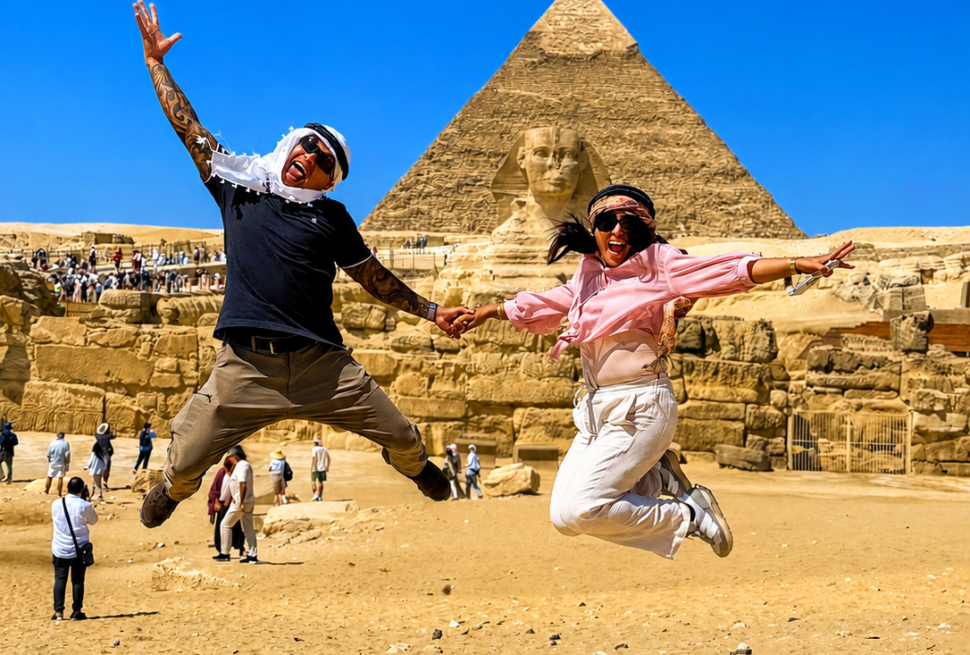
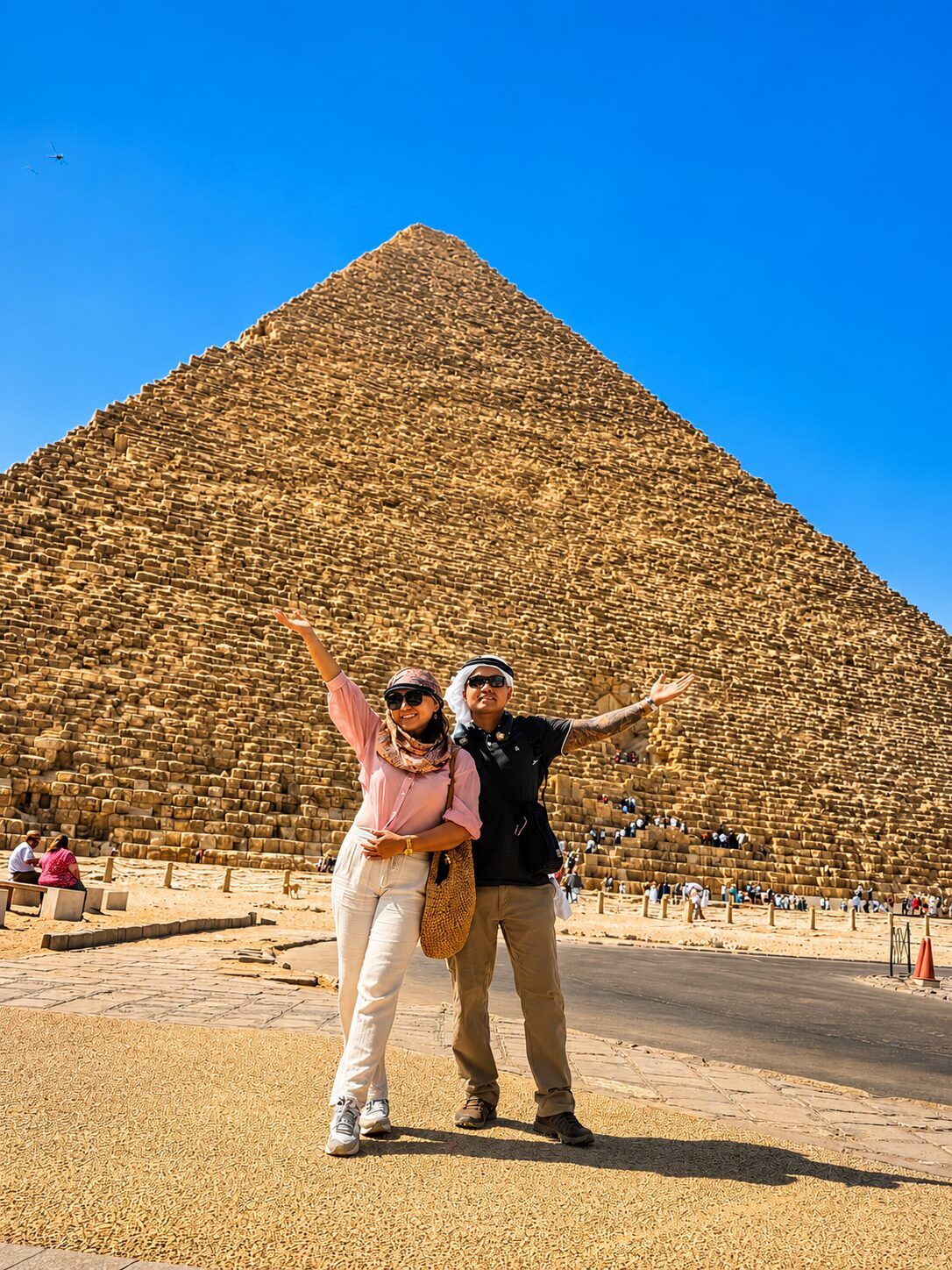
Standing before the Great Pyramid of Giza is an unforgettable experience. Rising from the desert sands on the Giza Plateau, this monumental structure has inspired wonder for more than 4,500 years. As the largest pyramid ever built in ancient Egypt, it remains the only surviving Wonder of the Ancient World, attracting millions of visitors each year.
While admiring its massive limestone blocks from the outside is impressive, stepping inside the Great Pyramid of Giza is an entirely different experience. Walking through its narrow passages, climbing the remarkable Grand Gallery, and standing inside the King’s Chamber allows travelers to connect with one of humanity’s greatest engineering achievements.
Unlike many archaeological sites where only ruins remain, the Great Pyramid still preserves much of its original internal design. Every corridor, chamber, and stone tells a story about the ambitions of Pharaoh Khufu and the extraordinary skills of the ancient Egyptians.
Whether you’re planning your first visit to Egypt or returning to explore more deeply, this guide will explain everything you need to know about the Great Pyramid—from its fascinating history and construction to what you’ll actually see inside.
The Great Pyramid at a Glance
| Feature | Details |
|---|---|
| Official Name | Great Pyramid of Khufu |
| Egyptian Name | Pyramid of Khufu (Cheops) |
| Location | Giza Plateau, Cairo, Egypt |
| Built Around | 2580–2560 BCE |
| Age | Approximately 4,500 years |
| Height (Original) | 146.6 meters (481 feet) |
| Height (Today) | Approximately 138.8 meters (455 feet) |
| Base Length | About 230 meters (756 feet) on each side |
| Original Purpose | Royal Tomb |
| UNESCO Status | World Heritage Site |
Why the Great Pyramid Is So Famous
The Great Pyramid is more than an ancient monument—it represents one of the greatest achievements in human history.
For nearly 3,800 years, it was the tallest man-made structure on Earth. Not until the completion of medieval cathedrals did any building surpass its height.
Even today, modern engineers continue to study its remarkable precision. The pyramid’s sides are aligned almost perfectly with the cardinal directions, and its construction demonstrates an extraordinary understanding of mathematics, surveying, and architecture.
Its influence extends far beyond archaeology. The Great Pyramid has inspired artists, architects, historians, scientists, and travelers for centuries, making it one of the most recognizable landmarks in the world.
Who Built the Great Pyramid?
The Great Pyramid was built during Egypt’s Fourth Dynasty for Pharaoh Khufu, who ruled during the Old Kingdom.
Khufu inherited a tradition of pyramid building established by earlier kings, but his project exceeded anything attempted before. His architects transformed the concept of a royal tomb into the largest stone monument ever constructed.
Although Khufu remains somewhat mysterious compared with other famous pharaohs, his pyramid ensured that his name would be remembered throughout history.
Archaeological discoveries near the Giza Plateau—including workers’ villages, bakeries, workshops, and cemeteries—show that the pyramid was built by a large, organized workforce rather than enslaved people, as popular myths have often claimed. Skilled laborers, craftsmen, engineers, and seasonal workers all contributed to this monumental project.
Why Was the Great Pyramid Built?
To understand the pyramid, it’s important to understand ancient Egyptian beliefs.
The Egyptians believed that life continued after death. A pharaoh was considered both a king and a divine figure whose spirit would live on in the afterlife.
The Great Pyramid served several purposes:
- A royal tomb for Pharaoh Khufu.
- A symbol of divine kingship.
- A monument demonstrating the wealth and power of the Egyptian state.
- Part of a larger funerary complex that included temples, causeways, satellite pyramids, and cemeteries.
The pyramid was designed not only to protect the king’s burial but also to support his spiritual journey into the afterlife.
An Engineering Marvel
The scale of the Great Pyramid continues to amaze visitors.
Construction is estimated to have required approximately 2.3 million stone blocks, with most weighing between 2 and 15 tons. Some granite blocks used in the King’s Chamber weigh significantly more.
Despite this enormous size, the builders achieved an astonishing level of accuracy.
Some of the pyramid’s remarkable characteristics include:
- Nearly perfect alignment with true north.
- Extremely level foundation.
- Precisely fitted limestone blocks.
- Sophisticated internal passage system.
- Advanced structural techniques that have helped the monument survive thousands of years.
These achievements were accomplished without modern machinery, steel tools, or computer technology.
How Was the Great Pyramid Built?
One of the most frequently asked questions is:
“How did the ancient Egyptians build such a massive structure?”
Although archaeologists continue to debate certain details, most agree on several key points.
Quarrying the Stone
Most of the limestone used for the pyramid came from quarries near the Giza Plateau, reducing the distance needed for transportation.
The finer white limestone casing stones, which originally covered the pyramid’s exterior, were brought from Tura on the eastern side of the Nile. Granite for the King’s Chamber came from Aswan, hundreds of kilometers to the south.
Transportation
Workers likely transported stone blocks using wooden sledges over prepared pathways.
Recent archaeological evidence suggests that wetting the sand in front of the sledges reduced friction, making it easier to move heavy loads.
Boats also played a crucial role in transporting stone along the Nile during the annual flood season.
Construction Ramps
The exact design of the ramps used to lift stones remains uncertain.
Several theories include:
- Straight ramps.
- Zigzag ramps.
- Spiral ramps.
- Internal ramp systems.
It is possible that different methods were used at various stages of construction.
Skilled Workforce
Contrary to popular belief, the builders were not armies of enslaved people.
Excavations have revealed organized workers’ settlements with housing, bakeries, breweries, medical care, and burial grounds.
This evidence suggests a highly organized workforce supported by the Egyptian state.
Amazing Facts About the Great Pyramid
The Great Pyramid is full of fascinating records and achievements.
It Was Once Covered in White Limestone
Originally, the pyramid was encased in polished white limestone that reflected sunlight brilliantly.
From a distance, it would have appeared almost glowing against the desert landscape.
Most of these casing stones were removed during later centuries for use in construction projects around Cairo.
It Once Had a Golden Pyramidion
Many historians believe the pyramid was crowned with a capstone known as a pyramidion, possibly covered in electrum—a natural alloy of gold and silver—which would have shone brightly in the sun.
Although the original pyramidion has not survived, similar examples from later pyramids provide insight into what it may have looked like.
It Is Incredibly Precise
Despite its immense size, the Great Pyramid’s base is remarkably level, with only minimal variation across its four sides.
Its alignment with the cardinal directions is so accurate that modern surveyors continue to admire the precision achieved by ancient Egyptian builders.
It Contains No Hieroglyphic Decoration
Unlike many later royal tombs, the interior of the Great Pyramid is largely undecorated.
Visitors expecting walls covered in colorful hieroglyphics are often surprised to find plain stone passages and chambers.
This simplicity adds to the monument’s mystery and grandeur.
What Does the Pyramid Look Like Today?
Although thousands of years have passed, the Great Pyramid remains an imposing sight.
Visitors today can still appreciate:
- Its immense limestone core blocks.
- The surviving casing stones near the base in some areas.
- The original entrance high on the north face.
- The modern entrance used by visitors.
- The surrounding funerary complex.
Nearby, you’ll also find:
- The Pyramid of Khafre.
- The Pyramid of Menkaure.
- The Great Sphinx.
- The Queens’ Pyramids.
- Ancient mastaba tombs.
- The remains of mortuary temples.
Together, these monuments form one of the world’s most significant archaeological landscapes.
Why Visiting the Inside Is So Special
Many travelers assume that seeing the Great Pyramid from the outside is enough.
However, entering the monument offers a completely different perspective.
Inside, you’ll walk through narrow stone passages that have remained largely unchanged since antiquity. You’ll experience the steep ascent of the Grand Gallery, admire the precision of the ancient masonry, and stand in the King’s Chamber—a space that has fascinated explorers, historians, and archaeologists for centuries.
The atmosphere inside is unlike any museum or reconstructed site. The cool stone walls, the echoes within the chambers, and the awareness that you’re standing inside the oldest surviving Wonder of the Ancient World create an unforgettable experience.
Great Pyramid Quick Facts
| Feature | Details |
|---|---|
| Official Name | Great Pyramid of Khufu |
| Built Around | 2580–2560 BCE |
| Age | Approximately 4,500 years |
| Original Height | 146.6 m (481 ft) |
| Current Height | 138.8 m (455 ft) |
| Base Length | 230.4 m (756 ft) |
| Original Casing | Polished Tura limestone |
| UNESCO Status | World Heritage Site |
| Ancient Wonder | Only surviving Wonder of the Ancient World |
| Location | Giza Plateau, Cairo, Egypt |
Timeline of the Great Pyramid
| Date | Event |
|---|---|
| c. 2580 BCE | Construction begins during Khufu’s reign |
| c. 2560 BCE | Great Pyramid completed |
| c. 2500 BCE | Giza Pyramid Complex fully developed |
| 1979 | Giza Necropolis designated a UNESCO World Heritage Site |
| Today | One of the world’s most visited archaeological sites |
Construction Statistics
| Item | Estimate |
|---|---|
| Stone Blocks | About 2.3 million |
| Average Block Weight | 2–15 tons |
| Granite Blocks | Up to 70 tons |
| Construction Period | Approximately 20 years |
| Workforce | Thousands of skilled laborers and seasonal workers |
Why the Great Pyramid Was Built
| Purpose | Explanation |
|---|---|
| Royal Tomb | Burial place of Pharaoh Khufu |
| Symbol of Power | Demonstrated the pharaoh’s authority |
| Religious Significance | Supported the king’s journey to the afterlife |
| Engineering Achievement | Showcased advanced architectural knowledge |
| National Legacy | Reinforced Egypt’s strength and stability |
Great Pyramid vs Modern Landmarks
| Structure | Height |
|---|---|
| Great Pyramid (Original) | 146.6 m |
| Statue of Liberty | 93 m |
| Big Ben (Elizabeth Tower) | 96 m |
| Leaning Tower of Pisa | 57 m |
| Eiffel Tower | 330 m |
Fun Facts Box
| Did You Know? | |
|---|---|
| 🏛️ | The Great Pyramid was the tallest man-made structure on Earth for nearly 3,800 years. |
| 📐 | Its sides are aligned extremely closely with the cardinal directions. |
| 🌍 | It is the only surviving Wonder of the Ancient World. |
| 🪨 | It contains about 2.3 million stone blocks. |
| ☀️ | It was once covered in smooth white limestone that reflected sunlight brilliantly. |
Exploring Inside the Great Pyramid of
Stepping Inside the Great Pyramid
Standing outside the Great Pyramid is impressive, but crossing its entrance is an entirely different experience. The noise of the Giza Plateau quickly fades, replaced by cool air, narrow stone corridors, and a sense of history unlike anywhere else in the world.
Every passage inside the pyramid was carefully designed over 4,500 years ago. Unlike Egyptian temples filled with colorful carvings and hieroglyphics, the interior of the Great Pyramid is surprisingly simple. Massive limestone and granite blocks dominate the space, emphasizing the monument’s engineering rather than decoration.
For many visitors, walking through these passages is the highlight of their trip to Egypt.
Can You Go Inside the Great Pyramid?
Yes. Visitors can enter the Great Pyramid with a separate interior ticket in addition to admission to the Giza Plateau. Availability, opening hours, and ticket policies may change, so it’s a good idea to check the latest official information before your visit.
Unlike the exterior, which can be admired by anyone entering the plateau, access to the interior is controlled to help preserve the monument and manage visitor numbers.
The route inside is straightforward, but it requires climbing steep wooden walkways and moving through narrow passages.
The Original Entrance
The original entrance to the Great Pyramid is located on the north face, approximately 17 meters (56 feet) above ground level.
Ancient builders carefully concealed this entrance behind the smooth white limestone casing that once covered the pyramid.
For centuries, it remained hidden from the outside.
Today, visitors can still see its location high above the modern entrance, although it is no longer used for public access.
The Modern Entrance
The entrance used by visitors today was created in the 9th century CE during the reign of the Abbasid Caliph Al-Ma’mun.
According to historical accounts, Al-Ma’mun hoped to discover hidden treasures inside the pyramid.
His workers tunneled through the limestone until they accidentally connected with the original internal passage system.
Although no royal treasures were found, this tunnel became the entrance still used by visitors today.
Walking through Al-Ma’mun’s tunnel is the first stage of every visit inside the Great Pyramid.
The Descending Passage
After entering, visitors encounter the Descending Passage, one of the oldest sections of the pyramid.
This narrow corridor:
- Slopes downward at an angle of about 26 degrees.
- Is approximately 1.2 meters high.
- Was carved directly into the bedrock beneath the pyramid.
The passage originally led toward an unfinished underground chamber.
Many archaeologists believe this chamber may have been part of the original construction plan before the burial chambers were moved higher inside the pyramid.
Today, most visitors briefly view the beginning of the descending passage before continuing toward the ascending route.
The Ascending Passage
The Ascending Passage branches upward from the descending corridor.
This steep, narrow tunnel leads toward the pyramid’s main interior spaces.
Visitors often notice:
- Smooth limestone walls.
- Low ceilings requiring many people to bend slightly.
- Wooden steps installed to make climbing easier.
- Warm temperatures due to limited ventilation.
Although the climb is relatively short, it can feel physically demanding because of the steep angle and confined space.
For travelers with mobility issues or severe claustrophobia, this section may be challenging.
The Grand Gallery
One of the most breathtaking spaces inside the Great Pyramid is the Grand Gallery.
After climbing through the ascending passage, visitors suddenly emerge into this spectacular corridor.
The Grand Gallery measures approximately:
- Length: 47 meters (154 feet)
- Height: 8.6 meters (28 feet)
Unlike the narrow tunnels below, the Grand Gallery feels surprisingly spacious.
Its walls rise in seven overlapping layers of precisely cut limestone blocks, creating a distinctive corbelled design that narrows toward the ceiling.
Many engineers consider it one of the greatest architectural achievements of the ancient world.
Why Is the Grand Gallery So Impressive?
The Grand Gallery demonstrates the extraordinary skill of ancient Egyptian builders.
Its design combines beauty and engineering.
Features include:
Corbelled Walls
Instead of building straight vertical walls, the builders gradually stepped each stone layer inward.
This reduced pressure while creating an elegant visual effect.
Perfect Stonework
Many limestone blocks fit together with astonishing precision.
Even after thousands of years, the gallery remains remarkably stable.
Steep Incline
The gallery continues upward toward the King’s Chamber, creating a dramatic sense of anticipation as visitors climb higher into the monument.
The Queen’s Chamber
Halfway through the upper section of the pyramid lies the Queen’s Chamber.
Despite its name, archaeologists do not believe a queen was ever buried here.
The chamber features:
- A pointed limestone ceiling.
- Symmetrical design.
- A mysterious wall niche.
- Two narrow shafts leading toward the pyramid’s exterior—or nearly so, depending on current interpretations.
The true purpose of the Queen’s Chamber remains uncertain.
Some scholars believe it had religious significance rather than serving as a burial chamber.
Others suggest it formed part of the pyramid’s symbolic design related to the pharaoh’s journey into the afterlife.
The King’s Chamber
The highlight of every visit inside the Great Pyramid is the King’s Chamber.
Located near the center of the monument, this remarkable room was constructed entirely from massive blocks of red granite transported from Aswan, more than 800 kilometers (500 miles) south of Giza.
Dimensions:
- Length: Approximately 10.5 meters
- Width: Approximately 5.2 meters
- Height: Approximately 5.8 meters
The chamber feels surprisingly simple.
There are:
- No hieroglyphics.
- No painted walls.
- No statues.
- No golden decorations.
Instead, visitors stand inside a room built with enormous granite blocks that have remained in place for more than four millennia.
Its simplicity enhances its power.
The Granite Sarcophagus
Inside the King’s Chamber stands one of its most famous features—the granite sarcophagus.
Carved from a single block of Aswan granite, it is slightly larger than the entrance passage leading into the chamber.
This suggests it was placed inside during construction before the surrounding passages were completed.
Although empty today, the sarcophagus is believed to have held the burial of Pharaoh Khufu.
Like the pyramid itself, it has become an icon of ancient Egyptian craftsmanship.
The Relieving Chambers
One of the greatest engineering achievements hidden above the King’s Chamber is a series of five relieving chambers.
These spaces were not designed for visitors but to protect the chamber below.
Their purpose was to:
- Distribute the enormous weight of the pyramid.
- Prevent the granite ceiling from collapsing.
- Increase the monument’s long-term stability.
Massive granite beams and a gabled limestone roof work together to redirect pressure away from the King’s Chamber.
These chambers remained unknown until explorers entered them centuries after the pyramid’s construction.
How Does It Feel Inside?
Many visitors are surprised by the atmosphere.
The interior is:
- Quiet.
- Warm.
- Slightly humid.
- Dimly lit.
- Echoing with footsteps and voices.
The absence of decoration encourages visitors to focus on the architecture itself.
Standing inside the King’s Chamber often inspires reflection. Knowing that generations of explorers, archaeologists, and travelers have stood in the same space creates a powerful connection with history.
Is the Climb Difficult?
The journey inside is manageable for most reasonably fit visitors, but there are some challenges.
Expect:
- Steep inclines.
- Narrow corridors.
- Limited headroom.
- Wooden walkways.
- Moderate physical effort.
Those with severe claustrophobia, heart conditions, or significant mobility limitations may prefer to admire the pyramid from the outside.
What Should You Bring Inside?
Keep your visit simple.
Recommended items include:
- Comfortable walking shoes.
- A small bottle of water (where permitted).
- Lightweight clothing.
- A fully charged phone or camera if photography is allowed under current rules.
- Respect for the site’s preservation guidelines.
Large backpacks and bulky luggage should be avoided.
Common Myths About the Interior
Many myths surround the Great Pyramid’s interior.
Myth: The Walls Are Covered in Hieroglyphics
False.
Unlike later royal tombs in the Valley of the Kings, the Great Pyramid’s interior is largely undecorated.
Myth: Hidden Treasure Is Still Inside
No confirmed royal treasure remains within the accessible chambers.
Myth: The Interior Is a Maze
The main visitor route is relatively direct and easy to follow with a guide.
Why Going Inside Is Worth It
Walking through the Great Pyramid is about much more than seeing empty rooms.
It is an opportunity to experience one of the greatest engineering accomplishments ever achieved.
Every step through its passages reveals the ingenuity of ancient Egyptian builders, while the Grand Gallery and King’s Chamber provide unforgettable moments that cannot be appreciated from photographs alone.
For many travelers, entering the Great Pyramid becomes the highlight of their entire journey through Egypt.
Interior Route Through the Great Pyramid
| Section | Description | Open to Visitors |
|---|---|---|
| Modern Entrance | Entrance created during the 9th century CE | ✅ Yes |
| Descending Passage | Sloping corridor leading toward the underground chamber | ✅ Partially |
| Ascending Passage | Steep corridor leading upward | ✅ Yes |
| Grand Gallery | Large corbelled hallway leading to the King’s Chamber | ✅ Yes |
| Queen’s Chamber | Middle chamber with mysterious purpose | ✅ Yes |
| King’s Chamber | Burial chamber containing the granite sarcophagus | ✅ Yes |
| Relieving Chambers | Five structural chambers above the King’s Chamber | ❌ No |
Original Entrance vs Modern Entrance
| Feature | Original Entrance | Modern Entrance |
|---|---|---|
| Built During | Reign of Khufu | 9th century CE |
| Location | North Face | Slightly below the original entrance |
| Purpose | Official entrance | Visitor access today |
| Used by Tourists | No | Yes |
| Condition | Preserved | Main public entrance |
Interior Chamber Dimensions
| Chamber | Approximate Dimensions | Construction Material |
|---|---|---|
| Grand Gallery | 47 m × 2.1 m × 8.6 m high | Limestone |
| Queen’s Chamber | 5.75 × 5.23 m | Limestone |
| King’s Chamber | 10.5 × 5.2 × 5.8 m | Red Granite |
| Granite Sarcophagus | Slightly larger than the entrance passage | Aswan Granite |
Difficulty Level Inside the Pyramid
| Section | Difficulty | Notes |
|---|---|---|
| Entrance Tunnel | Easy | Slight slope |
| Ascending Passage | Moderate | Steep and narrow |
| Grand Gallery | Moderate | Long climb |
| Queen’s Chamber | Easy | Flat floor |
| King’s Chamber | Easy | Spacious room |
What You’ll See Inside
| Attraction | Highlights |
|---|---|
| Limestone Passages | Original 4,500-year-old stonework |
| Grand Gallery | One of the greatest engineering achievements of Ancient Egypt |
| Queen’s Chamber | Mysterious chamber with gabled ceiling |
| King’s Chamber | Granite burial chamber |
| Granite Sarcophagus | Believed to have held Pharaoh Khufu |
Visitor Experience
| Feature | Experience |
|---|---|
| Temperature | Warm year-round |
| Lighting | Artificial lighting |
| Crowds | Moderate to busy during peak hours |
| Photography | Subject to current site regulations |
| Time Inside | Usually 30–45 minutes |
| Physical Effort | Moderate |
Interior Facts
| Fact | Information |
|---|---|
| Total Interior Chambers | 3 main chambers |
| Largest Interior Space | Grand Gallery |
| Highest Accessible Room | King’s Chamber |
| Decorative Hieroglyphics | None in the accessible chambers |
| Granite Blocks in King’s Chamber | Transported from Aswan |
Tips Before Entering
| Recommendation | Why It Matters |
|---|---|
| Wear comfortable shoes | Steep walkways and uneven surfaces |
| Bring water | Especially during warmer months (follow current site rules) |
| Avoid large backpacks | Easier movement through narrow passages |
| Visit early | Fewer visitors and cooler conditions |
| Take your time | The climb is steep in places |
Table 9: Interior Highlights Ranking
| Attraction | Historical Importance | Photography | Visitor Rating |
|---|---|---|---|
| Grand Gallery | ⭐⭐⭐⭐⭐ | ⭐⭐⭐⭐⭐ | ⭐⭐⭐⭐⭐ |
| King’s Chamber | ⭐⭐⭐⭐⭐ | ⭐⭐⭐⭐☆ | ⭐⭐⭐⭐⭐ |
| Granite Sarcophagus | ⭐⭐⭐⭐☆ | ⭐⭐⭐⭐☆ | ⭐⭐⭐⭐☆ |
| Queen’s Chamber | ⭐⭐⭐⭐☆ | ⭐⭐⭐☆☆ | ⭐⭐⭐⭐☆ |
| Ascending Passage | ⭐⭐⭐☆☆ | ⭐⭐⭐☆☆ | ⭐⭐⭐⭐☆ |
Hidden Secrets, Modern Discoveries & Visitor Tips
The Great Pyramid Still Holds Secrets
More than 4,500 years after its completion, the Great Pyramid of Giza continues to surprise archaeologists, engineers, and historians. Although millions of people have visited the monument, many questions about its construction and internal layout remain unanswered.
Unlike many ancient buildings that have been fully excavated, the Great Pyramid still contains areas that researchers cannot easily access. Thanks to advances in non-invasive technology, scientists are making new discoveries without damaging the monument.
This combination of ancient history and modern science is one reason the Great Pyramid remains one of the world’s most fascinating archaeological sites.
The ScanPyramids Project
In 2015, an international team of scientists launched the ScanPyramids Project, using advanced technologies to study Egypt’s pyramids without excavation.
Instead of drilling or dismantling the structure, researchers employed methods such as:
- Muon radiography (detecting cosmic-ray particles)
- Infrared thermography
- 3D laser scanning
- Photogrammetry
These techniques allow scientists to “see” inside massive stone structures in a way that was impossible just a few decades ago.
The goal is to improve our understanding of how the pyramids were built while preserving them for future generations.
The Discovery of the “Big Void”
One of the project’s most significant findings was announced in 2017.
Researchers identified a previously unknown empty space above the Grand Gallery, now commonly referred to as the “Big Void.”
Although its exact purpose remains unknown, it is one of the largest internal spaces discovered in the Great Pyramid since the 19th century.
Current theories include:
- A structural feature designed to reduce weight.
- An unfinished construction space.
- A hidden chamber with a symbolic purpose.
- A corridor related to the building process.
At present, there is no confirmed evidence that the void contains artifacts or treasures.
The discovery reminds us that the Great Pyramid still has mysteries waiting to be solved.
Hidden Passages and Unexplored Areas
Visitors only see a small portion of the Great Pyramid’s interior.
Behind the accessible passages are numerous sealed spaces, construction gaps, and inaccessible corridors that continue to intrigue researchers.
Some examples include:
The Subterranean Chamber
Located beneath the pyramid, this unfinished chamber is rarely visited and remains one of the least understood parts of the monument.
Narrow Shafts
Small shafts extend from both the King’s Chamber and the Queen’s Chamber.
Although often called “air shafts,” their exact purpose is still debated.
Some researchers believe they had symbolic connections to the stars rather than serving as ventilation systems.
Sealed Doors
Robotic explorations have revealed small limestone doors within some shafts, complete with copper fittings.
Their function remains uncertain, and further study continues.
How Were the Massive Stones Lifted?
One of the greatest mysteries surrounding the Great Pyramid is how ancient builders raised millions of stone blocks without modern cranes.
Archaeologists have proposed several theories.
Straight Ramps
Some scholars believe workers built a long earthen ramp leading directly to the pyramid.
While simple in concept, such a ramp would have required enormous amounts of material.
Spiral Ramps
Another theory suggests ramps wrapped around the pyramid as construction progressed.
This would reduce the length of the ramp while allowing workers to continue raising stones.
Internal Ramp Theory
A more recent idea proposes that part of the lifting system may have been built inside the pyramid itself.
Although intriguing, this theory remains debated.
It is possible that different methods were used during different stages of construction.
Precision That Still Amazes Engineers
Modern surveys continue to demonstrate the extraordinary precision achieved by ancient Egyptian builders.
Examples include:
- The pyramid is aligned almost perfectly with true north.
- Its four sides are nearly equal in length.
- The base is remarkably level despite covering more than 13 acres (5.3 hectares).
- Massive stone blocks fit together with minimal gaps.
These achievements are particularly impressive considering the technology available around 2600 BCE.
Myths vs. Facts
Because the Great Pyramid is so famous, it has inspired countless legends.
Let’s separate fact from fiction.
Myth: Aliens Built the Pyramid
Fact: Archaeological evidence clearly shows that the pyramid was built by ancient Egyptians using techniques that evolved over centuries.
Myth: The Pyramid Contains Hidden Treasure
Fact: The pyramid was robbed in antiquity. No confirmed royal treasure remains in the accessible chambers.
Myth: The Pyramid Produces Supernatural Energy
Fact: While many unusual claims circulate online, there is no scientific evidence supporting supernatural powers associated with the Great Pyramid.
Myth: The Interior Is Covered with Hieroglyphics
Fact: Unlike later royal tombs, the accessible chambers of the Great Pyramid are largely undecorated.
Photography Tips
The Great Pyramid offers exceptional photographic opportunities, both outside and, where current rules permit, inside.
Exterior Photography
Best locations include:
- Panorama Point
- Near the Sphinx
- The desert side of the plateau
- Sunrise viewpoints
- Sunset overlooking the western desert
Golden-hour lighting enhances the texture of the limestone and creates dramatic shadows.
Interior Photography
If photography is permitted under current regulations:
- Avoid using flash if prohibited.
- Respect other visitors.
- Capture the scale of the Grand Gallery.
- Focus on architectural details rather than rushing through the visit.
Always follow the latest site rules, as photography policies may change.
Best Time to Visit
Egypt can be visited throughout the year, but conditions vary by season.
October to April
This is generally considered the most comfortable period for sightseeing.
Advantages include:
- Cooler temperatures.
- Pleasant walking conditions.
- Better visibility.
- Comfortable afternoons.
May to September
Summer offers:
- Longer daylight hours.
- Fewer visitors during some periods.
- Very hot daytime temperatures.
Early morning visits are strongly recommended during warmer months.
How Long Should You Spend at the Great Pyramid?
A typical visit can be planned as follows:
| Activity | Suggested Time |
|---|---|
| Exterior Exploration | 45–60 minutes |
| Entering the Pyramid | 30–45 minutes |
| Photography | 20–30 minutes |
| Surrounding Complex | 60–90 minutes |
For travelers interested in archaeology, history, and photography, allowing half a day at the Giza Plateau provides a more relaxed experience.
Helpful Visitor Tips
Before entering the pyramid:
- Wear comfortable walking shoes.
- Stay hydrated, especially in warmer weather.
- Carry only essential items.
- Be prepared for narrow corridors and steep inclines.
- Take your time climbing the Grand Gallery.
- Respect preservation rules and avoid touching the ancient stone.
Nearby Attractions to Include
Many visitors combine the Great Pyramid with:
- The Great Sphinx
- Great Pyramid of Giza
- The Pyramid of Menkaure
- The Valley Temple
- The Grand Egyptian Museum
- Saqqara
- Memphis
A private guided tour makes it easier to explore these sites efficiently while learning about their historical significance.
Why the Great Pyramid Continues to Inspire
The Great Pyramid is far more than a royal tomb.
It represents human creativity, determination, and engineering on a scale that still commands admiration today.
Every generation studies it with new technologies, uncovering fresh clues while leaving many mysteries unsolved.
Standing inside its ancient passages offers more than a history lesson—it provides a direct connection to one of humanity’s greatest achievements.
Scan Pyramids Discoveries
| Discovery | Description | Significance |
|---|---|---|
| Big Void | Large hidden space above the Grand Gallery | One of the most important discoveries inside the pyramid in modern times |
| Thermal Anomalies | Temperature differences detected in some stone blocks | Suggest possible hidden spaces or structural variations |
| Muon Imaging | Used cosmic-ray particles to map internal areas | Allowed researchers to study the pyramid without excavation |
Best Time to Visit the Great Pyramid
| Season | Temperature | Crowd Level | Recommendation |
|---|---|---|---|
| October–November | Pleasant | Moderate | ⭐⭐⭐⭐⭐ |
| December–February | Cool | High | ⭐⭐⭐⭐⭐ |
| March–April | Warm | Moderate | ⭐⭐⭐⭐☆ |
| May–September | Hot | Lower during some periods | ⭐⭐⭐☆☆ |
Myth vs. Reality
| Myth | Reality |
|---|---|
| Built by slaves | Built by skilled workers and organized labor teams |
| Built by aliens | Built by ancient Egyptians using advanced engineering for their time |
| Filled with treasure | No confirmed treasures remain in the accessible chambers |
| Covered in hieroglyphics | The accessible interior is largely plain stone |
| Fully explored | New discoveries continue through modern scientific research |
Hidden Features Inside the Great Pyramid
| Feature | Location | Why It’s Important |
|---|---|---|
| King’s Chamber | Near the center of the pyramid | Believed to be Pharaoh Khufu’s burial chamber |
| Queen’s Chamber | Below the King’s Chamber | Purpose remains uncertain |
| Grand Gallery | Between the Ascending Passage and King’s Chamber | Extraordinary example of ancient engineering |
| Subterranean Chamber | Beneath the pyramid | Possibly part of the original design |
| Big Void | Above the Grand Gallery | Discovered in 2017 using muon imaging |
Scan Pyramids Discoveries
| Technology | Purpose | Result |
|---|---|---|
| Muon Radiography | Detect hidden spaces | Discovery of the Big Void |
| Infrared Thermography | Identify temperature differences | Revealed thermal anomalies |
| 3D Laser Scanning | Digital mapping | Highly accurate interior models |
| Photogrammetry | Structural documentation | Detailed visual records |
Pyramid Mysteries
| Mystery | Current Understanding |
|---|---|
| Big Void | Purpose unknown |
| Queen’s Chamber | Not believed to have housed a queen |
| Air Shafts | Possibly symbolic rather than for ventilation |
| Underground Chamber | May represent an early construction phase |
| Missing Pyramidion | Original capstone has not survived |
Great Pyramid Construction Theories
| Theory | Description | Status |
|---|---|---|
| Straight Ramp | Long external ramp | Possible but debated |
| Zigzag Ramp | Switchback ramp on one side | Plausible |
| Spiral Ramp | Wrapped around the pyramid | Widely discussed |
| Internal Ramp | Built within the pyramid | Interesting but unconfirmed |
Table 5: Engineering Achievements
| Achievement | Why It Matters |
|---|---|
| Nearly Perfect Alignment | Faces true north, south, east, and west with remarkable accuracy |
| Level Foundation | Minimal variation across the entire base |
| Precision Masonry | Blocks fit together with exceptional accuracy |
| Granite Ceiling Beams | Help distribute weight above the King’s Chamber |
| Long-Term Stability | Structure has survived over 4,500 years |
Myth vs Fact
| Myth | Fact |
|---|---|
| Built by slaves | Built by skilled workers supported by the Egyptian state |
| Built by aliens | Built using ancient Egyptian engineering and organization |
| Hidden treasure remains | No confirmed treasures remain in the accessible chambers |
| Covered in hieroglyphics | Accessible chambers are largely undecorated |
| Completely explored | Research continues, and new discoveries are still being made |
Photography Guide
| Location | Best Time | Difficulty |
|---|---|---|
| Great Pyramid Entrance | Morning | Easy |
| Grand Gallery | Subject to current photography rules | Moderate |
| King’s Chamber | Subject to current photography rules | Easy |
| Panorama Point | Sunrise & Sunset | Easy |
| Great Sphinx View | Golden Hour | Easy |
Best Time to Visit
| Month | Weather | Crowd Level | Rating |
|---|---|---|---|
| January | Cool | High | ⭐⭐⭐⭐⭐ |
| February | Mild | High | ⭐⭐⭐⭐⭐ |
| March | Pleasant | Moderate | ⭐⭐⭐⭐⭐ |
| April | Warm | Moderate | ⭐⭐⭐⭐☆ |
| May | Hot | Moderate | ⭐⭐⭐☆☆ |
| June | Very Hot | Lower | ⭐⭐☆☆☆ |
| July | Very Hot | Lower | ⭐⭐☆☆☆ |
| August | Very Hot | Lower | ⭐⭐☆☆☆ |
| September | Hot | Moderate | ⭐⭐⭐☆☆ |
| October | Pleasant | Moderate | ⭐⭐⭐⭐⭐ |
| November | Mild | Moderate | ⭐⭐⭐⭐⭐ |
| December | Cool | High | ⭐⭐⭐⭐⭐ |
What to Bring
| Item | Recommended | Reason |
|---|---|---|
| Comfortable Shoes | ✅ | Steep walkways and uneven surfaces |
| Water Bottle | ✅ | Stay hydrated (follow site rules) |
| Sunscreen | ✅ | Strong desert sun |
| Sunglasses | ✅ | Bright daylight |
| Hat | ✅ | Sun protection |
| Camera | ✅ | Exterior photography and interior if permitted |
| Portable Charger | ✅ | Long sightseeing day |
Table 10: Visitor Experience
| Feature | What to Expect |
|---|---|
| Walking Distance | Moderate |
| Stairs & Inclines | Steep in places |
| Interior Temperature | Warm throughout the year |
| Lighting | Artificial inside |
| Time Required | 30–45 minutes inside |
| Suitable for Children | Yes, if comfortable with confined spaces |
| Accessibility | Limited due to narrow passages and steep climbs |
Table 11: Nearby Attractions
| Attraction | Distance | Suggested Visit Time |
|---|---|---|
| Great Sphinx | 500 m | 30–45 minutes |
| Pyramid of Khafre | 300 m | 20–30 minutes |
| Pyramid of Menkaure | 700 m | 20–30 minutes |
| Valley Temple | 700 m | 20–30 minutes |
| Grand Egyptian Museum | 2 km | 2–4 hours |
| Saqqara | 30 km | Half day |
| Memphis | 35 km | 1–2 hours |
Table 12: Why Visit the Great Pyramid?
| Reason | Benefit |
|---|---|
| Explore Ancient Engineering | Experience one of history’s greatest construction achievements |
| Walk Inside a Wonder | Visit the only surviving Wonder of the Ancient World |
| Learn Ancient Egyptian History | Understand the beliefs and achievements of the Old Kingdom |
| Enjoy Unique Photography | Capture iconic views inside and outside the pyramid |
| Visit Nearby Sites | Easily combine with the Sphinx, Grand Egyptian Museum, Saqqara, and Memphis |
Complete Visitor Guide, Expert Tips & FAQs
Focus Keyword: Inside the Great Pyramid of Giza
Secondary Keywords: Great Pyramid Visitor Guide, Great Pyramid Tickets, Great Pyramid Tour, Pyramid of Khufu, Giza Pyramids Travel Guide
Planning Your Visit to the Great Pyramid
Visiting the Great Pyramid is one of the highlights of any trip to Egypt. Whether you are traveling independently, with family, or on a private guided tour, a little planning can make your experience much more enjoyable.
The Great Pyramid is located within the Giza Plateau, approximately 30–45 minutes from central Cairo, depending on traffic. Most visitors spend between three and five hours exploring the plateau, while history enthusiasts often dedicate an entire day to fully appreciate the site and its surrounding monuments.
Because the Giza Plateau is one of Egypt’s most visited attractions, arriving early in the morning is highly recommended. The cooler temperatures, softer sunlight, and smaller crowds create a more comfortable and rewarding experience.
How to Get There
There are several ways to reach the Great Pyramid:
Private Tour
A private tour is one of the most convenient options. It typically includes:
- Hotel pickup and drop-off
- Air-conditioned transportation
- Licensed Egyptologist guide
- Flexible itinerary
- Assistance with tickets and logistics
Taxi or Ride-Hailing Services
Taxis and ride-hailing apps are widely available in Cairo and can take visitors directly to the Giza Plateau entrance.
Public Transportation
Public buses and the Cairo Metro can bring travelers closer to Giza, but additional transportation is usually required to reach the entrance.
For first-time visitors, private transportation offers the most comfortable and efficient experience.
Best Time of Day to Visit
Timing can significantly influence your experience.
Sunrise
Many experienced travelers recommend arriving shortly after opening.
Benefits include:
- Cooler temperatures
- Better photography
- Fewer tour groups
- Easier access to viewpoints
Morning
Between 9:00 and 11:00 a.m., visitor numbers gradually increase.
This remains a good time for sightseeing, although popular areas become busier.
Afternoon
Afternoon visits offer warmer temperatures and stronger sunlight.
The light is excellent for panoramic photography, but summer afternoons can be very hot.
Sunset
The golden colors of sunset create spectacular views across the Giza Plateau.
Many photographers consider this one of the most beautiful times of day.
What Should You Wear?
Comfort is essential when exploring the Giza Plateau.
Recommended clothing includes:
- Lightweight, breathable fabrics
- Comfortable walking shoes
- Sunglasses
- Sunscreen
- Wide-brimmed hat
- Reusable water bottle (where permitted)
Although Egypt welcomes international visitors, modest clothing is appreciated when visiting cultural and historical sites.
Accessibility
The Great Pyramid’s interior presents physical challenges.
Visitors should expect:
- Narrow passages
- Low ceilings
- Steep inclines
- Wooden walkways
- Moderate physical effort
The interior is generally not suitable for wheelchairs or visitors with significant mobility limitations.
Those who prefer not to enter can still enjoy impressive exterior views and the surrounding archaeological complex.
Nearby Attractions
A visit to the Great Pyramid is often combined with other remarkable sites on the Giza Plateau and beyond.
Great Sphinx
Just a short walk from the pyramid, the Great Sphinx remains one of Egypt’s most iconic monuments.
Pyramid of Khafre
Distinguished by its remaining casing stones near the summit, this pyramid offers insight into the evolution of pyramid construction.
Pyramid of Menkaure
The smallest of the three main pyramids provides a quieter and equally fascinating experience.
Valley Temple
One of the best-preserved temples from Egypt’s Old Kingdom, believed to have played an important role in royal funerary rituals.
Grand Egyptian Museum
Located just minutes from the Giza Plateau, the museum houses thousands of artifacts from ancient Egypt, including treasures associated with King Tutankhamun.
Saqqara
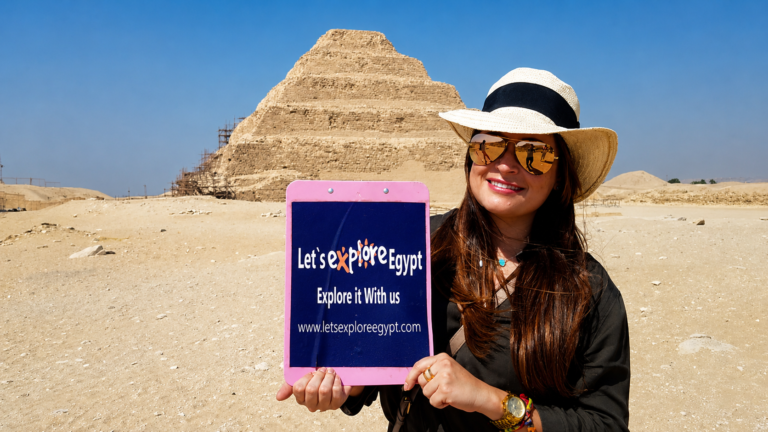
Home to the Step Pyramid of Djoser, Saqqara represents the earliest stage of pyramid development and makes an excellent day trip from Cairo.
Photography Tips
The Great Pyramid offers exceptional photographic opportunities.
Best Exterior Locations
- Panorama Point
- Desert side of the plateau
- Near the Sphinx
- Main entrance plaza
- Sunset viewpoints
Best Time
- Sunrise
- Golden Hour
- Late afternoon
Camera Tips
- Use a wide-angle lens for the pyramid’s scale.
- Include people to emphasize its size.
- Capture details of the limestone blocks.
- Experiment with different perspectives around the plateau.
Always follow the current photography rules inside the pyramid, as policies may change.
Interesting Facts Before You Leave
- The Great Pyramid remained the world’s tallest building for nearly 3,800 years.
- It originally shone with polished white limestone casing stones.
- More than 2.3 million stone blocks were used during construction.
- It is the only surviving Wonder of the Ancient World.
- Modern technology continues to reveal new discoveries inside the pyramid.
Why the Great Pyramid Matters Today
The Great Pyramid is more than an archaeological site.
It represents human ambition, innovation, and the remarkable achievements of one of history’s greatest civilizations.
Its influence extends into architecture, engineering, mathematics, astronomy, and cultural heritage.
Every year, new research deepens our understanding of the monument while reminding us that many mysteries remain unsolved.
For travelers, stepping inside the pyramid provides a direct connection with history that few destinations can match.
Final Thoughts
Entering the Great Pyramid of Giza is unlike visiting any other historical monument.
Walking through ancient corridors carved more than four millennia ago, climbing the Grand Gallery, and standing inside the King’s Chamber creates a powerful appreciation for the ingenuity of ancient Egyptian builders.
Whether you are fascinated by archaeology, architecture, engineering, or simply wish to experience one of the world’s greatest landmarks, the Great Pyramid offers an unforgettable journey into humanity’s past.
Combined with the Great Sphinx, the Grand Egyptian Museum, Saqqara, and Memphis, it forms the centerpiece of an extraordinary Egyptian adventure.
If Egypt is on your travel bucket list, stepping inside the Great Pyramid should be one of your highest priorities.
Frequently Asked Questions
1. Can visitors enter the Great Pyramid?
Yes. Entry to the interior requires a separate ticket in addition to admission to the Giza Plateau.
2. How long does it take to explore inside?
Most visitors spend 30–45 minutes inside the pyramid.
3. Is the climb difficult?
The route includes steep passages and narrow corridors, but most visitors with average fitness can complete it comfortably.
4. Are there hieroglyphics inside?
No. Unlike later royal tombs, the accessible interior is largely undecorated.
5. Can children enter?
Yes, although younger children may find the steep passages challenging.
6. Is photography allowed?
Photography policies may change over time. Always follow the latest rules and guidance from site staff.
7. What is the best season to visit?
October through April generally offers the most comfortable weather for sightseeing.
8. How old is the Great Pyramid?
Approximately 4,500 years.
9. Was the Great Pyramid built by slaves?
Archaeological evidence indicates it was built by skilled workers and organized labor teams supported by the Egyptian state.
10. Why is the Great Pyramid so famous?
It is the largest pyramid in Egypt, the oldest of the Seven Wonders of the Ancient World, and the only one still standing today.
Ready to Explore the Great Pyramid?
Turn your visit into an unforgettable experience with a professionally guided private tour.
At Let’s Explore Egypt, we offer:
- 🏛️ Licensed Egyptologist guides
- 🚗 Private air-conditioned transportation
- 🎟️ Assistance with tickets and itinerary planning
- 📸 Personalized sightseeing experiences
- 🌅 Sunrise and sunset tour options
- 👨👩👧 Private tours for couples, families, and small groups
- 💬 24/7 customer support before and during your trip
Whether you’re visiting Egypt for the first time or returning to uncover more of its ancient wonders, our team is here to help you create a memorable journey through the heart of one of the world’s oldest civilizations.
Quick Reference Tables
Visitor Checklist
| Item | Recommended |
|---|---|
| Comfortable walking shoes | ✅ |
| Hat | ✅ |
| Sunglasses | ✅ |
| Sunscreen | ✅ |
| Water bottle | ✅ (follow site rules) |
| Camera | ✅ |
| Portable charger | ✅ |
| Small backpack | ✅ |
Great Pyramid Visitor Information
| Information | Details |
|---|---|
| Location | Giza Plateau, Cairo |
| Age | Approximately 4,500 years |
| Builder | Pharaoh Khufu |
| Dynasty | Fourth Dynasty |
| Interior Access | Separate ticket required |
| Average Visit Time | 30–45 minutes inside |
| Best Time to Visit | Early morning or late afternoon |
| Suitable For | Families, couples, photographers, history enthusiasts |
Why Visit the Great Pyramid?
| Reason | Experience |
|---|---|
| Ancient Engineering | Explore one of humanity’s greatest architectural achievements |
| History | Walk through a monument built over 4,500 years ago |
| Architecture | Admire the Grand Gallery and King’s Chamber |
| Photography | Capture iconic views inside and outside the pyramid |
| Cultural Heritage | Visit the only surviving Wonder of the Ancient World |
Visitor Information
| Information | Details |
|---|---|
| Attraction | Great Pyramid of Khufu |
| Location | Giza Plateau, Cairo, Egypt |
| UNESCO Status | World Heritage Site |
| Built | c. 2580–2560 BCE |
| Builder | Pharaoh Khufu |
| Dynasty | Fourth Dynasty |
| Ancient Wonder | Only surviving Wonder of the Ancient World |
| Interior Access | Separate ticket required |
Suggested Half-Day Itinerary
| Time | Activity |
|---|---|
| 8:00 AM | Arrive at the Giza Plateau |
| 8:30 AM | Explore the exterior of the Great Pyramid |
| 9:00 AM | Enter the Great Pyramid |
| 9:45 AM | Visit the Great Sphinx |
| 10:30 AM | Explore the Valley Temple |
| 11:15 AM | Panoramic viewpoint & photography |
| 12:00 PM | Lunch at a nearby restaurant overlooking the pyramids |
What to Wear
| Item | Recommended | Why |
|---|---|---|
| Comfortable Shoes | ✅ | Walking on uneven stone surfaces |
| Lightweight Clothing | ✅ | Comfortable in warm weather |
| Hat | ✅ | Protection from the sun |
| Sunglasses | ✅ | Bright desert conditions |
| Sunscreen | ✅ | UV protection |
| Small Backpack | ✅ | Carry essentials easily |
What to Bring
| Item | Importance |
|---|---|
| Passport or ID | Identification if needed |
| Water Bottle | Stay hydrated (follow site rules) |
| Camera | Capture memorable views |
| Portable Charger | Extra battery for photos |
| Cash/Card | Tickets, snacks, or souvenirs |
| Phone | Navigation and emergency contact |
Great Pyramid Visitor Tips
| Tip | Benefit |
|---|---|
| Arrive early | Cooler weather and fewer crowds |
| Buy tickets in advance when available | Save time |
| Wear comfortable shoes | Easier climbing inside the pyramid |
| Stay hydrated | Especially during warmer months |
| Hire an Egyptologist guide | Gain deeper historical insight |
| Respect site regulations | Help preserve the monument |
Nearby Attractions
| Attraction | Distance | Suggested Time |
|---|---|---|
| Great Sphinx | 500 m | 30–45 min |
| Pyramid of Khafre | 300 m | 30 min |
| Pyramid of Menkaure | 700 m | 30 min |
| Valley Temple | 700 m | 20–30 min |
| Grand Egyptian Museum | 2 km | 2–4 hours |
| Saqqara | 30 km | Half day |
| Memphis | 35 km | 1–2 hours |
Is the Great Pyramid Right for You?
| Traveler Type | Recommended |
|---|---|
| Families | ⭐⭐⭐⭐⭐ |
| Couples | ⭐⭐⭐⭐⭐ |
| Solo Travelers | ⭐⭐⭐⭐⭐ |
| History Enthusiasts | ⭐⭐⭐⭐⭐ |
| Photographers | ⭐⭐⭐⭐⭐ |
| Luxury Travelers | ⭐⭐⭐⭐⭐ |
| Small Groups | ⭐⭐⭐⭐⭐ |
Best Photography Spots
| Location | Best Time |
|---|---|
| Great Pyramid Entrance | Morning |
| Panorama Point | Sunrise & Sunset |
| Great Sphinx Area | Early Morning |
| Desert Side | Sunset |
| Giza Plateau Overlook | Golden Hour |
Why Visit the Great Pyramid?
| Reason | Experience |
|---|---|
| Ancient History | Walk inside a 4,500-year-old monument |
| Engineering | Witness one of history’s greatest construction achievements |
| UNESCO Heritage | Explore a globally recognized historic site |
| Photography | Capture iconic views of Egypt |
| Cultural Experience | Learn about the beliefs and achievements of Ancient Egypt |
Frequently Asked Questions at a Glance
| Question | Quick Answer |
|---|---|
| Can you go inside? | Yes, with a separate interior ticket |
| How long is the visit? | Around 30–45 minutes inside |
| Is it difficult? | Moderate due to steep passages |
| Can children enter? | Yes, with adult supervision |
| Is photography allowed? | Subject to current site regulations |
| Best season? | October–April |
| Best time of day? | Early morning or late afternoon |
| Is a guide recommended? | Yes, for historical context |
Complete Great Pyramid Facts
| Feature | Details |
|---|---|
| Original Height | 146.6 m (481 ft) |
| Current Height | 138.8 m (455 ft) |
| Base Length | 230.4 m (756 ft) |
| Stone Blocks | About 2.3 million |
| Average Block Weight | 2–15 tons |
| Granite Blocks | Up to 70 tons |
| Construction Time | Approximately 20 years |
| Orientation | Aligned closely with true north |
| Age | Approximately 4,500 years |
Why Book a Private Tour?
| Benefit | Description |
|---|---|
| Private Vehicle | Comfortable, air-conditioned transportation |
| Egyptologist Guide | Expert historical interpretation |
| Flexible Schedule | Explore at your own pace |
| Hotel Pickup | Convenient start and end to your day |
| Local Knowledge | Helpful tips and personalized recommendations |
| Personalized Experience | Tailored to your interests and travel style |
Ready to Step Inside the Great Pyramid of Giza?
Walking through the ancient passages of the Great Pyramid of Khufu is an experience unlike any other. From the towering Grand Gallery to the legendary King’s Chamber, every step takes you deeper into one of the greatest achievements in human history.
At Let’s Explore Egypt, we create private, expertly guided experiences that bring Egypt’s ancient wonders to life. Whether you’re visiting for the first time or returning to explore more, our licensed Egyptologist guides will help you discover the stories, secrets, and engineering marvels behind the world’s oldest and only surviving Wonder of the Ancient World.
Why Travel with Let’s Explore Egypt?
- 🏛️ Licensed Egyptian Tour Operator
- 👨🏫 Professional Egyptologist Guides
- 🚗 Private Air-Conditioned Vehicles
- 🎟️ Assistance with Great Pyramid entry tickets
- 📸 Plenty of time for photography at the best viewpoints
- ⏰ Flexible departure times, including sunrise tours
- 💬 24/7 WhatsApp support before and during your trip
- ⭐ Thousands of satisfied travelers from around the world
Make the Most of Your Visit
Enhance your Great Pyramid experience by combining it with:
- 🦁 The Great Sphinx of Giza
- 🏺 The Grand Egyptian Museum
- 🏜️ Saqqara & the Step Pyramid
- 🏛️ Memphis, Egypt’s Ancient Capital
- 🐪 Camel or horse rides across the Giza Plateau
- 🌅 Sunrise or sunset panoramic viewpoints
Our private tours are designed around your interests, schedule, and pace—so you can enjoy Egypt without the stress of large groups or rushed itineraries.
Book Your Private Great Pyramid Tour Today
Whether you’re passionate about history, fascinated by ancient engineering, or simply dreaming of standing inside the world’s last surviving Ancient Wonder, we’re here to make your journey unforgettable.
📩 Contact Let’s Explore Egypt today for a personalized itinerary and discover the magic of the Great Pyramid with expert local guides.
Contact Us
📱 WhatsApp: +20 1203233365
📧 Email: info@lets-explore-egypt.com
Experience Ancient Egypt Like Never Before
Reserve your private Great Pyramid tour today and walk through more than 4,500 years of history with Let’s Explore Egypt.
Recommended Egypt Tours

Why You Can Trust Let's Explore Egypt
This article was written and reviewed by the Let's Explore Egypt Editorial Team, a licensed Egyptian tour operator specializing in private Egypt tours, Nile cruises, and tailor-made travel experiences since 2009.
- 🏛 Licensed Egyptian Tour Operator Since 2009
- ⭐ Trusted by Thousands of Travelers Worldwide
- 👨🏫 Written & Reviewed by Local Egypt Travel Experts
- 🚐 Private Tours & Tailor-Made Travel Experiences
- 📞 24/7 Customer Support