

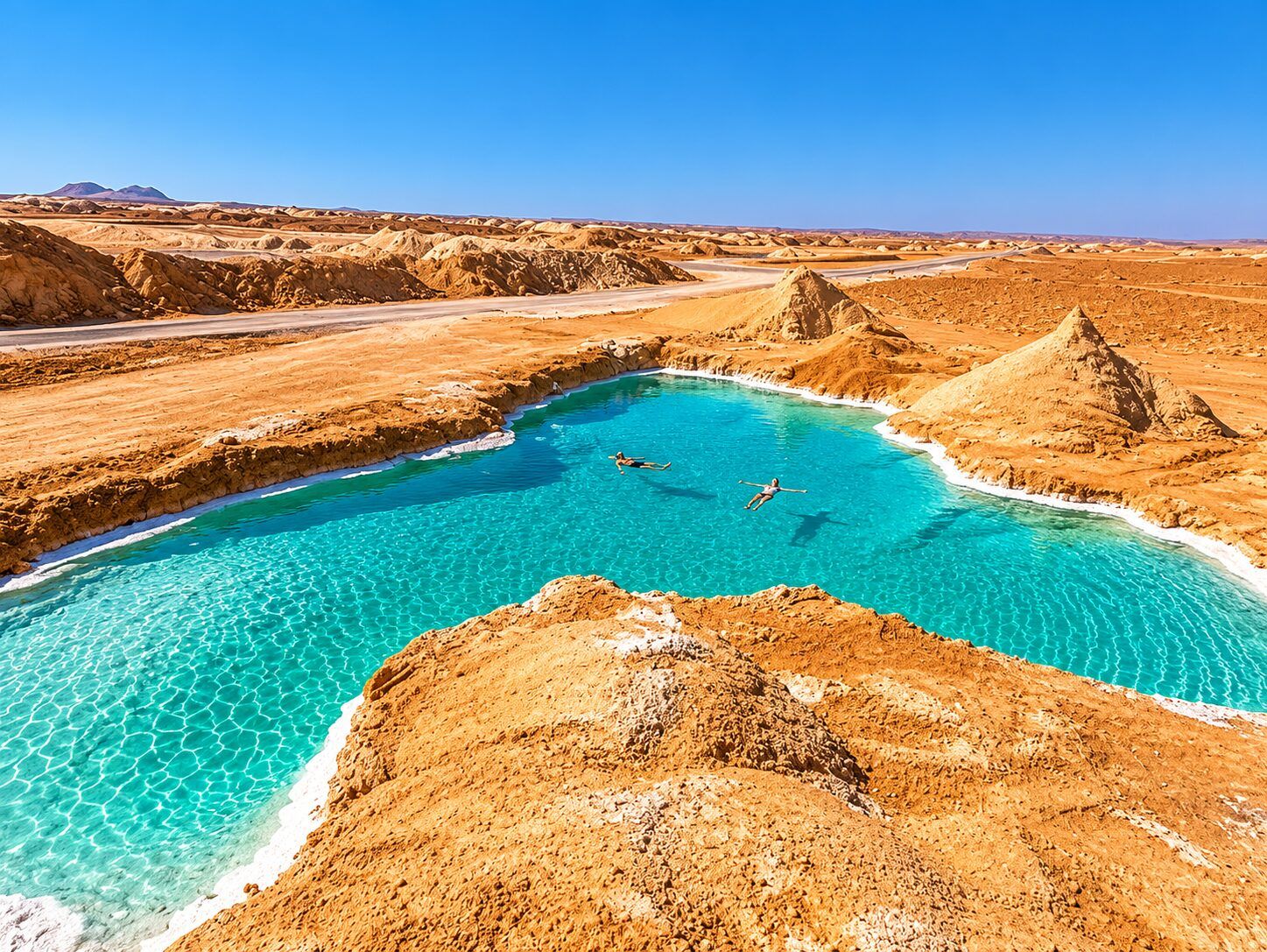
Nestled deep within Egypt’s Western Desert, more than 750 kilometres southwest of Cairo, Siwa Oasis feels like another world. Far removed from the bustling streets of Cairo and the crowded beaches of the Red Sea, Siwa offers visitors a peaceful escape surrounded by shimmering salt lakes, endless golden dunes, ancient temples, lush palm groves, and one of the most fascinating cultures in Egypt.
Unlike many Egyptian destinations that revolve around pharaohs and monumental temples, Siwa captivates travellers with its unique blend of history, adventure, wellness, and breathtaking natural beauty. Here, you’ll find therapeutic salt lakes, natural hot springs, vast desert landscapes perfect for 4×4 safaris, and archaeological treasures that date back thousands of years.
Whether you’re seeking relaxation, adventure, photography, history, or authentic cultural experiences, Siwa Oasis delivers something truly unforgettable.
In recent years, Siwa has become one of Egypt’s fastest-growing eco-tourism destinations. Boutique eco-lodges, sustainable tourism initiatives, and luxury desert camps now attract travellers from around the world while preserving the oasis’s traditional character.
This comprehensive guide covers everything you need to know before visiting Siwa Oasis—from its fascinating history and top attractions to transportation, accommodation, itineraries, travel costs, and expert travel tips.
Where is Siwa Oasis?

Siwa Oasis lies in the Matrouh Governorate in Egypt’s remote Western Desert, close to the Libyan border. It is one of Egypt’s most isolated inhabited regions, contributing to its distinctive culture and unspoiled landscapes.
The oasis sits approximately:
| Destination | Distance |
|---|---|
| Cairo | 750 km |
| Alexandria | 560 km |
| Marsa Matrouh | 300 km |
| Giza Pyramids | 760 km |
| Bahariya Oasis | 520 km |
The drive from Cairo usually takes between 8 and 10 hours, depending on traffic, weather conditions, and rest stops.
Despite the long journey, many travellers consider the drive part of the adventure, as the scenery gradually transforms from fertile Nile landscapes into endless desert vistas.
Why is Siwa Oasis So Special?
Siwa is unlike anywhere else in Egypt.
Instead of bustling cities and large tourist crowds, visitors discover:
- Crystal-clear turquoise salt lakes
- Vast palm and olive groves
- Natural hot and cold springs
- Ancient mud-brick architecture
- Peaceful desert villages
- Massive golden sand dunes
- Traditional Berber culture
- Eco-lodges built using ancient techniques
- One of the world’s most beautiful desert sunsets
The oasis is home to around 30,000 people, many of whom speak the Siwi language, a Berber language that has survived for centuries alongside Arabic. This linguistic and cultural heritage gives Siwa a unique identity within Egypt.
The slower pace of life, traditional customs, and strong community spirit make Siwa feel worlds apart from Egypt’s major cities.
A Brief History of Siwa Oasis

Although remote today, Siwa has played an important role throughout history.
Prehistoric Beginnings
Archaeological evidence suggests that humans lived around Siwa thousands of years before the pharaohs ruled Egypt. Natural springs and fertile land made the oasis an ideal place for early settlements.
The abundance of freshwater allowed agriculture to flourish despite the surrounding desert, creating a self-sustaining community in an otherwise harsh environment.
Ancient Egyptian Period
During the New Kingdom, Siwa became known for its sacred Oracle of Amun.
Pilgrims travelled hundreds of kilometres across the desert to consult the oracle, seeking guidance on matters ranging from warfare to personal decisions.
The temple became one of the most respected religious centres in North Africa.
Alexander the Great’s Famous Journey
Perhaps the most famous visitor to Siwa was Alexander the Great.
After conquering Egypt in 331 BC, Alexander travelled across the Western Desert to consult the Oracle of Amun.
According to ancient historians, the oracle recognised Alexander as the son of the god Amun, reinforcing his claim to divine rule. This event became one of the defining moments of his reign and enhanced his prestige throughout the ancient world.
Today, the Temple of the Oracle remains one of Siwa’s most iconic landmarks, drawing visitors eager to stand where one of history’s greatest conquerors once stood.
Greek and Roman Influence
Following Alexander’s visit, Siwa prospered under Greek and Roman rule.
Agriculture expanded, trade routes developed, and additional temples and settlements were established. The oasis became renowned for producing dates, olives, and other crops that were traded across the Mediterranean region.
Many of the tombs visible today on the Mountain of the Dead date from this era, featuring a blend of Egyptian and Greco-Roman artistic styles.
Islamic Era
With the arrival of Islam, Siwa gradually transformed into a prosperous desert town.
The inhabitants built impressive mud-brick structures using a traditional material called kershef, a mixture of salt, clay, and mud. This building technique provided natural insulation against the desert’s extreme temperatures and remains a defining feature of Siwan architecture.
The historic Shali Fortress, constructed in the 13th century, became the heart of the community and offered protection from raids and harsh weather.
Modern Siwa
Until relatively recently, Siwa remained one of Egypt’s most isolated communities due to the lack of modern roads.
Today, improved transport has made the oasis more accessible, yet it has retained much of its traditional character. Sustainable tourism initiatives and eco-friendly accommodations help preserve the region’s natural beauty and cultural heritage while providing memorable experiences for visitors.
The Geography of Siwa Oasis
Siwa sits in a natural depression approximately 18 metres below sea level.
The surrounding landscape includes:
- Vast expanses of the Great Sand Sea
- Salt flats
- Freshwater springs
- Olive orchards
- Date palm forests
- Rocky escarpments
- Desert plateaus
- Sand dunes exceeding 100 metres in height
This varied terrain supports a surprising diversity of flora and fauna and offers countless opportunities for outdoor exploration.
Climate in Siwa
Siwa experiences a classic desert climate with hot summers and mild winters.
| Season | Temperature |
|---|---|
| Winter | 8–24°C |
| Spring | 18–32°C |
| Summer | 25–42°C |
| Autumn | 18–34°C |
Rainfall is extremely rare, and the oasis enjoys clear skies for most of the year, making it an excellent destination for stargazing.
Best Time to Visit Siwa Oasis
For most travellers, the ideal time to visit is between October and April.
During these months, daytime temperatures are comfortable for sightseeing, desert safaris, and exploring archaeological sites, while evenings are pleasantly cool.
October to November
One of the best periods to visit, with warm days, comfortable nights, and fewer visitors than the peak winter season.
December to February
Perfect for outdoor activities and desert adventures. This is the busiest tourist season, so booking accommodation in advance is recommended.
March to April
Temperatures begin to rise but remain pleasant. Palm groves are especially vibrant, making it a beautiful time for photography.
May to September
Summer brings intense heat, often exceeding 40°C. While some travellers still visit, outdoor activities are generally best limited to the early morning or late afternoon.
Why Siwa Should Be on Your Egypt Itinerary
Many first-time visitors to Egypt focus on iconic destinations such as Cairo, Luxor, and Aswan. While these places are rich in history, Siwa offers a completely different perspective on the country.
Here, you’ll experience:
- A peaceful atmosphere far from busy tourist routes.
- Spectacular natural scenery, including salt lakes and towering sand dunes.
- Ancient temples linked to legendary figures such as Alexander the Great.
- Traditional Berber culture that has endured for centuries.
- Exceptional opportunities for desert adventures and wellness experiences.
- Some of Egypt’s most photogenic sunsets and night skies.
Siwa is more than just an oasis—it’s a destination where history, nature, and culture come together to create one of the most memorable journeys in Egypt.
Top Attractions in Siwa Oasis: The Ultimate Visitor’s Guide
Siwa Oasis is home to an extraordinary mix of ancient monuments, natural wonders, healing springs, and breathtaking desert scenery. Unlike Egypt’s famous Nile Valley sites, Siwa’s attractions are spread across lush palm groves, salt lakes, rocky hills, and endless sand dunes, creating an adventure unlike anywhere else in the country.
Whether you’re fascinated by archaeology, seeking relaxation in mineral-rich waters, or craving a thrilling desert safari, Siwa offers experiences for every type of traveller.
Temple of the Oracle of Amun

The Temple of the Oracle of Amun is undoubtedly Siwa’s most famous historical landmark. Perched on a rocky hill in the village of Aghurmi, this sacred temple has drawn pilgrims, kings, and curious travellers for more than 2,500 years.
Its greatest claim to fame is its connection with Alexander the Great, who crossed the harsh Western Desert in 331 BC to seek guidance from the oracle after conquering Egypt.
According to ancient accounts, the priests welcomed Alexander as the son of the god Amun, strengthening his legitimacy as ruler of Egypt and later the Persian Empire.
Today, although much of the temple is in ruins, visitors can still wander through its ancient chambers and imagine the mysterious rituals once performed here.
Highlights
- One of the world’s most famous ancient oracles
- Alexander the Great’s legendary pilgrimage site
- Panoramic views over Siwa Oasis
- Excellent photography location
- Historic village surroundings
Visitor Tips
- Visit early morning or late afternoon.
- Wear comfortable walking shoes.
- Bring water during warmer months.
- Combine your visit with nearby Aghurmi village.
Shali Fortress

Built in the 13th century, Shali Fortress once served as the fortified heart of Siwa Oasis. Constructed using traditional kershef, a unique mixture of salt, mud, clay, and palm trunks, the fortress protected local residents from invading tribes.
For centuries, families lived inside its maze of narrow alleyways, multi-storey homes, and defensive towers.
Heavy rains during the early twentieth century caused much of the fortress to collapse, leaving behind one of Egypt’s most atmospheric archaeological sites.
Today, restoration projects allow visitors to climb through parts of the ancient settlement while enjoying spectacular views across Siwa.
What You’ll See
- Traditional Siwan architecture
- Narrow winding streets
- Ancient homes
- Defensive walls
- Historic mosque
- Elevated viewpoints
Photography Tips
Shali is especially beautiful during:
- Sunrise
- Golden hour
- Sunset
- Blue hour after sunset
The warm colours of the salt-and-mud buildings create incredible photographs.
Mountain of the Dead (Gebel al-Mawta)

Despite its dramatic name, the Mountain of the Dead is one of Siwa’s most fascinating archaeological treasures.
The hill contains hundreds of rock-cut tombs dating mainly to the:
- 26th Dynasty
- Ptolemaic Period
- Roman Era
Many tombs feature surprisingly well-preserved wall paintings that blend Egyptian and Greek artistic traditions.
Among the most famous are:
Tomb of Si-Amun
Known for:
- Colourful paintings
- Hieroglyphic inscriptions
- Excellent preservation
Tomb of Mesu-Isis
Features:
- Religious scenes
- Beautiful ceiling decorations
- Ancient funerary artwork
Tomb of Niperpathot
Highlights include:
- Vibrant colours
- Detailed carvings
- Classic Egyptian symbolism
The panoramic view from the summit is equally rewarding, offering sweeping vistas of palm groves, salt lakes, and surrounding desert.
Cleopatra’s Spring

One of Siwa’s best-known natural attractions, Cleopatra’s Spring is a crystal-clear natural spring surrounded by cafés and palm trees.
Although there is no historical evidence that Queen Cleopatra actually bathed here, local tradition has kept the legend alive for centuries.
The spring maintains a pleasant temperature throughout the year, making it a refreshing stop after exploring the oasis.
Visitors often enjoy:
- Swimming
- Relaxing beside the water
- Fresh fruit juice
- Local mint tea
- Traditional Siwan dates
Nearby cafés provide an ideal place to unwind while enjoying views of the surrounding palm groves.
5. Siwa Salt Lakes


The brilliant turquoise Salt Lakes have become one of Egypt’s most photographed natural attractions.
Their extremely high salt concentration allows visitors to float effortlessly, much like the Dead Sea.
The vivid blue water contrasts beautifully with the white salt formations and surrounding desert, creating a surreal landscape.
Why Visit?
- Float effortlessly
- Therapeutic mineral-rich water
- Crystal-clear visibility
- Spectacular drone photography
- Incredible colours
Health Benefits
Many visitors believe the mineral-rich water may help:
- Skin conditions
- Muscle recovery
- Joint pain
- Relaxation
While many people enjoy these effects, scientific evidence for specific therapeutic benefits varies, so it’s best to view the experience as relaxing rather than guaranteed treatment.
Tips
- Avoid shaving beforehand.
- Don’t splash salty water into your eyes.
- Shower afterwards.
- Bring sandals.
6. Fatnas Island (Fantasy Island)


Fatnas Island is widely considered the best sunset spot in Siwa.
Connected by a wooden walkway through palm groves, the island overlooks a tranquil salt lake surrounded by thousands of date palms.
As the sun sinks below the horizon, the reflections across the water create one of Egypt’s most unforgettable landscapes.
Visitors usually come here to:
- Watch sunset
- Drink traditional tea
- Relax after sightseeing
- Take photographs
- Enjoy peaceful surroundings
7. Dakrour Mountain


Dakrour Mountain is famous for both its history and its traditional hot sand therapy.
Every summer, people from across Egypt and abroad visit to participate in therapeutic sand burial sessions supervised by experienced local practitioners.
Many visitors believe these treatments help relieve:
- Rheumatism
- Arthritis
- Joint stiffness
- Chronic pain
Whether or not you take part in sand therapy, the mountain offers excellent panoramic views of the oasis.
8. Abu Shrouf Village


Located about 27 kilometres east of central Siwa, Abu Shrouf provides a glimpse into traditional oasis life.
The village is known for:
- Quiet atmosphere
- Traditional homes
- Date farms
- Olive groves
- Natural spring
It’s an excellent place for visitors seeking authentic cultural experiences away from the main tourist sites.
9. Siwa House Museum


Before exploring the oasis, many travellers visit the Siwa House Museum to learn about local culture.
The museum displays:
- Traditional clothing
- Wedding jewellery
- Household tools
- Musical instruments
- Farming equipment
- Historical photographs
You’ll gain valuable insight into how Siwan families lived for generations.
10. Old Market (Siwa Souq)


No visit to Siwa is complete without exploring its charming local market.
Unlike Cairo’s busy bazaars, Siwa’s market has a relaxed atmosphere where artisans sell locally made products.
Popular souvenirs include:
- Rock salt lamps
- Olive oil
- Handmade baskets
- Palm-leaf crafts
- Silver jewellery
- Traditional embroidered clothing
- Siwan dates
- Herbal teas
- Natural soaps
Shopping here supports local families and helps preserve traditional craftsmanship.
Suggested One-Day Sightseeing Route
If you have only one full day in Siwa, this itinerary covers the main highlights:
| Time | Activity |
|---|---|
| 8:00 AM | Visit the Temple of the Oracle of Amun |
| 9:30 AM | Explore Shali Fortress |
| 11:00 AM | Tour the Mountain of the Dead |
| 12:30 PM | Lunch at a traditional Siwan restaurant |
| 2:00 PM | Swim at Cleopatra’s Spring |
| 3:30 PM | Float in the Salt Lakes |
| 5:30 PM | Sunset at Fatnas Island |
| Evening | Dinner and stroll through the Siwa Souq |
This route combines history, culture, relaxation, and stunning scenery, making it an excellent introduction to the oasis.
Desert Adventures in Siwa: Safaris, Sandboarding, Camping & Hidden Gems
One of the biggest reasons travellers journey all the way to Siwa Oasis is to experience the vast and untouched beauty of Egypt’s Western Desert. Beyond the palm groves and ancient ruins lies a landscape of towering sand dunes, crystal-clear springs, fossil fields, and endless horizons that make Siwa one of the country’s premier adventure destinations.
From thrilling 4×4 safaris across the Great Sand Sea to floating in remote desert springs and sleeping beneath a sky filled with countless stars, Siwa offers unforgettable experiences that simply can’t be found elsewhere in Egypt.
The Great Sand Sea


Stretching across Egypt and Libya, the Great Sand Sea is one of the largest continuous dune fields on Earth. Covering more than 70,000 square kilometres, it is a breathtaking wilderness of rolling golden dunes that can rise over 150 metres high.
The landscape constantly changes as winds reshape the dunes, creating dramatic ridges and valleys that seem to stretch endlessly into the horizon.
A trip into the Great Sand Sea is one of the highlights of any visit to Siwa.
What Makes It Special?
- Endless golden dunes
- Some of the highest sand dunes in Egypt
- Incredible sunset scenery
- Excellent wildlife spotting opportunities
- Peaceful, untouched desert landscapes
- Ideal conditions for off-road adventures
The silence of the desert is one of its most remarkable features. Far from cities and roads, the only sounds are the wind and the occasional movement of the sand.
4×4 Desert Safari


A 4×4 desert safari is the most popular activity in Siwa and an essential part of the experience.
Expert local drivers navigate steep dunes, dramatic slopes, and remote valleys using specially equipped four-wheel-drive vehicles.
Expect an exhilarating ride that combines stunning scenery with moments of genuine excitement.
Typical Safari Highlights
- Driving across massive dunes
- Visiting remote springs
- Sandboarding
- Desert photography stops
- Sunset viewing
- Traditional Bedouin tea
- Dinner around a campfire (on extended tours)
Most safaris last between 4 and 8 hours, although overnight trips are also widely available.
Bir Wahed Hot Spring


Hidden among the dunes lies Bir Wahed, one of the most beautiful natural springs in the Western Desert.
Warm mineral-rich water bubbles naturally from underground, forming a small pool surrounded by sand dunes.
Many visitors enjoy soaking in the spring after an exciting desert safari.
Why Visit?
- Naturally heated water
- Beautiful desert setting
- Excellent relaxation stop
- Popular sunset location
- Ideal for photography
Unlike crowded spas, Bir Wahed offers complete tranquillity in the middle of the desert.
The Cold Lake


Just a short distance from Bir Wahed lies the refreshing Cold Lake.
After bathing in the hot spring, many visitors cool off in this natural freshwater lake, creating a unique contrast between warm and cool waters.
The surrounding dunes make it one of the most picturesque locations in the oasis.
Sandboarding in Siwa


If you’ve ever wanted to snowboard on sand instead of snow, Siwa is the perfect place.
The towering dunes of the Great Sand Sea provide ideal conditions for sandboarding.
Whether you’re a beginner or experienced, the soft sand makes learning relatively easy.
Tips for Beginners
- Wear lightweight clothing.
- Use sunglasses to protect your eyes.
- Stay hydrated.
- Follow your guide’s instructions.
- Climb slowly to conserve energy.
Even if you don’t board, watching others descend the giant dunes is entertaining.
Desert Sunset Experience


Watching the sunset over the Great Sand Sea is one of the most magical moments in Siwa.
As daylight fades, the dunes change colour from bright gold to deep orange, pink, and purple.
Photographers often describe this as the finest natural light in Egypt.
Many safari operators stop at the highest dunes to allow visitors time to enjoy the changing colours and take photographs.
Camping Under the Stars


For travellers seeking a truly unforgettable experience, spending a night in the desert is highly recommended.
Far from artificial lights, the night sky reveals thousands of stars, the Milky Way, and—at certain times of year—meteor showers.
A typical camping experience includes:
- Comfortable tents or Bedouin-style camps
- Traditional dinner
- Campfire gathering
- Mint tea
- Stargazing
- Sunrise over the dunes
Luxury desert camps are also available for those looking for added comfort without sacrificing the wilderness experience.
Stargazing in Siwa


Siwa’s remote location and minimal light pollution make it one of the best places in Egypt for astronomy enthusiasts.
On clear nights, visitors can often see:
- The Milky Way
- Shooting stars
- Constellations visible to the naked eye
- Bright planets during certain seasons
Bring a tripod if you’re interested in astrophotography—the desert provides exceptional conditions for long-exposure night photography.
Fossils and Ancient Marine Landscapes
Millions of years ago, much of Egypt’s Western Desert lay beneath a vast prehistoric sea.
As a result, parts of the desert surrounding Siwa contain:
- Fossilised shells
- Ancient coral formations
- Limestone outcrops
- Marine sediments
These geological features provide fascinating evidence of the region’s ancient past and remind visitors how dramatically Earth’s landscapes have changed over time.
Wildlife of the Western Desert
Although the desert may appear empty at first glance, it supports a surprising variety of wildlife adapted to harsh conditions.
You might encounter:
- Desert foxes
- Fennec foxes
- Desert hares
- Lizards
- Geckos
- Falcons
- Eagles
- Owls
- Migratory birds (seasonally)
Most larger mammals are elusive and are more likely to be seen at dawn or dusk.
Photography Tips for the Desert
The Great Sand Sea is a dream destination for photographers.
Best Times to Shoot
- Sunrise
- One hour after sunrise
- Golden hour before sunset
- Blue hour
- Moonlit nights
- During the Milky Way season
Recommended Equipment
- Wide-angle lens
- Polarising filter
- Tripod
- Lens cleaning cloth
- Extra batteries
- Protective camera bag
Fine desert sand can get into equipment, so changing lenses outdoors should be avoided where possible.
Responsible Desert Tourism
The desert ecosystem is fragile, and responsible travel helps preserve it for future generations.
When exploring the Great Sand Sea:
- Stay on established routes with experienced drivers.
- Never leave litter behind.
- Avoid disturbing wildlife.
- Respect local customs and protected areas.
- Do not remove fossils, rocks, or plants.
- Use reusable water bottles where possible.
Supporting local guides and eco-conscious tour operators also contributes to the sustainable development of Siwa’s tourism industry.
Adventure Activities at a Glance
| Activity | Duration | Difficulty | Best Time |
|---|---|---|---|
| 4×4 Desert Safari | 4–8 hours | Easy | October–April |
| Sandboarding | 30–90 mins | Easy | October–April |
| Bir Wahed Hot Spring | 30–60 mins | Easy | All year |
| Cold Lake Swim | 20–40 mins | Easy | All year |
| Desert Camping | Overnight | Easy | October–April |
| Stargazing | 1–3 hours | Easy | Clear nights |
| Photography Tour | Half day | Easy | Sunrise & Sunset |
Sample Half-Day Desert Safari Itinerary
| Time | Activity |
|---|---|
| 2:30 PM | Depart Siwa by 4×4 |
| 3:15 PM | Explore the Great Sand Sea |
| 4:00 PM | Sandboarding on the dunes |
| 5:00 PM | Relax at Bir Wahed Hot Spring |
| 5:45 PM | Cool off at the Cold Lake |
| 6:30 PM | Watch the sunset from a high dune |
| 7:00 PM | Traditional Bedouin tea before returning to Siwa |
This itinerary combines adventure, relaxation, and spectacular scenery in a single afternoon.
Why the Desert Defines Siwa
While Siwa’s temples, salt lakes, and historic villages are remarkable, it is the surrounding desert that truly shapes the oasis’s identity. The Great Sand Sea offers a sense of freedom, silence, and natural beauty that few places in the world can match.
Whether you’re racing across dunes in a 4×4, floating in a spring hidden among the sands, or simply watching the stars from a desert camp, these experiences become lasting memories that make Siwa one of Egypt’s most extraordinary destinations.
Siwan Culture, Food, Accommodation & Sustainable Tourism
One of the most rewarding aspects of visiting Siwa Oasis is experiencing a culture unlike any other in Egypt. While the country’s famous destinations showcase Pharaonic temples and bustling cities, Siwa offers visitors the chance to immerse themselves in centuries-old traditions that have been preserved through its geographical isolation.
The oasis is home to a proud community with its own language, architecture, cuisine, clothing, music, and customs. Combined with its commitment to eco-tourism, Siwa provides an authentic travel experience that goes far beyond sightseeing.
The People of Siwa


The people of Siwa are primarily of Amazigh (Berber) heritage and have lived in the oasis for centuries.
Despite increasing tourism, the community has retained many of its traditional customs, making Siwa one of the most culturally distinctive regions in Egypt.
Life here revolves around:
- Agriculture
- Family traditions
- Community gatherings
- Religious celebrations
- Handicrafts
- Hospitality
Visitors often remark on the warm welcome they receive from local residents, who are known for their generosity and pride in sharing their culture.
The Siwi Language
One of the most fascinating aspects of Siwa is its language.
Many local residents speak Siwi, an Amazigh language that has survived for centuries alongside Arabic.
Today, most people speak:
- Siwi at home
- Arabic for education and business
- English in many hotels and tourism services
Learning a few Arabic greetings is appreciated, but visitors will generally have no trouble communicating in tourist areas.
Traditional Siwan Architecture


Siwa’s architecture is among the most distinctive in North Africa.
Historically, homes were built from kershef, a natural mixture of:
- Salt
- Mud
- Clay
- Sand
- Palm trunks
This traditional building material provides excellent insulation, helping keep interiors cool during hot summer days and warm during cool desert nights.
Many modern eco-lodges continue to use these traditional techniques, blending sustainability with comfort.
Architectural Features
- Thick insulating walls
- Palm-wood ceilings
- Small windows for natural cooling
- Earth-toned colours
- Courtyards
- Rooftop terraces
Walking through Siwa feels like stepping back in time.
Traditional Clothing
Traditional Siwan clothing remains an important part of local identity, particularly during weddings and festivals.
Women often wear:
- Brightly embroidered dresses
- Silver jewellery
- Decorative head coverings
- Colourful scarves
Men traditionally wear:
- Long robes
- White turbans
- Traditional sandals
Although everyday clothing has become more modern, traditional dress continues to play an important role in cultural celebrations.
Siwan Cuisine


Food is one of the highlights of visiting Siwa.
The fertile oasis produces some of Egypt’s finest:
- Dates
- Olives
- Olive oil
- Fresh vegetables
- Herbs
Meals are simple, healthy, and full of flavour.
Traditional Dishes to Try
1. Tagine
Slow-cooked meat or vegetables prepared in clay pots.
Popular versions include:
- Lamb
- Chicken
- Beef
- Seasonal vegetables
2. Grilled Lamb
Locally raised lamb is renowned for its tenderness.
It is often served with:
- Rice
- Fresh salads
- Flatbread
3. Fresh Dates
Siwa produces several varieties of dates.
Visitors can purchase them:
- Fresh
- Dried
- Stuffed with nuts
- Covered in chocolate
4. Siwan Olives
Olive cultivation has been central to Siwa’s economy for centuries.
Don’t miss:
- Green olives
- Black olives
- Pickled olives
- Premium olive oil
Many travellers take bottles of locally produced olive oil home as souvenirs.
5. Traditional Bread
Fresh bread is baked daily in many local bakeries.
Common varieties include:
- Flatbread
- Stone-baked bread
- Whole wheat loaves
Served warm, it accompanies almost every meal.
Local Drinks
Popular beverages include:
- Mint tea
- Hibiscus tea
- Fresh lemon juice
- Date juice
- Herbal infusions
- Arabic coffee
Fresh fruit juices are especially refreshing after a day exploring the desert.
Shopping in Siwa


Shopping in Siwa is centred around locally made products rather than mass-produced souvenirs.
Many items are handmade by local artisans using traditional techniques.
Best Souvenirs
- Rock salt lamps
- Olive oil
- Dates
- Herbal teas
- Handmade baskets
- Palm-leaf products
- Silver jewellery
- Embroidered textiles
- Natural soaps
- Local spices
Buying directly from local craftspeople supports the community and helps preserve traditional skills.
Festivals in Siwa
One of Siwa’s most significant cultural events is the Siyaha Festival, also known as the Festival of Reconciliation.
Held annually after the date harvest, the festival brings families and communities together to celebrate unity, hospitality, and peace.
Traditions include:
- Community meals
- Religious gatherings
- Traditional music
- Cultural ceremonies
- Storytelling
- Local dances
As the festival follows the Islamic lunar calendar and is primarily a community event, visitors should check local dates and be respectful if attending.
Eco-Tourism in Siwa


Siwa has become one of Egypt’s leading destinations for sustainable tourism.
Many hotels have adopted environmentally friendly practices, including:
- Solar energy
- Natural ventilation
- Locally sourced food
- Traditional construction methods
- Reduced plastic use
- Water conservation
This approach helps preserve both the environment and Siwa’s cultural heritage.
Where to Stay in Siwa
Accommodation ranges from simple guesthouses to luxurious eco-lodges.
Luxury Eco-Lodges
Ideal for travellers seeking:
- Spa treatments
- Gourmet dining
- Desert views
- Sustainable design
- Premium service
Boutique Hotels
Offer:
- Comfortable rooms
- Swimming pools
- Local cuisine
- Guided excursions
Perfect for most travellers.
Budget Guesthouses
Excellent for backpackers and independent travellers.
Expect:
- Clean rooms
- Friendly service
- Affordable prices
- Authentic atmosphere
Choosing the Right Accommodation
| Traveller Type | Best Option |
|---|---|
| Luxury travellers | Eco-lodge |
| Couples | Boutique hotel |
| Families | Resort or spacious hotel |
| Backpackers | Guesthouse |
| Adventure travellers | Desert camp |
| Wellness seekers | Eco-retreat |
Wellness in Siwa
Siwa has long been associated with natural wellness thanks to its mineral-rich environment.
Popular wellness experiences include:
- Floating in the salt lakes
- Soaking in hot springs
- Relaxing in natural cold springs
- Desert meditation
- Yoga retreats
- Massage treatments at selected hotels
Many visitors come simply to unwind and enjoy the peaceful surroundings.
Responsible Travel Tips
To help preserve Siwa for future generations:
- Dress modestly in villages.
- Ask permission before photographing people.
- Support local businesses.
- Avoid single-use plastics where possible.
- Respect archaeological sites.
- Stay on marked desert routes.
- Do not remove natural or historical objects.
- Conserve water, especially during the dry season.
Responsible tourism helps ensure that Siwa’s unique environment and traditions remain intact.
Useful Local Products
| Product | Why Buy It? |
|---|---|
| Olive Oil | Locally produced and high quality |
| Dates | Fresh and naturally sweet |
| Rock Salt Lamps | Decorative and uniquely Siwan |
| Herbal Tea | Traditional flavours |
| Palm Baskets | Handmade by local artisans |
| Embroidered Textiles | Authentic cultural craftsmanship |
| Silver Jewellery | Traditional Amazigh-inspired designs |
| Natural Soap | Often made with olive oil and local herbs |
Why Culture Makes Siwa Unique
While Egypt is famous for its pyramids and temples, Siwa offers something equally valuable: the chance to experience a living culture that has preserved its identity for centuries.
Its language, architecture, cuisine, crafts, and traditions create an atmosphere unlike anywhere else in the country. Combined with sustainable tourism and genuine local hospitality, Siwa leaves visitors with a deeper appreciation of Egypt’s cultural diversity.
How to Get to Siwa Oasis, Suggested Itineraries, Travel Costs, FAQs & Travel Tips
After exploring Siwa’s history, attractions, culture, and desert adventures, it’s time to plan your journey. This final section covers transportation, sample itineraries, estimated travel costs, practical advice, and answers to the most frequently asked questions.
How to Get to Siwa Oasis


Although Siwa is one of Egypt’s most remote destinations, reaching the oasis is straightforward with some planning.
By Private Car or Transfer
A private transfer is the most comfortable and flexible option, especially for families, couples, or small groups.
Advantages
- Hotel pickup and drop-off
- Air-conditioned vehicle
- Flexible departure time
- Stops for refreshments and photos
- Comfortable for long journeys
- Direct service without changing vehicles
Travel Time: 8–10 hours from Cairo
This option is ideal if you’re planning to combine Siwa with destinations such as Alexandria, El Alamein, or Marsa Matrouh.
By Bus
Several long-distance buses operate between Cairo and Siwa.
Advantages include:
- Budget-friendly
- Daily departures (subject to seasonal schedules)
- Comfortable coaches with air conditioning
Journey times typically range from 9 to 11 hours.
Booking tickets in advance is recommended, especially during holidays and winter weekends.
By Air
There is currently no commercial airport in Siwa Oasis.
The nearest airports are:
| Airport | Approximate Distance |
|---|---|
| Marsa Matrouh International Airport | 300 km |
| Borg El Arab Airport (Alexandria) | 560 km |
| Cairo International Airport | 750 km |
Travellers arriving by air must continue by road from these airports.
Driving from Cairo to Siwa
The journey follows modern desert highways through Egypt’s Western Desert.
Typical route:
- Cairo
- Wadi El Natrun
- El Alamein (or nearby junction depending on the chosen route)
- Marsa Matrouh
- Siwa Oasis
The scenery gradually changes from farmland to vast desert landscapes before reaching the oasis.
Best Time to Visit Siwa
| Season | Weather | Recommended |
|---|---|---|
| October | Warm | ⭐⭐⭐⭐⭐ |
| November | Pleasant | ⭐⭐⭐⭐⭐ |
| December | Mild | ⭐⭐⭐⭐⭐ |
| January | Cool | ⭐⭐⭐⭐⭐ |
| February | Mild | ⭐⭐⭐⭐⭐ |
| March | Comfortable | ⭐⭐⭐⭐ |
| April | Warm | ⭐⭐⭐⭐ |
| May–September | Very Hot | ⭐⭐ |
The most popular period is October to April, when daytime temperatures are ideal for sightseeing, desert safaris, and outdoor activities.
How Many Days Do You Need?
| Days | Recommended? |
|---|---|
| 1 Day | Not recommended due to travel time |
| 2 Days | Good |
| 3 Days | Excellent |
| 4 Days | Ideal |
| 5 Days | Perfect for a relaxed pace |
Suggested 2-Day Siwa Itinerary
Day 1
- Arrive in Siwa
- Explore Shali Fortress
- Visit the Temple of the Oracle
- Lunch in a local restaurant
- Swim at Cleopatra’s Spring
- Sunset at Fatnas Island
Day 2
- Visit the Salt Lakes
- Explore the Mountain of the Dead
- Desert safari
- Bir Wahed Hot Spring
- Return or stay another night
Suggested 3-Day Siwa Itinerary
Day 1
- Arrival
- Shali Fortress
- Local market
- Sunset at Fatnas Island
Day 2
- Oracle Temple
- Mountain of the Dead
- Salt Lakes
- Cleopatra’s Spring
Day 3
- Great Sand Sea Safari
- Sandboarding
- Bir Wahed
- Desert sunset
Suggested 4-Day Itinerary
Includes everything above plus:
- Abu Shrouf Village
- Siwa House Museum
- Olive farms
- Free afternoon
- Wellness treatments
- Additional desert exploration
Suggested 5-Day Itinerary
Perfect for photographers and nature lovers.
Includes:
- Full-day safari
- Overnight desert camping
- Stargazing
- More cultural experiences
- Leisure time at eco-lodges
- Additional visits to springs and lakes
Estimated Travel Costs
Prices vary depending on travel style and season.
| Expense | Estimated Cost (USD) |
|---|---|
| Budget Hotel | 20–50 |
| Mid-range Hotel | 60–120 |
| Luxury Eco-Lodge | 150–350+ |
| Local Meal | 5–12 |
| Fine Dining | 20–40 |
| Desert Safari | 40–120 |
| Salt Lake Visit | Often included in tours |
| Private Transfer (Cairo–Siwa) | Varies by vehicle and group size |
Packing Checklist
Bring:
- Comfortable walking shoes
- Lightweight clothing
- Warm jacket for winter evenings
- Hat
- Sunglasses
- Sunscreen
- Swimsuit
- Power bank
- Camera
- Reusable water bottle
- Personal medications
- Small amount of cash
Essential Travel Tips
Respect Local Culture
Siwa is a conservative community.
Modest clothing is appreciated, particularly in villages and residential areas.
Carry Cash
Although many hotels accept cards, smaller cafés, markets, and local shops often prefer cash.
Stay Hydrated
The desert climate is dry year-round.
Drink water regularly, especially during outdoor activities.
Protect Electronics
Fine desert sand can damage cameras and phones.
Carry protective cases and avoid changing camera lenses in windy conditions.
Book Desert Tours with Experienced Guides
Always choose licensed, experienced local guides for off-road adventures.
Allow Extra Travel Time
Road journeys through the desert can occasionally take longer due to weather, checkpoints, or road conditions.
Avoid scheduling tight connections after returning from Siwa.
Frequently Asked Questions
1. Is Siwa Oasis worth visiting?
Absolutely. Siwa combines history, culture, desert adventure, and natural beauty unlike anywhere else in Egypt.
2. How far is Siwa from Cairo?
Approximately 750 kilometres, with a driving time of around 8–10 hours.
3. Can you visit Siwa on a day trip from Cairo?
No. The journey is too long for a practical day trip.
4. Is Siwa safe for tourists?
Yes. Siwa is generally considered a peaceful destination. As with any trip, follow local advice and use reputable tour operators.
5. What language is spoken?
Arabic and the Siwi (Amazigh) language are widely spoken. English is common in hotels and tourism services.
6. Is swimming allowed in the Salt Lakes?
Yes. Floating in the highly saline water is one of Siwa’s signature experiences.
7. Do I need a guide?
A guide is highly recommended for desert safaris and can greatly enhance visits to historical sites.
8. Is Wi-Fi available?
Most hotels offer Wi-Fi, though speeds may be slower than in larger cities.
9. Can I use credit cards?
Major hotels often accept cards, but cash is useful for local markets and smaller businesses.
10. Is alcohol available?
Some hotels may serve alcohol, but availability is limited. Visitors should respect local customs.
11. What is Siwa famous for?
Its salt lakes, Oracle Temple, Great Sand Sea, dates, olives, eco-lodges, and Amazigh culture.
12. What should I wear?
Lightweight, breathable clothing and comfortable footwear. Modest dress is recommended in public areas.
13. Is Siwa suitable for families?
Yes. Families can enjoy historical sites, springs, desert safaris, and relaxed outdoor activities.
14. Can I camp in the desert?
Yes. Overnight camping with experienced guides is one of the most memorable experiences in Siwa.
15. When is the best time to visit?
From October to April, when temperatures are comfortable for outdoor exploration.
16. Are there ATMs in Siwa?
Yes, but it is wise to carry enough cash before arriving, especially for remote excursions.
17. How long should I stay?
Three to four days is ideal for most travellers, while five days allows a more relaxed pace.
18. Can I visit Siwa all year?
Yes, although the summer months can be extremely hot.
19. Is photography allowed?
Yes, at most sites. Always ask permission before photographing local people.
20. What makes Siwa different from other Egyptian destinations?
Its blend of Amazigh culture, dramatic desert landscapes, therapeutic salt lakes, eco-tourism, and peaceful atmosphere sets it apart from Egypt’s more traditional tourist destinations.
Final Thoughts
Siwa Oasis is one of Egypt’s most extraordinary destinations—a place where ancient history, spectacular landscapes, and living traditions come together in remarkable harmony. Whether you’re exploring the Temple of the Oracle, floating in the crystal-clear salt lakes, racing across the Great Sand Sea in a 4×4, or watching the Milky Way from a desert camp, every moment in Siwa feels unique.
Unlike the bustling cities along the Nile, Siwa invites you to slow down, connect with nature, and discover a side of Egypt that many travellers never experience. If you’re looking for an adventure that combines culture, relaxation, and unforgettable scenery, Siwa Oasis deserves a place at the top of your travel itinerary.
Plan Your Siwa Adventure with Let’s Explore Egypt
Ready to discover Egypt’s most enchanting oasis?
Our team at Let’s Explore Egypt specialises in private, tailor-made tours designed around your interests and schedule.
We Can Help You With:
- Private Cairo to Siwa transfers
- Multi-day Siwa Oasis tours
- Great Sand Sea desert safaris
- Bir Wahed and Salt Lakes excursions
- Luxury eco-lodge reservations
- Family holidays and honeymoon packages
- Egypt-wide private tours combining Siwa with Cairo, Alexandria, Luxor, Aswan, and the Red Sea
Why Travel With Us?
- ✔️ Licensed Egyptian tour operator
- ✔️ Experienced local guides
- ✔️ Comfortable private transportation
- ✔️ Flexible itineraries
- ✔️ No forced shopping stops
- ✔️ 24/7 customer support via WhatsApp
- ✔️ Personalised travel planning
Ready to explore Siwa?
📱 WhatsApp: +20 120 323 3365
Let us create a memorable journey through one of Egypt’s most beautiful and authentic destinations.
Recommended Egypt Tours
Why You Can Trust Let's Explore Egypt
This article was written and reviewed by the Let's Explore Egypt Editorial Team, a licensed Egyptian tour operator specializing in private Egypt tours, Nile cruises, and tailor-made travel experiences since 2009.
- 🏛 Licensed Egyptian Tour Operator Since 2009
- ⭐ Trusted by Thousands of Travelers Worldwide
- 👨🏫 Written & Reviewed by Local Egypt Travel Experts
- 🚐 Private Tours & Tailor-Made Travel Experiences
- 📞 24/7 Customer Support