

The Giza Pyramids are among the most extraordinary monuments ever built by humankind. Rising from the edge of the Sahara Desert just outside Cairo, these ancient wonders have fascinated travelers, historians, archaeologists, and explorers for more than 4,500 years.
Every year, millions of visitors from around the world travel to Egypt to witness the only surviving Wonder of the Ancient World. Standing before the Great Pyramid is an unforgettable experience that words alone can hardly describe. The sheer scale, precision, and mystery of these monuments continue to inspire curiosity and admiration.
Whether you’re planning your first visit to Egypt or returning to explore the country in greater depth, this guide will help you make the most of your trip. From practical travel advice to historical insights and photography tips, you’ll find everything you need to confidently plan your visit.
Why Visit the Giza Pyramids?
Few places on Earth can match the historical significance of the Giza Plateau.
Here you’ll discover:
- The Great Pyramid of Khufu
- The Pyramid of Khafre
- The Pyramid of Menkaure
- The Great Sphinx
- The Valley Temple
- Ancient tombs and cemeteries
- Panoramic desert viewpoints
- Camel and horse riding experiences
More than simply a tourist attraction, the Giza Plateau represents one of humanity’s greatest engineering achievements.
Walking through this UNESCO World Heritage Site offers a direct connection to one of the world’s oldest civilizations.
Where Are the Giza Pyramids?
The Giza Pyramids are located in Giza Governorate, approximately 15 kilometers (9 miles) southwest of downtown Cairo and around 45 minutes from Cairo International Airport, depending on traffic.
The site sits on the western bank of the Nile River at the edge of the Sahara Desert.
Its elevated limestone plateau provided the perfect foundation for constructing the royal pyramids during Egypt’s Fourth Dynasty.
Today, visitors can easily reach the site by private vehicle, guided tour, taxi, or ride-hailing services.
A Brief History of the Giza Plateau
The story of the Giza Pyramids begins more than 4,500 years ago, during Egypt’s Old Kingdom.
At the time, Egypt was one of the most advanced civilizations in the world.
Its pharaohs ruled a unified kingdom stretching along the Nile River and believed they would continue their existence in the afterlife.
To prepare for eternity, enormous tombs were constructed to protect their bodies, treasures, and sacred possessions.
The Fourth Dynasty became the golden age of pyramid construction.
Three successive kings commissioned the monuments we see today:
- Khufu
- Khafre
- Menkaure
Together, these rulers transformed the Giza Plateau into one of history’s greatest architectural masterpieces.
Who Built the Giza Pyramids?
Contrary to popular myths, the pyramids were not built by slaves.
Modern archaeological discoveries reveal that they were constructed by highly skilled Egyptian workers, craftsmen, engineers, architects, and laborers.
Excavations near the plateau uncovered:
- Workers’ villages
- Bakeries
- Breweries
- Medical facilities
- Cemeteries
These findings show that the workforce was well organized and cared for during construction.
Thousands of workers rotated seasonally, particularly during the Nile flood season when farming activities paused.
The Great Pyramid of Khufu
The centerpiece of the Giza Plateau is undoubtedly the Great Pyramid of Khufu, also known as the Pyramid of Cheops.
Originally standing 146.6 meters (481 feet) tall, it remained the tallest man-made structure on Earth for nearly 4,000 years.
Even today, it continues to amaze engineers and scientists.
Amazing Facts
- Built around 2560 BC
- Approximately 2.3 million limestone blocks
- Estimated weight of six million tons
- Nearly perfect alignment with the cardinal directions
- Constructed without modern machinery
Many researchers still debate exactly how such an enormous structure was built with ancient tools.
Engineering That Still Amazes the World
One of the greatest mysteries surrounding the Great Pyramid is its incredible precision.
The base is almost perfectly level.
Its sides are aligned almost exactly with true north, south, east, and west.
The joints between many limestone blocks are so precise that even modern engineers admire their craftsmanship.
Some individual stones weigh over 70 tons, raising fascinating questions about transportation and construction methods.
Despite decades of research, archaeologists continue discovering new information about this remarkable monument.
Can You Go Inside the Great Pyramid?
Yes.
Visitors can purchase a separate ticket to enter the Great Pyramid.
Inside, you’ll climb through narrow ascending and descending corridors leading to the famous King’s Chamber.
Although there are no colorful wall paintings or treasures remaining inside, standing within the only surviving Wonder of the Ancient World is an unforgettable experience.
Before Entering
Keep in mind:
- The passages are narrow.
- There are steep wooden ramps.
- It becomes warm inside.
- Photography rules may vary.
- Not recommended for visitors with severe claustrophobia.
Even if you choose not to enter, the exterior alone is one of the world’s greatest sights.
The Pyramid of Khafre
The second-largest pyramid belongs to Pharaoh Khafre, son of Khufu.
Although slightly shorter than the Great Pyramid, it often appears taller because it was constructed on higher ground.
This pyramid is easy to recognize thanks to the original smooth limestone casing still visible near its summit.
Khafre is also believed to have commissioned the Great Sphinx and the nearby Valley Temple, creating one of the most impressive architectural complexes of Ancient Egypt.
The Pyramid of Menkaure
The smallest of the three royal pyramids belongs to Pharaoh Menkaure.
Despite its more modest size, it remains an architectural masterpiece.
Originally covered with polished granite at its lower levels, the pyramid demonstrates the continued refinement of pyramid construction during the Fourth Dynasty.
Its surrounding satellite pyramids were built for members of the royal family.
Many visitors appreciate the quieter atmosphere around Menkaure’s pyramid, making it an excellent place for photography.
The Great Sphinx
No visit to Giza is complete without seeing the Great Sphinx.
Carved directly from the limestone bedrock, this colossal statue combines the body of a lion with the head of a king.
Most Egyptologists believe it represents Pharaoh Khafre.
Dimensions
- Length: 73 meters (240 feet)
- Height: 20 meters (66 feet)
- Width: 19 meters (62 feet)
For more than four millennia, the Sphinx has guarded the pyramids while inspiring countless legends and mysteries.
Its missing nose remains one of the world’s most famous archaeological mysteries.
Mysteries of the Sphinx
The Great Sphinx continues to puzzle researchers.
Some of the most frequently asked questions include:
- Why was it built?
- Why is the nose missing?
- Were there originally more statues nearby?
- Are there hidden chambers beneath it?
- What colors originally covered its surface?
Although many theories exist, ongoing archaeological research continues to provide new insights.
The Valley Temple
Adjacent to the Sphinx lies the remarkably preserved Valley Temple of Khafre.
Constructed from enormous limestone and granite blocks, this temple played an important role in royal funerary rituals.
Visitors can still admire:
- Massive stone walls
- Granite columns
- Ancient floors
- Carefully cut masonry
- Impressive architecture
The precision of its construction rivals that of the pyramids themselves.
Panoramic Viewpoint
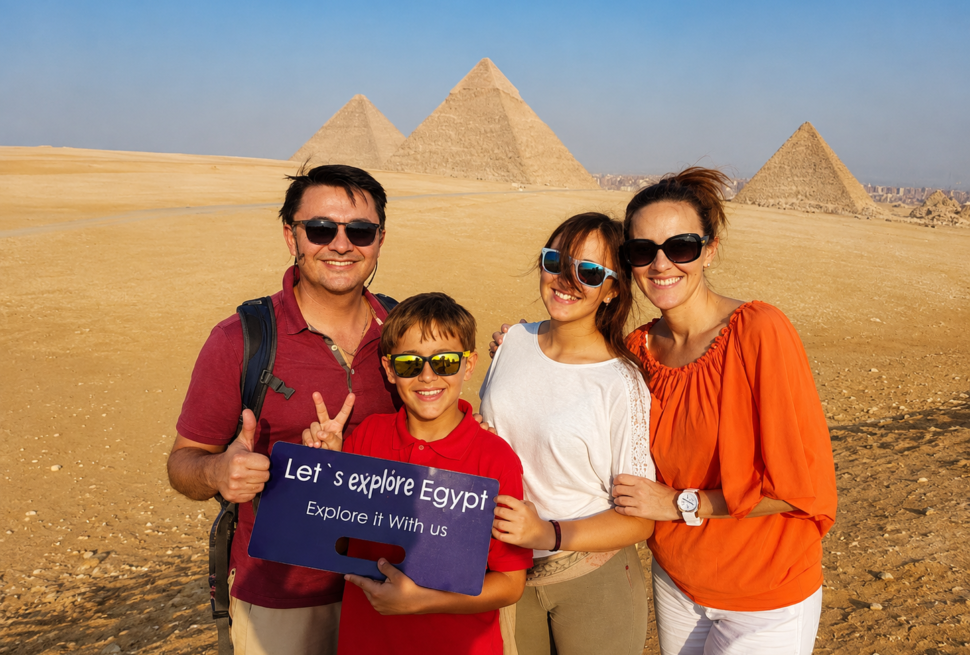
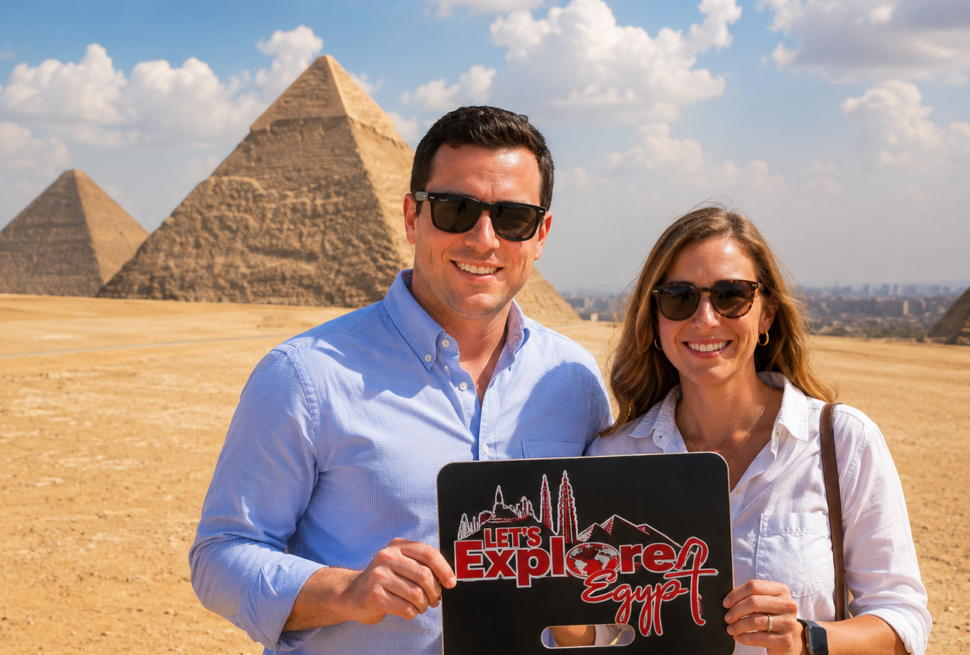
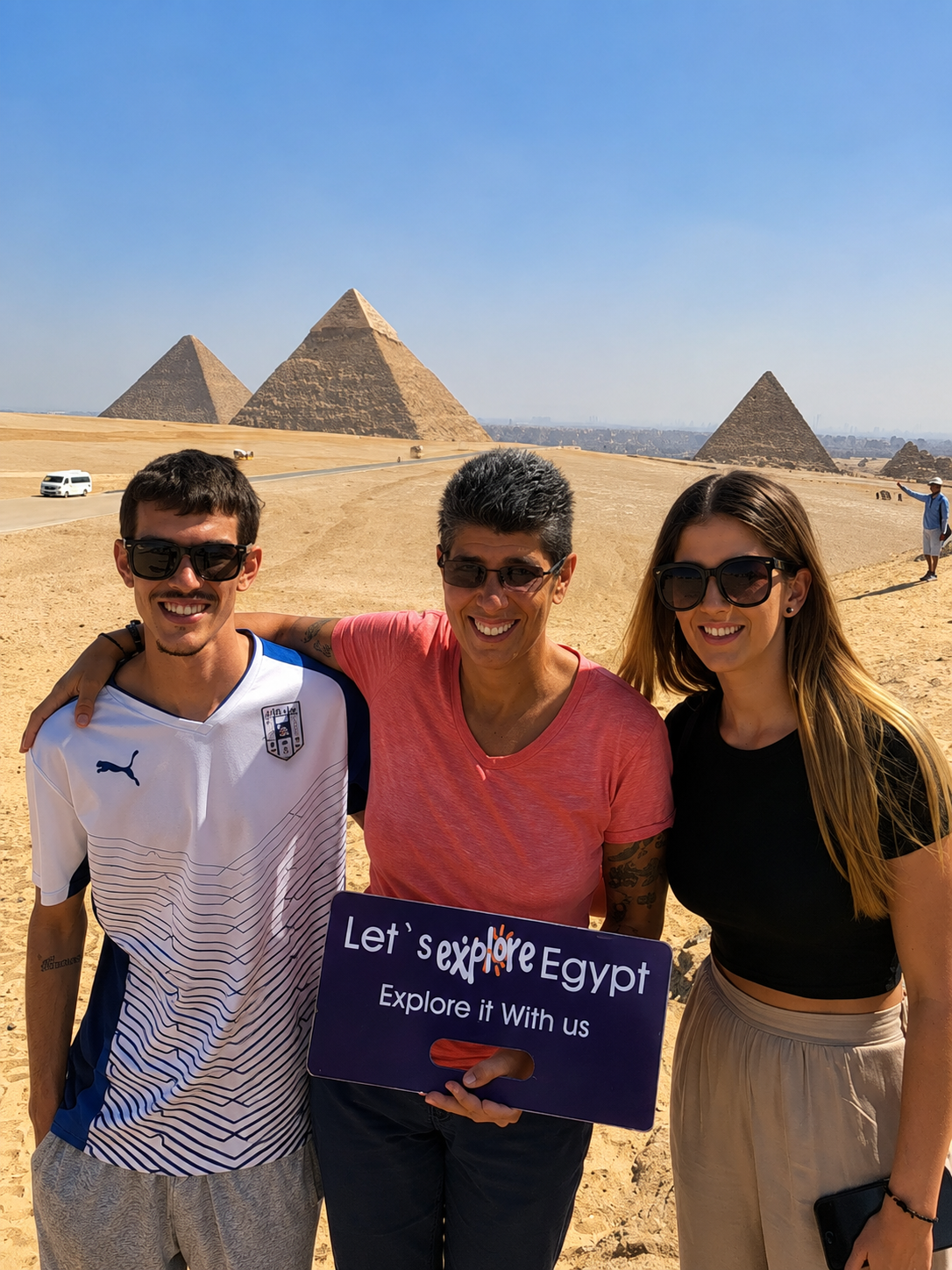
One of the highlights of any visit is the Panorama Point, located a short distance into the desert.
From here, visitors enjoy breathtaking views of all three pyramids standing together against the golden sands of the Sahara.
This is one of the best places for:
- Family photos
- Sunrise photography
- Professional portraits
- Drone-free panoramic views
- Camel ride pictures
Many of Egypt’s most iconic travel photographs are taken from this location.
Best Photography Spots
Professional photographers recommend several locations:
Panorama Point
Perfect for capturing all three pyramids.
Near the Great Sphinx
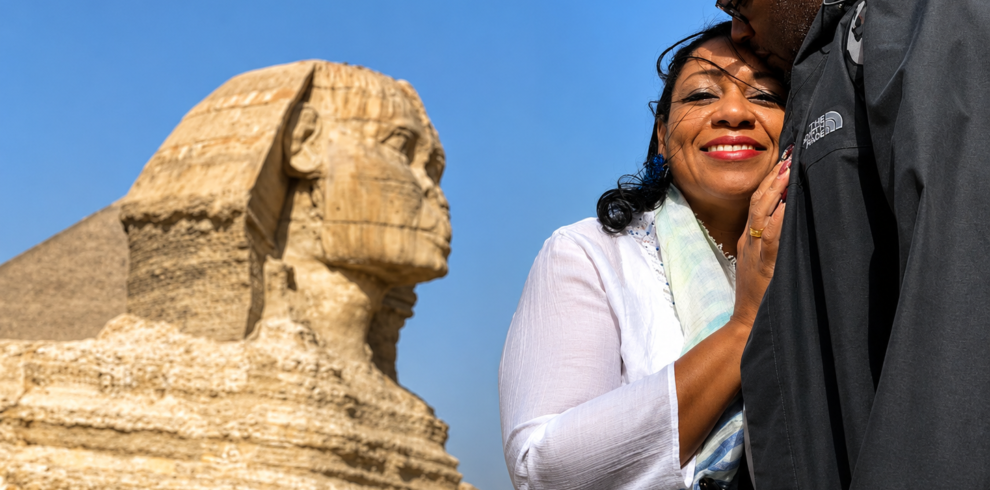
Ideal for dramatic close-up shots with the pyramids behind.
Desert Edge
Excellent for wide landscape photography.
Sunrise
Soft golden light creates incredible colors.
Sunset
Warm evening light produces spectacular silhouettes.
Why the Giza Pyramids Continue to Fascinate the World
Despite centuries of exploration, the Giza Pyramids continue to inspire new discoveries.
Archaeologists regularly uncover:
- Ancient tombs
- Hidden chambers
- Workers’ villages
- New inscriptions
- Burial shafts
Modern technologies such as laser scanning, satellite imaging, and non-invasive surveys continue to reveal details that were previously unknown.
Every visit offers an opportunity to witness one of humanity’s greatest achievements while appreciating the remarkable ingenuity of Ancient Egypt.
Part 2: Tickets, Opening Hours, Best Time to Visit & Essential Visitor Tips
Now that you’ve learned about the history and significance of the Giza Pyramids, it’s time to plan your visit like an experienced traveler.
Knowing the best time to visit, where to buy tickets, what to wear, and how to avoid common mistakes can make a huge difference. The Giza Plateau is one of the world’s most visited archaeological sites, so a little preparation will help you enjoy a smoother, more memorable experience.
Opening Hours
The Giza Pyramids Complex is open every day, including weekends and most public holidays.
While opening hours may vary slightly depending on the season or special events, visitors can generally expect the site to open early in the morning and close before sunset.
Typical Visiting Hours
| Season | Opening | Closing |
|---|---|---|
| Summer | 7:00 AM | 6:00 PM |
| Winter | 8:00 AM | 5:00 PM |
Tip: Always arrive early. Morning visits offer cooler temperatures, softer light for photography, and fewer tour groups.
How to Buy Tickets
There are two main ways to purchase tickets:
At the Entrance
Most visitors buy tickets directly at the official ticket office near the main entrance.
Advantages:
- Quick and simple
- No advance planning required
- Suitable during quieter periods
Online Tickets
When available, online booking can help you:
- Save time
- Avoid ticket lines
- Plan your itinerary in advance
- Secure entry during busy travel seasons
Always use official or trusted booking platforms.
What Does the Entrance Ticket Include?
A standard entrance ticket typically allows access to:
- Giza Plateau
- Great Pyramid exterior
- Pyramid of Khafre exterior
- Pyramid of Menkaure exterior
- Great Sphinx
- Valley Temple
- Panoramic Viewpoint
- Visitor walking areas
Entering the interior of certain pyramids usually requires an additional ticket.
Optional Tickets
Visitors may also choose to purchase tickets for:
- Inside the Great Pyramid
- Inside other pyramids (when open)
- Special archaeological areas
- Sound & Light Show (evening)
Availability may vary depending on restoration work.
How Much Time Should You Spend at Giza?
Many first-time visitors underestimate how large the archaeological site actually is.
To enjoy the experience without rushing, allow:
Quick Visit
2 hours
Suitable if you only want to see:
- Great Pyramid
- Sphinx
- Panorama Point
Recommended Visit
3–4 hours
This gives you enough time to explore:
- Three pyramids
- Sphinx
- Valley Temple
- Camel ride
- Photography
- Souvenir shopping
History Enthusiasts
5–6 hours
Ideal if you also plan to:
- Enter the Great Pyramid
- Visit nearby tombs
- Explore museums
- Spend extra time photographing the site
Best Time of Year to Visit
Cairo enjoys sunshine almost all year.
However, some months are more comfortable than others.
October to April ⭐⭐⭐⭐⭐
The most pleasant weather.
Advantages:
- Mild temperatures
- Comfortable walking
- Clear skies
- Excellent photography conditions
May and September ⭐⭐⭐⭐☆
Warm but manageable.
Ideal for travelers looking to avoid peak-season crowds.
June to August ⭐⭐⭐☆☆
Summer temperatures can exceed 40°C (104°F).
If visiting during summer:
- Arrive at opening time
- Carry plenty of water
- Wear lightweight clothing
- Take frequent breaks
Best Time of Day
Sunrise ⭐⭐⭐⭐⭐
Many photographers consider sunrise the most magical time.
Benefits:
- Cooler weather
- Fewer visitors
- Soft golden light
- Beautiful desert colors
Morning
Perfect for:
- Families
- Private tours
- Entering the pyramids
- Comfortable sightseeing
Late Afternoon
Excellent for:
- Sunset photography
- Warm golden lighting
- Dramatic shadows
- Relaxed atmosphere
Should You Ride a Camel?
A camel ride is one of the most iconic experiences at the Giza Pyramids.
Riding across the desert with the pyramids in the background creates unforgettable memories and incredible photographs.
Camel rides are available in different durations, from short photo sessions to longer desert experiences.
Tips
- Agree on the price before starting.
- Confirm how long the ride lasts.
- Use licensed operators whenever possible.
- Ask your guide for assistance.
- Wear comfortable clothing.
Horse Carriage Rides
If camels aren’t for you, horse-drawn carriages offer another enjoyable way to explore parts of the plateau.
These rides are especially popular with families and visitors who prefer a more relaxed experience.
Sound & Light Show
After sunset, the Giza Plateau transforms into a spectacular outdoor theater.
The Sound & Light Show tells the story of Ancient Egypt using:
- Colored lights
- Narration
- Music
- Special effects
- Pyramid projections
While daytime visits focus on history and archaeology, the evening show provides a completely different perspective on the monuments.
What Should You Wear?
Comfort is essential.
Recommended clothing:
✔ Breathable fabrics
✔ Comfortable walking shoes
✔ Sunglasses
✔ Hat
✔ Sunscreen
✔ Light jacket during winter evenings
Avoid high heels, as the terrain is uneven and sandy.
What Should You Bring?
Your day will be much more enjoyable if you carry:
- Passport or ID
- Camera
- Mobile phone
- Power bank
- Bottled water
- Cash for souvenirs and tips
- Small backpack
- Sunscreen
- Lip balm
- Sunglasses
Food & Drinks
Several cafés and restaurants operate near the entrance and surrounding area.
Visitors can enjoy:
- Egyptian cuisine
- International dishes
- Fresh juices
- Coffee
- Tea
- Snacks
Many private tours also include lunch at a restaurant with panoramic views of the pyramids.
Restrooms & Visitor Facilities
The Giza Plateau provides several visitor services, including:
- Restrooms
- Ticket offices
- Parking areas
- Security checkpoints
- Souvenir shops
- Information points
- Small cafés
Facilities continue to improve as part of ongoing tourism development projects.
Is the Site Family-Friendly?
Absolutely.
Children often find the pyramids fascinating.
Families especially enjoy:
- Camel rides
- Open spaces
- Interactive storytelling from guides
- Family photographs
- Exploring ancient monuments
Parents should ensure children stay hydrated, wear hats, and remain close due to the large crowds.
Accessibility
The Giza Plateau is partially accessible, but visitors should be aware that:
- Some pathways are uneven.
- Sand can make movement difficult.
- Entering the pyramids involves steep, narrow passages.
- Wheelchair access is limited in certain areas.
Private transportation can help reduce walking distances between major attractions.
Can You Visit Without a Guide?
Yes.
However, many visitors find that hiring a licensed Egyptologist significantly enhances the experience.
A guide can explain:
- Ancient construction techniques
- Hieroglyphs
- Religious beliefs
- Royal family history
- Hidden details often overlooked by independent visitors
Instead of simply looking at stone monuments, you’ll understand the remarkable stories behind them.
Common Tourist Mistakes
Avoid these common mistakes:
Arriving Too Late
The site becomes much busier after mid-morning.
Forgetting Water
Cairo’s climate can be very dry.
Wearing Uncomfortable Shoes
You’ll walk more than expected.
Ignoring Sunscreen
Even winter sunshine can be surprisingly strong.
Rushing the Visit
Many visitors spend only one hour at Giza.
Take your time—you may never visit again.
Not Visiting the Panorama Point
Some travelers leave without seeing the famous panoramic viewpoint.
It’s one of the most beautiful locations on the plateau.
Accepting Unwanted Services
Friendly vendors may offer camel rides, souvenirs, or photos. Politely decline if you’re not interested, and agree on prices in advance for any service you choose.
Practical Tips for an Unforgettable Visit
- Arrive as early as possible.
- Book a private guide if you want a deeper understanding of the site.
- Carry small cash for optional purchases.
- Stay hydrated.
- Respect the monuments by not climbing on them.
- Allow enough time for photography.
- Wear comfortable clothing suitable for the weather.
With a little planning, your visit to the Giza Pyramids can become one of the most memorable experiences of your life.
Part 3: How the Pyramids Were Built, Hidden Tombs & Fascinating Facts
After exploring the monuments themselves and learning how to plan your visit, it’s time to uncover one of history’s greatest mysteries:
How were the Giza Pyramids actually built?
For more than 4,500 years, scholars, engineers, architects, and archaeologists have tried to answer this question. Although many details remain uncertain, decades of archaeological discoveries have revealed an incredible story of planning, innovation, and human determination.
The Giza Plateau is much more than three pyramids—it is a vast ancient city that once included workers’ villages, royal tombs, temples, workshops, and harbors along the Nile.
The Construction of the Great Pyramid
The Great Pyramid of Khufu was built around 2560 BC during Egypt’s Fourth Dynasty.
It is estimated that construction took approximately 20 to 27 years, involving thousands of skilled workers, architects, engineers, and craftsmen.
Unlike modern construction projects, every stage was completed without cranes, engines, or steel machinery.
Instead, ancient Egyptians relied on:
- Copper tools
- Wooden sledges
- Stone hammers
- Rope systems
- Ramps
- Human skill and organization
Even today, many engineers consider the Great Pyramid one of the greatest construction achievements in history.
How Many Stone Blocks Were Used?
The Great Pyramid contains approximately:
- 2.3 million limestone blocks
- An estimated total weight of 6 million tons
- Individual blocks weighing between 2 and 15 tons
- Granite beams inside the King’s Chamber weighing up to 70 tons
The precision with which these massive stones were cut and placed continues to impress architects around the world.
Where Did the Stones Come From?
Most of the limestone used to build the pyramids came from quarries located just south of the Giza Plateau.
The finer white limestone casing stones were transported from Tura, across the Nile, while the granite used in the King’s Chamber came from Aswan, more than 800 kilometers (500 miles) away.
Transporting these enormous blocks over such distances demonstrates the remarkable logistical capabilities of Ancient Egypt.
The Ramp Theory
One of the most widely accepted explanations suggests that the pyramids were built using large ramps.
Several theories exist:
Straight Ramp
A long ramp leading directly to the pyramid.
Zigzag Ramp
A ramp changing direction along one side of the pyramid.
Spiral Ramp
A ramp wrapping around the structure as construction progressed.
Although archaeologists continue to debate the exact method, most agree that ramps played an important role.
Incredible Precision
Perhaps the most astonishing aspect of the Great Pyramid is its accuracy.
Modern laser measurements show:
- The base is nearly perfectly level.
- Each side is almost identical in length.
- The corners are aligned extremely closely with the cardinal directions.
- The internal chambers follow precise geometric relationships.
This level of precision would be impressive even with today’s technology.
The Missing Limestone Casing
Originally, all three pyramids were covered with smooth, polished white limestone.
When sunlight reflected from these casing stones, the pyramids would have appeared dazzlingly bright and could be seen from many kilometers away.
Over the centuries, earthquakes and later construction projects in Cairo led to the removal of most of these stones.
Today, only a few original casing stones remain near the top of the Pyramid of Khafre.
The Workers’ Village
One of the most important archaeological discoveries near Giza completely changed our understanding of pyramid construction.
Excavations uncovered an ancient workers’ settlement featuring:
- Houses
- Bakeries
- Breweries
- Kitchens
- Storage buildings
- Medical facilities
- Cemeteries
These discoveries show that the builders were organized, well-fed, and highly skilled—not enslaved laborers, as once believed.
What Did the Workers Eat?
Archaeologists found evidence that workers enjoyed a surprisingly nutritious diet.
Food included:
- Bread
- Fish
- Beef
- Goat
- Sheep
- Dates
- Onions
- Garlic
- Beer
Medical evidence also suggests that injured workers received treatment and were cared for during recovery.
The Solar Boat
One of the most remarkable discoveries at Giza was the Solar Boat of Khufu.
Buried beside the Great Pyramid in a sealed pit, the wooden vessel measured over 43 meters (141 feet) in length.
Experts believe it symbolized the pharaoh’s journey with the sun god Ra through the afterlife.
The boat was carefully reconstructed using more than 1,200 wooden pieces, providing extraordinary insight into ancient Egyptian shipbuilding.
Hidden Tombs Around the Pyramids
Many visitors focus only on the pyramids themselves, but the surrounding area contains hundreds of fascinating tombs.
These belonged to:
- Royal family members
- Priests
- High-ranking officials
- Architects
- Military commanders
- Nobles
Unlike the pyramids, many of these tombs feature beautifully preserved wall carvings and inscriptions depicting scenes of everyday life in Ancient Egypt.
Hieroglyphics and Ancient Art
The tombs surrounding Giza preserve some of Egypt’s finest examples of ancient artwork.
Visitors can admire scenes showing:
- Farming
- Fishing
- Hunting
- Music
- Banquets
- Religious ceremonies
- Family life
- Craftsmanship
These carvings provide valuable information about how ordinary Egyptians lived more than four millennia ago.
The Mystery of Hidden Chambers
In recent years, advanced scanning technologies have revealed previously unknown voids inside the Great Pyramid.
Using cosmic-ray imaging, scientists detected large hidden spaces that cannot be seen from existing passages.
While researchers continue studying these mysterious voids, their exact purpose remains unknown.
Could they contain undiscovered chambers? Structural spaces? Construction features?
The mystery continues.
Ancient Astronomy
The pyramids were not positioned randomly.
Many scholars believe their alignment reflects the ancient Egyptians’ advanced understanding of astronomy.
The sides of the Great Pyramid align remarkably closely with the four cardinal directions, while some internal shafts appear to point toward stars that held religious significance.
Although interpretations vary, there is little doubt that astronomy played an important role in ancient Egyptian architecture.
Myths vs. Facts
The Giza Pyramids have inspired countless myths. Let’s separate fiction from reality.
Myth: Aliens Built the Pyramids
Fact: Archaeological evidence clearly demonstrates that the pyramids were built by ancient Egyptians using sophisticated engineering and organized labor.
Myth: The Pyramids Were Built by Slaves
Fact: Excavated workers’ villages show that skilled laborers constructed the pyramids and received food, medical care, and proper burials.
Myth: There Are Secret Treasure Rooms Full of Gold
Fact: While new voids have been discovered, no evidence suggests hidden treasure chambers inside the Great Pyramid.
Myth: The Pyramids Were Built Overnight
Fact: Construction likely took decades and required extraordinary planning and coordination.
Fascinating Facts About the Giza Pyramids
- The Great Pyramid was the tallest structure in the world for nearly 4,000 years.
- It is the only surviving Wonder of the Ancient World.
- The pyramids were originally covered in polished white limestone.
- The Great Pyramid contains approximately 2.3 million stone blocks.
- Some granite beams weigh more than 70 tons.
- The site attracts millions of visitors every year.
- New archaeological discoveries continue to be made.
- The Giza Plateau remains one of the most studied archaeological sites on Earth.
Famous Visitors Through History
For centuries, the Giza Pyramids have inspired explorers, writers, scientists, and world leaders.
Notable visitors have included:
- Ancient Greek historian Herodotus
- Napoleon Bonaparte
- Mark Twain
- Agatha Christie
- Winston Churchill
- Queen Elizabeth II
- Barack Obama
- Countless archaeologists and researchers
Their writings and observations helped introduce the wonders of Giza to the rest of the world.
Why the Giza Pyramids Still Matter Today
More than four millennia after their construction, the pyramids remain a symbol of human ambition, innovation, and creativity.
They continue to inspire:
- Scientific research
- Engineering studies
- Architectural design
- Historical scholarship
- Cultural tourism
Every new discovery reminds us that the Giza Plateau still has stories left to tell.
Part 4: Where to Stay, Nearby Attractions, FAQs & Planning the Perfect Visit
Congratulations! You now know the history of the Giza Pyramids, how they were built, and how to plan your visit. In this final section, we’ll help you transform your trip into a complete experience by recommending nearby attractions, accommodation, dining, photography tips, and answering the most frequently asked questions.
Whether you’re visiting Giza for a few hours or spending several days exploring Cairo, these tips will help you make the most of your journey.
Where to Stay Near the Giza Pyramids
One of the most unforgettable experiences in Egypt is waking up to a direct view of the Great Pyramids.
The Giza area offers accommodation for every budget, from luxury hotels to boutique guesthouses with rooftop terraces overlooking the monuments.
Luxury Hotels
Luxury hotels typically offer:
- Spacious rooms
- Swimming pools
- Fine dining restaurants
- Spa facilities
- Private balconies
- Concierge services
- Panoramic pyramid views
Many visitors choose these hotels to enjoy sunrise or sunset over the pyramids from the comfort of their room.
Boutique Hotels
Boutique hotels provide a more intimate atmosphere and often feature rooftop restaurants with spectacular views.
Many are family-run, offering personalized service and authentic Egyptian hospitality.
Budget Accommodation
Budget-friendly guesthouses are widely available near the Giza Plateau.
They often include:
- Comfortable rooms
- Free Wi-Fi
- Breakfast
- Airport transfer options
- Rooftop seating areas
They are an excellent choice for travelers who prefer spending more on experiences than accommodation.
Where to Eat Near the Pyramids
After exploring the archaeological site, you’ll find plenty of excellent dining options nearby.
Popular choices include:
- Traditional Egyptian cuisine
- International restaurants
- Rooftop cafés
- Family-friendly restaurants
- Fine dining with pyramid views
Many private tours include lunch at carefully selected restaurants known for both quality and scenery.
Egyptian Dishes to Try
No visit to Egypt is complete without sampling its rich cuisine.
Recommended dishes include:
- Mixed Grill
- Koshary
- Molokhia
- Mahshi (Stuffed Vegetables)
- Fattah
- Shawarma
- Kofta
- Falafel (Ta’ameya)
- Fresh Baladi Bread
- Om Ali
- Basbousa
Pair your meal with fresh mango juice, hibiscus tea, or traditional mint tea for an authentic experience.
Best Photography Locations
The Giza Plateau offers endless opportunities for incredible photographs.
Panorama Point
The most famous viewpoint, where all three pyramids line up against the desert.
Great Sphinx Plaza
Capture the Sphinx with the Great Pyramid rising behind it.
Camel Trail
Photograph the pyramids from deeper within the desert for a timeless scene.
Sunrise
Golden light creates soft shadows and fewer crowds.
Sunset
Warm evening colors make the limestone glow beautifully.
Nearby Attractions Worth Visiting
Many travelers combine the Giza Pyramids with other nearby attractions to create a full-day itinerary.
Grand Egyptian Museum (GEM)
Just minutes from the Giza Plateau, the Grand Egyptian Museum is one of the world’s largest archaeological museums.
Highlights include:
- King Tutankhamun’s complete treasures
- Colossal statues
- Ancient artifacts
- Interactive exhibits
Saqqara
Often overlooked, Saqqara is home to the Step Pyramid of Djoser, the world’s oldest large-scale stone monument.
It offers a quieter atmosphere and fascinating tombs with colorful wall reliefs.
Memphis
Once the capital of Ancient Egypt, Memphis features:
- The colossal statue of Ramses II
- The Alabaster Sphinx
- Open-air museum
- Ancient ruins
Dahshur
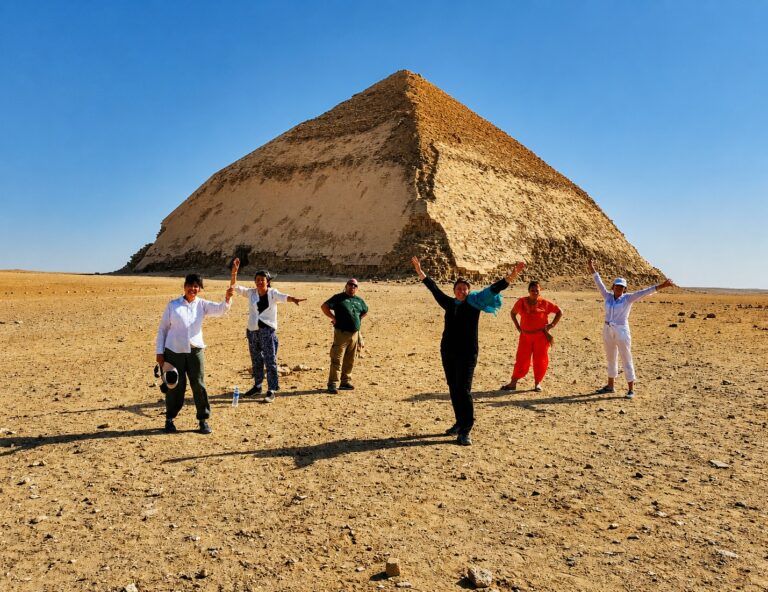
Known for the Bent Pyramid and the Red Pyramid, Dahshur provides a less crowded but equally fascinating pyramid experience.
Many visitors even prefer it because they can explore at a slower pace.
Suggested Itineraries
Half-Day Visit
- Great Pyramid
- Great Sphinx
- Panorama Point
Ideal for travelers with limited time.
Full-Day Tour
- Giza Pyramids
- Great Sphinx
- Valley Temple
- Grand Egyptian Museum
- Lunch
- Camel Ride
Perfect for first-time visitors.
Two-Day Experience
Day One
- Giza Pyramids
- Grand Egyptian Museum
Day Two
- Saqqara
- Memphis
- Dahshur
This itinerary offers a deeper understanding of Ancient Egypt’s evolution.
Why Visit with a Licensed Egyptologist?
Exploring the Giza Plateau with a professional guide transforms the experience.
A licensed Egyptologist can explain:
- Pyramid construction techniques
- Ancient Egyptian beliefs
- Royal history
- Hieroglyphics
- Archaeological discoveries
- Hidden details often missed by independent visitors
Instead of simply viewing monuments, you’ll gain a richer understanding of the civilization that created them.
Why Choose a Private Tour?
A private tour allows you to enjoy Giza at your own pace.
Benefits include:
- Hotel pickup and drop-off
- Air-conditioned transportation
- Flexible schedule
- Licensed guide
- No waiting for large groups
- Time for photography
- Personalized recommendations
- Comfortable experience
Whether you’re traveling solo, as a couple, or with family, a private tour offers convenience and flexibility.
Frequently Asked Questions
How old are the Giza Pyramids?
The pyramids were built more than 4,500 years ago, during Egypt’s Fourth Dynasty.
Which pyramid is the largest?
The Great Pyramid of Khufu is the largest and oldest of the three.
Can visitors enter the pyramids?
Yes. Entry to certain pyramids requires an additional ticket and may depend on restoration schedules.
How long should I spend at the Giza Plateau?
A minimum of 3–4 hours is recommended to comfortably explore the main attractions.
Are camel rides safe?
Yes, especially when arranged through reputable operators or your tour provider.
Can I visit independently?
Yes, but many visitors find that hiring a licensed Egyptologist greatly enriches the experience.
Is photography allowed?
Photography is generally permitted in outdoor areas. Some indoor spaces may have restrictions.
What should I wear?
Lightweight clothing, comfortable walking shoes, sunglasses, and sunscreen are recommended.
Is the site suitable for children?
Absolutely. Families often enjoy the open spaces, camel rides, and fascinating history.
When is the best time to visit?
October through April offers the most comfortable weather, though early morning visits are recommended year-round.
Travel Tips Before You Go
Before visiting, remember to:
- Start early to avoid crowds.
- Stay hydrated.
- Wear comfortable footwear.
- Bring a camera or smartphone.
- Carry some cash for optional purchases.
- Respect the archaeological site.
- Allow extra time for photography.
- Take breaks if visiting during warmer months.
Why Book with Let’s Explore Egypt?
At Let’s Explore Egypt, we specialize in creating unforgettable private experiences across Cairo and the Giza Plateau.
Our tours are designed to combine comfort, flexibility, and expert local knowledge.
When you book with us, you can expect:
- Private air-conditioned transportation
- Licensed Egyptologist guides
- Hotel pickup and drop-off
- Flexible itineraries
- No unnecessary shopping stops
- Transparent pricing
- Personalized service
- Friendly local support from booking to departure
Whether you want a half-day visit, a full-day tour, or a customized Egypt itinerary, our team is here to help you experience the very best of Egypt.
Final Thoughts
The Giza Pyramids are more than an archaeological site—they are a symbol of human creativity, ambition, and endurance.
Standing before these monuments is a humbling experience that connects you with one of the greatest civilizations in history. From the towering Great Pyramid and the mysterious Great Sphinx to the panoramic desert views and nearby cultural treasures, every moment spent at Giza offers something extraordinary.
Whether you’re passionate about ancient history, photography, architecture, or simply seeking a once-in-a-lifetime adventure, the Giza Plateau promises memories that will stay with you forever.
If you’re planning your journey, let Let’s Explore Egypt help you experience the pyramids with expert guidance, private transportation, and carefully crafted itineraries designed around your interests.
Book your Giza Pyramids tour today and discover why this timeless wonder continues to inspire millions of visitors from around the world.
At Let’s Explore Egypt, we specialize in:
- Private Egypt tour
- Grand Egyptian Museum tours
- Cairo day Tours
- Luxor Day Tour
- Egypt Multi-Day Tours
- Egypt Solo Tours
- Egypt Family Tours
Popular Packages
Choose your Giza Pyramids Tour
Choose the best
our Giza Pyramid Tour
Turn a traditional Egyptian meal into an exciting team-building culinary adventure. The Egyptian Food Challenge invites participants to taste authentic...
The Egyptian Treasure Hunt is an interactive team-building experience that transforms sightseeing into an exciting competition. Instead of simply following...
Experience the thrill of riding an ATV quad bike through the Egyptian desert on an exciting outdoor adventure designed for...
Take your team to the desert for a fun and memorable Camel Race Challenge at the Giza Pyramids. This unique...
Discover Egypt on an unforgettable 16-Day Egypt Tour Package: Pyramids, Nile Cruise, Sinai & Red Sea, a private journey combining...
Discover Egypt on an unforgettable 16-Day Egypt Vacation Package: Pyramids, Luxor, Aswan, Sinai & Hurghada, a private journey combining ancient...
Recommended Egypt Tours


Why You Can Trust Let's Explore Egypt
This article was written and reviewed by the Let's Explore Egypt Editorial Team, a licensed Egyptian tour operator specializing in private Egypt tours, Nile cruises, and tailor-made travel experiences since 2009.
- 🏛 Licensed Egyptian Tour Operator Since 2009
- ⭐ Trusted by Thousands of Travelers Worldwide
- 👨🏫 Written & Reviewed by Local Egypt Travel Experts
- 🚐 Private Tours & Tailor-Made Travel Experiences
- 📞 24/7 Customer Support