The Giza Pyramids are the world’s most famous ancient monuments and one of the last remaining Seven Wonders of the Ancient World. Located just outside Cairo, Egypt, this UNESCO World Heritage Site attracts millions of visitors every year who come to experience over 4,500 years of history.
Whether you’re planning your first trip to Egypt or looking for insider tips, this guide covers everything you need to know before visiting the Giza Plateau.
Table of Contents
- Why Visit the Giza Pyramids?
- History of the Giza Pyramids
- The Three Great Pyramids
- The Great Sphinx
- What to See Inside the Pyramids
- Best Time to Visit
- Opening Hours
- Ticket Information
- How to Get There
- Best Things to Do
- Camel & Horse Rides
- Photography Tips
- What to Wear
- Safety Tips
- Common Tourist Scams
- Nearby Attractions
- Frequently Asked Questions
Why Visit the Giza Pyramids?
The Giza Plateau is more than just three pyramids.
Visitors can experience:
- The Great Pyramid of Khufu
- Pyramid of Khafre
- Pyramid of Menkaure
- The Great Sphinx
- Valley Temple
- Panoramic viewpoint
- Camel rides across the desert
- Spectacular sunrise and sunset views
- Ancient royal tombs
- Local culture
It’s the single most iconic destination in Egypt.
History of the Giza Pyramids
The pyramids were built during Egypt’s Fourth Dynasty around 2580–2500 BC.
The three pyramids were constructed as royal tombs for:
- Pharaoh Khufu
- Pharaoh Khafre
- Pharaoh Menkaure
Over 2.3 million limestone blocks were used to build the Great Pyramid.
For nearly 4,000 years it remained the tallest structure on Earth.
The Three Great Pyramids
The Great Pyramid of Khufu
Height (original):
146.6 meters
Current height:
138.8 meters
Built:
Around 2560 BC
Highlights:
- Largest pyramid
- One of the Seven Wonders
- King’s Chamber
- Grand Gallery
- Interior passageways
Pyramid of Khafre
Often appears taller because it sits on higher ground.
Highlights:
- Original casing stones remain at the top.
- Best preserved pyramid.
- Connected to the Great Sphinx.
Pyramid of Menkaure
The smallest of the three pyramids but still incredibly impressive.
Nearby are three smaller queens’ pyramids.
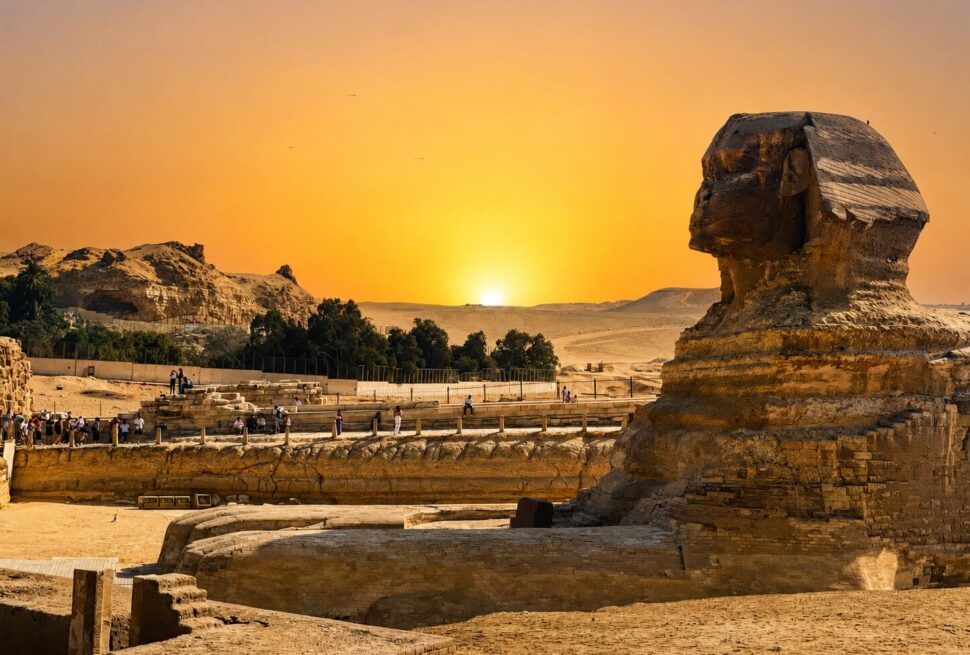
The Great Sphinx
The Great Sphinx measures:
Length:
73 meters
Height:
20 meters
It has the body of a lion and the head of Pharaoh Khafre.
The Sphinx has guarded the pyramids for over 4,500 years.
Can You Go Inside the Pyramids?
Yes.
Visitors can enter:
- Great Pyramid of Khufu
- Pyramid of Khafre (when open)
- Pyramid of Menkaure (when open)
Inside you’ll find:
- Narrow tunnels
- Ancient chambers
- The King’s Chamber
- Granite sarcophagus
- Massive stone architecture
There are no treasures inside today.
Best Time to Visit
The ideal months are:
- October
- November
- December
- January
- February
- March
- April
Summer temperatures can exceed 40°C (104°F).
Best Time of Day
Early morning (8–10 AM)
Advantages:
- Cooler weather
- Fewer crowds
- Better photography
- Softer sunlight
Late afternoon is also excellent.
Opening Hours
Generally:
8:00 AM – 5:00 PM
Hours may change during Ramadan or holidays.
Ticket Information
Separate tickets may apply for:
- Giza Plateau entrance
- Great Pyramid interior
- Khafre Pyramid
- Menkaure Pyramid
Children and students may receive discounts.
How to Get to the Giza Pyramids
From Downtown Cairo:
- Taxi
- Uber
- Private tour
- Metro (combined with taxi)
- Hotel transfer
Travel time:
30–60 minutes depending on traffic.
Best Things to Do
Explore the Great Pyramid
The highlight of every visit.
Visit the Sphinx
Walk to the famous guardian of Egypt.
Panorama Point
Perfect for wide-angle photos of all three pyramids.
Ride a Camel
One of Egypt’s classic experiences.
Book through reputable operators to avoid scams.
Visit the Grand Egyptian Museum
Only minutes from the pyramids.
Home to thousands of priceless artifacts including many treasures from King Tutankhamun.
Watch the Sound & Light Show
An evening experience featuring storytelling, lights, and music.
Photography Tips
Best spots:
- Panorama Viewpoint
- Sphinx Plaza
- Desert side of the pyramids
- Sunset viewpoint
Early morning provides the best lighting.
What Should You Wear?
Recommended:
- Comfortable walking shoes
- Hat
- Sunglasses
- Sunscreen
- Breathable clothing
- Reusable water bottle
Safety Tips
The Giza Plateau is generally safe for tourists.
Helpful advice:
- Carry small cash for optional tips.
- Stay hydrated.
- Follow marked visitor areas.
- Book with licensed guides when possible.
- Keep valuables secure.
Common Tourist Scams
Be cautious of:
- Unofficial camel ride offers
- People demanding money after taking photos
- Fake “free gifts”
- Unlicensed guides
- Inflated souvenir prices
A reputable private tour can help you avoid these hassles.
Nearby Attractions
Within a short drive you can visit:
- Grand Egyptian Museum
- Saqqara
- Memphis
- Dahshur
- Egyptian Museum in Tahrir
- Khan El Khalili Bazaar
- Old Cairo
Frequently Asked Questions
How long should I spend at the Giza Pyramids?
Most visitors spend 3–5 hours, while a full-day tour that includes nearby attractions such as Saqqara, Memphis, and the Grand Egyptian Museum is a popular option.
Can I enter the Great Pyramid?
Yes. Entry requires a separate interior ticket, and access may be limited during maintenance or when capacity is reached.
Are camel rides worth it?
They can be a memorable experience, especially from the desert panorama. Agree on the price in advance or book through a trusted operator.
Is the site suitable for children?
Yes. Families visit regularly, but keep in mind that the interior passages of the pyramids are steep, narrow, and can be challenging for young children or visitors with mobility concerns.
What is the best month to visit?
October through April offers the most comfortable weather for sightseeing.
Can I visit without a guide?
Yes, but a knowledgeable Egyptologist can add valuable historical context and help you navigate the large archaeological site more efficiently.
Final Thoughts
The Giza Pyramids are more than an archaeological site—they are one of humanity’s greatest engineering achievements and a symbol of ancient Egypt. With thoughtful planning, an early start, and time to explore beyond the main monuments, your visit can become one of the most memorable experiences of your trip.
For many travelers, combining the pyramids with the Grand Egyptian Museum, Saqqara, and Memphis creates the most complete introduction to Egypt’s remarkable ancient civilization.
Recommended Egypt Tours
Why You Can Trust Let's Explore Egypt
This article was written and reviewed by the Let's Explore Egypt Editorial Team, a licensed Egyptian tour operator specializing in private Egypt tours, Nile cruises, and tailor-made travel experiences since 2009.
- 🏛 Licensed Egyptian Tour Operator Since 2009
- ⭐ Trusted by Thousands of Travelers Worldwide
- 👨🏫 Written & Reviewed by Local Egypt Travel Experts
- 🚐 Private Tours & Tailor-Made Travel Experiences
- 📞 24/7 Customer Support