Trip Info
-
Free cancellation up to 24 hours before the tour starts for a full refund.
-
Professional Licensed Egyptologist Guide
-
English, Arabic, and other languages upon request
-
Your private guide and driver can meet you at: Your hotel in Luxor Your Nile cruise ship Luxor Railway Station Luxor International Airport Another agreed location within Luxor Pickup time: Flexible and confirmed after booking.
-
Private Guided Tour
-
Private Air-Conditioned Vehicle
-
1-15
-
At the end of your Valley of the Kings Tour, your private driver will drop you off at your preferred location in Luxor.
Overview
Step into the ancient world of Egypt’s powerful pharaohs on a private Valley of the Kings Tour in Luxor. Explore the legendary royal burial ground on the West Bank of the Nile, where rulers of Egypt’s New Kingdom were buried in magnificent tombs carved deep into the desert mountains.
The Valley of the Kings contains more than 60 tombs, along with additional unfinished tombs, and is divided into the East and West Valleys. The royal burial ground was used primarily by rulers of the 18th, 19th, and 20th Dynasties.
With your private professional Egyptologist guide, discover the fascinating stories behind the pharaohs, ancient Egyptian beliefs about the afterlife, colorful wall paintings, hieroglyphics, and sacred funerary texts.
Your standard entrance ticket allows access to the Valley and selected tombs that are open under the site’s current visiting arrangements. Some famous tombs, including the Tomb of Tutankhamun, may require a separate ticket. The tombs open to visitors can also change as part of preservation arrangements
Highlights
- Explore the legendary Valley of the Kings
- Visit selected royal tombs
- Discover ancient Egyptian burial traditions
- See colorful wall paintings and hieroglyphics
- Learn about the journey to the afterlife
- Visit the Tomb of Tutankhamun as an optional extra
- Learn about famous pharaohs of the New Kingdom
- Enjoy a private professional Egyptologist guide
- Private air-conditioned transportation
- Flexible pickup and drop-off in Luxor
- No forced shopping stops
Reviews
Itinerary Description
Your private Valley of the Kings Tour begins with pickup from your preferred location in Luxor.
Travel in a comfortable private air-conditioned vehicle toward Luxor's West Bank, home to the ancient necropolis of Thebes.
Meet your professional Egyptologist guide and begin exploring one of Egypt's most famous archaeological sites.
The Valley was chosen as a royal burial ground partly because of its isolated location and its position on the western side of the Nile, which was associated with death, rebirth, and the setting sun in ancient Egyptian beliefs.
Enter selected tombs and admire their extraordinary decorations. Your guide will explain the ancient scenes covering the walls, including gods, sacred rituals, funerary texts, and the pharaoh's symbolic journey through the afterlife.
Depending on your interests and ticket arrangements, you may also choose to visit additional tombs requiring separate admission, such as the famous Tomb of Tutankhamun.
After your visit, relax in your private vehicle and return to your preferred location in Luxor
Hotel or Nile Cruise Pickup 🚐
Your private driver and Egyptologist guide will collect you from your hotel, Nile cruise ship, or another agreed location in Luxor.
Travel comfortably toward the West Bank.
Explore the Valley of the Kings 👑
Arrive at the famous Valley of the Kings and begin your journey into the world of ancient Egyptian royalty.
The Valley served as a major royal burial ground during Egypt's New Kingdom. Its tombs were carved into the surrounding rock rather than built as visible pyramids.
Visit Selected Royal Tombs 🏛️
Enter selected tombs included with your admission arrangements.
Inside, discover remarkable:
Hieroglyphic inscriptions
Colorful wall paintings
Images of ancient gods
Funerary texts
Sacred symbols
Scenes of the journey through the afterlife
The specific tombs open to visitors may vary on the day of your visit.
Optional Tomb of Tutankhamun 👑
For an additional experience, you may choose to visit the famous Tomb of Tutankhamun, subject to separate admission and site rules.
Tutankhamun's tomb became world-famous after Howard Carter discovered it in 1922 relatively intact. Despite its fame, the tomb is relatively modest in size compared with several other royal tombs in the Valley.
Learn About Ancient Egyptian Beliefs
Your Egyptologist guide will explain the fascinating ideas behind the royal tombs.
Discover how the ancient Egyptians prepared for eternity and why tomb walls were decorated with religious texts and images designed to guide and protect the deceased king.
Return to Your Preferred Location 🚐
After completing your visit, your private driver will return you to your preferred location in Luxor.
Includes/Excludes
Includes
- Private pickup and drop-off in Luxor
- Private air-conditioned transportation
- Professional licensed Egyptologist guide
- Guided visit to the Valley of the Kings
- Bottled water during the tour
- All service charges and taxes
- Private tour exclusively for your group
- No forced shopping stops
- Entrance fees
- Additional tickets
- Tomb of Tutankhamun entrance ticket
- Lunch and drinks
Excludes
- Personal expenses
- Gratuities
- Optional activities
- Any service not specifically mentioned under Includes
More Info
Journey into the Royal Tombs of Ancient Egypt
A Valley of the Kings Tour is one of the most fascinating experiences you can enjoy in Luxor. Located on the West Bank of the Nile, this legendary archaeological site was the royal burial ground of many pharaohs during Egypt’s New Kingdom. Instead of building pyramids, generations of rulers chose to create elaborate tombs deep inside the rocky mountains surrounding ancient Thebes.
Today, visitors can enter selected royal tombs and walk through corridors decorated with colorful paintings, hieroglyphics, sacred texts, and scenes showing the ancient Egyptian journey into the afterlife. Each tomb tells a different story about the pharaoh buried there and the beliefs that shaped ancient Egyptian civilization.
With a private Egyptologist guide, your visit becomes much more than simply walking through ancient tombs. You will learn about the kings who ruled Egypt, the meaning behind the artwork, the gods of the afterlife, the mummification process, and the extraordinary preparations that ancient Egyptians made for eternity.
Whether you are visiting Luxor for one day or spending several nights exploring the ancient city of Thebes, the Valley of the Kings is an essential part of any Egypt itinerary.
Why Is the Valley of the Kings So Famous?
The Valley of the Kings is famous because it contains the burial places of some of ancient Egypt’s most important rulers.
During the New Kingdom, Egypt became one of the most powerful civilizations in the ancient world. Pharaohs ruled from Thebes and built magnificent temples, monuments, and tombs.
The Valley became the chosen burial area for many rulers of the 18th, 19th, and 20th Dynasties.
Among the famous pharaohs connected with the Valley are:
Tutankhamun
Ramesses II
Seti I
Thutmose III
Amenhotep II
Ramesses III
Thutmose I
The tombs were carved directly into the mountains and carefully decorated to prepare and guide the deceased pharaoh for the afterlife.
The Valley is divided into the East Valley and West Valley. Most of the tombs regularly visited by tourists are located in the East Valley.
Ancient Egyptian Beliefs About the Afterlife
To understand the Valley of the Kings, it is important to understand how ancient Egyptians viewed death.
Death was not considered the complete end of existence. Instead, ancient Egyptians believed that life could continue in another world.
However, the journey into the afterlife required preparation.
The body needed to be preserved through mummification. The tomb needed to provide a protected place for the deceased. Religious texts and magical scenes were placed on the walls to help guide and protect the pharaoh.
The tomb decorations were therefore much more than beautiful artwork.
They had an important religious purpose.
Images of gods, sacred symbols, gates, boats, and supernatural creatures represented the journey through the underworld.
The deceased king was expected to overcome dangers and eventually join the gods and experience eternal renewal.
Your Egyptologist guide will explain these beliefs as you explore the tombs.
Why Did Pharaohs Stop Building Pyramids?
Earlier Egyptian kings were famously buried in pyramids.
However, during the New Kingdom, rulers began choosing a different type of royal burial.
Instead of constructing highly visible pyramids, they created hidden tombs within the mountains.
There were several advantages to this approach.
The rocky landscape provided natural protection. The remote location made the tombs less visible from a distance. Long underground corridors and chambers also created a more elaborate burial environment.
Despite these efforts, many tombs were still robbed in ancient times.
The discovery of Tutankhamun’s tomb, which remained relatively intact compared with many other royal tombs, later became one of the greatest archaeological discoveries in history.
Enter the Ancient Royal Tombs
One of the most exciting moments of your visit is entering the tombs.
From the outside, the desert landscape may appear simple and quiet.
But behind the entrances are long corridors and chambers covered with remarkable ancient artwork.
As you walk inside, you will see walls decorated with:
Hieroglyphic inscriptions
Ancient Egyptian gods
Pharaohs performing sacred rituals
Scenes of the afterlife
Funerary books
Sacred boats
Stars and astronomical symbols
Mythological creatures
Protective spells
The colors in many tombs remain remarkably vivid despite being thousands of years old.
Your guide can explain the meaning of the scenes and help you recognize important gods and symbols.
The Tombs Open to Visitors
The Valley contains numerous tombs, but not all are open to visitors at the same time.
Archaeological conservation is extremely important.
Thousands of visitors entering the tombs can affect the ancient artwork through humidity, temperature changes, and other environmental factors.
For this reason, the tombs available to visitors may change.
Your standard ticket generally allows entry to a selected number of regular tombs.
Your guide can recommend the best available tombs on the day of your visit.
Some tombs require separate tickets because of their historical importance, preservation requirements, or visitor management arrangements.
The Tomb of Tutankhamun
The most famous tomb in the Valley is undoubtedly the Tomb of Tutankhamun.
Tutankhamun became world-famous after British archaeologist Howard Carter discovered his tomb in 1922.
Unlike many royal tombs that had been heavily robbed, Tutankhamun’s burial contained an extraordinary collection of objects.
The discovery captured the imagination of the world.
Tutankhamun himself was a relatively young king who died at an early age, but the discovery of his tomb made him one of the most famous pharaohs in history.
Visitors can often add the Tomb of Tutankhamun to their Valley visit by purchasing a separate ticket.
The tomb is smaller than some of the other royal tombs, but its historical significance makes it a popular optional experience.
The Tomb of Seti I
The Tomb of Seti I is considered one of the most impressive tombs in the Valley of the Kings.
Seti I was the father of Ramesses II and ruled during the 19th Dynasty.
His tomb is famous for its exceptional decoration, long corridors, and beautifully preserved artwork.
The walls contain detailed scenes and religious texts connected with the ancient Egyptian journey through the afterlife.
Because of its importance, access may require a separate premium ticket.
If available and included in your travel plans, it can be an extraordinary addition to your visit.
The Tomb of Ramesses II
Ramesses II is one of the most famous pharaohs in Egyptian history.
Known for his long reign and extensive building projects, he left behind monuments throughout Egypt.
His tomb in the Valley of the Kings reflects the importance of his royal status.
The tomb contains elaborate decorations and scenes connected with ancient Egyptian religious beliefs.
The availability of the tomb for visitors can change, so your guide will advise you about the best options during your tour.
Discover the Hieroglyphics
One of the most fascinating parts of visiting the Valley is seeing ancient Egyptian writing on the tomb walls.
Hieroglyphics were used to record names, prayers, religious texts, and important information.
Your guide can show you how royal names were written inside cartouches and help you recognize some common symbols.
You may learn about:
The ankh, symbol of life
The Eye of Horus
Sacred birds
The scarab
Solar symbols
Images of Osiris
Images of Anubis
Images of Ra
Understanding even a few of these symbols can completely change the way you see the tomb decorations.
Meet the Gods of the Afterlife
The tomb walls introduce visitors to many important gods from ancient Egyptian mythology.
Osiris
Osiris was closely associated with the afterlife, resurrection, and the world of the dead.
Anubis
Anubis was associated with mummification and the protection of the deceased.
Ra
Ra was the powerful sun god and played an important role in beliefs about the daily cycle of death and rebirth.
Horus
Horus was associated with kingship and divine protection.
Hathor
Hathor was associated with motherhood, joy, music, and protection.
Your guide will explain how these gods appear in the tombs and why they were important to the pharaoh’s journey.
Private Egyptologist Guide
A professional Egyptologist guide can make a major difference to your experience.
The Valley of the Kings contains an enormous amount of history, but much of it is hidden in the details of the wall decorations.
Your guide can explain:
The history of the New Kingdom
The pharaohs buried in the Valley
Ancient Egyptian religious beliefs
Mummification
Funerary texts
Hieroglyphics
Mythology
The discovery of Tutankhamun’s tomb
The architecture of the royal tombs
Modern conservation efforts
Because this is a private tour, you can ask questions and enjoy a more personal experience.
The pace can also be adjusted according to your interests.
Comfortable Private Transportation
Your Valley of the Kings Tour includes comfortable private transportation from Luxor.
Your driver can collect you from your hotel, Nile cruise ship, railway station, airport, or another agreed location.
Travel across the Nile toward the West Bank and enjoy the changing scenery as the modern city gives way to farmland, villages, and the desert landscape.
After completing your visit, your private driver will return you to your preferred location.
What to Wear
The Valley of the Kings is located in a desert environment, and comfortable clothing is important.
We recommend:
Lightweight and breathable clothing
Comfortable walking shoes
Sunglasses
Hat
Sunscreen
The tombs can involve walking along pathways and through corridors.
Supportive footwear is recommended.
During winter, mornings may be cooler, so a light jacket can be useful.
What to Bring
Bring only what you need for a comfortable visit.
Recommended items include:
Camera or smartphone
Sunglasses
Sunscreen
Hat
Bottled water
Comfortable shoes
Small day bag
Personal medication
Photography rules may vary between tombs, so always check with your guide before taking pictures.
Best Time to Visit the Valley of the Kings
The Valley can be visited throughout the year.
However, an early morning visit is often more comfortable, particularly during the hot summer months.
The cooler months from October to April are generally popular for sightseeing in Luxor.
If possible, visiting earlier in the day can also provide a more comfortable experience before the strongest afternoon heat.
Combine the Valley of the Kings with Other West Bank Attractions
The Valley of the Kings can easily be combined with other important Luxor attractions.
Popular additions include:
Temple of Queen Hatshepsut
Discover the spectacular terraced temple built against the dramatic cliffs of Deir el-Bahari.
Colossi of Memnon
Stop to see the two enormous seated statues of Pharaoh Amenhotep III.
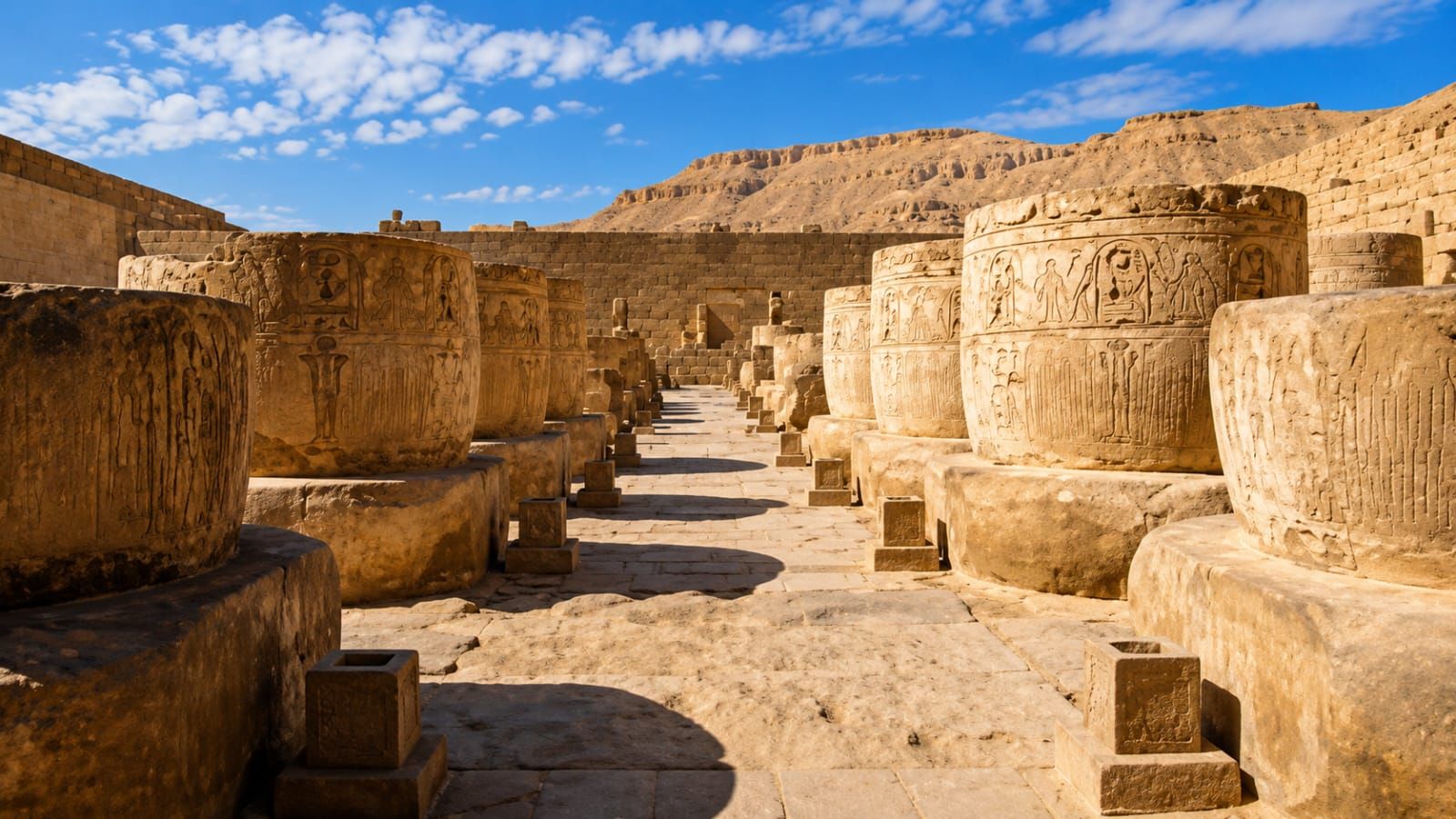
Medinet Habu Temple
Explore the impressive mortuary temple of Ramesses III.
Valley of the Queens
Visit the burial area associated with royal women and members of the ancient Egyptian royal family.
A full West Bank tour is an excellent choice for travelers who want to explore several major archaeological sites in one day.
Is the Valley of the Kings Suitable for Families?
Yes. The Valley of the Kings can be a fascinating experience for families.
Children often enjoy entering the ancient tombs and seeing the colorful wall paintings.
Because this is a private tour, your guide can adjust the explanations to make the experience more engaging for younger travelers.
Families should remember that there is walking involved and that the desert can become very hot during summer.
Important Conservation Rules
The Valley of the Kings is one of the world’s most valuable archaeological sites.
Visitors should respect all site rules designed to protect the ancient tombs.
These rules may include restrictions relating to:
Photography
Video recording
Touching the walls
Food and drinks
Large bags
Flash photography
Never touch the ancient paintings or inscriptions.
These decorations have survived for thousands of years and require careful protection.
A UNESCO World Heritage Experience
The Valley of the Kings is part of the archaeological area known as Ancient Thebes and its Necropolis, recognized as a UNESCO World Heritage Site.
The region represents one of the most important concentrations of ancient monuments anywhere in the world.
Visiting the Valley allows you to experience the extraordinary achievements of the civilization that ruled Egypt thousands of years ago.
Why This Tour Is a Must-Do in Luxor
A visit to Luxor would not be complete without exploring the Valley of the Kings.
This is where ancient Egyptian rulers prepared for eternity.
Behind the desert mountains, powerful pharaohs created underground worlds filled with religious art, sacred texts, and extraordinary symbols.
Walking through these ancient corridors creates a direct connection with the people who built them thousands of years ago.
Every tomb is different.
Every wall tells a story.
Every corridor reveals another part of the ancient Egyptian vision of life, death, and eternity.
Book Your Private Valley of the Kings Tour
A private Valley of the Kings Tour is the perfect way to explore one of Egypt’s greatest archaeological treasures.
Enjoy convenient pickup in Luxor, comfortable private transportation, and the knowledge of a professional Egyptologist guide.
Enter selected royal tombs, admire ancient paintings and hieroglyphics, and discover the fascinating beliefs that guided the pharaohs on their journey to the afterlife.
For an even more memorable experience, consider adding the famous Tomb of Tutankhamun or another premium tomb, subject to ticket availability.
Walk in the footsteps of Egypt’s ancient pharaohs and discover the secrets of the legendary Valley of the Kings on an unforgettable private tour in Luxor.
Frequently Asked Questions
The private tour usually takes approximately 3–4 hours, depending on your pickup location, pace, and time spent inside the tombs.
Yes. The tour is private and designed exclusively for you and your group.
The number of tombs included depends on your entrance ticket and the tombs open to visitors on your travel date. The official tourism information notes that tomb access is managed to support preservation.
No. The Tomb of Tutankhamun usually requires a separate entrance ticket. It can be added to your visit where available
The western side of the Nile was associated with death and rebirth in ancient Egyptian beliefs because the sun appeared to set in the west before being reborn
There is a moderate amount of walking, including pathways and walking inside the tombs. Comfortable shoes are recommended.
Yes. Families are welcome, and a private guide can adapt the explanations and pace to suit your group.
Photography rules can vary between tombs and may change. Your guide will advise you about the current rules during your visi
Wear comfortable, lightweight clothing and supportive walking shoes. A hat, sunglasses, and sunscreen are recommended.
An early morning visit is generally more comfortable, especially during warmer months.