

Trip Info
-
Free cancellation up to 24 hours before the tour starts for a full refund
-
Professional Licensed Egyptologist Guide
-
English, Arabic, and other languages upon request
-
Your private Egyptologist guide and driver can meet you at: Your hotel in Luxor Your Nile cruise ship Luxor Railway Station Luxor International Airport Another agreed location within Luxor Pickup time: Flexible and confirmed after booking.
-
Private Guided Tour
-
Private Air-Conditioned Vehicle
-
1-15
-
At the end of your Karnak Temple & Luxor Temple Tour, your private driver will drop you off at your preferred location in Luxor.
-
1
-
99
Overview
Discover two of the most magnificent monuments of ancient Egypt on this private Karnak Temple & Luxor Temple Tour. Explore the legendary temples of ancient Thebes with a professional Egyptologist guide and learn about the pharaohs, gods, religious ceremonies, and extraordinary architecture that shaped Luxor thousands of years ago.
Begin at the vast Karnak Temple Complex, one of ancient Egypt’s most important religious centers. Walk through monumental gateways and courtyards, admire towering obelisks, visit the Sacred Lake, and stand beneath the famous Great Hypostyle Hall, with its 134 enormous columns.
Continue to the beautiful Luxor Temple, located in the heart of modern Luxor. Discover its grand colonnades, statues, courtyards, and monuments built and expanded by rulers including Amenhotep III and Ramesses II.
The two temples were historically connected by the ancient Avenue of Sphinxes and played an important role in the Opet Festival. Today, both form part of the extraordinary archaeological landscape of ancient Thebes.
Highlights
- Explore the magnificent Karnak Temple Complex
- Walk through the Great Hypostyle Hall
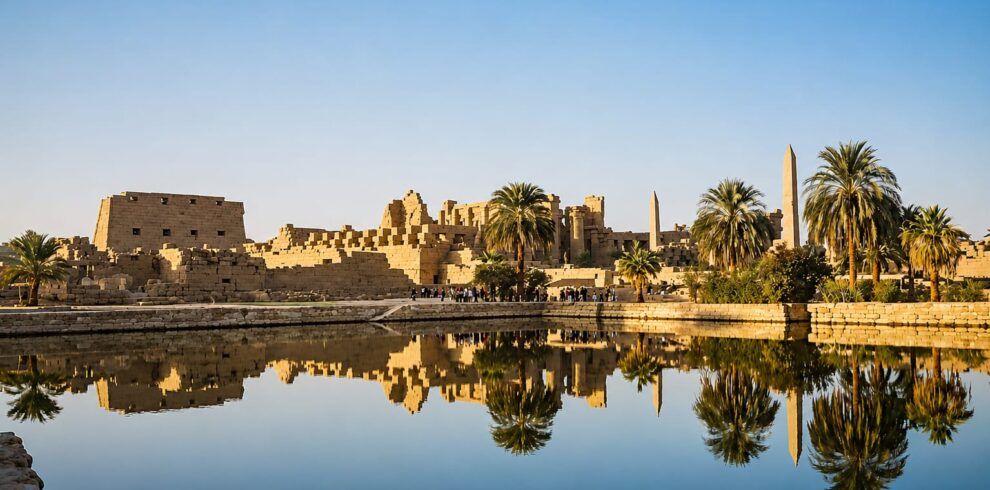
- See Karnak's Sacred Lake
- Discover ancient obelisks and statues
- Learn about the god Amun and ancient Egyptian religion
- Visit the beautiful Luxor Temple
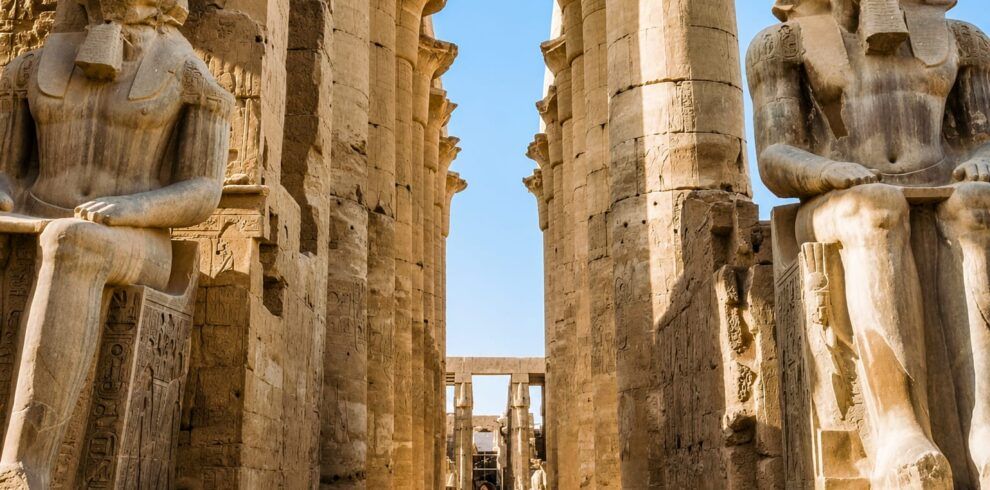
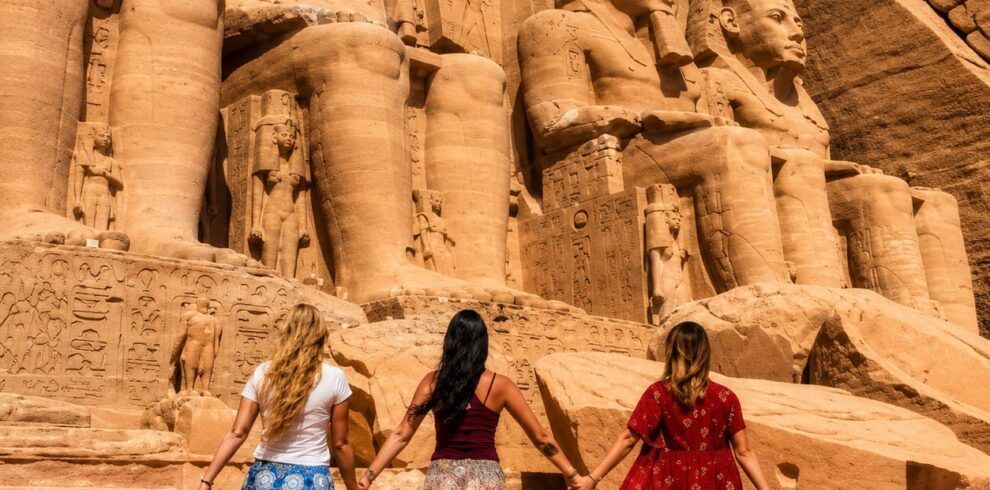
- See the monumental statues of Ramesses II
- Explore the Great Colonnade and ancient courtyards
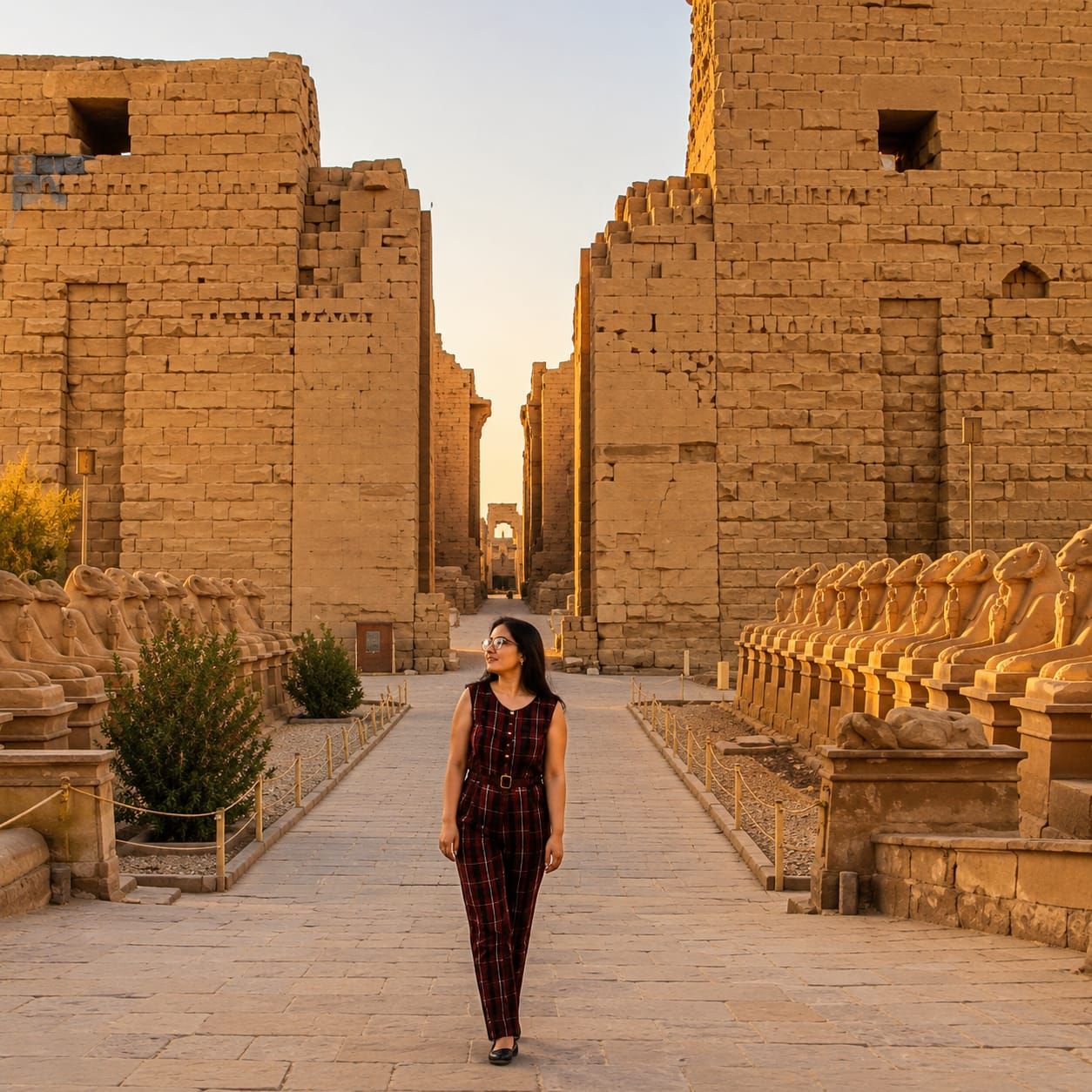
- Discover the Avenue of Sphinxes
- Learn about the ancient Opet Festival
- Enjoy a private professional Egyptologist guide
- Travel in a private air-conditioned vehicle
- Flexible pickup time
- No forced shopping stops
Reviews
Itinerary Description
Your private Karnak Temple & Luxor Temple Tour begins with pickup from your hotel, Nile cruise, or another agreed location in Luxor.
Meet your professional Egyptologist guide and travel to Karnak Temple, the largest temple complex in ancient Thebes. Explore its monumental architecture and discover how generations of Egyptian kings added temples, pylons, obelisks, chapels, and statues to this extraordinary sacred site.
After Karnak, travel to Luxor Temple, approximately three kilometers to the south. Here, explore one of Egypt's most beautiful temples and learn about its connection with ancient royal ceremonies and the Opet Festival.
The two temples were once connected by a sphinx-lined ceremonial route, creating a sacred processional landscape across ancient Thebes.
After completing your visits, your private driver will return you to your preferred location in Luxor.
Karnak Temple 🏛️
Start your tour at the magnificent Karnak Temple Complex.
Karnak was developed over many centuries and contains an extraordinary collection of temples, chapels, gateways, statues, obelisks, and sacred spaces. The complex was especially important as a center for the worship of Amun and the other members of the Theban religious tradition.
The Great Hypostyle Hall
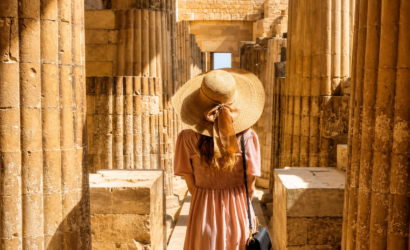
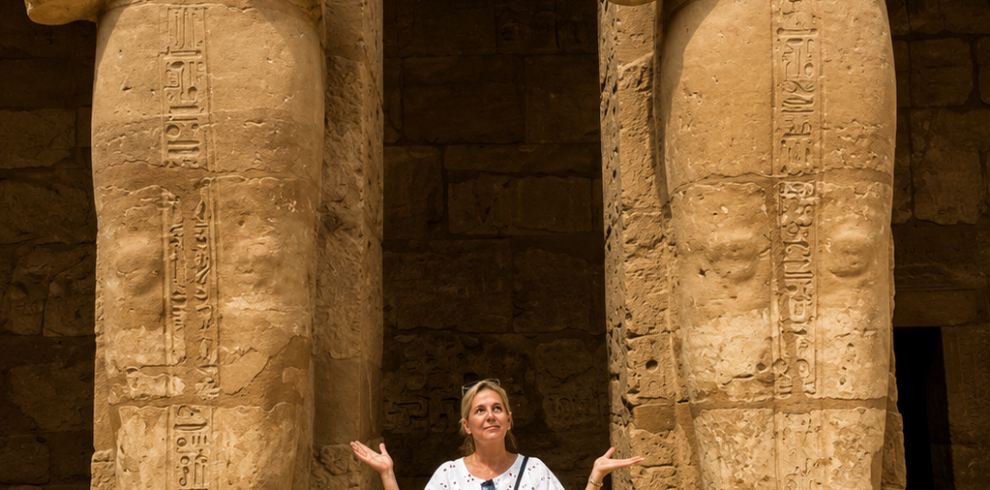
Walk through the famous Great Hypostyle Hall and admire its 134 massive columns. This remarkable architectural space is one of the most famous sights in all of Egypt.
The Obelisks
Discover the impressive obelisks built by ancient Egyptian rulers, including the famous towering obelisk of Queen Hatshepsut.
The Sacred Lake
Visit the Sacred Lake, an important part of the temple complex associated with ancient religious rituals and purification.
Ancient Statues and Temples
As you explore, your Egyptologist guide will explain the stories behind the monuments, hieroglyphics, gods, pharaohs, and ceremonies that once took place here.
Luxor Temple ⛩️
Continue to Luxor Temple, beautifully located in the center of modern Luxor.
The temple was developed by several rulers over centuries. Its core was built primarily by Amenhotep III, while Ramesses II added major monuments, including the impressive pylon and courtyard.
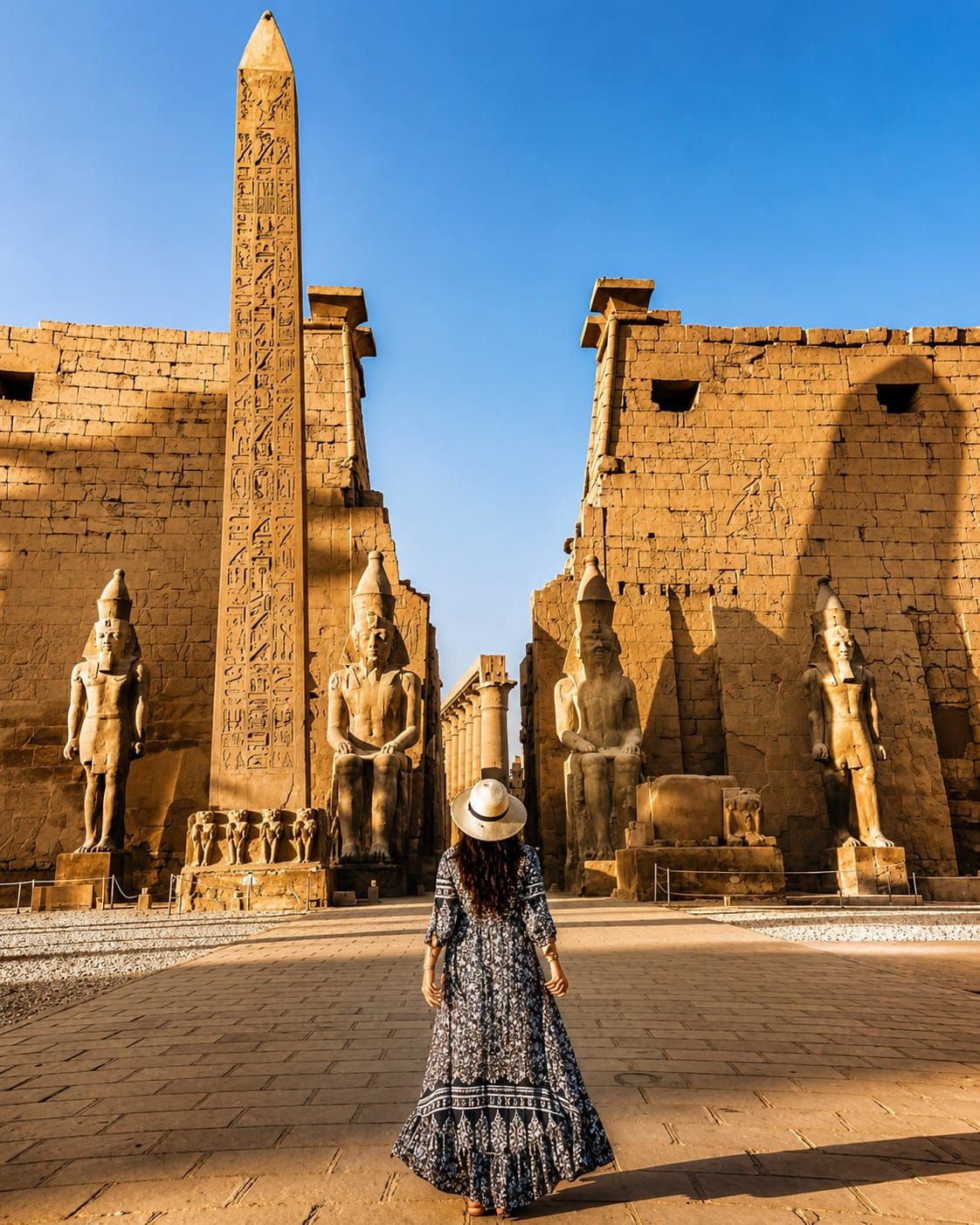
The Monumental Entrance
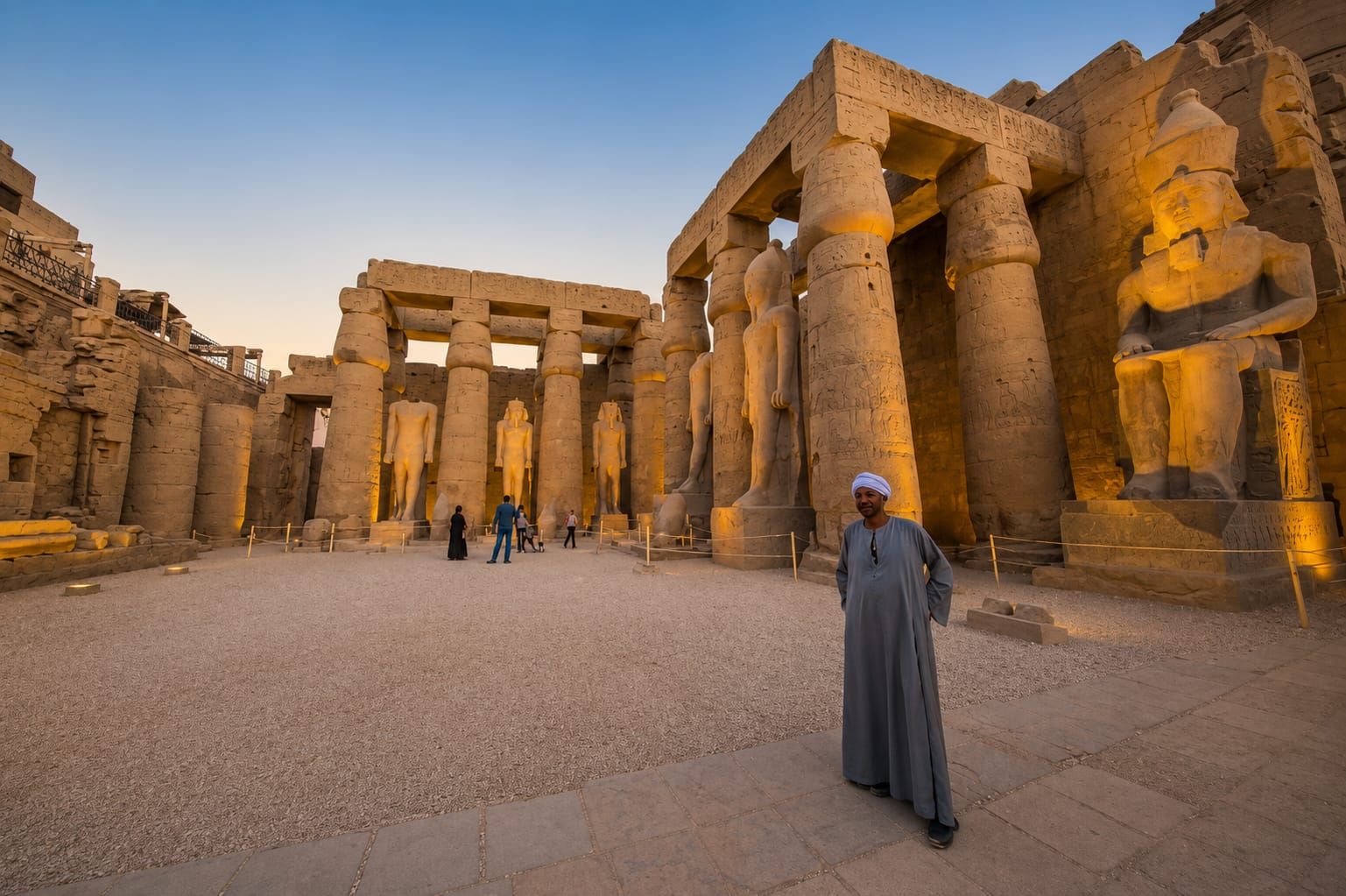
See the huge statues of Ramesses II and the temple's monumental entrance.
One of the original pair of obelisks remains at Luxor Temple, while the other was moved to Paris in the nineteenth century.
The Great Colonnade
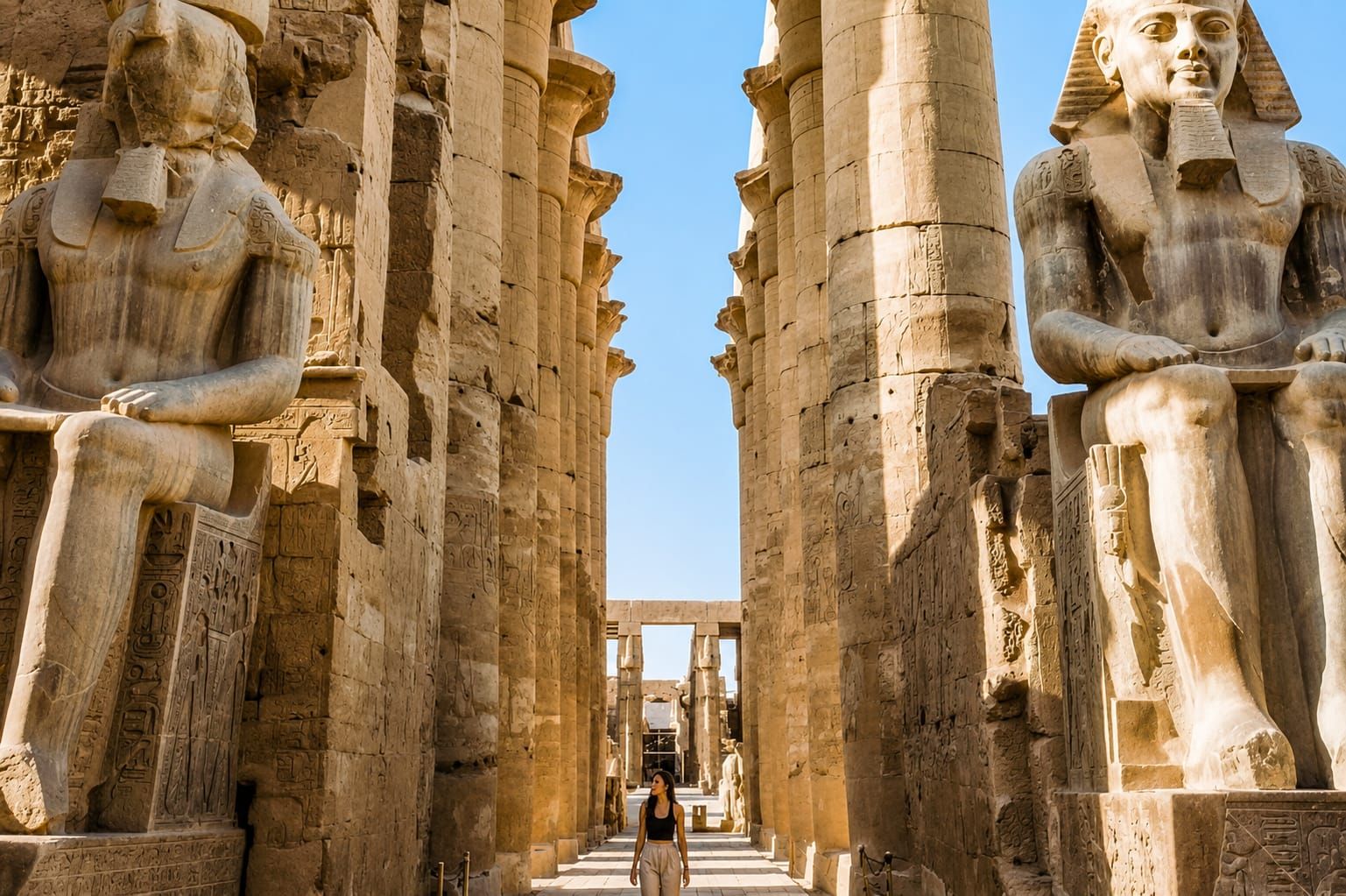
Walk through the magnificent colonnade and admire the monumental columns and ancient decorations.
Ancient Courtyards
Explore the Courtyard of Ramesses II and the impressive architectural spaces built during different periods of Egyptian history.
Avenue of Sphinxes
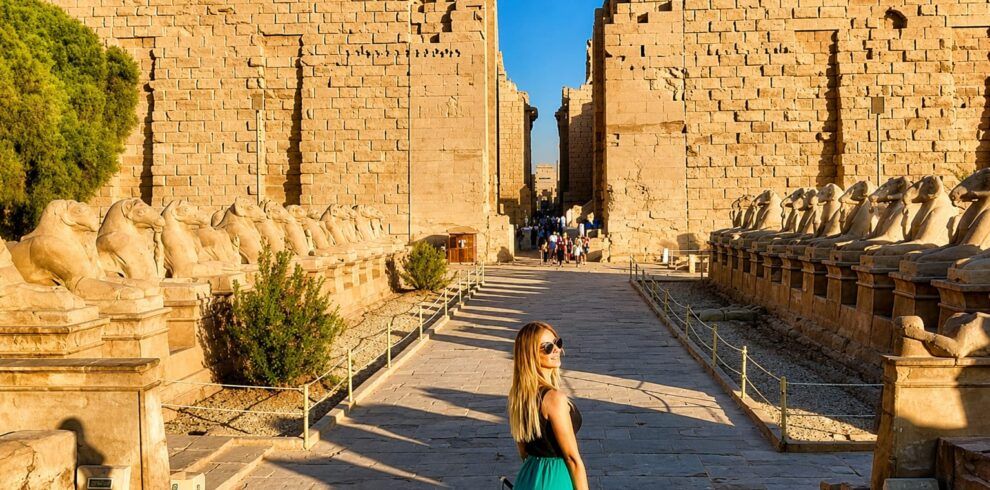
Learn about the ancient processional road connecting Karnak Temple and Luxor Temple. The restored avenue stretches for approximately 2.7 kilometers and was used for important religious ceremonies.
Optional Evening Visit to Luxor Temple 🌙
For a different experience, your itinerary can be arranged to visit Luxor Temple later in the day.
At night, the temple's illuminated columns and statues create a spectacular atmosphere and excellent opportunities for photography.
Includes/Excludes
Includes
- Entrance fees
- Lunch and drinks
- Private pickup and drop-off in Luxor
- Private air-conditioned transportation
- Professional licensed Egyptologist guide
- Guided visit to Karnak Temple
- Guided visit to Luxor Temple
- Bottled water during the tour
- All service charges and taxes
- Private tour exclusively for your group
- No forced shopping stops
Excludes
- Personal expenses
- Gratuities
- Optional activities
- Karnak Sound and Light Show
- Any service not specifically mentioned under Includes
More Info
Discover Two of the Greatest Temples of Ancient Egypt
The Karnak Temple & Luxor Temple Tour is a fascinating journey into the heart of ancient Thebes, the city now known as Luxor. This private experience takes you to two of Egypt’s most extraordinary temples and gives you the opportunity to explore thousands of years of history with a professional Egyptologist guide.
Luxor is often described as the world’s greatest open-air museum. The city is home to an exceptional concentration of ancient monuments, temples, tombs, statues, and archaeological sites. While Luxor’s West Bank is famous for the Valley of the Kings and the royal necropolis, the East Bank was historically associated with the great temples and the religious life of ancient Thebes.
On this tour, you will visit Karnak Temple, one of the largest religious complexes ever constructed, and Luxor Temple, a magnificent monument located in the heart of the modern city. Although each temple has its own unique history and architecture, they were historically connected through an ancient ceremonial route known as the Avenue of Sphinxes.
Together, these monuments tell an extraordinary story about ancient Egyptian religion, kingship, architecture, mythology, and ceremonial life.
Why Visit Karnak and Luxor Temple Together?
Visiting both temples on the same tour gives you a much deeper understanding of ancient Thebes.
Karnak was a vast religious complex that developed over many centuries. Different pharaohs added new buildings, temples, courtyards, statues, gateways, and obelisks.
Luxor Temple had a different purpose and atmosphere. It was closely associated with royal ceremonies, the renewal of kingship, and the great religious celebrations that connected it with Karnak.
The two temples were linked by a ceremonial road lined with sphinxes. During important festivals, religious processions traveled between the sacred sites.
When you visit both monuments, you can better imagine how ancient Thebes once functioned as a great religious and ceremonial center.
This private tour gives you enough time to appreciate the major highlights while learning about the fascinating history behind each structure.
Explore the Magnificent Karnak Temple Complex
Your journey begins at the spectacular Karnak Temple Complex.
Karnak is not a single temple. It is an enormous collection of temples, chapels, sanctuaries, pylons, obelisks, statues, and ceremonial spaces built and expanded over many centuries.
The site became one of the most important religious centers in ancient Egypt.
The main area of Karnak was strongly connected with the worship of Amun-Ra, one of the most important gods in ancient Egyptian religion.
Successive pharaohs wanted to demonstrate their power and devotion by contributing new monuments to the sacred complex.
As a result, Karnak became an extraordinary architectural record of generations of Egyptian history.
Walking through the site, you will see the work of many different rulers and dynasties.
The Great Hypostyle Hall
One of the most famous areas of Karnak is the remarkable Great Hypostyle Hall.
This enormous hall contains 134 massive stone columns arranged in rows.
Walking through the columns is one of the most unforgettable experiences in Egypt.
The columns are covered with carvings and inscriptions, many of which tell stories about pharaohs, gods, religious ceremonies, and military victories.
The scale of the hall demonstrates the remarkable architectural abilities of ancient Egyptian builders.
Some of the central columns are so enormous that visitors can stand beneath them and appreciate their extraordinary height.
Your Egyptologist guide will explain the scenes carved into the walls and columns and help you understand the symbolism behind the ancient artwork.
Karnak’s Monumental Pylons and Gateways
As you explore Karnak, you will pass through monumental gateways known as pylons.
These massive stone structures formed impressive entrances to different sections of the temple complex.
Many of them were decorated with scenes showing the pharaoh making offerings to the gods or celebrating military victories.
The pylons were designed to create a sense of progression as visitors moved deeper into the sacred areas of the temple.
Your guide will explain how the architecture of Karnak reflected ancient Egyptian beliefs and the hierarchy of the religious world.
The Obelisks of Karnak
Karnak is also famous for its impressive obelisks.
These tall stone monuments were carved from single pieces of stone and transported over great distances before being erected at the temple.
One of the most famous surviving examples is the obelisk of Queen Hatshepsut.
The size and weight of these monuments demonstrate the incredible engineering skills of ancient Egyptian workers.
Obelisks were associated with the sun and played an important symbolic role in Egyptian religious architecture.
Your guide can explain how they were created, transported, and raised thousands of years ago.
The Sacred Lake
Another fascinating feature of Karnak is the Sacred Lake.
The lake was used in connection with ancient religious rituals and temple activities.
It remains one of the most peaceful areas of the enormous complex.
Standing near the water, you can take a break from the busy temple spaces and imagine the priests who once performed ceremonies here.
The Sacred Lake provides another reminder that Karnak was not simply a collection of impressive buildings. It was a living religious institution where priests, officials, and royal representatives carried out important rituals.
Ancient Statues and Hieroglyphics
Everywhere you walk at Karnak, you will see statues, carvings, and inscriptions.
Some statues represent pharaohs. Others represent gods and religious figures.
The walls are covered with hieroglyphics and scenes that provide valuable information about ancient Egyptian history.
Your private guide can help you understand these details and point out features that might otherwise be easy to miss.
Learning how to recognize common symbols, gods, and royal names can make the temple experience even more interesting.
Continue to Luxor Temple
After exploring Karnak, continue through modern Luxor to the beautiful Luxor Temple.
Located in the center of the city, Luxor Temple has a unique atmosphere.
Unlike Karnak, which feels vast and complex, Luxor Temple has a more concentrated and elegant design.
The temple was developed by several important rulers, including Amenhotep III and Ramesses II.
As you enter the temple, you will discover monumental statues, towering columns, ancient courtyards, and beautifully decorated walls.
The Great Entrance of Luxor Temple
One of the first impressive sights at Luxor Temple is its monumental entrance.
The entrance area is associated with the building projects of Ramesses II.
Massive statues of the pharaoh stand near the pylon, creating an impressive introduction to the temple.
The entrance originally featured a pair of obelisks.
Today, one remains at Luxor Temple, while the other was transported to Paris during the nineteenth century.
The remaining obelisk and statues continue to demonstrate the scale and grandeur of ancient Egyptian royal architecture.
The Courtyard of Ramesses II
As you continue into the temple, explore the grand courtyard associated with Ramesses II.
The courtyard is surrounded by monumental columns and statues.
This area demonstrates the importance of royal imagery in ancient Egyptian architecture.
Pharaohs were not only political rulers. They also played a central role in religious ceremonies and were responsible for maintaining the proper relationship between the human world and the gods.
Your guide will explain the role of the pharaoh and the meaning behind the scenes carved into the temple.
The Great Colonnade
One of the most beautiful sections of Luxor Temple is its impressive colonnade.
Tall columns line the ancient ceremonial spaces and create a dramatic perspective through the temple.
The columns and walls contain carvings and scenes connected with religious ceremonies and royal celebrations.
This is also one of the best places for photography.
The combination of monumental architecture and detailed ancient artwork makes Luxor Temple a particularly beautiful place to explore.
The Ancient Avenue of Sphinxes
One of the most fascinating connections between Karnak and Luxor Temple is the Avenue of Sphinxes.
This ancient ceremonial route historically linked the two sacred complexes.
The avenue was lined with hundreds of sphinx statues and played an important role in religious processions.
The restored route helps modern visitors understand that Karnak and Luxor Temple were once part of a much larger sacred landscape.
Walking near the avenue allows you to imagine the great processions that once traveled between the temples.
The Opet Festival
One of the most important religious celebrations associated with Karnak and Luxor Temple was the ancient Opet Festival.
During this major festival, sacred processions traveled between the temples.
The celebrations involved priests, religious objects, ceremonies, and royal participation.
The festival was connected with religious renewal and the symbolic renewal of royal power.
Understanding the Opet Festival adds another dimension to your visit.
The temples were not simply monuments built to stand silently for thousands of years. They were active religious spaces filled with ceremonies, processions, music, priests, and royal rituals.
Visit Luxor Temple During the Day or Evening
One of the advantages of a private tour is flexibility.
You can visit Luxor Temple during the daytime or arrange your itinerary so that you arrive later in the afternoon.
As the sun sets, the atmosphere changes dramatically.
At night, Luxor Temple is illuminated, and the ancient columns and statues create a beautiful scene against the dark sky.
An evening visit can be especially enjoyable during the warmer months when temperatures become more comfortable after sunset.
It is also an excellent option for photographers and couples looking for a memorable experience.
A Private Egyptologist Guide Makes the Difference
Exploring Karnak and Luxor Temple with a professional Egyptologist guide allows you to understand the monuments on a much deeper level.
Ancient Egyptian temples contain thousands of details.
Without an explanation, it can be difficult to understand:
Who built each monument
Which god was worshipped
What the hieroglyphics mean
Why the temple was designed in a particular way
How religious ceremonies were performed
What the carvings represent
How the pharaohs used the temples
Why Karnak and Luxor Temple were connected
A private guide can answer your questions and adapt the visit to your interests.
If you enjoy photography, history, mythology, or architecture, the tour can focus more on the aspects that interest you most.
Comfortable Private Transportation
Your private air-conditioned vehicle makes traveling between the temples easy and comfortable.
Karnak and Luxor Temple are located a short distance apart, but private transportation allows you to avoid the inconvenience of arranging local transport.
Your driver will take you between the attractions and remain available according to your itinerary.
This is especially useful during the hot summer months.
What to Wear
The tour involves outdoor sightseeing and walking, so comfortable clothing is recommended.
Wear:
Comfortable walking shoes
Lightweight clothing
Hat
Sunglasses
Sunscreen
During winter evenings, you may want to bring a light jacket.
The ground at archaeological sites can be uneven, so supportive shoes are recommended.
What to Bring
For a comfortable visit, bring:
Camera or smartphone
Sunscreen
Sunglasses
Hat
Water
Comfortable walking shoes
Personal medication
Small day bag
Avoid carrying unnecessary heavy bags during the tour.
Best Time to Visit Karnak and Luxor Temple
Luxor can be visited throughout the year.
The cooler months from October to April are generally more comfortable for outdoor sightseeing.
During the summer, temperatures can become very high during the middle of the day.
For this reason, an early morning start or late-afternoon itinerary may be more comfortable.
Visiting Luxor Temple in the evening is another excellent option.
Combine Your Tour with Other Luxor Attractions
If you have more time, your private tour can be customized with additional experiences.
Popular options include:
Valley of the Kings
Temple of Queen Hatshepsut
Colossi of Memnon
Medinet Habu Temple
Luxor Museum
Mummification Museum
Nile felucca ride
Banana Island
Karnak Sound and Light Show
Luxor Hot Air Balloon Ride
You can combine the East Bank temples with the West Bank monuments for a complete full-day Luxor experience.
Perfect for Every Type of Traveler
Couples
Enjoy a private and flexible experience, with the option to visit Luxor Temple at sunset or in the evening.
Families
Introduce children to the fascinating world of ancient Egypt with stories about pharaohs, gods, temples, and hieroglyphics.
Solo Travelers
Explore Luxor comfortably with a private guide who can provide detailed explanations throughout the visit.
Small Groups
Friends and families can enjoy the experience together and customize the pace of the tour.
Discover the Heart of Ancient Thebes
The Karnak Temple & Luxor Temple Tour is an opportunity to step into one of the greatest civilizations in human history.
At Karnak, stand beneath enormous columns and explore an ancient religious complex built and expanded by generations of pharaohs.
At Luxor Temple, walk through elegant colonnades and monumental courtyards connected with royal ceremonies and ancient festivals.
Between the two temples, discover the story of the Avenue of Sphinxes and the great processions that once moved through the sacred city of Thebes.
Book Your Private Karnak Temple & Luxor Temple Tour
This private tour is ideal for travelers who want to explore Luxor’s most important East Bank monuments in comfort and with expert guidance.
Enjoy private transportation, a professional Egyptologist guide, and the flexibility to explore at your own pace.
Walk through the Great Hypostyle Hall at Karnak, admire ancient obelisks and the Sacred Lake, and continue to Luxor Temple to discover monumental statues, courtyards, and the beautiful Great Colonnade.
Experience the extraordinary history, architecture, and atmosphere of ancient Thebes on an unforgettable private Karnak Temple & Luxor Temple Tour.
Frequently Asked Questions
The tour usually takes approximately 4–5 hours, depending on your pace and the time spent at each temple
Yes. This is a private tour exclusively for you and your group.
The tour includes guided visits to Karnak Temple and Luxor Temple
Yes. Pickup and drop-off from your Nile cruise in Luxor can be arranged.
Entrance fees depend on the package you select. You can choose a tour option with tickets included where available.
There is a moderate amount of walking. Karnak is a large complex, and visitors should wear comfortable walking shoes.
Yes. An evening visit can often be arranged, depending on your preferred schedule and site operating hours.
Yes. Families are welcome, and the private itinerary can be adjusted to suit your group's pace.
Wear comfortable, lightweight clothing and supportive walking shoes. Sunglasses, sunscreen, and a hat are recommended during daytime visits.
Yes. Depending on your available time, you can add other attractions such as Luxor Museum, Mummification Museum, a Nile felucca ride, or other Luxor experiences.