

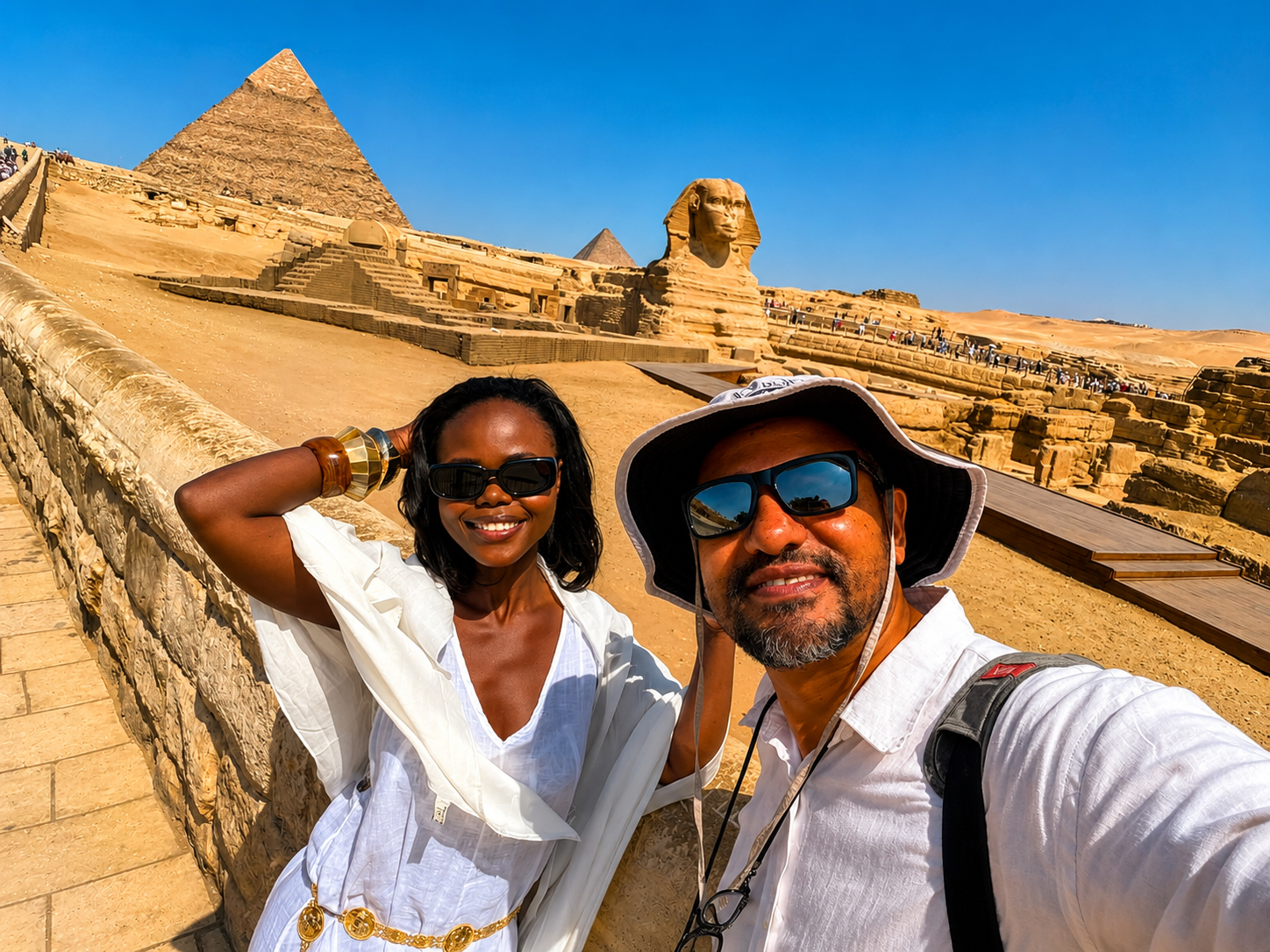
Planning a Private Giza Pyramids Tour? Discover the Great Pyramid, Great Sphinx, insider travel tips, tickets, history, and everything you need for the perfect Cairo adventure.
Private Giza Pyramids Tour: The Ultimate Guide to Exploring Egypt’s Greatest Wonder
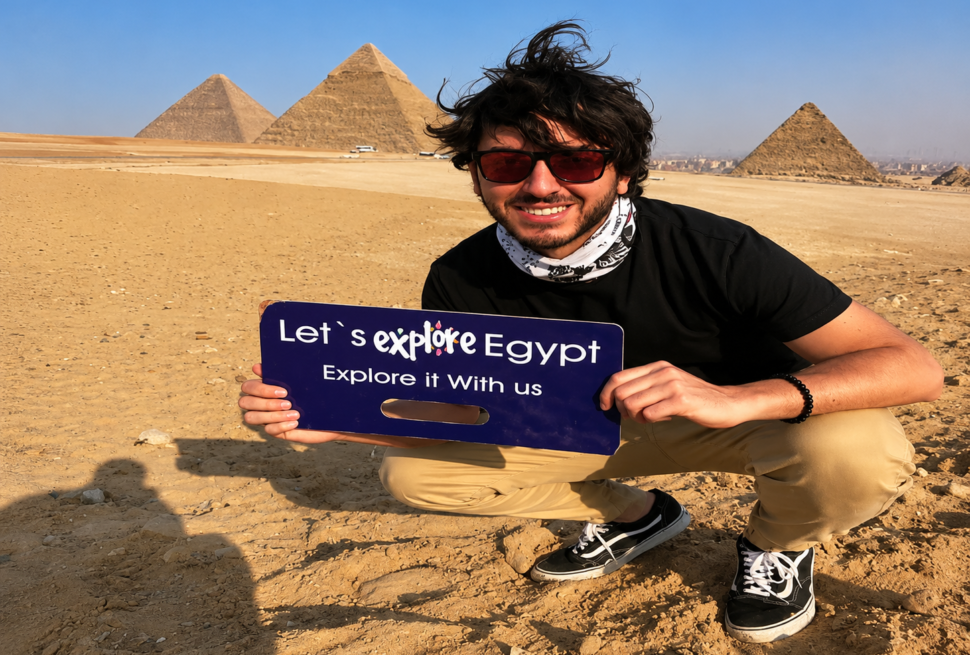
Imagine standing before the Great Pyramid of Khufu, a monument that has dominated the Egyptian landscape for more than 4,500 years. As the morning sun rises over the Giza Plateau, golden light illuminates the limestone blocks that ancient craftsmen carefully positioned thousands of years ago. Nearby, the mysterious Great Sphinx silently watches over the desert, just as it has since the days of the pharaohs.
A Private Giza Pyramids Tour offers far more than simply visiting famous landmarks. It allows you to experience one of the greatest archaeological sites in the world at your own pace, guided by an expert Egyptologist who can reveal the fascinating stories, legends, and discoveries hidden behind these incredible monuments.
Unlike crowded group tours, a private experience gives you complete flexibility. Whether you want to spend extra time photographing the pyramids, enter the Great Pyramid, ride a camel across the desert, or simply admire the breathtaking views, your itinerary is designed around your interests.
This comprehensive guide will help you understand why the Giza Pyramids continue to inspire millions of travelers every year and how to make the most of your visit.
Why Choose a Private Giza Pyramids Tour?
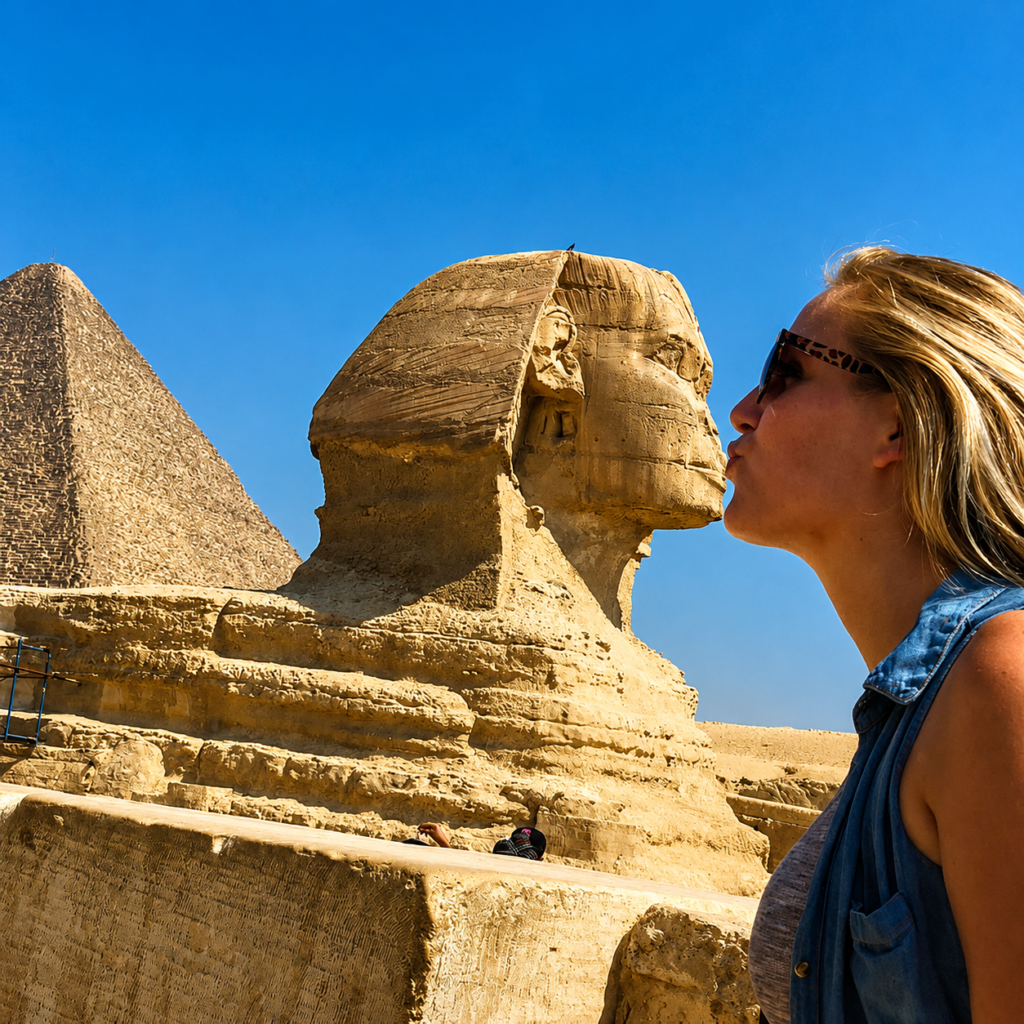
Every year, millions of people visit the Giza Plateau. While many join large bus groups, experienced travelers often choose a private tour because it offers a more comfortable, relaxed, and rewarding experience.
A private tour means that every moment of your day is dedicated to you. There is no waiting for other guests, no rushing through the monuments, and no strict schedule that limits your exploration. Instead, you enjoy personalized attention from your guide, who can answer your questions and adapt the tour to your interests.
Whether you are passionate about ancient engineering, archaeology, photography, or simply want to enjoy one of the world’s greatest wonders without the crowds, a private tour provides unmatched flexibility.
Benefits of a Private Tour
- Private Egyptologist guide
- Private modern air-conditioned vehicle
- Flexible itinerary
- Convenient hotel pickup and drop-off
- Plenty of time for photography
- No large groups
- Comfortable transportation
- Personalized historical explanations
- Family-friendly experience
- Ideal for couples, solo travelers, and small groups
Many travelers consider the private experience well worth the investment because it transforms a simple sightseeing trip into a memorable journey through ancient Egyptian history.
Where Are the Giza Pyramids?
The Giza Pyramids Complex is located on the western bank of the Nile River in Giza, approximately 15 kilometers (9 miles) southwest of downtown Cairo.
Thanks to its convenient location, the pyramids can easily be visited as a half-day or full-day excursion from almost anywhere in Cairo or Giza.
Approximate Travel Times
- Downtown Cairo: 30–45 minutes
- Cairo International Airport: 45–60 minutes
- New Cairo: 60–90 minutes
- Giza Hotels: 15–30 minutes
Because traffic in Cairo can vary throughout the day, morning departures are highly recommended.
A Brief History of the Giza Pyramids
More than 4,500 years ago, Egypt entered one of the most remarkable periods in human history. During the Fourth Dynasty of the Old Kingdom, powerful pharaohs ruled a prosperous kingdom with advanced engineering knowledge, organized labor, and extraordinary architectural ambition.
Rather than building simple tombs, these rulers created monuments that would symbolize their divine authority for eternity.
The result was the construction of the Giza Pyramids, monuments so extraordinary that they continue to puzzle engineers and historians today.
The complex consists of three royal pyramids built for:
- Pharaoh Khufu
- Pharaoh Khafre
- Pharaoh Menkaure
Surrounding these pyramids are numerous temples, queens’ pyramids, ceremonial causeways, cemeteries, and the Great Sphinx.
Together they form one of the most important archaeological landscapes ever discovered.
The Great Pyramid of Khufu
The centerpiece of every private tour is undoubtedly the Great Pyramid of Khufu.
Also known as the Great Pyramid of Giza, it is the largest pyramid ever constructed and the only surviving Wonder of the Ancient World.
Its enormous scale continues to astonish visitors.
Incredible Facts
- Built around 2580 BC
- Original height: 146.6 meters (481 feet)
- Current height: 138.5 meters (454 feet)
- Base length: 230 meters on each side
- More than 2.3 million limestone and granite blocks
- Estimated weight exceeding six million tons
For almost 3,800 years, no human-made structure anywhere in the world stood taller.
Even with today’s technology, building an identical monument would be an enormous engineering challenge.
How Was the Great Pyramid Built?
This question has fascinated scholars for centuries.
Although many theories exist, archaeologists generally agree that the pyramid was built by thousands of highly skilled workers rather than slaves.
Workers quarried limestone from nearby sites while granite was transported from Aswan, nearly 900 kilometers to the south.
Using ramps, sledges, ropes, and remarkable planning, the builders carefully positioned each massive stone with astonishing precision.
Modern laser measurements show that the pyramid’s alignment with the four cardinal directions is incredibly accurate, demonstrating the advanced knowledge possessed by ancient Egyptian architects.
Despite decades of research, certain aspects of its construction remain one of archaeology’s greatest mysteries.
Walking Around the Great Pyramid
Standing beside the Great Pyramid is an unforgettable experience.
The individual limestone blocks are much larger than most visitors expect, with many weighing between two and fifteen tons.
As you circle the pyramid with your Egyptologist guide, you’ll discover fascinating details that most visitors overlook, including:
- Original entrance location
- Ancient casing stones
- Construction techniques
- Alignment with the stars
- Hidden chambers discovered through modern scanning technology
- The immense scale of the foundation
Every side of the monument reveals a new perspective, making it one of the world’s greatest photography locations.
Can You Go Inside the Great Pyramid?
Yes.
One of the highlights of a private tour is the opportunity to enter the Great Pyramid (additional entrance ticket required).
Inside you’ll climb through narrow ascending passages before reaching one of ancient Egypt’s most remarkable architectural spaces.
Visitors will experience:
- The Descending Passage
- The Ascending Passage
- The Grand Gallery
- The King’s Chamber
- The granite sarcophagus of Pharaoh Khufu
Unlike Egyptian temples decorated with colorful carvings, the interior is surprisingly plain. Its true beauty lies in its incredible engineering and the realization that these chambers were constructed more than four millennia ago.
The climb is moderately demanding because of the steep, narrow passages, but many visitors consider it one of the most memorable experiences in Egypt.
Interesting Facts About Khufu
Although Khufu commissioned the greatest monument ever built, surprisingly little is known about his personal life.
Historians believe he ruled Egypt for approximately 23 years during one of the country’s most prosperous periods.
Only a small ivory statue of Khufu has survived, making it remarkable that one of history’s greatest rulers is primarily remembered through the monument he left behind rather than through statues or written records.
His pyramid remains the ultimate symbol of ancient Egyptian civilization and continues to inspire architects, engineers, historians, and travelers from every corner of the globe.
Why the Great Pyramid Still Amazes Scientists
Even after centuries of research, the Great Pyramid continues to reveal new secrets.
Advanced scanning technology has identified hidden spaces within the structure, suggesting there is still much to learn about its internal design. Researchers continue to study its construction techniques, alignment, and engineering, making the pyramid not only a monument to the past but also an active subject of modern scientific investigation.
For visitors, this ongoing research adds another layer of fascination—you’re not just seeing a famous landmark, but a place that still holds mysteries waiting to be uncovered.
Coming in Part 2:
- The Pyramid of Khafre
- The Pyramid of Menkaure
- The Great Sphinx
- Valley Temple of Khafre
- Panoramic Viewpoint
- Camel Rides
- Best Photo Locations
- Hidden Secrets of the Giza Plateau
Private Giza Pyramids Tour
The Pyramid of Khafre: The Best-Preserved Pyramid at Giza
After exploring the Great Pyramid of Khufu, your private tour continues to the impressive Pyramid of Khafre, the second-largest pyramid on the Giza Plateau. Although it is slightly smaller than Khufu’s pyramid, it often appears taller because it was built on higher ground.
One of the Pyramid of Khafre’s most distinctive features is the layer of original polished Tura limestone casing that remains near the summit. This is the only one of the three major pyramids where visitors can still see how all the pyramids once looked when they were completely covered with smooth white limestone that reflected the sunlight.
When these casing stones were intact, the pyramids would have shone brilliantly across the desert, earning ancient Egypt a reputation for some of the most magnificent monuments ever created.
Quick Facts
- Built for Pharaoh Khafre
- Construction Date: Around 2558–2532 BC
- Original Height: 143.5 meters (471 feet)
- Current Height: 136.4 meters (448 feet)
- Base Length: 215.3 meters (706 feet)
- Fourth Dynasty
Your Egyptologist guide will explain why Khafre chose this location and how his funerary complex became one of the most important religious sites in ancient Egypt.
Can You Enter the Pyramid of Khafre?
Yes.
The Pyramid of Khafre is sometimes open to visitors with a separate entrance ticket.
Inside, you’ll descend through a corridor leading to the burial chamber carved directly into the bedrock beneath the pyramid. Although the interior is simpler than the Great Pyramid, it provides an authentic glimpse into the architecture of royal tombs during the Old Kingdom.
At the center of the chamber lies a granite sarcophagus that once held the remains of Pharaoh Khafre.
Walking through these ancient corridors offers a unique perspective on how the pharaohs prepared for eternity according to ancient Egyptian beliefs.
The Pyramid of Menkaure
The smallest of the three main pyramids belongs to Pharaoh Menkaure, the grandson of Khufu.
Although it is considerably smaller than its neighbors, the Pyramid of Menkaure is admired for its elegant proportions and exceptional craftsmanship.
Originally, its lower courses were covered with polished red Aswan granite, while the upper sections were clad in white limestone, creating a striking contrast in color.
Quick Facts
- Built for Pharaoh Menkaure
- Height: 65 meters (213 feet)
- Construction Date: Around 2510 BC
- Lower section originally faced with red granite
- Fourth Dynasty
Because many visitors spend most of their time around the Great Pyramid, the area surrounding Menkaure’s pyramid is often quieter, making it an excellent place to appreciate the scale of the Giza Plateau.
The Queens’ Pyramids
Near the Great Pyramid are several smaller pyramids known as the Queens’ Pyramids.
These monuments were built for members of the royal family, including queens and close relatives of Pharaoh Khufu.
Although much smaller than the main pyramids, they played an essential role in the royal cemetery and provide valuable insight into ancient Egyptian burial traditions.
Nearby archaeologists have also uncovered tombs belonging to priests, nobles, and high-ranking officials who served the royal court.
The Great Sphinx of Giza
No visit to the Giza Plateau would be complete without standing before the legendary Great Sphinx.
Carved directly from a massive limestone outcrop, the Sphinx combines the body of a lion with the head of a king, symbolizing power, wisdom, and protection.
Believed to represent Pharaoh Khafre, the monument has watched over the pyramids for more than 4,500 years.
Amazing Facts
- Length: 73 meters (240 feet)
- Height: 20 meters (66 feet)
- Width: 19 meters (62 feet)
- Carved from a single natural limestone ridge
- Largest monolithic statue in ancient Egypt
Its calm expression, enormous size, and mysterious history continue to inspire visitors from around the world.
Why Is the Sphinx Missing Its Nose?
One of the most frequently asked questions concerns the missing nose.
Many people mistakenly believe Napoleon’s soldiers destroyed it. However, historical drawings created before Napoleon’s arrival already show the Sphinx without its nose.
Most historians believe the damage occurred centuries earlier, although the exact circumstances remain uncertain.
Your Egyptologist guide will explain the different historical theories while separating legend from fact.
The Dream Stele
Between the paws of the Great Sphinx stands the famous Dream Stele, erected by Pharaoh Thutmose IV around 1400 BC.
According to the inscription, the young prince fell asleep beneath the Sphinx while hunting.
In his dream, the Sphinx promised him the throne of Egypt if he cleared away the sand that had buried much of the monument.
After becoming pharaoh, Thutmose IV fulfilled his promise and restored the Sphinx, leaving behind the granite stele visitors can still see today.
Valley Temple of Khafre
Adjacent to the Great Sphinx lies one of Egypt’s finest surviving Old Kingdom buildings—the Valley Temple of Khafre.
Constructed from enormous limestone blocks and lined with polished Aswan granite, this temple served as part of the king’s funerary complex.
Historians believe the mummification rituals and purification ceremonies took place here before the pharaoh’s body was transported to his pyramid.
The temple’s massive stone architecture remains remarkably well preserved despite being more than four millennia old.
Panoramic Viewpoint
One of the highlights of every Private Giza Pyramids Tour is visiting the famous Panoramic Viewpoint.
This elevated location offers breathtaking views of all three pyramids aligned against the vast Sahara Desert.
It is considered one of the best photography locations in Egypt.
From here you can capture:
- All three pyramids together
- Desert landscapes
- Camel caravans
- Sunrise photographs
- Sunset photography
- Family portraits
- Wide panoramic images
Many professional photographers consider this viewpoint essential for capturing the true scale and beauty of the Giza Plateau.
Camel Rides Around the Pyramids
One of the most memorable experiences available during your visit is a traditional camel ride across the desert.
For centuries, camels have been known as the “Ships of the Desert,” carrying travelers across North Africa and the Middle East.
Today, riding a camel around the pyramids provides a unique perspective of these ancient monuments while creating unforgettable photographs.
Your guide can recommend reputable camel operators if you wish to include this optional activity.
Horse Carriage and Horseback Riding
If camels aren’t your preference, horse riding and traditional horse-drawn carriages are also available around the plateau.
These experiences offer another enjoyable way to admire the pyramids while exploring areas beyond the main visitor paths.
Hidden Secrets of the Giza Plateau
While most visitors focus on the pyramids themselves, the plateau contains many lesser-known treasures.
Your Egyptologist may point out:
- Ancient workers’ tombs
- Nobles’ mastabas
- Archaeological excavation sites
- Queens’ pyramids
- Original quarry locations
- Ancient causeways
- Temple foundations
- Restoration projects
These hidden areas reveal that the Giza Plateau was once a thriving ceremonial city rather than simply a collection of pyramids.
Why Every Visit Is Different
No two visits to the Giza Pyramids are exactly the same.
The changing desert light, seasonal weather, archaeological discoveries, and your guide’s expertise create a unique experience each time.
Whether you spend your time exploring the monuments, taking photographs, learning about ancient engineering, or simply enjoying the atmosphere, the Giza Plateau leaves a lasting impression on every traveler.
Coming in Part 3
- How the Ancient Egyptians Built the Pyramids
- Ancient Construction Theories
- Hidden Chambers & Recent Discoveries
- Can You Climb the Pyramids?
- Grand Egyptian Museum (GEM)
- Best Time to Visit
- What to Wear
- Ticket Information
- Travel Tips
- Common Tourist Mistakes
Private Giza Pyramids Tour – Part 3
How Did the Ancient Egyptians Build the Pyramids?
One of the greatest mysteries in history is how the ancient Egyptians built the Giza Pyramids more than 4,500 years ago. Despite decades of archaeological research, the construction of these monumental structures continues to fascinate engineers, historians, and travelers alike.
Unlike the myths often seen in movies, there is no credible archaeological evidence that aliens or supernatural forces built the pyramids. Instead, discoveries show that they were constructed by thousands of highly skilled Egyptian workers using remarkable planning, engineering, and teamwork.
Recent excavations have uncovered workers’ villages, bakeries, workshops, and cemeteries near the Giza Plateau, proving that a well-organized workforce was responsible for building these incredible monuments.
The Workforce Behind the Pyramids
Contrary to popular belief, the pyramids were not built by slaves.
Archaeologists believe that a large workforce of skilled laborers, stonemasons, engineers, architects, surveyors, and seasonal workers collaborated on the project. Many workers were farmers who helped during the annual Nile flood, when their fields were underwater.
The workers were provided with food, housing, medical care, and tools, reflecting the sophisticated organization of ancient Egyptian society.
Where Did the Stones Come From?
Constructing the Great Pyramid required approximately 2.3 million stone blocks, each weighing between 2 and 80 tons.
Different types of stone came from different regions of Egypt:
Limestone
Most of the pyramid was built using limestone quarried directly from the Giza Plateau.
Tura Limestone
The smooth outer casing originally consisted of fine white limestone transported from the Tura quarries on the eastern bank of the Nile.
When the sun reflected off these polished stones, the pyramids appeared dazzling white and could be seen from great distances.
Aswan Granite
Massive granite blocks used in the King’s Chamber and other structural elements were transported from Aswan, nearly 900 kilometers (560 miles) south of Giza.
Moving these enormous stones over such a distance remains one of the greatest logistical achievements of the ancient world.
How Were the Stones Moved?
Researchers believe the Egyptians developed ingenious methods to transport heavy blocks.
The most widely accepted theories include:
- Wooden sledges pulled by teams of workers
- Wetting the sand to reduce friction
- Earthen ramps leading up the pyramid
- Wooden rollers for certain tasks
- Levers used for final positioning
Although archaeologists continue to debate the exact ramp design, there is broad agreement that a combination of these techniques made construction possible.
Incredible Precision
Perhaps the most astonishing aspect of the Great Pyramid is its precision.
Modern laser measurements show that:
- The pyramid is almost perfectly aligned with true north.
- Each side of the base is remarkably similar in length.
- The corners are nearly perfect right angles.
- The foundation is almost completely level.
Even with today’s advanced equipment, achieving this level of accuracy on such a massive structure would be an extraordinary engineering accomplishment.
Hidden Chambers and Recent Discoveries
Although the Giza Pyramids have been studied for centuries, they continue to reveal new secrets.
In recent years, scientists have used advanced technologies such as:
- Muon scanning
- Infrared thermography
- 3D laser mapping
- Digital modeling
These non-invasive methods have detected previously unknown spaces within the Great Pyramid, including the famous “Big Void,” a large hidden cavity located above the Grand Gallery.
While researchers are still studying its purpose, the discovery demonstrates that the Great Pyramid still holds mysteries waiting to be solved.
Can You Climb the Pyramids?
No.
Climbing the pyramids is strictly prohibited and illegal.
The monuments are protected archaeological treasures and UNESCO World Heritage Sites. Climbing them can damage the ancient stones and poses significant safety risks.
Visitors who ignore the rules may face heavy fines, arrest, or removal from the archaeological site.
Fortunately, there are many designated viewpoints that offer spectacular panoramic views without harming these priceless monuments.
The Grand Egyptian Museum (GEM)
A visit to the Grand Egyptian Museum (GEM) perfectly complements your Private Giza Pyramids Tour.
Located just minutes from the Giza Plateau, the museum is one of the world’s most ambitious cultural projects and the largest archaeological museum dedicated to a single civilization.
Its modern architecture, expansive galleries, and state-of-the-art exhibitions provide visitors with a deeper understanding of ancient Egyptian history.
Museum Highlights
- The majestic Grand Hall
- The iconic Colossal Statue of Ramses II
- The impressive Grand Staircase
- Twelve main exhibition galleries
- Thousands of ancient artifacts
- Interactive displays and multimedia experiences
- Panoramic views of the Giza Pyramids
Many visitors choose to combine the pyramids and the Grand Egyptian Museum in a single full-day itinerary for a complete exploration of Egypt’s ancient heritage.
Best Time to Visit the Giza Pyramids
Although the pyramids are open year-round, choosing the right time can greatly enhance your experience.
Best Months
- October
- November
- December
- January
- February
- March
- April
During these months, temperatures are generally pleasant, making it easier to explore the plateau comfortably.
Summer (June–August) can be extremely hot, especially during midday.
Best Time of Day
Early Morning
- Cooler temperatures
- Softer lighting
- Fewer crowds
- Better photography
Late Afternoon
- Beautiful golden-hour lighting
- Cooler weather
- Stunning sunset views
- Dramatic desert colors
Midday tends to be the busiest and hottest period.
What Should You Wear?
Comfort is key when visiting the Giza Plateau.
Recommended clothing includes:
- Lightweight breathable clothing
- Comfortable walking shoes
- Sunglasses
- Wide-brimmed hat or cap
- Sunscreen
- Reusable water bottle
During winter evenings, bringing a light jacket is advisable.
Since much of the tour takes place outdoors, dressing appropriately helps ensure a comfortable experience.
Ticket Information
Visitors can choose from several ticket options depending on the experiences they wish to include.
Typical options may include:
- General entry to the Giza Plateau
- Entry to the Great Pyramid
- Entry to the Pyramid of Khafre (when open)
- Entry to the Pyramid of Menkaure (when open)
- Combined tickets with the Grand Egyptian Museum (depending on availability)
Ticket availability and pricing may change, so it’s always best to check the latest information before your visit or book through a trusted tour operator.
Helpful Travel Tips
To make the most of your Private Giza Pyramids Tour:
- Arrive early to avoid crowds.
- Carry a valid passport or ID.
- Bring cash for optional purchases.
- Stay hydrated throughout the day.
- Follow your guide’s instructions inside the pyramids.
- Respect archaeological barriers.
- Wear comfortable footwear.
- Charge your camera or phone before arriving.
These simple tips can help you enjoy a smoother and more memorable visit.
Common Tourist Mistakes
Many first-time visitors make avoidable mistakes.
Here are a few to watch out for:
- Arriving during the hottest part of the day.
- Wearing uncomfortable shoes.
- Underestimating walking distances.
- Forgetting sunscreen or water.
- Rushing through the site without learning its history.
- Spending too little time at the panoramic viewpoint.
- Missing the nearby Grand Egyptian Museum.
Planning ahead allows you to enjoy the Giza Plateau at a more relaxed pace and appreciate its remarkable history.
Why the Giza Pyramids Continue to Inspire the World
More than four millennia after they were built, the Giza Pyramids remain symbols of human creativity, determination, and innovation.
They have inspired explorers, scientists, architects, artists, writers, and travelers from every corner of the globe.
Each new archaeological discovery reminds us that the pyramids are not just monuments of the past—they are living chapters in the ongoing story of human civilization.
More information about Giza Pyramid Tour
- The Complete Private Giza Pyramids Tour Itinerary
- What to Expect During Your Tour
- Camel Ride Experience
- Egyptian Food to Try
- Family Travel Tips
- Solo Traveler Guide
- Best Photography Spots
- Frequently Asked Questions
- Why Book with Let’s Explore Egypt Travel
- Final Conclusion & Call to Action
Private Giza Pyramids Tour
Your Complete Private Giza Pyramids Tour Itinerary
One of the greatest advantages of booking a Private Giza Pyramids Tour is the flexibility to explore at your own pace. Unlike large group excursions, your itinerary can be adjusted to match your interests, whether you’re passionate about history, photography, architecture, or simply want to enjoy one of the world’s most extraordinary destinations.
Below is a typical itinerary that provides the perfect balance between sightseeing, learning, and relaxation.
Hotel Pickup
Your day begins with convenient pickup from your hotel in Cairo or Giza.
Your licensed Egyptologist guide will greet you in the hotel lobby before you travel in a modern, air-conditioned private vehicle toward the Giza Plateau.
During the drive, your guide will introduce you to the history of ancient Egypt, explain the significance of the Fourth Dynasty, and share fascinating stories about the pharaohs who built the pyramids.
Arrival at the Giza Plateau
As you approach the plateau, the pyramids gradually appear above the desert horizon—a moment many travelers describe as one of the most unforgettable experiences of their lives.
Your guide will help you understand the layout of the archaeological site before beginning your exploration.
Explore the Great Pyramid of Khufu
Your first major stop is the magnificent Great Pyramid of Khufu.
Standing at its base allows you to truly appreciate the incredible size of the monument.
Your guide will explain:
- Why it was built
- How it was constructed
- The symbolism behind its design
- Ancient burial beliefs
- Modern archaeological discoveries
You’ll have plenty of time to admire the massive limestone blocks and capture memorable photographs.
Optional Entry Inside the Great Pyramid
If you have purchased an interior ticket, you’ll have the opportunity to enter the Great Pyramid.
Walking through its ancient corridors and climbing the Grand Gallery is one of the highlights of any visit to Egypt.
Although the passages are narrow and steep, reaching the King’s Chamber offers a remarkable connection with one of history’s greatest engineering achievements.
Visit the Pyramid of Khafre
Next, continue to the Pyramid of Khafre, famous for the original limestone casing that still covers part of its summit.
Here your guide will explain the differences between Khufu’s and Khafre’s pyramids while sharing fascinating stories about the royal family and their funerary traditions.
This area also provides excellent opportunities for close-up photography.
Explore the Pyramid of Menkaure
Continue to the smallest of the three main pyramids.
Although less visited than its larger neighbors, the Pyramid of Menkaure is admired for its elegant proportions and beautiful construction.
Because there are usually fewer visitors here, many travelers enjoy the quieter atmosphere.
Visit the Great Sphinx
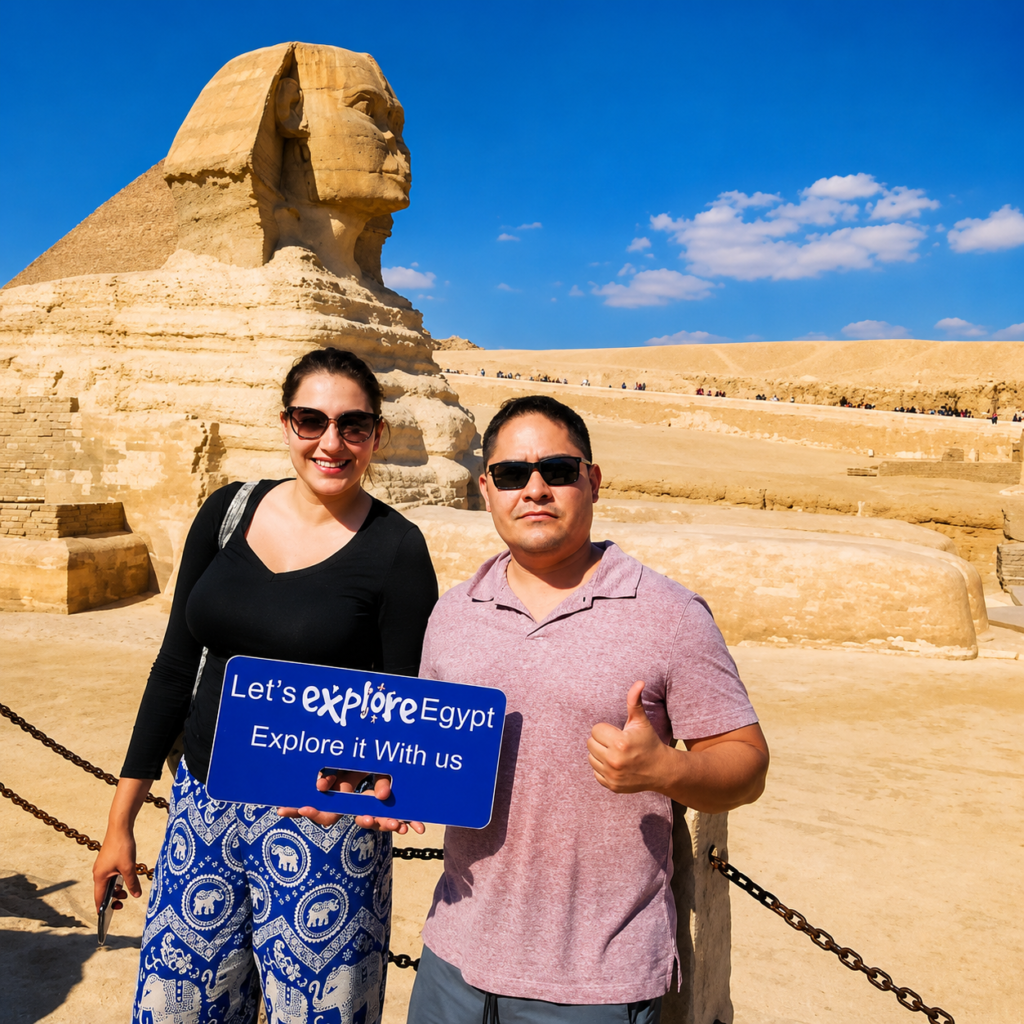
No tour is complete without standing before the legendary Great Sphinx.
As your guide explains the monument’s symbolism and mysterious history, you’ll gain a deeper appreciation for one of the world’s most iconic sculptures.
You’ll also visit the famous Dream Stele and enjoy spectacular photo opportunities with both the Sphinx and pyramids in the background.
Explore the Valley Temple
Adjacent to the Sphinx lies the remarkably preserved Valley Temple of Khafre.
This ancient structure played an essential role in the king’s funeral ceremonies and remains one of the best-preserved temples from Egypt’s Old Kingdom.
Walking through its enormous granite halls offers an incredible glimpse into ancient religious practices.
Panoramic Viewpoint
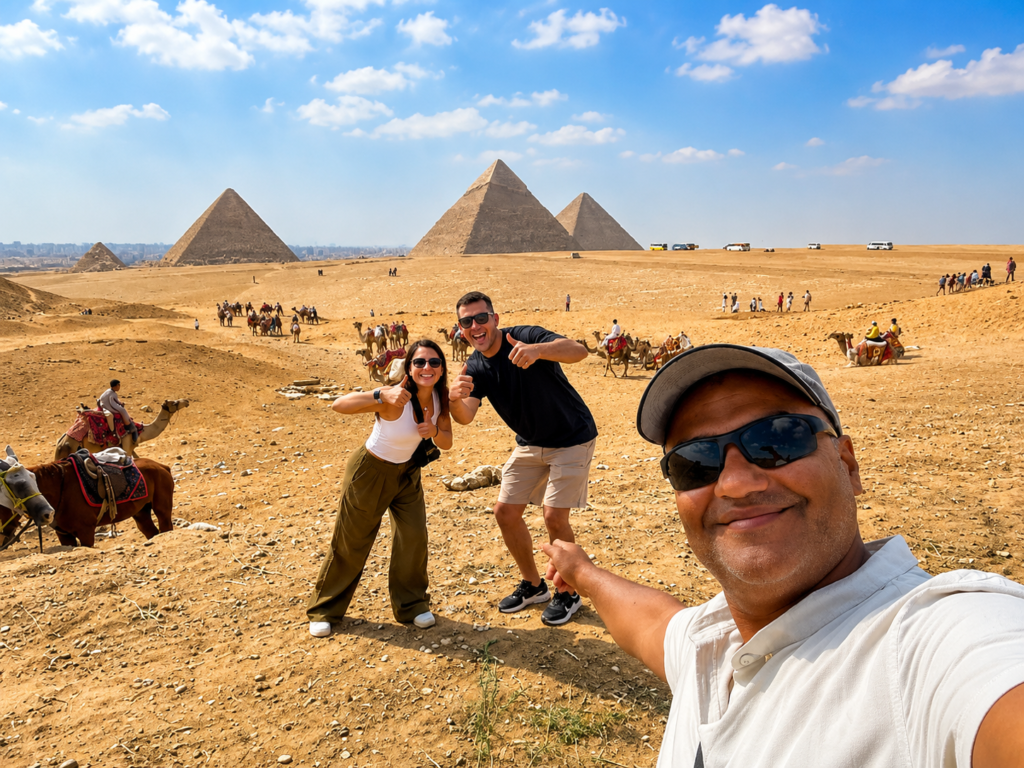
One of the highlights of your private tour is the famous Panoramic Viewpoint.
From this elevated location you’ll enjoy breathtaking views of all three pyramids rising from the desert.
This is widely considered the best place to capture unforgettable photographs.
Your guide will gladly help you find the perfect angles for memorable pictures.
Optional Camel Ride
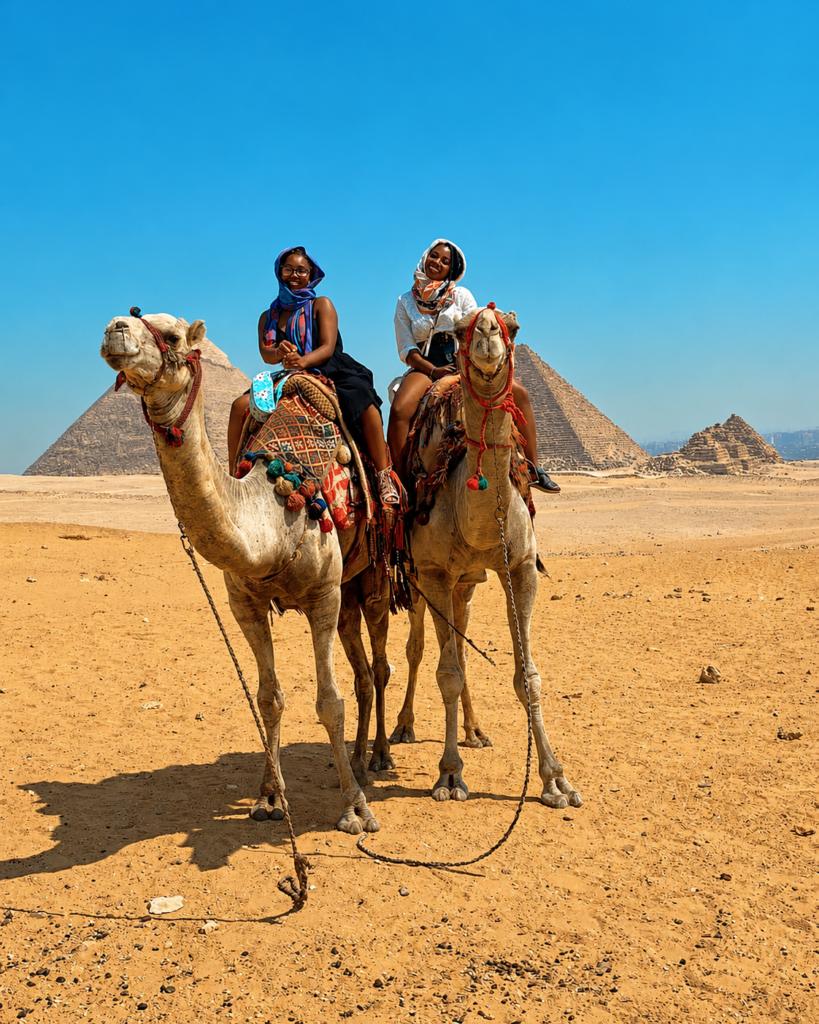
Many visitors choose to experience a traditional camel ride across the desert.
This optional activity provides:
- Incredible panoramic views
- Unique photography opportunities
- A memorable cultural experience
- Beautiful desert scenery
Whether you ride for a few minutes or longer, it’s an unforgettable way to experience the landscape surrounding the pyramids.
Lunch at a Local Egyptian Restaurant
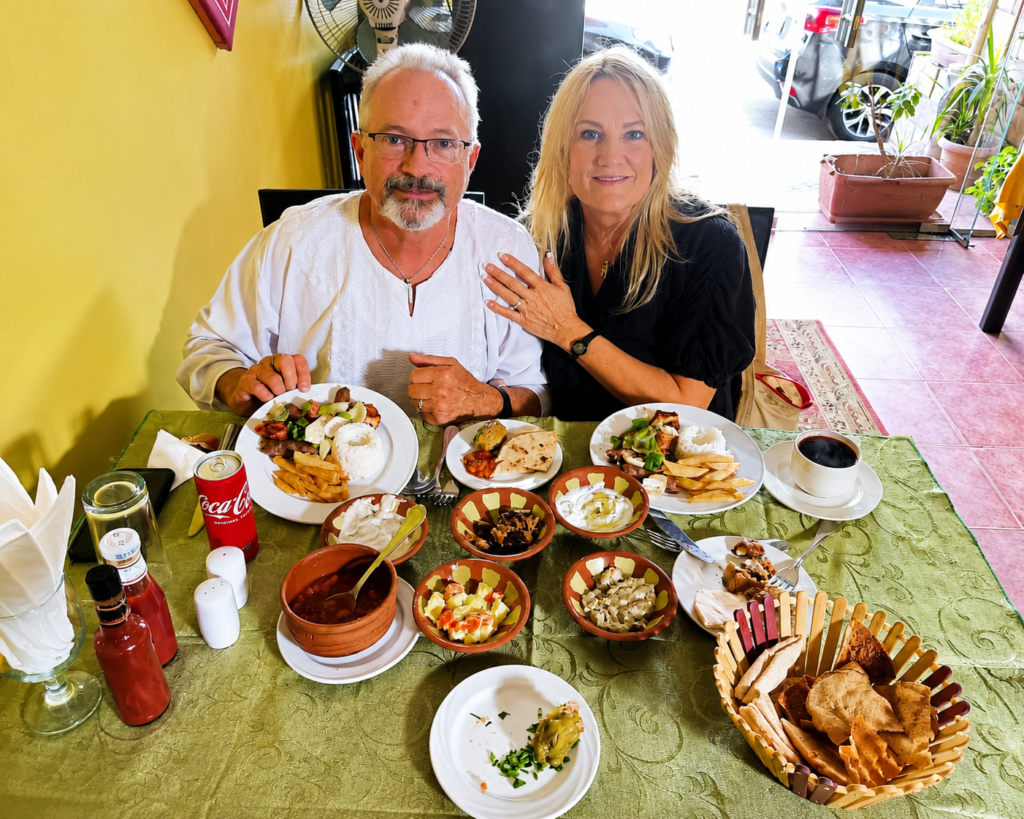
After exploring the Giza Plateau, enjoy a relaxing lunch at a carefully selected local restaurant.
Popular Egyptian dishes may include:
- Mixed grilled meats
- Kofta
- Chicken kebab
- Koshari
- Molokhia
- Stuffed vegetables
- Fresh salads
- Tahini
- Traditional Egyptian bread
Vegetarian and vegan options are widely available.
Sharing a traditional meal is an excellent opportunity to experience Egyptian hospitality and cuisine.
Optional Visit to the Grand Egyptian Museum (GEM)
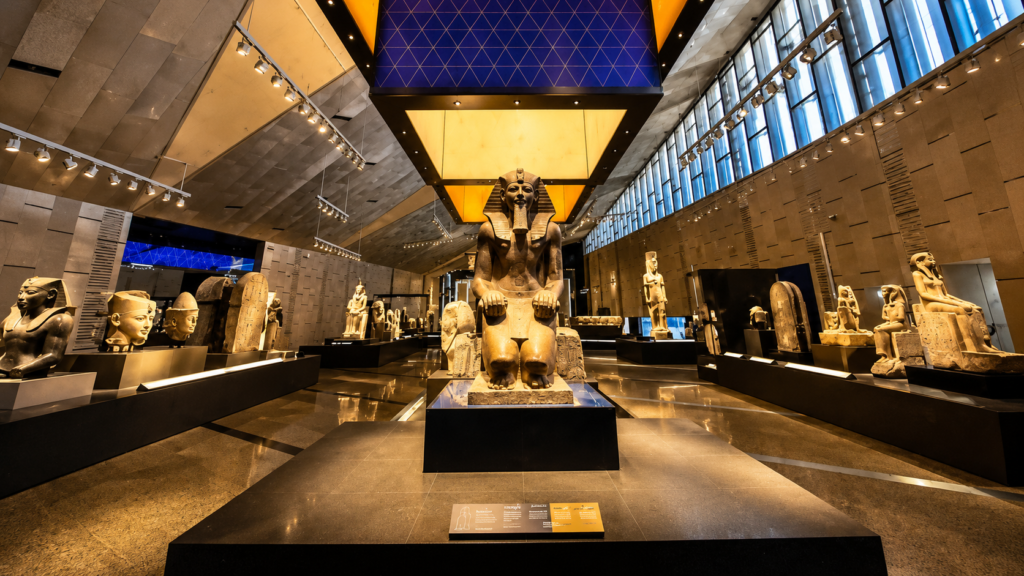
Many travelers choose to extend their day by visiting the Grand Egyptian Museum, located only a few minutes from the pyramids.
The museum offers a perfect complement to the archaeological site, allowing visitors to explore thousands of priceless artifacts discovered throughout Egypt.
Highlights include:
- Grand Hall
- Colossal Statue of Ramses II
- Grand Staircase
- Main Exhibition Galleries
- Ancient royal treasures
- Interactive displays
Combining the pyramids and GEM creates one of the finest cultural experiences available anywhere in the world.
Shopping for Authentic Egyptian Souvenirs
If you enjoy shopping, your guide can recommend reputable government-approved galleries where you can browse authentic Egyptian handicrafts.
Popular souvenirs include:
- Handmade papyrus artwork
- Alabaster statues
- Cartouche necklaces
- Silver jewelry
- Scarab replicas
- Traditional perfumes
- Cotton products
- Handwoven textiles
Unlike aggressive street vendors, established galleries provide fixed prices and high-quality products.
Shopping is entirely optional, and if you prefer to spend your time exclusively exploring the monuments, your itinerary can easily accommodate that.
Is This Tour Suitable for Families?
Absolutely.
The Giza Pyramids are one of Egypt’s most family-friendly attractions.
Children are often fascinated by:
- The enormous pyramids
- Camel rides
- The Great Sphinx
- Ancient history
- Open desert landscapes
Because the tour is private, families can move at their own pace and take breaks whenever needed.
Is This Tour Suitable for Seniors?
Yes.
A private tour is often the most comfortable option for senior travelers.
Your driver can minimize walking distances where possible, and your guide can adapt the pace of the visit according to your preferences.
Although entering the Great Pyramid requires climbing steep passages, all outdoor areas are accessible to most visitors.
Is This Tour Good for Solo Travelers?
Definitely.
Many solo travelers prefer private tours because they offer:
- Personalized attention
- Greater flexibility
- Comfortable transportation
- Local expertise
- Enhanced safety
- Opportunities to ask unlimited questions
A knowledgeable guide transforms the visit into an engaging learning experience rather than simply walking around ancient monuments.
Best Photography Spots
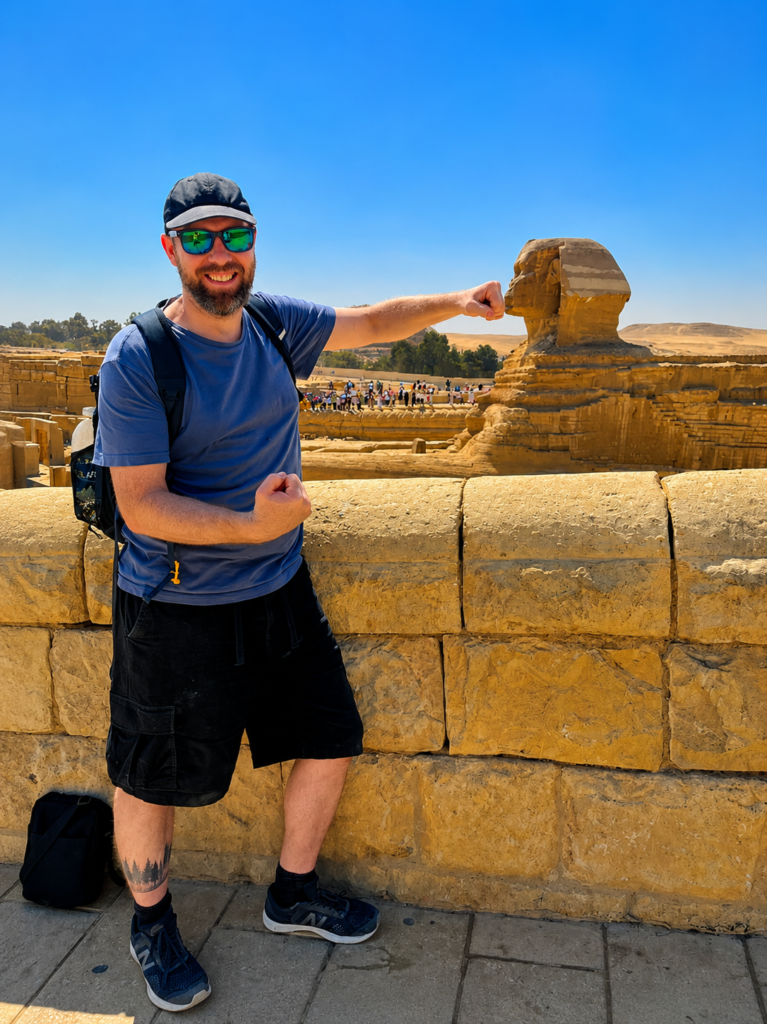
Photography enthusiasts will discover countless incredible viewpoints throughout the Giza Plateau.
Some favorites include:
The Great Pyramid Entrance
Perfect for dramatic close-up images.
Panorama Point
The classic location where all three pyramids can be photographed together.
Great Sphinx Plaza
Capture the Sphinx with Khafre’s Pyramid rising behind it.
Desert Camel Trail
One of the most iconic locations for sunrise and sunset photography.
Valley Temple
Excellent for architectural details and ancient granite construction.
Golden Hour Photography
The hour shortly after sunrise and before sunset provides the most beautiful lighting.
Warm golden tones illuminate the limestone, creating breathtaking photographs that showcase the pyramids at their absolute best.
Professional photographers often plan their visits around these times.
Coming in Part 5 (Final)
- Frequently Asked Questions
- Why Travelers Choose Private Tours
- Responsible Tourism Tips
- Nearby Attractions
- Why Book with Let’s Explore Egypt Travel
- Final Conclusion
- SEO FAQ Section
- Call to Action
Private Giza Pyramids Tour
Frequently Asked Questions
How long does a Private Giza Pyramids Tour take?
Most private tours last 4 to 6 hours, depending on your itinerary and whether you choose to enter the Great Pyramid or combine your visit with the Grand Egyptian Museum.
If you wish to explore additional attractions such as Saqqara, Memphis, or the Grand Egyptian Museum, a full-day tour of 8–10 hours is recommended.
Can You Go Inside the Pyramids?
Yes.
Visitors can purchase separate entrance tickets to enter selected pyramids.
The Great Pyramid of Khufu is the most popular interior visit and includes:
- Descending Passage
- Ascending Passage
- Grand Gallery
- King’s Chamber
- Granite Sarcophagus
The passages are steep and narrow, so visitors should be comfortable walking in confined spaces.
Is the Tour Suitable for Children?
Absolutely.
Children often enjoy:
- Seeing the enormous pyramids
- Visiting the Great Sphinx
- Camel rides
- Learning fascinating stories about the pharaohs
- Exploring the desert landscape
A private tour allows families to take breaks whenever necessary.
Is the Tour Wheelchair Accessible?
Many outdoor areas of the Giza Plateau are accessible.
However, entering the pyramids involves steep, narrow passages that are unfortunately not wheelchair accessible.
Your guide will recommend the most comfortable route based on your mobility needs.
What Should I Bring?
We recommend bringing:
- Passport or ID
- Comfortable walking shoes
- Sunglasses
- Sunscreen
- Hat
- Camera
- Mobile phone
- Portable charger
- Reusable water bottle
- Cash for personal purchases
Can I Ride a Camel?
Yes.
Camel rides are available near the Panoramic Viewpoint and offer one of the most iconic experiences at the Giza Pyramids.
Your guide can help arrange a reputable camel ride if you’d like to include this optional activity.
Is Photography Allowed?
Yes.
Photography is permitted in most outdoor areas of the Giza Plateau.
Some indoor areas may have specific restrictions, so it’s always best to follow the guidance of your tour guide and site staff.
The panoramic viewpoint, Great Sphinx, and Great Pyramid are among the best photography locations in Egypt.
When Is the Best Time to Visit?
The best months are:
- October
- November
- December
- January
- February
- March
- April
Morning visits provide cooler temperatures and softer light, while late afternoon offers spectacular golden-hour photography.
Why Travelers Prefer Private Tours
Travelers consistently choose private tours because they offer a more enjoyable and personalized experience.
Flexibility
Spend more time at your favorite locations without following a fixed group schedule.
Comfort
Travel in a private, air-conditioned vehicle with hotel pickup and drop-off.
Expert Guidance
Your licensed Egyptologist brings the history of ancient Egypt to life with engaging explanations and answers to your questions.
Better Photography
Enjoy extra time at the best viewpoints without feeling rushed.
No Large Groups
Avoid waiting for buses or coordinating with dozens of other travelers.
Family-Friendly
A private tour allows you to travel at your own pace, making it ideal for families with children, seniors, couples, and solo travelers.
Responsible Tourism at the Giza Pyramids
The Giza Pyramids are among the world’s most valuable cultural treasures. Every visitor plays an important role in helping preserve them for future generations.
Please remember to:
- Stay on designated visitor paths.
- Do not climb the pyramids.
- Respect archaeological barriers.
- Dispose of waste responsibly.
- Support licensed guides and reputable local businesses.
- Treat the monuments with care and respect.
By following these simple guidelines, you help protect one of humanity’s greatest achievements.
Nearby Attractions to Combine with Your Tour
If you have extra time, consider adding one or more of these nearby destinations:
Grand Egyptian Museum (GEM)
Home to thousands of ancient Egyptian artifacts displayed in one of the world’s most advanced museums.
Saqqara
Explore the famous Step Pyramid of Djoser, the world’s oldest large-scale stone monument.
Memphis
Visit the ancient capital of Egypt and admire the colossal statue of Ramses II and the Alabaster Sphinx.
Dahshur
Discover the Bent Pyramid and the Red Pyramid, two remarkable monuments that showcase the evolution of pyramid construction.
Egyptian Museum in Tahrir Square
See an outstanding collection of pharaonic artifacts and royal treasures.
Khan El Khalili Bazaar
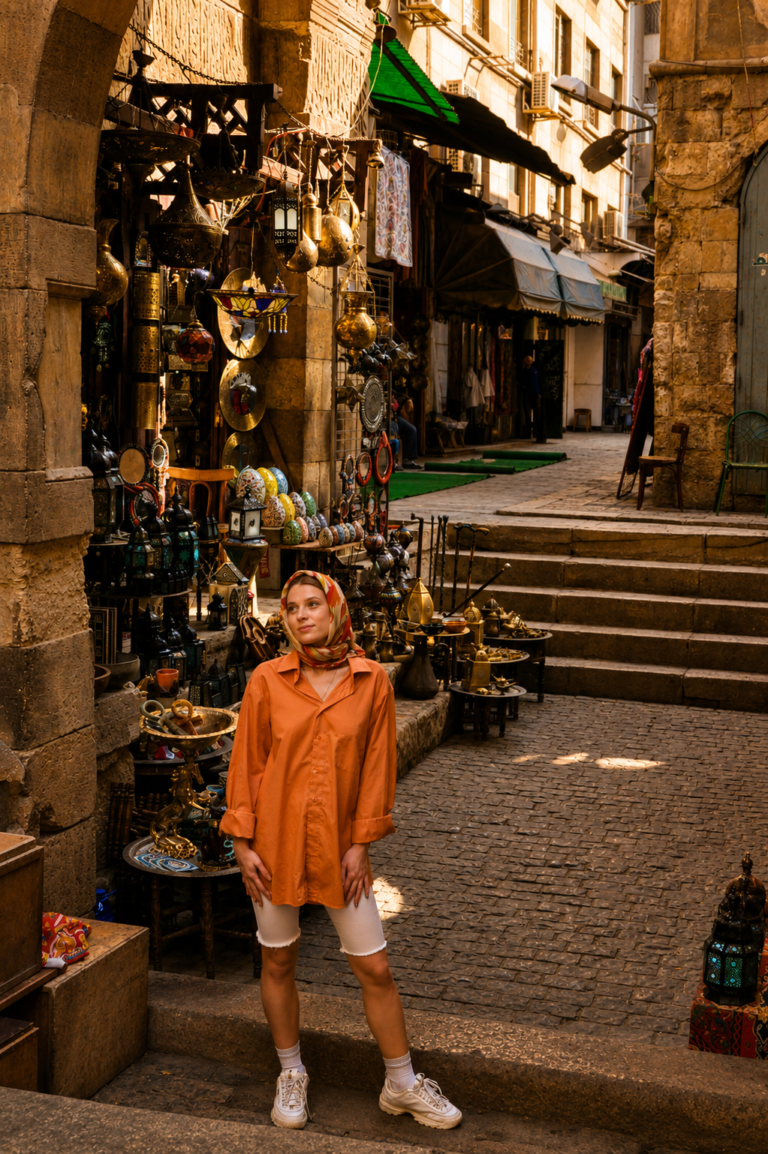
Experience Cairo’s historic market, filled with handmade crafts, spices, jewelry, and traditional souvenirs.
Why Book with Let’s Explore Egypt Travel?
Choosing the right tour operator makes all the difference.
At Let’s Explore Egypt Travel, we are committed to providing authentic, comfortable, and memorable experiences for every traveler.
Why Choose Us?
- 100% Private Tours
- Licensed Egyptologist Guides
- Modern Air-Conditioned Vehicles
- Flexible Itineraries
- No Forced Shopping Stops
- Hotel Pickup & Drop-Off
- Transparent Pricing
- 24/7 WhatsApp Support
- Personalized Service
- Thousands of Happy Travelers
Whether you’re traveling as a couple, family, solo adventurer, or group of friends, our experienced team is dedicated to making your visit to Egypt unforgettable.
Why the Giza Pyramids Continue to Inspire the World
The Giza Pyramids have stood for more than 4,500 years, surviving changing civilizations, natural disasters, and the passage of time.
They represent more than the final resting places of ancient kings—they are enduring symbols of human creativity, engineering, determination, and ambition.
Every stone tells a story of a civilization that transformed dreams into reality using skill, organization, and remarkable vision.
For millions of visitors, standing before the Great Pyramid is not simply another sightseeing stop—it is a deeply moving experience that connects them with one of humanity’s greatest achievements.
Whether you come to admire the architecture, uncover ancient mysteries, photograph breathtaking landscapes, or learn about the fascinating world of the pharaohs, the Giza Pyramids promise an experience unlike any other.
Final Thoughts
A Private Giza Pyramids Tour is the perfect way to explore Egypt’s most iconic landmark in comfort and at your own pace. With the guidance of a licensed Egyptologist, you’ll gain a deeper understanding of the history, engineering, and culture behind these extraordinary monuments while enjoying the flexibility that only a private experience can offer.
From the awe-inspiring Great Pyramid of Khufu and the mysterious Great Sphinx to the panoramic desert viewpoints and nearby Grand Egyptian Museum, every moment of your journey reveals another chapter in the remarkable story of ancient Egypt.
Whether you’re visiting Cairo for a day or beginning a longer adventure across Egypt, a private tour of the Giza Pyramids is an unforgettable experience that will leave you with memories to last a lifetime.
Book Your Private Giza Pyramids Tour Today
Experience Egypt’s greatest treasures with Let’s Explore Egypt Travel.
✔️ 100% Private Tours
✔️ Licensed Egyptologist Guides
✔️ Hotel Pickup & Drop-Off
✔️ Modern Air-Conditioned Vehicles
✔️ Flexible Itineraries
✔️ No Hidden Costs
✔️ 24/7 WhatsApp Support
Reserve your Private Giza Pyramids Tour today and discover why millions of travelers consider the Giza Plateau one of the most extraordinary destinations on Earth.
FAQ
Is a private Giza Pyramids tour worth it?
Yes. A private tour offers personalized service, flexible timing, and the expertise of a licensed Egyptologist, making it the best way to explore the Giza Plateau.
How much time do you need at the Giza Pyramids?
Most visitors spend 4–6 hours exploring the pyramids, the Great Sphinx, and the Valley Temple. A full-day tour allows time to visit the Grand Egyptian Museum as well.
Can tourists enter the Great Pyramid?
Yes. Visitors can enter the Great Pyramid with a separate entrance ticket, subject to daily availability and site regulations.
What is the best time to visit the Giza Pyramids?
The best time is between October and April, especially in the early morning or late afternoon when temperatures are cooler and the lighting is ideal for photography.
Are the Giza Pyramids suitable for families?
Absolutely. The site is one of Egypt’s top family attractions, offering history, open spaces, and optional camel rides that appeal to visitors of all ages.
How far are the Giza Pyramids from Cairo?
The Giza Pyramids are approximately 15 km (9 miles) from downtown Cairo and are typically reached in 30–45 minutes, depending on traffic.
Looking for a stress-free vacation with expert local guides?
At Let’s Explore Egypt, we specialize in:
- Private Egypt tour
- Grand Egyptian Museum tours
- Cairo day Tours
- Luxor Day Tour
- Egypt Multi-Day Tours
- Egypt Solo Tours
- Egypt Family Tours
Recommended Egypt Tours

Why You Can Trust Let's Explore Egypt
This article was written and reviewed by the Let's Explore Egypt Editorial Team, a licensed Egyptian tour operator specializing in private Egypt tours, Nile cruises, and tailor-made travel experiences since 2009.
- 🏛 Licensed Egyptian Tour Operator Since 2009
- ⭐ Trusted by Thousands of Travelers Worldwide
- 👨🏫 Written & Reviewed by Local Egypt Travel Experts
- 🚐 Private Tours & Tailor-Made Travel Experiences
- 📞 24/7 Customer Support